
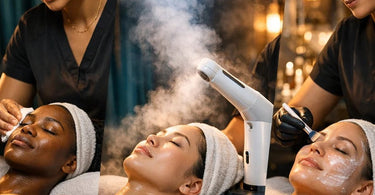
It's the little things that matter... especially when those little things involve turning a simple device like a facial steamer into a full-blown, skin-transforming experience for your clients. We all know the basic benefits: steam softens the skin, makes it more receptive to products, and gives that post-facial "glow." But the magic—the real game-changer for your service results and retail success—lies in what you apply before the steam starts, what you add to the steam itself, and how you treat the skin after the timer dings. It's a three-act play for every skin type, from the oiliest T-zone to the most sensitive complexion. Nail this sequence, and you're not just performing a service; you're delivering undeniable, customized results that keep clients booking back. Let's dive into the professional's guide to maximizing every minute of steam time.
Think of facial steaming as the ultimate "skin prep" artist. The warm, moist vapor works by temporarily increasing the permeability of the skin's outermost layer, softening debris and making it more receptive to the active ingredients in your serums and masks . This isn't about "opening and closing" pores (they don't have muscles, despite what your gym client might think!), but about gently conditioning the skin for optimal product penetration . For you, the pro, this means every product you use after steaming gets a VIP pass to work deeper and more effectively. It's why the right pre-, during-, and post-steam protocol is a non-negotiable part of advanced facial treatments, from hydrodermabrasion prep to maximizing the effects of a microdermabrasion treatment.
Act I: The Critical Pre-Steam Prep (Don't Skip This!)
The work begins before you even turn the steamer on. Applying steam to a dirty face is like mopping a floor before you sweep it—you're just pushing the gunk around. A thorough cleanse is step one, non-negotiable . This removes surface makeup, sunscreen, pollution, and excess oil so they don't get driven deeper into the skin by the steam . For a truly deep cleanse, consider a double-cleanse method: start with a gentle cleansing oil or balm to break down makeup and sebum, followed by a water-based gel or foam cleanser. This ensures a perfectly clean canvas.
But here's where customization kicks in. Your pre-steam move can be tailored to the client's primary concern. For a client with dry or dull skin, consider a very light application of a nourishing facial oil or a hyaluronic acid serum before steaming. The steam will help drive these hydrating ingredients in. For an acne-prone client, you might opt for a quick swipe with a salicylic acid toner to start dissolving pore-clogging impurities, which the steam will then help lift away. The goal is to use the steam as an accelerator for your chosen preparatory product.
Act II: During the Steam – Elevating the Vapor with Additives
This is your chance to turn a generic steam into a targeted therapeutic treatment. While plain distilled water (always use distilled to protect your equipment!) is perfectly fine, adding botanicals or specific essential oils to the water reservoir can amplify benefits and create a multi-sensory experience . This is where your knowledge of aromatherapy and plant actives shines.
Here's a quick cheat sheet for customizing the steam itself:
- For Oily & Acne-Prone Skin: Add a few drops of tea tree or eucalyptus oil. These have purifying properties and can help create a clarifying atmosphere . A handful of dried green tea leaves can also introduce skin-loving antioxidants into the vapor.
- For Dry & Sensitive Skin: Lavender or chamomile are superb choices. Lavender is known for its soothing and relaxing properties, perfect for calming sensitive skin . A chamomile tea bag steeped in the water can have a gentle anti-inflammatory effect.
- For Dull & Congested Skin: Invigorating citrus oils like sweet orange can help brighten, while rosemary is often associated with stimulating circulation .
Important Safety Note: Always use high-quality, pure essential oils and only a drop or two in a full steamer reservoir. The concentrated vapors can be overpowering. When in doubt, using dried herbs is a gentler, lower-risk option . Remind clients to keep their eyes comfortably closed during the treatment.
Act III: The Golden Hour – Post-Steam Protocol by Skin Type
The 10-15 minutes after steaming are the most important window in the entire treatment. The skin is warm, hydrated, and supremely absorbent. This is your moment to deliver actives with maximum impact. The wrong move here (like using a harsh scrub) can cause irritation, but the right move creates "wow" results. Here is your skin-type-specific playbook.
For Oily & Acne-Prone Skin
Post-steam, the goal is to purify and clarify without over-drying. After gently patting the face, apply a purifying clay mask. The steam has already loosened sebum and debris; now the clay can draw it out effectively . Follow with a toner containing salicylic acid or niacinamide to refine pores, then a lightweight, oil-free serum and moisturizer. This is an ideal time to consider gentle, sterile extractions if part of your service, as impurities are softened and easier to remove .
For Dry & Dehydrated Skin
Your mission is to trap all that lovely hydration from the steam. Skip traditional clay masks which can be drying. Instead, immediately apply a hydrating gel or cream mask packed with hyaluronic acid, glycerin, or aloe vera . Follow with a hyaluronic acid serum to bind moisture, and then seal it all in with a richer cream or facial oil. This layering technique locks in the hydration from the steam and the treatment products. For an ultra-luxe finish, a product with paraffin can create an occlusive barrier for intense moisture retention.
For Sensitive & Reactive Skin
Caution and calming are key. After steaming, soothe the skin with a cool (not cold) damp cloth or a spritz of a calming mist with ingredients like arnica or rose water . Apply a soothing, fragrance-free mask designed for sensitivity. Then, layer gentle, barrier-supporting products like a serum with ceramides or peptides, followed by a simple, reparative moisturizer. Avoid any strong acids, retinoids, or physical scrubs for at least 24 hours .
For Combination & "Normal" Skin
You have the most flexibility! This is a great time to use a multi-tasking treatment mask—perhaps a charcoal mask on the T-zone and a hydrating one on the cheeks, or a universally brightening vitamin C mask. Follow with a balancing toner, an antioxidant serum, and a moisturizer suited to their current skin needs. This is also a perfect skin type for incorporating dermaplaning post-steam for supremely smooth results.
Professional Power Tips & Common Pitfalls to Avoid
Timing is Everything: Limit steam sessions to 5-10 minutes . Over-steaming can strip the skin and lead to redness or broken capillaries, especially on sensitive types. Once a week is sufficient for most clients; oily skin may tolerate up to two sessions .
Distance Matters: Always maintain a safe distance of 6-12 inches from the steamer nozzle to the client's face to prevent thermal injury . It should feel warm and relaxing, never hot or painful.
The SPF Non-Negotiable: Freshly steamed skin is more vulnerable to sun damage. If the client is heading out post-facial, applying a broad-spectrum sunscreen is an absolute must . This is a crucial retail opportunity—educate them on why it's essential today.
Skip the Steam For: Clients with active rosacea flares, severe eczema, or melasma, as heat can exacerbate these conditions . Always consult their intake form.
Building the Ultimate Steaming Station
To execute these protocols flawlessly, you need the right tools. Start with a reliable, professional-grade facial steamer from our selection. Pair it with a comfortable treatment table and have a towel steamer nearby for the ultimate comforting touch. Your product arsenal should include a range of treatment masks, serums, and retail-focused moisturizers to cater to every skin type that walks in. Don't forget the supporting cast: high-quality applicators, cotton, and towels.
Mastering the art of the steam facial is what separates a good esthetician from a great one. It's a foundational treatment that enhances everything else you do. By customizing the before, during, and after for each unique skin type, you demonstrate expert-level care, achieve visibly better results, and create a truly personalized experience that clients can't replicate at home. Now, go turn up the (controlled, perfectly-timed) heat!
