
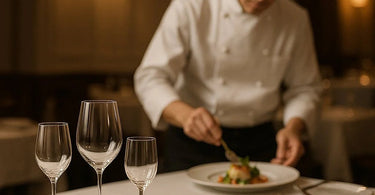
Elevate your business today by stepping out of the treatment room and into a world of white tablecloths and whispered wine recommendations. What in the world could a busy salon or spa owner learn from a place where the bread arrives before you even know you want it? As it turns out, everything. In a fine dining restaurant, the service isn't just about the food; it's a meticulously choreographed performance where timing is everything. The pacing of the meal—from the amuse-bouche to the final espresso—is designed to build anticipation, create comfort, and leave the guest feeling perfectly satisfied, never rushed. This isn't just a luxury; it's a science of satisfaction. In our world, where wellness is a daily, personalized priority for clients and a $6.3 trillion global industry, the difference between a good service and a legendary one often comes down to the invisible rhythm of the appointment. Let's pull back the curtain on the service secrets of the world's best restaurants and translate them into a masterclass for your spa or salon.
Think about your last truly incredible meal at a high-end restaurant. The server didn't just take your order; they guided you. They anticipated your needs—refilling your water glass just as you glanced at it, clearing plates at the precise moment the table fell silent, pacing the courses so you never felt too full or, worse, bored. This level of anticipatory service is the gold standard. In fine dining, guests aren't just paying for food; they are investing in an experience where every detail is polished, precise, and perfectly timed. The stakes are just as high in beauty and wellness. Clients aren't just paying for a facial or a haircut; they are buying an hour of peace, a boost of confidence, a transformation. When you master the pacing, you deliver on that unspoken promise completely.
The Art of the First Impression: Your "Welcome Amuse-Bouche"
In fine dining, the experience begins the moment a guest steps through the door. The host's greeting, the ambiance, the offer to take a coat—it all sets the tone. Your salon or spa reception is your host stand. This is where you set the pace for the entire visit.
Actionable Tip: Train your front desk staff to be more than schedulers; they are the first act of the service. A warm, personalized greeting ("Welcome back, Sarah! We have your favorite tea ready.") immediately slows the client's racing mind. Instead of handing them a clipboard, escort them to a cozy seating area. Offer a refreshment—not just water, but perhaps an infused tea from your relaxation collection. This initial, unhurried moment is your amuse-bouche—a small, delightful taste of the care to come. It signals that here, time moves differently.
The Main Course: Mastering the Treatment Tempo
This is where the magic—or the mishaps—happen. The fine dining server is trained in a strict sequence of service, knowing exactly when to approach, present, pour, and clear. Your service sequence should be just as intentional.
1. The Consultation is Your Menu Presentation: A fine dining server doesn't rattle off specials; they tell a story, suggest pairings, and answer detailed questions about origin and preparation. Your consultation should do the same. Don't just ask "What are we doing today?" Engage. "I see on your card you loved our hydrodermabrasion last time. Your skin looks amazing! Today, I was thinking we could pair it with a microcurrent boost to really enhance that glow. What do you think?" This collaborative pacing builds excitement and value.
2. Synchronized Service is Key: In the best restaurants, when multiple plates are delivered to a table, servers move in unison, placing each dish at the exact same moment. In a spa, think of this as the seamless hand-off. If a client is moving from a salt scrub to a massage, the transition should be fluid. The esthetician and therapist should communicate so the client never waits on a cold table, wondering what's next. The rhythm is unbroken.
3. The "Invisible Hand" of Service: One of the most elegant fine dining techniques is the "invisible hand," where a server clears a plate with one hand while keeping the other gracefully behind their back, appearing calm and never rushed. In your space, this translates to mindfulness during the service. Are you fumbling with a wax warmer or moving with quiet confidence? Is your manicure station organized, or are you constantly turning away to search for a file? Calm, prepared movements make the client feel like they are your only focus.
Handling the "Unexpected Course": When Timing Goes Awry
Even in a three-Michelin-star kitchen, a sauce might break. The mark of excellence is how it's handled. A fine dining server would never simply say "There's a delay." They manage expectations with grace: "The chef is taking extra care with your dish to ensure it's perfect. May I bring you another glass of champagne while you wait?"
If you fall behind schedule, communicate like a pro. Send your front desk person or pop in yourself with a warm, apologetic smile: "I want to give my current client my full attention, so I'm running about 10 minutes behind for you. Please, relax with another cup of our Ayur-Medic tea, and I promise it will be worth the wait." This honest, proactive communication respects their time and usually transforms potential irritation into appreciation for your dedication to quality.
The Final "Petit Four": Sealing the Experience
A fine dining meal never ends abruptly with the check. It concludes with a final, sweet gesture—a petit four, a chocolate truffle, a parting wish for a lovely evening. This is your most crucial moment for retention and retail.
Do not rush the checkout! This is your time to solidify the experience. Walk the client to the front, not just point. While they are paying, offer a sample of the cuticle oil you used or a spritz of the pillow mist from their facial. "I used our new Tuel Skincare serum on you today. Here's a sample to try for the rest of the week." Then, book their next appointment before they leave. A fine dining server would say, "We look forward to serving you again." You should say, "I've reserved this same time for you in four weeks to maintain these results. Does that work for your calendar?"
Setting the Stage: Your Tools for Perfect Pacing
You can't conduct a symphony without an orchestra. The right tools and environment are essential for maintaining your service flow.
- Comfort is King: A client fidgeting on a hard table or chilly under a thin sheet cannot relax into your pace. Invest in client comfort with heated table toppers, plush spa bedding, and supportive bolsters.
- Efficiency Enablers: Nothing kills pace like downtime. Have multiple wax warmers ready to go, organized tool caddies, and a steady supply of compressed sponges and hygienic table paper.
- Atmospheric Alchemy: The lighting, music, and scent in a restaurant are carefully curated. Use aromatherapy diffusers, soft lighting from adjustable lamps, and peaceful music to create a timeless bubble.
Ultimately, what fine dining teaches us is that pacing is a form of deep respect. It says, "Your time, your comfort, and your experience are my only priorities." In an age where younger generations, especially millennials and Gen Z, are driving wellness spending by prioritizing it as a daily, non-negotiable practice, they aren't just buying a service—they're seeking an authentic, elevated experience. By becoming a maestro of your treatment room's rhythm, you stop selling appointments and start creating devotees. They won't just come back; they'll bring their friends, write the glowing reviews, and cherish the time spent in your care. Now, go set the table. Your guests are waiting.
.)