
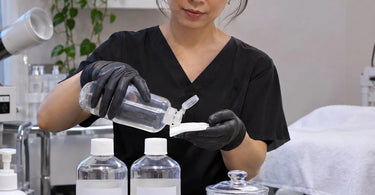
Great outcomes start with great tools... and sometimes, those tools come in a bottle labeled alcohol! Whether you are preparing a manicure station, organizing your facial treatment room, or restocking your professional cleaners and disinfectants, understanding the difference between ethyl alcohol and isopropyl alcohol can make your daily routine safer, smarter, and more efficient. These two hardworking ingredients may look practically identical on the shelf, but their chemical properties, appropriate applications, and product formulations are not exactly interchangeable. And while both deserve a place in conversations about professional hygiene, choosing the right one involves more than grabbing whichever bottle happens to be closest to your perfectly organized treatment cart. Let's clear up the confusion so you can shop confidently and keep your beautiful business running smoothly!
In the spa, salon, barbering, nail, and esthetics industries, alcohol appears in everything from hand sanitizers and surface preparation products to specialty beauty formulations. Knowing what each type does, where it belongs, and when a different disinfectant is required helps protect your clients, your equipment, and your professional reputation.
What Exactly Is Ethyl Alcohol?
Ethyl alcohol, also called ethanol, is a clear, colorless, flammable liquid with the chemical formula C2H5OH. It is the same basic chemical compound found in alcoholic beverages, although ethanol intended for industrial, cosmetic, or sanitizing applications may contain additives that make it unsuitable or unsafe for consumption.
In professional beauty settings, ethanol may appear as an ingredient in hand sanitizers, cosmetic formulations, certain skin preparation products, and specialized cleaning solutions.
One important detail is that ethyl alcohol can be denatured. Denatured alcohol contains additional substances intended to make it unsuitable for drinking. Depending on the formula, those additives can affect its odor, skin compatibility, and appropriate uses.
That means a bottle labeled denatured alcohol should never automatically be treated as a substitute for a product specifically formulated for skin application. The ingredients and directions matter just as much as the alcohol itself.
For spa professionals working with professional skincare products, ethanol may serve several formulation purposes, including acting as a solvent, helping dissolve certain ingredients, or supporting a product's intended texture and performance.
What Is Isopropyl Alcohol?
Isopropyl alcohol, also known as isopropanol or IPA, is another clear, flammable liquid commonly recognized as rubbing alcohol. Its chemical formula is C3H8O, making it chemically different from ethanol even though both belong to the alcohol family.
Isopropyl alcohol is widely used in cleaning products, selected disinfectant formulations, and numerous industrial and cosmetic applications. It is especially familiar to nail professionals because alcohol-based products are used for certain nail preparation and finishing procedures.
For example, some professional gel polish systems recommend a compatible alcohol-based cleanser to remove the tacky inhibition layer after curing. Other systems have different requirements, so the manufacturer's directions should always take priority.
Isopropyl alcohol is toxic if swallowed and should never be consumed. Like ethanol, it can also irritate or dry the skin, especially with repeated or inappropriate exposure.
Think of these two alcohols as talented sisters working in the same beauty business. They have similar skills, but you would not automatically give them identical appointments!
Ethyl Alcohol vs. Isopropyl Alcohol: The Key Differences
Although both alcohols can be effective antimicrobial ingredients in appropriately formulated products, several distinctions are worth understanding before making a purchasing decision.
Chemical composition: Ethanol contains two carbon atoms, while isopropanol contains three. This difference influences their physical properties, solvent behavior, and interactions with other ingredients.
Common applications: Ethanol is frequently used in hand sanitizers and cosmetic formulas. Isopropyl alcohol is common in rubbing alcohol, cleaning preparations, and selected professional nail products. However, either alcohol may be used in properly formulated hand sanitizers or surface disinfectants.
Evaporation: Both evaporate relatively quickly at room temperature. Ethanol generally has a lower boiling point than isopropanol, although actual drying behavior depends on concentration, other ingredients, temperature, and ventilation.
Antimicrobial activity: Both can inactivate many microorganisms at appropriate concentrations. Their effectiveness varies by organism, formulation, and exposure time. Neither should be considered universally effective against every pathogen.
Skin compatibility: Neither alcohol is automatically gentle. Finished products may contain moisturizers or other ingredients that improve their suitability for a particular application.
Surface compatibility: Both may damage certain plastics, rubber components, adhesives, finishes, or specialty coatings. Always verify equipment compatibility before use.
The most important difference for a working beauty professional is often not which chemical sounds stronger. It is whether the finished product is labeled, tested, and appropriate for the job you need it to perform.
Is 70% Alcohol Better Than 91% or 99% Alcohol?
Here is where things get interesting! Many professionals assume that a higher alcohol percentage must automatically mean stronger disinfection. After all, 99 is bigger than 70, and we all appreciate impressive numbers. Unfortunately, microorganisms do not follow that logic quite so neatly.
Water plays an important role in the antimicrobial activity of alcohol. For many disinfection applications, alcohol solutions containing approximately 60% to 90% alcohol by volume provide effective activity against susceptible microorganisms.
A 70% alcohol solution contains approximately 70% alcohol and 30% other components, usually primarily water. That water can support the protein-denaturing action responsible for much of alcohol's antimicrobial effectiveness.
Highly concentrated alcohol may evaporate rapidly and is not automatically a better disinfectant. However, 91% or 99% isopropyl alcohol may be specified for certain cleaning or technical applications where low water content is desirable.
For example, a nail product manufacturer might recommend a particular alcohol concentration for a specialized finishing step. That recommendation does not mean the same solution is suitable for disinfecting every salon implement.
The professional takeaway: Choose the concentration required by the product instructions and intended application. Never assume that stronger means safer, more effective, or appropriate for every task.
Can Ethyl Alcohol and Isopropyl Alcohol Both Disinfect?
Yes, both ethanol and isopropanol have antimicrobial properties. At appropriate concentrations, they can act against many bacteria, fungi, and enveloped viruses. However, their effectiveness differs across microorganisms, and neither reliably destroys bacterial spores.
For professional salons and spas, an essential distinction must be made between an ingredient having antimicrobial activity and a finished product being legally acceptable for required salon disinfection.
In the United States, products making disinfectant claims for environmental surfaces generally fall under EPA regulation. State cosmetology and barbering rules may require an EPA-registered disinfectant with specific claims, directions, and contact times for reusable implements and workstations.
Simply wiping a pair of nail tools with rubbing alcohol does not necessarily meet those requirements.
When disinfecting reusable nonporous implements, select a product that satisfies your state board's requirements and follow its label for cleaning, dilution, immersion, rinsing, and contact time.
Shop Professional Cleaners & Disinfectants for Salons and Spas to explore products intended for professional environments, checking each individual label before purchasing.
Why Cleaning and Disinfecting Are Not the Same Thing
Cleaning removes visible debris, oils, product residue, and other contamination from a surface. Disinfecting uses an appropriate chemical product to kill specified microorganisms under labeled conditions.
Both steps are important, and they are not interchangeable.
Imagine finishing a beautiful gel manicure and finding a little product residue on your workstation. A quick wipe with alcohol might remove some residue, but that does not automatically mean the workstation has undergone a compliant disinfection procedure.
First, remove visible contamination using an appropriate cleaning method. Then apply the required disinfectant and maintain the surface wet for its specified contact time.
That contact time matters! If a product requires several minutes of wet contact, spraying it on and immediately wiping it dry will not meet the directions.
Because alcohol evaporates quickly, it can be difficult to maintain the required wet contact time over larger surfaces. For that reason, a properly labeled professional surface disinfectant may be a more practical choice for treatment stations, counters, and reusable equipment.
Which Alcohol Is Better for Nail Technicians?
Nail professionals encounter alcohol in several different situations, but each procedure has its own requirements.
Gel polish finishing: Certain gel systems use an alcohol-based cleanser to remove the sticky inhibition layer after curing. Always check whether the particular gel requires cleansing and which product is recommended.
Nail preparation: Some nail systems use a specialized dehydrator or cleanser before application. Substituting ordinary rubbing alcohol can produce inconsistent results or conflict with the manufacturer's instructions.
Workstation cleaning: Alcohol may help remove selected residues from compatible nonporous surfaces, but cleaning alone is not a replacement for required disinfection.
Reusable tools: Clippers, pushers, and other reusable implements must be cleaned and disinfected according to applicable regulations and manufacturer instructions. Alcohol alone should not be assumed sufficient.
Browse Manicure Essentials, Nail Brushes & Tools, and Professional Nail Care Collections for products that support an organized professional nail service.
And remember, nail chemistry is already complicated enough without turning your manicure station into a surprise science experiment!
What About Ethyl Alcohol and Isopropyl Alcohol in Facial Treatments?
Estheticians should be particularly thoughtful about alcohol selection because facial skin varies widely in sensitivity, barrier function, and tolerance.
Ethanol may appear in professionally formulated toners, cleansers, and other skincare products. Its role depends on the complete formulation, and its presence alone does not determine whether a product is appropriate for a particular client.
Isopropyl alcohol may also appear in some cosmetic or skin preparation products, but ordinary household rubbing alcohol should not be substituted for a professionally formulated facial treatment.
Applying highly concentrated alcohol directly to facial skin can cause dryness, irritation, or disruption of the skin barrier. This may be especially undesirable for clients with sensitive or compromised skin.
For facial services, choose products specifically intended for the treatment and follow the manufacturer's directions.
Explore Advanced Facial Treatment Products for Salons & Spas and Premium Skincare Products for professional treatment options.
Which Alcohol Should Waxing Professionals Use?
Waxing professionals need to distinguish between preparing the skin for hair removal and disinfecting treatment equipment.
Before waxing, the goal is generally to remove appropriate surface residue and prepare the skin according to the wax manufacturer's instructions. That does not mean applying concentrated rubbing alcohol to every client.
Many professional waxing systems offer dedicated pre-wax cleansers and post-wax care products designed for their specific procedures.
These products can be a better fit than improvising with an alcohol bottle, especially when working with delicate facial areas or clients prone to irritation.
Browse Pre & Post-Waxing Products and Waxing Supplies for Professionals to build a complete treatment setup.
For workstation surfaces and reusable equipment, follow the separate cleaning and disinfection requirements applicable to your establishment.
Beautiful waxing results are wonderful. Beautiful results paired with consistent, compliant hygiene practices? Even better.
Can You Use Alcohol on Massage Tables and Spa Equipment?
Not automatically! Although alcohol can be suitable for certain hard, nonporous surfaces, repeated exposure may damage some upholstery, synthetic coverings, plastics, adhesives, rubber components, and protective finishes.
That matters when you have invested in gorgeous treatment furniture. Nobody wants to discover that an inexpensive cleaning shortcut has damaged an expensive massage table.
Check the care instructions for your professional massage tables and chairs before selecting a cleaner or disinfectant.
Some equipment manufacturers specify particular disinfectant products or ingredients and warn against others. Following those instructions helps maintain material compatibility and supports proper equipment care.
Using appropriate hygienic table paper and compatible protective coverings can also support efficient treatment-room turnover, although barriers do not eliminate required cleaning and disinfection.
Is Ethyl Alcohol Safer Than Isopropyl Alcohol?
Neither alcohol should be considered harmless simply because it is commonly available.
Ethanol and isopropanol are both flammable, can cause irritation, and can present hazards when inhaled at excessive concentrations or used improperly.
Isopropyl alcohol is especially hazardous if swallowed. Denatured ethanol may contain additional toxic ingredients, making the exact product formulation important.
For professional environments, follow these practical precautions:
- Read the product label and Safety Data Sheet before use.
- Keep alcohol away from flames, sparks, hot tools, and other ignition sources.
- Store containers securely in appropriate, clearly labeled locations.
- Provide adequate ventilation during use.
- Use appropriate protective equipment when required by the product instructions.
- Never combine alcohol with other cleaning or disinfecting chemicals unless the manufacturer explicitly directs you to do so.
- Never use technical-grade or industrial alcohol as a substitute for a skin product.
- Keep alcohol products out of reach of children and unauthorized individuals.
Remember that hair dryers, electrical equipment, waxing equipment, and other heat-producing devices can create additional concerns around flammable liquids.
Organize your supplies thoughtfully and consider compatible Bottles & Jars only when their materials and labeling are appropriate for the chemical being stored. Original containers are generally the safest default unless the product instructions permit transfer.
Can You Substitute Ethyl Alcohol for Isopropyl Alcohol?
Sometimes two properly formulated products can serve similar purposes, but that does not make the pure ingredients universally interchangeable.
If a professional nail system specifically requires isopropyl alcohol at a particular concentration, switching to ethanol without manufacturer approval may change performance.
If a hand sanitizer contains ethanol, that does not mean an ordinary bottle of isopropyl alcohol should be poured into an empty sanitizer dispenser.
Likewise, replacing an EPA-registered disinfectant with an unlabeled alcohol solution can create serious compliance problems.
Always evaluate the finished product, its concentration, intended use, formulation, registration status where applicable, and manufacturer instructions.
For professional beauty services, consistency matters. The goal is not to invent the most creative chemical shortcut. The goal is to deliver safe, repeatable results for every client.
How to Choose the Right Alcohol-Based Product for Your Salon
Before ordering another bottle, start with the actual task you need to accomplish.
For hand hygiene: Choose a commercially manufactured hand sanitizer labeled for hand use, with an appropriate active ingredient concentration. Alcohol-based hand sanitizers commonly contain at least 60% ethanol or 70% isopropanol. Soap and water remain important, particularly when hands are visibly dirty or greasy.
For salon surface disinfection: Choose a disinfectant that meets your applicable regulations and is labeled for the specific surface and microorganisms of concern. Follow all cleaning and contact-time requirements.
For nail enhancements: Select the cleanser, dehydrator, or finishing solution recommended for the particular product system.
For facial and waxing services: Use professional skin products formulated for the service rather than substituting generic rubbing alcohol.
For equipment maintenance: Check material compatibility and the equipment manufacturer's care instructions before applying any alcohol-containing cleaner.
For purchasing and inventory: Review container sizes, concentration, storage requirements, safety documentation, and how frequently your staff actually uses each product.
You can explore isopropyl alcohol products, ethyl alcohol products, and hand sanitizers through Pure Spa Direct's product search. Check individual listings for current availability, specifications, and intended applications.
Common Questions About Ethyl and Isopropyl Alcohol
Is rubbing alcohol the same as ethyl alcohol?
Not necessarily. In the United States, rubbing alcohol commonly contains isopropyl alcohol, although certain products may use ethanol. Read the active ingredient label to identify what is actually inside.
Does 70% alcohol kill all germs?
No. Alcohol is effective against many susceptible microorganisms, but it does not reliably destroy bacterial spores and is less effective against certain other pathogens. Product formulation and labeled use conditions matter.
Can I use 99% isopropyl alcohol for everything?
No. High-concentration isopropyl alcohol may be useful for certain specialized applications, but it is not universally preferable for disinfection, skincare, nail preparation, or equipment cleaning.
Can I mix ethyl alcohol and isopropyl alcohol together?
Do not mix alcohol products to create your own disinfectant or sanitizer. Mixing changes the formulation and can compromise safety, labeled concentrations, and product performance.
Is alcohol a substitute for sterilization?
No. Alcohol is not a sterilant and does not provide reliable destruction of all microbial life, including bacterial spores. Instruments requiring sterilization must undergo an appropriate validated sterilization process.
Does alcohol disinfect instantly?
No. Antimicrobial effectiveness depends on concentration, the organism involved, the amount of contamination, and sufficient exposure time. A fast-drying surface is not proof that proper disinfection occurred.
Stock Smarter With Pure Spa Direct
Keeping your salon or spa running beautifully means having the right supplies for each service, not simply collecting products with impressive-sounding ingredients.
Pure Spa Direct is a professional beauty and wellness supply distributor offering products for salons, spas, barbershops, nail studios, massage practices, and esthetics businesses. From professional hygiene essentials to treatment-room supplies, the goal is to help you find products that fit your services and workflow.
Explore Professional Cleaners & Disinfectants, Protective Gloves & Masks, Professional Cotton, Sponges, and Wipes, and Must-Have Supplies for Salon & Spa Business Success to support your daily operations.
The Bottom Line: Which Alcohol Is Right for Your Business?
Ethyl alcohol and isopropyl alcohol are both useful ingredients with important roles in professional beauty and wellness settings. Ethanol is commonly found in hand sanitizers and cosmetic formulations, while isopropyl alcohol is frequently used in rubbing alcohol, selected cleaning products, and nail service preparations. Both can provide antimicrobial activity in suitable formulations, but neither is a universal replacement for a properly labeled professional disinfectant.
The smartest choice comes down to the specific application, the finished product's instructions, equipment compatibility, and applicable sanitation requirements.
So the next time someone asks, what is the difference between ethyl alcohol and isopropyl, you can confidently explain that the answer involves chemistry, concentration, formulation, and proper professional use. Because a truly fabulous salon is not just spotless and stylish. It is a place where smart product choices and great service go hand in hand!
Ready to refresh your supply cabinet? Discover professional Spa Essentials and cleaning solutions at Pure Spa Direct, and keep your team equipped for another beautiful day of business.
