
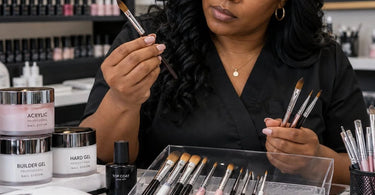
Quality work begins with quality tools, and few tools work harder in a busy nail salon than a professional application brush. Whether you are sculpting acrylic enhancements, smoothing builder gel, or creating intricate nail art, the right brush can make the difference between a beautiful, efficient service and twenty extra minutes spent correcting product placement. Unfortunately, replacement brushes are not always as interchangeable as they look. Before you order a shiny new set of professional nail brushes and tools, it pays to check a few important details that can protect your investment, your product systems, and your appointment schedule.
After all, the prettiest brush in the catalog is not necessarily the one your nail system needs. A gorgeous handle cannot rescue a brush that picks up too much liquid, leaves streaks in builder gel, or sheds bristles into a freshly sculpted enhancement. That last situation is particularly frustrating when the client has already selected the perfect shade and is admiring her nails.
For salon owners, nail technicians, and purchasing managers, replacement brushes are more than inexpensive accessories. They influence application consistency, product consumption, service speed, and the quality of the finished manicure. Here is what to examine before placing your next professional nail brush order.
1. Identify the Exact Nail System Before Shopping
The first question is simple: What product will this brush actually apply?
Professional nail systems use different materials, viscosities, and application techniques. A brush designed for liquid-and-powder acrylic may not perform well with hard gel. A detailed nail art liner may be excellent for fine lines but completely impractical for building structure. Even products that appear similar can require different brush characteristics.
Common professional nail systems include:
- Liquid-and-powder acrylic: Brushes must absorb and release monomer predictably while controlling the acrylic bead.
- Builder gel and hard gel: Brushes need to distribute thicker gel smoothly without creating unnecessary ridges or trapping air.
- Soft gel and gel polish: Application brushes should provide even coverage and controlled product movement.
- Polygel and hybrid enhancement systems: These may use specialized shaping brushes, spatulas, and approved slip solutions.
- Nail art systems: Fine liners, angled brushes, detailing brushes, and specialty shapes serve different decorative techniques.
Start by reviewing the manufacturer's instructions for your existing system. Look for the recommended brush type, material, shape, and cleaning procedure. If your salon works with several enhancement systems, establish separate brush assignments rather than assuming one universal brush can handle everything.
Professionals using acrylic nail supplies and professional gel polish should be especially careful about sharing application tools between product categories.
2. Check Brush Material: Natural Hair or Synthetic Bristles?
Brush material is one of the most important purchasing considerations because it affects liquid retention, flexibility, product release, and maintenance.
Natural-hair brushes are widely used for traditional acrylic enhancement applications. Kolinsky-style brushes are valued for their tapered bristles, liquid-holding characteristics, and ability to return to a controlled point or edge. These qualities can help experienced technicians manage acrylic bead size and placement.
Synthetic brushes are frequently preferred for gel applications. Quality synthetic fibers can provide a smooth application surface, consistent shape, and suitable resistance to products and cleaners approved by their manufacturers. They are available in flat, oval, angled, and precision configurations.
Neither material is automatically superior for every nail service. The correct choice depends on the chemistry of the system and the technician's technique.
Before buying, check whether the product description identifies the bristle material. If it only says premium professional brush without explaining what the bristles are made from, consider requesting more information.
Also remember that a brush labeled for acrylic or gel is not automatically compatible with every brand's products. Follow system-specific instructions whenever they are available.
3. Compare Brush Size Without Relying on the Number Alone
Brush sizes can be surprisingly confusing. A size 8 from one manufacturer may not have exactly the same dimensions as a size 8 from another. Brush numbering is useful for shopping within a consistent product line, but it is not a universal measurement standard.
When comparing replacement brushes, examine the actual bristle width, length, thickness, and overall profile whenever specifications are available.
For acrylic applications, larger brushes may accommodate larger beads and faster product placement, while smaller brushes may provide additional control for detailed work or technicians developing their technique.
For gel applications, a brush that is too wide may make sidewall control difficult, while one that is too narrow may require unnecessary extra strokes.
Ask yourself whether the current brush size supports your typical services. A technician working primarily on short natural nails may prefer different dimensions from someone regularly sculpting long extensions.
The goal is not to purchase the largest brush possible. The goal is to choose the size that produces consistent results with the least amount of unnecessary manipulation.
4. Examine Brush Shape and How It Affects Application
Shape matters just as much as size. A professional brush should support the technique it is designed to perform.
Common nail brush shapes include:
- Round or pointed: Frequently used for acrylic product pickup, shaping, and precise placement.
- Oval: Useful for controlled gel application and working around the cuticle area.
- Flat or square: Suitable for distributing certain gels and creating smooth, even coverage.
- Angled: Helpful for selected decorative techniques, defined edges, and specialty applications.
- Fine liner: Designed for detailed nail art, thin lines, and intricate patterns.
- Fan or specialty blending brush: Used for certain gradient effects and decorative finishes.
When replacing a favorite brush, compare its working shape rather than simply purchasing another brush with the same number printed on the handle.
A technician who relies on a carefully tapered oval brush may find a flat replacement awkward, even if both are marketed for builder gel.
Explore nail art supplies separately when purchasing precision tools. Decorative brushes and enhancement application brushes often have very different performance requirements.
5. Confirm Brand and System Compatibility
Professional nail product manufacturers develop systems with particular application methods in mind. Some recommend specific brushes or brush materials for optimal results.
Before purchasing a replacement, determine whether the brush is an original manufacturer accessory, a manufacturer-approved alternative, or a third-party brush intended for general use.
These distinctions can matter when maintaining a consistent salon workflow.
For example, a salon using CND, OPI, or Gelish products should evaluate brush recommendations for the particular enhancement or color system being used, rather than assuming that every accessory carrying the same brand name serves every formulation.
Verify compatibility with the actual product line. A brush suitable for gel color may not be the preferred tool for a sculpting gel from the same company.
When using an alternative brush, confirm that its bristle material and cleaning requirements are suitable for the products involved. If compatibility information is unavailable, avoid making assumptions that could compromise service quality.
6. Inspect Bristle Quality and Construction
A replacement brush should hold its working shape, release product smoothly, and withstand repeated professional use when maintained correctly.
Pay attention to the following construction details:
- Bristle alignment: Hairs or fibers should form a consistent point, edge, or profile appropriate to the brush design.
- Spring and flexibility: The bristles should respond predictably to normal application pressure.
- Ferrule construction: The metal component securing the bristles should be firmly attached to the handle.
- Shedding resistance: Loose bristles can interfere with application and create unwanted debris in the finished enhancement.
- Handle durability: Materials should tolerate the cleaning and handling conditions specified by the manufacturer.
- Balance: The tool should feel comfortable during the repetitive movements required for professional nail services.
A brush does not need to be expensive to be useful, but unusually cheap replacements with unclear material specifications can become costly if they require frequent replacement or create application problems.
And yes, discovering a stray brush hair inside a perfectly leveled gel nail is an excellent way to test your patience. It is considerably less enjoyable when the appointment book is already full.
7. Consider Handle Comfort and Technician Ergonomics
Nail technicians perform detailed hand movements throughout the day. Brush handle design can influence grip comfort, control, and fatigue.
Look at handle diameter, length, balance, surface texture, and overall weight. Some technicians prefer lightweight, narrow handles for precision work. Others find a slightly thicker handle more comfortable during longer services.
If your staff uses the same brush model regularly, ask technicians for feedback before ordering replacements in quantity.
Minor design changes between product generations may affect comfort even when the brush head appears identical.
For salons equipped with dedicated nail tables and manicure stations, storage clearance may also influence purchasing decisions. Long-handled brushes and capped tools should fit safely into their intended organizers without bending the bristles.
8. Review Cleaning Requirements Before You Buy
One of the biggest mistakes in nail brush purchasing is overlooking cleaning compatibility.
Different brush materials and product systems require different maintenance methods. Using an inappropriate solvent can dry out natural bristles, damage adhesives, alter brush shape, or shorten the life of the tool.
Traditional natural-hair acrylic brushes are commonly cleaned with compatible monomer during routine use. Many manufacturers advise avoiding acetone because it can damage the hair or components of the brush.
Gel brushes often require a different approach. Depending on the manufacturer, uncured product may be removed with an approved gel brush cleaner or other specified cleaning material. Some gel brushes should be protected from unnecessary exposure to curing light while product remains in the bristles.
Always follow the cleaning and storage directions supplied with the brush and nail system. Avoid prolonged soaking unless the manufacturer expressly permits it.
Cleaning an application brush also should not be confused with meeting salon sanitation requirements. Follow applicable licensing rules and manufacturer directions for reusable implements, and never assume that wiping away visible product constitutes disinfection.
Salons can review their broader maintenance inventory through professional cleaners and disinfectants, selecting products that are appropriate for their intended equipment and required procedures.
9. Know the Warning Signs That a Nail Brush Needs Replacement
Not every underperforming brush needs immediate replacement. Sometimes the issue involves poor cleaning, improper storage, or residual product that can be addressed using approved care procedures.
However, certain signs suggest that a new brush is the more practical choice.
- The bristles remain permanently splayed or twisted after appropriate cleaning and reshaping.
- The brush no longer forms the required point or edge.
- Product has hardened inside the bristles and cannot be safely removed.
- The brush sheds fibers during application.
- The ferrule has loosened or become damaged.
- The handle is cracked, deteriorating, or uncomfortable to grip.
- Application becomes inconsistent despite proper product preparation and technique.
- The brush shows damage that prevents proper cleaning or compliant reuse.
A simple performance comparison can help. If a properly maintained replacement brush produces more consistent application than the old one under the same working conditions, deterioration may be contributing to the problem.
For professionals delivering multiple enhancement appointments each day, replacing a worn brush promptly may save more time than repeatedly attempting to compensate for its limitations.
10. Decide Whether to Buy Individual Brushes or Multipacks
Salon purchasing decisions should reflect actual usage instead of the temptation to fill every available drawer with matching accessories.
Individual replacement brushes make sense when technicians have specific preferences or need one specialized tool. Multipacks may be useful for salons with standardized application methods, several technicians, or predictable brush replacement requirements.
Before buying in quantity, verify that the brush model performs well with your system. Test a sample through normal professional use, following its maintenance instructions, before committing to a larger order.
Consider these practical purchasing factors:
- How many technicians use the brush regularly?
- How many application systems require dedicated tools?
- Is the exact brush model consistently available?
- Are replacement caps or protective storage accessories included?
- Will the salon need spare brushes for damaged or worn tools?
- Does purchasing a multipack create meaningful savings without excess inventory?
For high-volume nail salons, maintaining a small, organized backup inventory can prevent unnecessary disruptions when a brush unexpectedly fails.
Browse professional nail care collections when coordinating brush purchases with other regularly used supplies.
11. Evaluate the Real Cost Per Service
Purchase price alone does not determine whether a replacement brush represents good value.
A less expensive brush that loses its shape quickly, sheds fibers, or requires additional application time may cost more over its useful life than a higher-quality alternative.
For a basic comparison, divide the brush purchase price by the number of successful services completed before replacement.
For example, a $30 brush used for 150 services has a direct brush cost of approximately $0.20 per service. A $12 brush that remains usable for only 30 services has a direct brush cost of $0.40 per service.
Those figures are illustrative, not guaranteed brush lifespans. Actual durability depends on product chemistry, cleaning, handling, technique, and frequency of use.
Labor time also deserves attention. If one brush allows more consistent product placement with fewer corrective strokes, it may provide meaningful operational value during a busy schedule.
Salon owners should assess overall performance, not simply the price printed on the package.
12. Avoid Cross-Contamination Between Professional Nail Systems
Using a brush across unrelated product systems can introduce unwanted residue into materials or interfere with application performance.
For example, residual acrylic monomer, gel, pigment, or other product contamination can affect how another material behaves.
One practical solution is to assign and label brushes by system and purpose. Keep acrylic brushes separate from gel brushes, and maintain dedicated precision brushes when particular art products require them.
Color-coded storage, labeled brush holders, and clearly organized workstations can make this easier for teams.
If a salon provides dipping powder services alongside acrylic and gel enhancements, review the tools and application instructions for each system individually.
A dedicated brush should remain dedicated unless the manufacturer's directions specifically support another use.
Remember that preventing product cross-contamination does not replace client hygiene or required equipment cleaning procedures. Both must be addressed in professional salon operations.
13. Check Storage and Protective Accessories
Even a beautifully manufactured brush can deteriorate if it spends its downtime crushed inside an overcrowded drawer.
Protective caps, brush cases, and dedicated holders can help preserve bristle shape when used correctly.
For gel brushes, an opaque protective cap may help shield residual light-sensitive product from exposure, provided the brush is cleaned and stored according to the manufacturer's instructions.
For acrylic brushes, appropriate positioning during drying and storage helps protect natural hair and prevents unnecessary stress on the bristles.
Inspect whether a replacement brush includes a properly fitting cap. Some decorative caps are not designed for every stage of cleaning or storage, so check the product directions instead of assuming that a cap can immediately be placed over a wet brush.
Keep workstations organized with suitable nail brush holders and other practical accessories that reduce accidental damage between appointments.
14. Build a Replacement Brush Checklist for Your Salon
Creating a standard purchasing checklist helps salon managers avoid mismatched replacements and makes ordering more consistent across technicians.
Before approving an order, confirm the following:
- Application: Is the brush intended for acrylic, gel, hybrid enhancements, or nail art?
- System: Is it compatible with the exact product line used in the salon?
- Material: Are the bristles natural hair, synthetic, or a specified blend?
- Dimensions: Are the actual brush size and profile appropriate?
- Shape: Does the head match the required application technique?
- Construction: Are the bristles, ferrule, and handle suitable for professional use?
- Comfort: Does the technician find the handle balanced and manageable?
- Cleaning: Are the approved maintenance procedures practical for the salon?
- Storage: Is there a suitable cap, case, or protective holder?
- Value: Does the expected performance justify the purchase price?
- Availability: Can the same model be reordered when needed?
Keeping these details in a purchasing record makes future reorders easier. Record manufacturer, model, brush dimensions, approved cleaning methods, and staff feedback so that a well-performing brush can be replaced accurately.
15. Coordinate Brush Purchases With Your Other Nail Supplies
Replacement brush orders offer a convenient opportunity to review the supplies that support consistent nail services.
Evaluate whether your salon also needs nail files and buffers, manicure essentials, professional nail polish, or cuticle oil.
The objective is not to add unnecessary products to the cart. It is to avoid placing multiple emergency orders because an essential item was overlooked during routine inventory checks.
A well-organized professional nail station makes it easier to maintain consistent services, reduces avoidable interruptions, and supports a more comfortable experience for both technicians and clients.
Pure Spa Direct supplies professional salons, spas, and beauty businesses with a broad selection of products from established industry brands. As a wholesale distributor rather than a manufacturer, Pure Spa Direct provides access to supplies that professionals can evaluate according to their preferred systems, service requirements, and purchasing needs.
Frequently Asked Questions About Replacement Nail Brushes
Can I use an acrylic brush for builder gel?
Do not assume that an acrylic brush is suitable for builder gel. Natural-hair acrylic brushes and synthetic gel brushes often have different product-handling characteristics. Check the instructions for your specific gel system before selecting a brush.
Are all size 8 nail brushes the same?
No. Brush numbering is not completely standardized across manufacturers. Compare actual bristle measurements, shape, and intended application instead of relying only on the size number.
How often should professional nail brushes be replaced?
There is no universal replacement schedule. Replace a brush when it no longer maintains its working shape, sheds bristles, becomes damaged, or cannot be properly maintained. Regular inspection is more useful than replacing every brush after an arbitrary number of weeks.
Are synthetic nail brushes lower quality than natural-hair brushes?
Not necessarily. Quality depends on the application and construction. Synthetic brushes can be an excellent choice for gel services, while appropriate natural-hair brushes are often preferred for traditional acrylic sculpting.
Should every nail technician use the same brush size?
Not always. Standardizing brush models can simplify purchasing, but individual technique, hand comfort, product consistency, and service type may justify different sizes or shapes.
Can I clean every nail brush with acetone?
No. Acetone may damage natural bristles and certain brush components. Use only the cleaning method approved for the brush and nail system. Do not improvise with harsh solvents to salvage a damaged tool.
Is it worth keeping backup nail brushes?
Yes, particularly for busy salons. A modest inventory of compatible replacements can help avoid service interruptions when a brush becomes unusable. Just make sure backup brushes are protected, correctly labeled, and appropriate for the systems in use.
The Bottom Line: Buy the Brush That Fits the Work
The best replacement brush is not necessarily the most expensive, the most decorative, or the one with the biggest size number. It is the brush that works consistently with your professional nail system, suits the technician's application method, and holds up to the maintenance requirements of a busy salon.
Before purchasing, confirm compatibility, bristle material, dimensions, shape, construction, cleaning instructions, and storage needs. A few minutes of careful comparison can help reduce wasted product, frustrating application problems, and unnecessary replacement costs.
Ready to refresh your nail station? Explore Nail Brushes & Tools and the broader selection of Professional Nail Care Collections at Pure Spa Direct. Choose brushes that support the way your team actually works, keep appropriate backups available, and give those hardworking tools the care they deserve.
Because your brushes should be helping you create beautiful nails, not giving you one more thing to fix before your next client arrives.
