
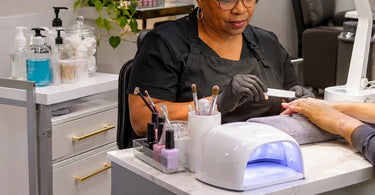
Stay ahead, stay successful... and make every square foot of your nail salon work a little harder! Replacing a traditional manicure table with a compact workstation can sound like the perfect solution when your salon feels crowded, your technicians need more elbow room, or your floor plan could use a serious makeover. But before you trade that spacious table for something smaller and sleeker, there are a few important details worth examining. After all, a manicure station needs to do more than look fabulous in a photograph. It has to support comfortable, efficient professional nail services throughout a busy workday.
Compact manicure workstations can be a smart investment for independent nail technicians, boutique salons, multi-service spas, and growing nail businesses. They can create a cleaner appearance, improve traffic flow, and potentially make room for additional services. However, downsizing without considering equipment placement, ventilation, storage, and technician comfort can introduce frustrating problems that outweigh the space savings.
Before making the switch, explore the available Nail Tables and Manicure Stations and think carefully about how your team actually uses its current furniture. The goal is not simply to find the smallest workstation available. It is to find the right workstation for the services your business provides.
Why Are Salons Switching to Compact Manicure Workstations?
Traditional manicure tables often feature generous work surfaces, built-in drawers, storage cabinets, and substantial furniture frames. These features can be wonderful for technicians who perform detailed nail services, but they also occupy valuable salon floor space.
Compact manicure workstations are designed to deliver essential working functionality within a smaller footprint. Depending on the model, they may feature streamlined tabletops, narrow drawer units, open shelving, portable construction, or space-saving storage solutions.
For a smaller nail salon, even a modest reduction in furniture dimensions can make a noticeable difference in the overall layout.
Potential advantages include:
- More available floor space around manicure stations.
- Improved movement between service areas.
- A less crowded appearance in boutique nail salons.
- Greater flexibility when rearranging salon furniture.
- Opportunities to accommodate additional equipment or services.
- Simpler workstation organization when storage is planned carefully.
However, the biggest advantage is not always fitting another manicure station into the room. Sometimes it is creating a more comfortable, professional environment for the clients and technicians already there.
1. Measure the Entire Workstation Area, Not Just the Table
One of the most common mistakes when shopping for compact nail furniture is focusing exclusively on tabletop dimensions.
A workstation may look wonderfully small in a product photo, but the table itself represents only part of the space required for comfortable service.
You also need room for the nail technician, client seating, leg movement, storage access, equipment cords, and circulation around the station.
Start by measuring the complete area surrounding your existing manicure table. Record the table width, depth, and height, along with the actual space occupied when both chairs are in use.
Next, consider whether nearby furniture, doors, cabinets, or walkways restrict movement.
A helpful way to evaluate a replacement is to create a simple floor template using the proposed workstation dimensions. Mark the outline on the floor with removable tape, then position the chairs and other equipment as they would be arranged during a real appointment.
Have a technician sit at the proposed station and simulate normal working movements. Check whether the client can approach comfortably and whether drawers or storage compartments can open without hitting anything.
Remember that applicable accessibility, building, and fire safety requirements still apply. A compact table does not automatically make a tight layout compliant.
2. Make Sure the Work Surface Is Large Enough for Your Services
Smaller furniture can make a salon look beautifully organized, but it should not make technicians feel like they are performing manicures on an airplane tray table.
Different nail services require different amounts of usable working space.
A technician primarily offering traditional polish manicures may need less equipment at the immediate work surface than someone performing elaborate acrylic extensions or detailed nail art.
Consider the equipment and materials used during your most common appointments:
- Nail lamps and curing equipment.
- Electric nail files and handpieces.
- Dust collection equipment.
- Manicure bowls and hand rests.
- Brushes, files, buffers, and disposable supplies.
- Polish bottles, gels, and treatment products.
- Sanitized tools and designated containers for used implements.
If your salon frequently performs enhancements using Acrylic Nail Supplies, evaluate whether the workstation provides enough space for products, tools, and safe chemical handling without clutter.
For services involving Professional Gel Polish, verify the positioning of curing lamps, electrical outlets, and the client's hands.
Technicians specializing in Nail Art Supplies may need additional room for precision tools, colors, palettes, and small decorative components.
A compact table can absolutely support sophisticated services, but the available working area must match the actual workflow.
3. Consider Technician Ergonomics Before Downsizing
Professional nail technicians spend considerable time performing detailed work with their hands while sitting in relatively fixed positions.
Table height, chair positioning, arm support, and client distance can influence how comfortably technicians work throughout the day.
Before replacing a traditional manicure table, examine whether the new workstation allows the technician to maintain a comfortable, relatively neutral working posture.
Pay particular attention to:
- Whether the technician can sit close enough to the client's hands without excessive forward leaning.
- Whether there is adequate leg and knee clearance beneath the tabletop.
- Whether the working height supports relaxed shoulders and arms.
- Whether the client's chair fits comfortably opposite the technician.
- Whether frequently used tools remain within easy reach.
- Whether drawers, frames, or structural supports interfere with seating.
A narrow table may reduce the distance between technician and client, which can sometimes be helpful. However, a poorly designed workstation can create cramped legroom or awkward arm positioning.
Adjustable salon seating and appropriate arm supports may improve comfort, but accessories cannot completely compensate for unsuitable furniture dimensions.
If several technicians will share the station, consider their different heights and working preferences before choosing a fixed configuration.
4. Do Not Sacrifice Ventilation for a Smaller Footprint
Ventilation deserves special attention when replacing manicure furniture, particularly in salons that provide acrylic enhancements, gel filing, or other services involving nail dust and chemical vapors.
Some traditional manicure tables incorporate local exhaust ventilation or have dedicated space for dust collection equipment. A smaller replacement may not offer the same features.
Before purchasing, determine whether your current table includes an integrated ventilation system and how that system contributes to your overall salon air quality strategy.
Important questions include:
- Does the compact workstation support suitable local exhaust ventilation?
- Is there sufficient room for a compatible dust collection system?
- Where will collected dust and filtration components be maintained?
- Will equipment placement interfere with air capture at the work area?
- Can the station connect to required exhaust infrastructure?
- Does the proposed arrangement comply with applicable local ventilation requirements?
Dust collection and chemical vapor control are related but different concerns. A device designed primarily to collect filing dust should not automatically be considered an adequate solution for controlling chemical vapors.
In addition, portable filtration equipment is not necessarily a substitute for required source-capture exhaust or general salon ventilation.
Local rules vary, so salon owners should verify requirements with the appropriate authorities and qualified ventilation professionals before modifying an existing setup.
A beautiful compact workstation is not much of an upgrade if it compromises the salon's air quality controls.
5. Examine Storage Capacity Before Giving Up Those Drawers
Traditional manicure tables often contain more storage than owners realize. The drawers may hold everything from daily files to backup polish bottles, cleaning supplies, and manicure accessories.
It is easy to underestimate how much equipment has accumulated until the day you empty those drawers.
Before replacing the table, perform a practical workstation inventory.
Separate items into three categories: products needed during every service, products used occasionally, and backup inventory that can remain in a central storage area.
Daily essentials such as Nail Files & Buffers, brushes, cuticle tools, and frequently used manicure products should remain easily accessible.
Products used less often may be better stored in a nearby cabinet or designated supply area.
For additional organization, explore nail salon storage carts, compact drawer organizers, and suitable shelving.
Be careful, however, about solving every storage problem by adding another rolling cart. If a smaller table requires a large cart, extra shelving, and several countertop organizers, the overall setup may occupy nearly as much space as the original furniture.
Also consider the storage requirements of flammable or otherwise hazardous products. Follow product labels, safety data sheets, and applicable fire and workplace safety rules rather than assuming that any convenient drawer is suitable for chemical storage.
6. Check Electrical Access and Cord Management
Modern manicure stations often rely on several electrical devices operating during the workday.
Gel curing lamps, task lighting, electric files, and dust collection systems all need practical power access.
Compact workstations sometimes provide less room for cord routing, power connections, and equipment placement.
Before purchasing, identify every electrical device normally used at the station and check its installation requirements.
Determine where cords will run, how the equipment will be positioned, and whether cables could interfere with seating or create tripping hazards.
If your current manicure table has integrated outlets or electrical features, verify whether the replacement offers comparable capabilities.
Do not assume that adding power strips or extension cords is an appropriate permanent solution. Electrical arrangements must meet equipment instructions and applicable codes.
Task lighting also matters. Browse LED Bright Lamps when evaluating options that provide focused illumination without unnecessarily crowding the work surface.
A well-designed compact station should support equipment efficiently while keeping cords and electrical connections safely organized.
7. Think About the Client Experience
Salon furniture has two customers: the technician who works at it and the client who sits across from it.
A compact manicure workstation may look stylish, but the client still needs comfortable seating, appropriate arm support, and enough space for a relaxing appointment.
Consider whether the new table allows clients to rest their hands naturally without leaning forward or holding uncomfortable positions.
Check the available space for handbags, coats, and personal belongings. Avoid arrangements that encourage clients to place bags or phones directly within the active manicure area.
Evaluate how the table works with your existing chairs. A workstation with unusual dimensions may require different seating to maintain comfortable arm and leg positioning.
Remember that smaller furniture can create a more open and welcoming environment, particularly in intimate salons where traditional tables feel oversized.
The trick is ensuring the finished space feels intentionally designed rather than simply squeezed together.
8. Consider the Durability and Cleaning Requirements
Compact furniture may use lightweight frames, thinner panels, or alternative materials to minimize size and weight. These characteristics do not necessarily mean the furniture is less durable, but construction quality deserves careful attention.
Professional manicure stations experience frequent contact with cleaning products, nail dust, polish, removers, and other service materials.
Examine the manufacturer's specifications for tabletop materials, surface finishes, weight capacity, hardware, and recommended cleaning procedures.
Questions worth asking include:
- Is the tabletop appropriate for repeated professional use?
- Can the surface tolerate the required cleaning and disinfection procedures?
- Are the edges and seams easy to clean?
- Is the frame stable during filing and detailed nail services?
- Will drawers and moving components withstand frequent use?
- Are replacement components available if something wears out?
Some finishes can be damaged by acetone and other solvents. Test product compatibility according to manufacturer guidance rather than assuming that a smooth or glossy tabletop is automatically chemical resistant.
For routine workstation hygiene, select appropriate Professional Cleaners & Disinfectants for Salons and Spas and follow their labels, including any required surface contact times.
A workstation that is easy to maintain can make daily cleaning more efficient and help preserve a professional appearance.
9. Decide Whether You Actually Need a Portable Workstation
Compact and portable are not the same thing.
Some small manicure tables are designed to remain stationary, while others include wheels, folding mechanisms, or lightweight construction that allows them to be repositioned.
Portable workstations may be attractive for multi-purpose treatment rooms, beauty education settings, temporary service areas, and businesses that frequently rearrange their layouts.
However, mobility introduces additional considerations.
If the table has wheels, determine whether they lock securely. If the design folds, examine the locking mechanisms and stability when fully assembled.
Check the manufacturer's weight and equipment limitations. A portable workstation intended for light manicure services may not be the best choice for a fully equipped enhancement station.
For salons that operate from the same floor plan every day, a sturdy fixed compact workstation may provide greater practical value than a mobile design.
10. Calculate the Real Cost of Replacing the Table
One compact workstation may appear less expensive than a traditional manicure table, but the purchase price is only part of the investment.
Before replacing several stations, calculate the complete cost of the proposed setup.
Include the workstation itself, delivery, assembly, compatible seating, storage accessories, lighting, ventilation changes, and any necessary electrical work.
You should also consider the time needed to move equipment and reorganize supplies.
For example, imagine a compact table costs less than your current furniture, but the replacement also requires a separate storage cart and modifications to your dust collection arrangement. The actual savings could be considerably smaller than the original price comparison suggests.
On the other hand, a compact workstation that eliminates the need for oversized furniture while retaining essential functionality may represent excellent long-term value.
Consider exploring the broader Stylish and Functional Nail Salon Furniture Essentials collection when comparing furniture configurations and coordinating your salon's design.
Traditional Manicure Table vs. Compact Workstation: Which Is Better?
Neither option is automatically superior. The best choice depends on your available space, service menu, equipment requirements, and technician preferences.
A traditional manicure table may be the better fit when your salon needs extensive integrated storage, generous work surfaces, or a specific ventilation arrangement.
A compact workstation may be more suitable when your service menu requires relatively little equipment at the tabletop, the floor plan is limited, and supplemental storage can be organized efficiently.
Consider these practical differences:
- Floor space: Compact stations can reduce the furniture footprint, although the complete seating and equipment area still matters.
- Work surface: Traditional tables often offer more room, but some compact designs provide sufficient space for focused services.
- Storage: Larger tables may include more integrated compartments, while compact units can encourage centralized inventory organization.
- Mobility: Certain compact models are easier to reposition, although this varies by construction.
- Ventilation: Either design may support suitable ventilation, depending on its specifications and installation.
- Appearance: Compact stations can create a streamlined look, while larger furniture may suit salons with more spacious layouts.
- Flexibility: The most adaptable choice depends on service requirements, furniture configuration, and available floor space.
Rather than shopping solely by furniture category, compare individual product specifications against your salon's operational needs.
How to Test a Compact Manicure Workstation Before Replacing Every Table
If your business has multiple manicure stations, consider evaluating one compact setup before committing to a complete furniture replacement.
This trial approach can reveal details that are difficult to judge from dimensions and photographs alone.
Have a technician use the proposed setup for representative services, while ensuring that all required safety and ventilation controls remain in place.
Observe how frequently the technician reaches for stored supplies, whether equipment placement is practical, and whether the client can sit comfortably.
Look for workflow interruptions caused by limited surface area or inconvenient storage.
Ask the technician to evaluate shoulder comfort, working posture, legroom, lighting, and overall accessibility.
Then compare the new station with the traditional setup using meaningful observations such as preparation time, workstation clutter, cleaning convenience, and technician feedback.
A short evaluation can prevent an expensive furniture decision based primarily on appearance.
And if your current table still works beautifully? There is no rule saying every salon must chase the latest minimalist furniture trend. Sometimes the best design decision is keeping what already works.
What Should You Look for When Shopping for a Compact Nail Station?
Once you have identified your salon's requirements, create a purchasing checklist that separates essential features from optional extras.
Your essential requirements might include a particular table height, minimum usable surface area, compatible ventilation arrangement, enough knee clearance, and easy-to-clean materials.
Optional features could include decorative finishes, additional drawers, wheels, or coordinating furniture details.
Before ordering, verify the manufacturer's published dimensions and assembly requirements. Product photos can provide useful design inspiration, but they do not replace accurate measurements.
Also consider how the workstation will coordinate with other furniture, including Pedicure Chairs and Spas if your business offers both manicure and pedicure services.
Salon owners creating a cohesive professional space can browse Top-Quality Equipment & Furniture for Spas & Salons to explore additional furniture and equipment categories.
Frequently Asked Questions About Compact Manicure Workstations
Are compact manicure tables good for acrylic nail services?
They can be, provided the workstation offers adequate usable surface area, appropriate equipment placement, comfortable working dimensions, and suitable ventilation. Acrylic services may require more dedicated equipment and chemical handling space than basic polish manicures.
Can a compact nail workstation save enough room for another client station?
Possibly, but the decision must be based on the complete floor plan rather than table dimensions alone. Seating, access routes, required clearances, equipment, and applicable occupancy requirements must all be considered.
Do compact manicure workstations have built-in dust collectors?
Some models may incorporate dust collection or ventilation features, while others have neither. Verify the specific product configuration, filtration capabilities, maintenance instructions, and compatibility with required ventilation systems before purchasing.
Is a folding manicure table suitable for everyday salon use?
That depends on the manufacturer's intended use, stability, load capacity, materials, and construction quality. A folding design can offer flexibility, but it should be evaluated carefully for frequent professional services.
How much storage should a manicure workstation provide?
Enough to keep frequently used supplies accessible without cluttering the work surface. Backup products and less frequently used materials can often be stored in a separate, appropriately organized supply area.
Should a salon replace all its manicure tables at once?
Testing one compact station first is often a sensible approach. It allows technicians to evaluate comfort and workflow before the business makes a larger investment.
Final Thoughts: Choose a Workstation That Works as Hard as Your Nail Technicians
Replacing a traditional manicure table with a compact workstation can be an excellent way to refresh your nail salon's appearance, improve floor space efficiency, and support a more organized service environment.
But smaller is not automatically better.
The right workstation should balance usable surface area, technician ergonomics, ventilation requirements, storage capacity, cleaning practicality, and client comfort.
Measure carefully, evaluate your service menu, compare equipment requirements, and consider testing a compact setup before changing your entire salon layout.
Whether you are refreshing a single manicure station or planning a complete nail salon makeover, Pure Spa Direct offers a broad selection of professional beauty equipment, furniture, and supplies from established manufacturers and brands. As a professional wholesale distributor, Pure Spa Direct helps salon and spa businesses explore the products they need to build practical, attractive treatment spaces.
Browse professional manicure tables and nail stations, discover Manicure Essentials, and find equipment that complements your services and floor plan.
Because a fabulous manicure station should do more than look cute. It should give your technicians the room, organization, and functionality they need to create beautiful nails, one appointment at a time!
