
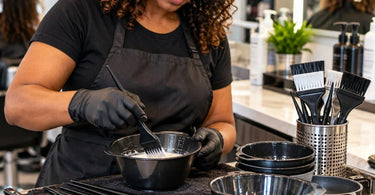
Your success hinges on this choice... especially when a seemingly simple change to your hair color accessories could affect everything from your monthly supply budget to how smoothly your busiest Saturday runs. Reusable processing accessories promise less waste, fewer repeat purchases, and a more organized color station, but they also introduce questions about cleaning, durability, sanitation, and daily workflow. Before trading disposable supplies for reusable alternatives, salon owners and colorists need to understand what actually makes the switch worthwhile. After all, saving a few dollars on supplies is wonderful, but not if your team spends those savings wrestling dried color out of a brush at closing time.
The good news? A thoughtful transition can make professional color services more efficient without sacrificing the consistency clients expect. The secret is choosing the right tools, evaluating their true operating costs, and creating a cleaning system that fits your salon instead of becoming another chore everyone mysteriously forgets.
What Counts as a Reusable Hair Color Processing Accessory?
Reusable hair color processing accessories are tools designed for repeated professional use when properly cleaned, disinfected where required, maintained, and stored according to their manufacturers' instructions and applicable salon regulations. They may replace certain disposable items used during mixing, application, sectioning, processing, and cleanup.
Common examples include reusable tint bowls, color application brushes, sectioning clips, nonporous processing caps designed for repeated use, washable protective accessories, and other durable implements approved for professional salon services.
Not every item marketed as reusable is suitable for every color treatment. Some accessories tolerate repeated exposure to permanent hair color and developer, while others are better suited to temporary color, conditioning treatments, or limited applications.
Professionals shopping for Professional Hair Color and processing supplies should evaluate accessories based on their actual service requirements rather than assuming that anything washable is automatically suitable for repeated use.
Start With the Actual Cost Per Color Service
The first consideration is financial, but the calculation goes beyond the purchase price. A reusable accessory usually costs more upfront than a disposable equivalent. Its potential savings depend on how many successful uses it delivers and how much labor and cleaning expense each use requires.
Consider a hypothetical salon that spends $0.35 on a disposable processing accessory. A reusable replacement costs $7 and lasts for 100 usable services. Its purchase cost averages $0.07 per service before cleaning expenses.
That sounds fantastic until you include the cost of washing, disinfection when required, drying, replacement due to damage, and any additional staff time. If those expenses average $0.20 per use, the reusable accessory costs approximately $0.27 per service. That still offers savings, but the difference is smaller than the initial price comparison suggests.
For a realistic evaluation, calculate the total cost of ownership using the accessory purchase price, expected usable lifespan, cleaning materials, staff labor, utility use, and replacement frequency.
It also helps to account for unexpected failures. A reusable accessory that cracks after a few weeks or develops stubborn staining may never deliver its projected savings.
The smartest purchasing decision comes from estimating cost per completed service, not simply comparing the prices printed on two packages.
Material Compatibility Matters More Than Appearance
Professional hair color formulations can expose accessories to dyes, alkalizing agents, oxidizing developers, and repeated cleaning chemicals. Materials that look durable on a retail shelf may behave differently after weeks of busy salon use.
When evaluating reusable hair color bowls, look for smooth, nonporous surfaces and manufacturer confirmation that the material is compatible with the intended hair color products and cleaning procedures.
High-quality plastic bowls are common in professional coloring, while some other chemical-resistant, nonreactive materials may also be appropriate. Avoid assuming every metal bowl is suitable for oxidative color mixing. Always follow the color manufacturer's instructions, including any restrictions on metallic tools or containers.
Reusable hair color brushes deserve similar scrutiny. Inspect bristle attachment, handle construction, chemical resistance, and whether product can accumulate in seams or around the ferrule.
For sectioning clips, consider spring durability, grip, smoothness, and whether their construction allows effective cleaning. Hidden hinges and tight crevices can make maintenance more difficult.
Even attractive tools should be rejected if their surfaces become rough, cracked, sticky, or otherwise difficult to clean thoroughly.
Understand the Difference Between Cleaning and Disinfecting
This is one of the most important considerations in the entire transition. Reusable accessories create an ongoing responsibility to prevent cross-contamination between clients.
Cleaning removes visible residue, hair, oils, and other soil from a tool. Disinfection uses an appropriate product and process to reduce or eliminate specified microorganisms on compatible surfaces. The two are not interchangeable.
For reusable implements that require disinfection, salon professionals should follow the applicable state cosmetology board rules, the accessory manufacturer's instructions, and the disinfectant label.
A practical reprocessing procedure generally includes removing visible hair color residue, washing the accessory with an appropriate cleaner, rinsing as directed, applying an approved disinfectant using the specified method and contact time, and completing any required rinsing and drying before clean storage.
Disinfectants must be appropriate for the intended tool and surface. An EPA-registered product should be used according to its labeling, including dilution instructions, required contact time, and compatibility limitations. Explore Professional Cleaners & Disinfectants for Salons and Spas when planning your cleaning inventory.
Do not assume that a quick rinse, a spray of alcohol, or a few seconds under a UV light automatically satisfies salon disinfection requirements. UV storage cabinets should not be treated as substitutes for required cleaning and disinfection.
Soft or porous accessories may require laundering or another manufacturer-approved process, and some items cannot be reliably disinfected at all. If an accessory cannot be processed in accordance with applicable rules, it should not be reused between clients.
Reusable should never become shorthand for rinsed it off and hoped for the best. Your clients deserve a slightly more scientific approach.
Will Reusable Accessories Slow Down Your Color Services?
Even inexpensive reusable supplies can become costly if they disrupt service timing. In a busy color salon, a few additional minutes per appointment can accumulate into significant labor expenses.
Before switching, map the accessory's complete journey through a typical service. Consider how quickly it can be retrieved, used, placed in a designated soiled-tool area, cleaned, disinfected when applicable, dried, and returned to service.
Pay particular attention to the busiest period of the week. A salon may have plenty of reusable tint bowls available on Tuesday morning but suddenly run short when multiple stylists are performing highlights, root touch-ups, and color corrections simultaneously.
The solution is often maintaining a larger inventory of reusable tools than the number needed for one service cycle.
If six colorists regularly need two bowls each during overlapping appointments, twelve bowls may not be enough. Additional inventory is needed to accommodate tools awaiting cleaning, disinfection, drying, or replacement.
Review the layout of your Professional Hair Salon & Barber Shop Supplies area to ensure that clean tools remain conveniently accessible while used accessories have a separate holding location.
Hair Color Results Must Remain Consistent
Cost savings mean little if a replacement accessory interferes with application quality or color-processing procedures.
For example, a reusable color bowl should offer enough capacity for efficient mixing without unnecessary splashing. Its interior should permit thorough blending and allow the stylist to remove product cleanly with an application brush.
A color brush should provide dependable control during root applications, detailed placement, and saturation. Bristles that spread unpredictably or shed during services can interfere with precision.
Sectioning clips must hold the required amount of hair securely without slipping. Processing accessories should also be appropriate for the specific heat, moisture, and chemical conditions of the service.
When working with Hair Bleaches and Lighteners, check product instructions for approved mixing materials and processing conditions. Never assume a reusable cap, covering, or other accessory is suitable for added heat or enclosed processing.
Color results depend on formulation, application, timing, and manufacturer instructions. The new accessories should support those requirements rather than encourage shortcuts.
Consider the Cleaning Time Nobody Mentions
One of the less glamorous realities of reusable supplies is that someone must clean them. Usually, that someone is a stylist or assistant who already has fourteen things to do and a client who has suddenly remembered an important question during checkout.
Cleaning difficulty can vary dramatically by accessory design. Smooth bowls may release most color residue relatively easily, while deeply textured surfaces and narrow brush components may require more attention.
During product evaluation, consider how easily the accessory can be cleaned promptly after use, whether stains remain after proper cleaning, how long required disinfection takes, and whether the tool must be completely dry before storage.
Determine who is responsible for each step. A designated cleaning station, clear written procedures, and sufficient supplies can help prevent shortcuts during busy periods.
Remember that visible staining does not necessarily mean an accessory is contaminated. However, staining should not be confused with adequate cleaning, and residue trapped in crevices should never be ignored.
If a reusable tool repeatedly requires excessive scrubbing or cannot be cleaned adequately, replacing it may be more practical than continuing to use it.
Think About Water, Energy, and Environmental Impact
Reducing disposable accessory waste is a legitimate reason to consider reusable alternatives, especially for high-volume salons. However, environmental benefits should be evaluated across the accessory's entire working life.
A reusable product requires materials and energy to manufacture. Its continued use may also require water, detergent, disinfectant, and sometimes laundering or machine drying.
The environmental tradeoff depends on durability, number of uses, cleaning requirements, and what disposable product it replaces.
A sturdy bowl that remains in service for hundreds of uses may offer a more compelling waste-reduction opportunity than a fragile reusable item that requires frequent replacement.
Likewise, laundering a few reusable accessories inefficiently in separate loads can reduce some of the anticipated environmental advantages.
Salons can make the transition more practical by selecting long-lasting accessories, following efficient manufacturer-approved cleaning processes, and monitoring actual product lifespan.
Be careful with marketing claims such as zero waste, completely sustainable, or environmentally harmless. Reusable tools can reduce certain waste streams, but that does not make every reusable alternative automatically better in every environmental category.
Know Which Supplies Should Stay Disposable
A sustainable salon does not need to eliminate every single-use product. Some supplies are intended for one client or one treatment because of hygiene requirements, material limitations, or service-specific safety considerations.
Disposable gloves are a particularly important example. Reusable tint bowls and sectioning clips do not eliminate the need for appropriate hand protection during chemical services.
Browse Protective Gloves & Masks for Salon and Spa Professionals when maintaining supplies for professional color services.
Likewise, porous materials, single-use applicators, and other disposable accessories should not be reused simply to reduce purchasing costs. Follow product labeling and local regulatory requirements.
Some disposable processing materials also deliver specialized performance. For example, certain highlighting techniques depend on specific foil characteristics or product-compatible barriers. Reusable alternatives should only be adopted when they can perform the intended function safely and effectively.
A hybrid approach often makes the most sense: reusable accessories where practical, with single-use products retained wherever required or operationally advantageous.
Evaluate Durability Under Real Salon Conditions
A manufacturer's description can provide useful guidance, but actual salon testing offers another level of insight.
Before placing a large order, introduce a small group of reusable accessories into your normal color workflow. Test them with the approved services and products they are intended to support.
Watch for cracked bowls, damaged clip springs, loosened brush bristles, warped components, and surfaces that become difficult to clean.
Inspect accessories regularly rather than waiting for visible failures during appointments. A simple replacement schedule can help managers monitor wear and control inventory spending.
For frequently used tools, keep spare accessories available. A colorist should not have to improvise because the last clean brush developed a mysterious personality disorder halfway through a root application.
Purchasing durable items from professional supply categories, including Professional Hair Brushes & Combs for Stylists, can simplify standardization across the color department.
Make Sure Your Team Supports the Change
Even a well-researched purchasing decision can fail if the stylists who use the accessories every day find them inconvenient.
Ask your team which disposable supplies they use most frequently, which accessories create the most waste, and where reusable alternatives might improve organization.
Then invite colorists and assistants to test potential replacements before committing to a full salon-wide transition.
Training should cover correct accessory use, product compatibility, cleaning procedures, disinfection requirements, storage, and retirement criteria.
Do not rely on assumptions that everyone learned identical sanitation procedures during cosmetology school. Regulations and product instructions may differ, and established salon habits are not always consistent.
A short written procedure at the cleaning station can establish clear expectations for the team.
Make sure employees also know when to remove damaged or contaminated tools from circulation. Saving an inexpensive accessory should never take priority over proper sanitation or service quality.
Organize Separate Areas for Clean and Used Tools
Reusable accessories require more deliberate storage than items that simply come out of a new package and go into the trash after service.
Designate separate locations for clean, disinfected implements and tools awaiting reprocessing. Storage containers should protect clean items from contamination and comply with applicable salon requirements.
Clearly distinguish the two areas so a used clip cannot accidentally return to the clean supply drawer.
Consider organizing reusable color bowls and brushes by size, function, or service type. Clearly labeled storage can save time when stylists need particular accessories.
Salons using multiple color lines may also benefit from keeping dedicated mixing accessories where manufacturer requirements or workflow needs justify them.
Well-organized salon storage containers and workstation systems make it easier to maintain separation without cluttering every available counter.
Remember that a tidy-looking station is not necessarily a properly disinfected station. A beautiful drawer full of questionable brushes is still a questionable drawer.
Calculate How Many Reusable Accessories You Actually Need
Underbuying is a common mistake when introducing reusable tools. The right inventory level depends on how many color services overlap, how long accessories remain unavailable during cleaning, and how many items each stylist needs.
Start by reviewing your busiest service blocks. Count the maximum number of accessories needed simultaneously, then include tools that are still awaiting cleaning, disinfection, or drying.
For example, if a busy period requires eighteen color bowls in active use and another six are normally being processed or held for cleaning, the salon needs at least twenty-four usable bowls before accounting for a reasonable backup supply.
Adjust that number for your actual operating procedures rather than applying one universal formula.
When evaluating quantities, also consider whether colorists need separate brushes for different formulations or application techniques.
Keeping a few extra approved tools available can be less expensive than interrupting appointments to locate, clean, and prepare an accessory that is not yet ready for use.
Run a Small Trial Before Switching Everything
The most reliable way to evaluate reusable hair color processing accessories is through a limited pilot program.
Choose one or two commonly used accessories, establish a baseline for disposable purchasing and waste, and introduce reusable versions that meet your service and sanitation requirements.
Test them for several weeks under normal conditions, including your busiest appointment periods.
Track purchase costs, cleaning expenses, staff time, tool failures, inventory shortages, and stylist feedback. Record how many disposable items are actually replaced rather than estimating savings based only on intended use.
It is also useful to note whether the change affects appointment preparation, application consistency, or end-of-day closing procedures.
At the end of the trial, compare the results against your original expectations.
If an accessory delivers reliable performance, measurable savings, and manageable maintenance requirements, expand its use. If it creates extra work without meaningful benefits, reconsider the design or retain the disposable alternative.
This approach allows salon owners to make purchasing decisions based on actual operations rather than optimistic product descriptions.
Questions to Ask Before Placing a Bulk Order
Before committing to reusable processing tools, work through a practical purchasing checklist:
- Is the accessory specifically designed for repeated professional use?
- Is its material compatible with the hair color, developer, lightener, and cleaning products used in the salon?
- Can it be cleaned and disinfected as required by applicable regulations?
- Does the manufacturer provide clear care and replacement instructions?
- How many usable services can reasonably be expected before replacement?
- How much staff time will cleaning and maintenance add?
- Will sufficient inventory remain available during the busiest appointments?
- Does the accessory maintain application accuracy and processing consistency?
- Are replacement units readily available when tools become damaged?
- Does the total cost per service justify the transition?
These questions can prevent expensive purchasing mistakes and reveal operational issues before they affect paying clients.
For a broader inventory review, explore Must-Have Supplies for Salon & Spa Business Success alongside your existing hair color equipment and consumables.
When Reusable Accessories Make the Most Sense
Reusable hair color accessories are particularly worth evaluating in salons with consistent color-service volume, organized cleaning procedures, and enough storage space to manage separate clean and used inventory.
They may also appeal to businesses trying to reduce purchases of frequently discarded supplies or standardize equipment across multiple colorists.
However, a smaller salon should not assume reusable tools are always more economical. Limited service volume, complex cleaning needs, or premature tool wear can change the calculation.
Similarly, salons offering highly specialized color services may need to retain certain single-use products for application performance or compliance reasons.
The most successful approach is rarely an all-or-nothing decision. It is a thoughtful combination of reusable and disposable accessories selected according to function, safety, cost, and workflow.
Make the Switch Work for Your Salon
Switching to reusable hair color processing accessories can be a smart operational improvement, but only when the tools deliver the durability, sanitation compatibility, application performance, and efficiency your business requires.
Start with the accessories that create the greatest recurring purchasing costs. Compare their total operating expenses, verify their compatibility with professional color products, and confirm that your team can maintain them correctly between clients.
Then test a manageable quantity before changing your entire inventory. A successful trial offers useful evidence about savings, maintenance time, and everyday practicality.
Pure Spa Direct supplies professional salon products and equipment from established manufacturers, giving salon owners and colorists options when reviewing their color-service setups. Explore Professional Hair Salon & Barber Shop Supplies, Professional Hair Color, and reusable hair color accessories as you evaluate what belongs at your stations.
The goal is not to make every item reusable simply because that sounds impressive on a sustainability checklist. It is to create a color department that operates smoothly, protects clients, supports your stylists, and makes financial sense. If you can reduce unnecessary waste and keep everyone on schedule, that is a change worth celebrating. Preferably after the last color bowl has been cleaned.
