
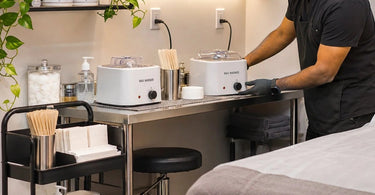
Smart tools, professional results... and sometimes, the smartest upgrade in your waxing room is simply giving your favorite wax formula its own little home. Adding a second professional wax warmer might seem like a small equipment decision, but it can make a surprisingly meaningful difference in how your treatment room operates. Whether you are juggling hard wax and soft wax, accommodating a growing appointment schedule, or getting tired of swapping wax formulas between services, a second warmer can help create a more organized and efficient workflow. Of course, before adding another heated appliance to your already hardworking treatment room, there are a few practical details worth considering. Because the only thing that should be running hot during a busy waxing appointment is the wax, not your stress level!
A second wax warmer is not automatically the answer to every scheduling challenge. The right decision depends on your service menu, treatment volume, available workspace, electrical setup, and the types of wax you use most frequently. Understanding those factors before purchasing equipment can help you make an investment that supports your services rather than simply taking up valuable counter space.
1. Start With the Reason You Need Another Wax Warmer
Before comparing equipment, identify exactly what you want your second warmer to accomplish. Is your current warmer too small for busy waxing days? Are you switching between hard and soft wax throughout the day? Do you want to keep two formulas available without changing pots? Or are you simply looking for backup equipment in case your primary warmer experiences a problem?
Each situation points toward a different equipment solution. A compact warmer may be ideal for maintaining a small quantity of specialty wax, while a larger model could make more sense for high-volume body waxing. If you regularly use two types of wax, a dual warmer with independent temperature controls may deserve consideration.
Think about your most common services and the wax products they require. A treatment room specializing in eyebrow and facial waxing has different equipment demands from a room performing consecutive Brazilian, leg, and back waxing appointments.
The goal is not to collect warmers like decorative candles. The goal is to support the services that actually generate revenue.
2. Decide Whether You Need Separate Hard Wax and Soft Wax Stations
One of the most practical reasons to add a second warmer is the ability to keep professional hard wax and soft strip wax ready for different treatments.
Hard wax is commonly selected for facial waxing, Brazilian waxing, underarms, and other areas where estheticians prefer a stripless application. Soft wax is frequently used for larger areas such as legs, arms, and backs, although product selection ultimately depends on the formulation, treatment area, and professional technique.
Maintaining separate warmers allows professionals to work with different formulas without repeatedly emptying or changing the primary pot. This can reduce equipment preparation between appointments and simplify the transition from one service to another.
However, remember that hard wax and soft wax do not necessarily have identical heating requirements. Each product must be prepared and maintained according to its manufacturer's instructions. A second warmer should provide the control necessary for the specific wax being used.
Independent temperature adjustment is particularly valuable when the two wax formulas require different operating conditions.
3. Consider a Dual Wax Warmer Before Buying Two Separate Units
If the primary objective is keeping two wax formulas ready, a dual wax warmer may provide an alternative to purchasing two individual appliances.
Dual warmers combine two heating compartments within one equipment housing. Depending on the model, they may accommodate different container sizes and feature independently adjustable thermostats.
For example, the Miss Cire 2-in-1 Professional Dual Wax Warmer features a larger compartment designed to hold up to 2.2 pounds of hard wax and a smaller compartment for approximately 14 ounces of soft wax. Each compartment has its own thermostat and temperature indicator light, allowing the two formulas to be managed independently.
That configuration may be appealing to estheticians who routinely provide both strip and stripless waxing services.
However, a dual warmer is not necessarily smaller than every possible combination of individual units. Compare actual equipment dimensions, counter placement, access to controls, and usable clearance before making a decision.
Two separate units may also offer greater flexibility when you want to position warmers on different sides of a workstation or temporarily move one to another treatment room, provided movement is performed safely when the equipment is cool.
4. Measure Your Treatment Room Before Adding Equipment
Counter space is valuable real estate in a professional waxing room. Your warmer needs a stable location, but your workstation also needs room for applicators, wax strips, gloves, cleansing products, and other frequently used supplies.
Before ordering a second unit, measure your available work surface and review the manufacturer's equipment dimensions and required clearances.
Consider whether the warmer will interfere with access to treatment supplies or create awkward reaching movements during an appointment. A perfectly functioning warmer is not especially helpful if your technician has to perform a miniature obstacle course to reach it.
Placement should support natural movements between the treatment table, wax station, and supply area. Avoid positioning heated equipment where cords could become tangled, clients could accidentally touch the housing, or wax could be knocked over.
A separate salon utility cart may provide additional organization when appropriate, but only if it offers a stable, heat-compatible surface and meets the warmer manufacturer's placement requirements. Locking casters do not automatically make a mobile cart suitable for heated equipment.
Keep the surrounding area free of loose linens, paper products, and other materials that should not be stored near heat.
5. Check Your Electrical Setup and Available Outlets
Adding another wax warmer means adding another electrical appliance to the treatment room. Before plugging everything in, review the electrical requirements of both units.
Check the voltage and power ratings listed by each manufacturer. Consider what other equipment operates in the same space, including towel warmers, treatment table heaters, lighting, and other electrical devices.
A room with multiple heated appliances may require a closer look at the available circuit capacity.
Follow the appliance manufacturer's instructions regarding electrical connections. Avoid overloading outlets or relying on extension cords and power strips when they are not approved for the equipment. If electrical capacity is uncertain, have a qualified electrician evaluate the setup.
Also think about the physical location of each outlet. Power cords should not cross walking paths, dangle over counter edges, or create snagging hazards.
A tidy workstation is not just aesthetically pleasing. It helps reduce avoidable interruptions and supports safer daily operations.
6. Choose Warmer Capacity Based on Actual Service Volume
Wax warmers are available in a variety of capacities, from compact units designed for smaller wax containers to larger professional models intended for higher-volume services.
The right size depends on how much wax you use, how frequently you replenish it, and the types of treatments performed.
For a room that primarily offers brow, lip, and chin waxing, a smaller secondary warmer may provide sufficient capacity for a specialty formula. A busy body waxing room may benefit from a larger reservoir that supports consecutive appointments without frequent preparation.
Review your waxing schedule and product consumption over several typical business days. Note how often your existing warmer needs replenishment and whether waiting for wax to reach working consistency affects service preparation.
Remember that larger capacity does not automatically translate into faster heating. Heat-up performance depends on the warmer design, wax volume, starting temperature, and formulation.
Consult equipment specifications rather than assuming that every larger warmer operates more efficiently.
7. Evaluate Temperature Control and Wax Consistency
Consistent wax temperature is essential to professional application. Wax that is too cool may become difficult to spread, while overheated wax can create a serious burn risk.
When comparing wax warmer options, examine the available temperature controls and how they relate to the products you intend to use.
Some warmers feature simple adjustable dials, while others offer digital displays or additional temperature indicators. A digital display can make settings easier to reference, but it does not eliminate the need to verify the actual wax temperature before application.
Different wax formulas can have different working temperature ranges. Follow the wax manufacturer's preparation instructions and the warmer manufacturer's operating guidance.
Always check the wax before client application using the recommended professional temperature-testing procedure. Do not assume that a particular dial position guarantees a safe application temperature.
A second warmer can help maintain two formulas at their appropriate working consistencies without repeatedly adjusting one shared heating compartment.
8. Think About Cleaning, Sanitation, and Cross-Contamination
More equipment means more surfaces to clean, more controls to maintain, and another station to include in your treatment room sanitation procedures.
Before adding a warmer, consider how easily the unit can be cleaned and whether it features removable inserts, compatible containers, protective collars, or other components that simplify maintenance.
Keep wax residues away from temperature controls and electrical components. Use cleaning products approved for the equipment and follow manufacturer instructions regarding cooling, unplugging, and cleaning.
Never immerse an electrical warmer in water or spray cleaning liquids into its electrical openings.
Maintaining two separate wax formulas can support better organization, but a second warmer does not replace proper infection prevention practices. Never double-dip a used applicator into a shared wax supply. Use fresh applicators as required by applicable sanitation rules, and maintain clean supplies and work surfaces between clients.
Keep professional wax applicators, protective gloves, and other single-use supplies conveniently accessible without placing them directly beside hot equipment.
Review applicable state board requirements and local regulations when establishing equipment cleaning and service procedures.
9. Organize Each Wax Station Around Its Intended Service
One of the biggest advantages of a second wax warmer is the opportunity to organize supplies more intentionally.
Instead of treating both warmers as interchangeable appliances, establish a purpose for each station.
For example, one warmer might support facial waxing services using a designated hard wax formula, while the second maintains soft wax for larger body areas. Another treatment room may use one warmer for its primary hard wax and a second for a specialty formula.
Label storage areas clearly and organize compatible products nearby. Keep clean applicators, wax strips and rolls, and pre- and post-waxing products in locations that make sense for the services being performed.
Separate product organization can reduce accidental formula selection and make restocking easier for team members.
For treatment rooms shared by several estheticians, standardized station layouts can be especially beneficial. Everyone should know which warmer contains which wax, how the equipment is operated, and where the corresponding supplies belong.
Clear labeling and written procedures are more reliable than relying on someone's memory during a fully booked Saturday.
10. Consider Whether Your Wax Brands and Containers Are Compatible
Not every warmer accommodates every wax container or formulation.
Some units are designed for standard wax cans, while others use removable metal pots or specific inserts. Certain warmers accommodate hard wax beads, while other equipment is designed around particular container dimensions.
Before purchasing, compare the warmer's specifications with the wax products you already use.
If your treatment room carries ItalWax, Berodin, Cirepil, or another professional waxing line, verify the relevant container sizes and preparation requirements rather than assuming compatibility based on brand recognition alone.
Also examine whether replacement inserts or compatible accessories are available when needed.
A warmer that works with your existing products is generally easier to incorporate into daily operations than one requiring an entirely different collection of containers and accessories.
11. Calculate the Business Value of a Second Warmer
Equipment purchases should be evaluated in terms of how they support your business, not just their initial price tags.
Consider the complete investment, including the warmer, compatible accessories, any electrical or workstation modifications, and the additional cleaning and maintenance responsibilities.
Then evaluate the operational benefits.
Will the second warmer reduce preparation time between services? Will it allow two wax formulas to remain ready throughout the day? Could it support a broader treatment menu or reduce interruptions caused by repeatedly changing wax products?
For a simple planning exercise, imagine that maintaining separate wax formulas saves four minutes of preparation during five relevant service transitions each day. That represents twenty minutes of potential daily workflow time.
However, those minutes do not automatically translate into additional revenue. The savings become financially meaningful only when they improve scheduling, reduce paid labor requirements, or create another measurable operational benefit.
Track actual results before assigning a dollar value to the improvement.
If your primary warmer already supports your entire appointment schedule without delays, another unit may provide convenience rather than a substantial financial return. And convenience is lovely, but it still deserves its own line in the budget.
12. Plan for Busy Days Without Overestimating Your Needs
Peak appointment periods can reveal workflow problems that remain invisible during quieter hours.
Consider what happens when a client books a Brazilian waxing service immediately before another client requests a full leg wax. If both treatments require different wax formulas and your room has only one warmer, additional preparation may be necessary.
Maintaining two suitable wax products simultaneously can simplify those transitions.
However, a second warmer does not solve every source of appointment delays. Room turnover, consultation time, client preparation, sanitation procedures, and technician availability can all influence scheduling efficiency.
Look at your appointment records before investing. Identify whether wax preparation is truly creating measurable downtime.
For salons with multiple treatment rooms, it may also be worth comparing the benefits of adding a warmer to one busy room versus redistributing existing equipment across the facility.
The best equipment arrangement supports your actual booking patterns rather than a hypothetical calendar where every appointment begins exactly on time. We can dream, though!
13. Decide How You Will Handle Backup Equipment and Maintenance
A second wax warmer may offer a useful backup option if your primary appliance requires servicing or replacement.
However, backup capability depends on whether the secondary warmer can safely accommodate the necessary wax type and quantity.
If both warmers serve completely different purposes, one may not be a practical replacement for the other.
Maintain equipment according to the manufacturer's maintenance recommendations. Periodically inspect power cords, plugs, controls, housings, and removable components for signs of wear or damage.
Remove damaged or malfunctioning equipment from service rather than attempting improvised repairs.
Include both warmers in daily opening and closing procedures. Staff should know when equipment should be activated, how wax temperature is checked, who is responsible for cleaning, and how appliances are shut down according to manufacturer instructions.
Do not leave heated wax equipment operating unattended when prohibited by its instructions. Establish a clear shutdown procedure at the end of the workday.
14. Make Sure the Upgrade Supports Client Comfort
Clients may never notice that you added another warmer, but they can certainly notice a disorganized treatment room or unnecessary waiting.
A well-planned equipment setup helps technicians prepare confidently and move efficiently between treatments.
Maintaining the correct wax formula and working consistency can support smoother application, provided the technician follows the product's intended use and appropriate professional technique.
Client comfort also depends on factors beyond equipment, including skin assessment, service selection, communication, technician training, and suitable pre- and post-waxing care.
A second warmer is a tool for supporting those practices, not a substitute for them.
Keep hot equipment away from client contact areas, maintain clear movement paths, and organize the workstation so supplies can be retrieved without unnecessary reaching across the treatment table.
Professionalism is often found in the small details that make an appointment feel calm and effortless.
15. Know When a Second Warmer Is Not Necessary
There are situations where adding another warmer may not be the best use of your equipment budget.
If your room performs only one waxing service category, uses a single formula, and experiences no meaningful preparation delays, another appliance could add complexity without providing much benefit.
Similarly, an overcrowded treatment room may benefit more from improved storage, upgraded furniture, or better supply organization before introducing another heated device.
If the existing warmer is unreliable, replacing it with a higher-quality or more appropriate model may make more sense than keeping it in service alongside a new unit.
Professional equipment purchases should solve a clearly identified problem. More devices do not automatically create a better treatment room.
Sometimes the most impressive upgrade is a workstation that finally has enough room for everything you actually use.
16. A Practical Checklist Before You Buy
Before choosing your second wax warmer, review these essential questions:
- Service compatibility: Which waxing services will the additional warmer support?
- Wax selection: Will it hold hard wax, soft wax, or a specialty formula?
- Container compatibility: Does the equipment accommodate your existing wax products and approved inserts?
- Capacity: Is the reservoir appropriately sized for your appointment volume?
- Temperature management: Can you properly control and verify the wax's working temperature?
- Workstation space: Is there a stable, suitable location with adequate clearance?
- Electrical requirements: Can the existing electrical setup safely support another appliance?
- Cleaning: Are the surfaces and removable components practical to maintain?
- Workflow: Will the new warmer reduce an actual preparation bottleneck?
- Budget: Does the anticipated benefit justify the purchase and ongoing maintenance?
Answering these questions makes it easier to choose equipment based on operational needs rather than appearance or an attractive sale price alone.
17. Build a More Efficient Waxing Room With the Right Supplies
Once you have identified the type of warmer that fits your treatment room, consider the surrounding supplies that help the entire station operate smoothly.
Reliable professional waxing supplies, appropriately sized applicators, compatible wax formulas, and organized cleaning products all contribute to an efficient setup.
For businesses evaluating multiple equipment and product options, Pure Spa Direct offers a broad selection of professional waxing essentials from established industry brands. As a distributor serving salon, spa, and beauty professionals, Pure Spa Direct provides access to equipment and supplies that can be compared according to service requirements and business needs.
Explore Professional Wax Warmers for Salons & Spas, browse Complete Waxing Kits, or review Waxing Accessories & Removers when planning your workstation.
If your room uses substantial quantities of a particular formula, reviewing Bulk Wax Deals may also help with purchasing and inventory planning.
The Bottom Line: Make Your Second Wax Warmer Work for Your Business
Adding a second wax warmer can be a worthwhile treatment room upgrade when it addresses a specific service or workflow need. Separate equipment for hard and soft wax, additional capacity for busy schedules, independently controlled formulas, and practical backup capability can all be legitimate reasons to expand your setup.
The key is choosing equipment that matches your services, fits your workspace, meets electrical and safety requirements, and integrates naturally into your daily procedures.
Before buying, take a close look at your appointment mix, wax consumption, available counter space, and equipment specifications. A thoughtful purchasing decision can help you create a cleaner, more organized, and more functional waxing station without introducing unnecessary complexity.
Ready to give your waxing room a little extra working power? Explore the selection of professional wax warmers at Pure Spa Direct and find an option that suits the way your business actually operates. Because a busy treatment room has enough moving parts already, and your wax warmer should be helping with the hustle, not adding to it!
