
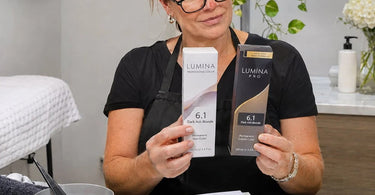
Do your best work, every time... even when your favorite professional hair color arrives wearing an entirely new outfit. You know the moment: you open your latest salon supply delivery, reach for your trusty 6N, and discover a box that looks nothing like the one you have been using for years. The shade number is familiar, but the packaging is giving you serious identity crisis vibes. Before you start squeezing tubes into your mixing bowl and hoping for the best, take a few practical steps to determine whether you are dealing with a simple packaging refresh or a more significant product change.
For professional colorists, consistency is everything. Your clients expect their signature brunette, dimensional blonde, or gorgeous copper to look just as fabulous as it did during their last appointment. Understanding how to manage hair color packaging transitions can protect those results, reduce unnecessary corrective services, and keep your color department running beautifully.
Does New Hair Color Packaging Mean a New Formula?
Not necessarily. Hair color manufacturers regularly update packaging for reasons that have little or nothing to do with the actual product inside. A brand may introduce a modern visual identity, reduce packaging materials, improve label readability, standardize its international packaging, or make its tubes easier for professionals to dispense.
However, a packaging redesign can also coincide with a reformulation, updated color technology, revised shade descriptions, or changes to recommended application procedures. The shade number may remain identical throughout these changes.
Think of the shade number as a product identifier rather than an absolute guarantee of chemical composition. A familiar number tells you which shade the manufacturer intends the product to represent within that particular color line. It does not independently establish that every ingredient, pigment combination, or performance characteristic remains unchanged.
This distinction matters whether your salon relies on Wella, Clairol Professional, Rusk, or another trusted professional color brand.
Start by Identifying Exactly What Changed
Place the old and new packages next to each other before introducing the updated product into your regular salon services. Resist the temptation to judge the product solely by its new graphics. A fabulous makeover on the outside tells you very little about what is happening inside the tube.
Compare the following details:
- Brand and product line: Confirm that both products belong to the same exact color system.
- Shade number: Check every number, letter, slash, decimal, and other shade designation.
- Shade description: Determine whether the written shade name or tonal description has changed.
- Product type: Verify whether both products are permanent, demi-permanent, semi-permanent, or another type of color.
- Net contents: Check the weight or volume of the colorant.
- Ingredient declaration: Look for changes in listed ingredients or their order.
- Developer requirements: Compare recommended developer systems and strengths.
- Mixing instructions: Confirm the specified color-to-developer ratio.
- Processing instructions: Review timing, application methods, and any updated restrictions.
- Safety warnings: Check for new precautions or revised testing instructions.
- Lot identification: Record the batch or lot information for traceability.
This comparison takes only a few minutes, but it can reveal important differences before they become expensive appointments involving corrective color, additional product, and an unexpectedly long relationship with your salon chair.
Confirm That the Shade Number Belongs to the Same Color System
Professional hair color numbering systems are not universal. One manufacturer may use a particular number to identify an ash reflection, while another uses the same number for a different tonal family.
Even within a single brand, different permanent and demi-permanent color collections may use similar shade codes without producing identical results.
A 7N from one product line should not automatically be treated as interchangeable with a 7N from another line. The color depth, pigment concentration, underlying tone, developer compatibility, and gray coverage characteristics may differ.
Keep current hair color shade charts and manufacturer technical guides accessible at your color station. If a brand introduces updated packaging alongside a revised shade chart, make sure your stylists are referencing the current information.
Contact the Manufacturer Before Making Assumptions
If the packaging comparison leaves you with unanswered questions, obtain clarification from the manufacturer or contact your professional distributor for assistance locating the appropriate technical information.
Provide clear photographs of both packages, including the shade numbers, ingredient lists, barcodes, and lot codes. Specific information makes it easier to identify the products involved and determine whether they represent different generations of the same color line.
Useful questions include:
- Is this a packaging-only update or a reformulation?
- Has the pigment composition or concentration changed?
- Are the old and new versions expected to deliver comparable results?
- Have developer recommendations or mixing ratios changed?
- Is there an updated gray coverage protocol?
- Are revised shade charts or technical guides available?
- Can the previous and current versions be combined, or should they be used separately?
- Have any allergy precautions or other safety instructions changed?
At Pure Spa Direct, we understand that professional buyers need dependable product information. As a distributor of salon and beauty supplies, we recognize the importance of connecting purchasing decisions with manufacturer-specific technical guidance.
Why Comparing Ingredient Lists Is Helpful but Not Enough
Ingredient comparisons can help identify possible reformulations. If a familiar ingredient disappears or a new ingredient appears, that is a good reason to investigate further.
However, identical-looking ingredient declarations do not necessarily establish identical formulas. Ingredient labels generally do not disclose precise concentrations or proprietary manufacturing details. Certain changes in pigment proportions, raw material specifications, or manufacturing processes may not be apparent from the printed ingredient list.
Conversely, a difference in labeling does not automatically mean the performance has changed significantly. Manufacturers may update ingredient terminology or make other labeling revisions.
Use ingredient comparisons as one part of your evaluation rather than the final verdict. Manufacturer confirmation and appropriate testing offer a more useful basis for professional decisions.
Perform a Controlled Strand Test Before Using Unfamiliar Color
When a product has been reformulated or its status remains uncertain, a controlled strand test can help you evaluate its performance before committing to a full service.
Gather your hair color brushes, mixing bowls, digital color scale, and other standard color preparation supplies.
For an old-versus-new comparison, use comparable hair samples with similar starting levels, texture, porosity, and chemical history. If both versions have their own instructions, prepare each one according to its respective manufacturer directions.
Evaluate characteristics such as:
- Consistency of the mixed product.
- Ease of application and distribution.
- Final color depth.
- Warmth or coolness of the finished tone.
- Color deposit on porous hair.
- Coverage on representative gray hair samples.
- Uniformity after rinsing and drying.
- Color appearance under consistent lighting.
Human hair swatches or suitable training manikins for hairdressers can support preliminary evaluations. Synthetic hair is not an appropriate substitute for testing conventional oxidative hair color performance.
Remember that results on practice samples cannot guarantee the outcome on every client. A client-specific strand test may still be appropriate, particularly for corrective services, significant tonal changes, or hair with a complicated chemical history.
Never Confuse a Strand Test With an Allergy Test
A strand test evaluates how hair responds to a color product. An allergy alert test addresses potential skin sensitivity. These are different procedures, and neither should be treated as a replacement for the other.
Follow the current manufacturer instructions for allergy testing before each applicable hair color service, including the specified advance testing period, which is commonly 48 hours. A previous history of using the same shade without difficulty does not eliminate the possibility of a future allergic reaction.
If a client has previously experienced a reaction to hair dye, do not proceed simply because the packaging or formulation has changed. Follow applicable product contraindications and recommend appropriate medical guidance.
Keep protective gloves for salon professionals available at every color station, avoid applying color to damaged or irritated scalps, and follow the current product safety instructions throughout the service. A negative allergy alert test does not guarantee that a reaction will not occur.
Review Developer Compatibility With the Updated Product
The developer plays an essential role in oxidative hair coloring. A product reformulation may introduce changes to recommended developer types, peroxide strengths, or mixing ratios, even if the shade designation remains unchanged.
Compare your existing professional hair color developer inventory with the updated color instructions.
Do not assume that a developer is compatible simply because it has the same advertised volume as another product. Developer formulations may contain different stabilizers, conditioning ingredients, or consistency modifiers. Use only the combinations approved for the particular color system.
Check whether the manufacturer has introduced a companion developer or modified its recommendations for resistant gray hair, tonal deposit, or lifting services.
If the instructions have changed, update your salon procedures immediately. Your mixing bowl is not the place for an unsupervised chemistry experiment, no matter how impressive your collection of color tubes may be.
Can You Mix Old and New Versions of the Same Hair Color?
Only combine previous and updated versions when the manufacturer explicitly confirms that doing so is appropriate. Matching shade numbers alone do not establish that two formulations can safely or predictably be combined.
When compatibility is uncertain, keep the versions separate. Prepare color using the approved products and instructions for each system.
This becomes especially important when a stylist has only a small amount remaining in an older tube and wants to finish the formula using the newly packaged version.
Rather than improvising during a service, plan inventory replenishment so that sufficient quantities of verified, compatible products are available for each appointment.
Do not combine leftover activated hair color with freshly mixed product, and never store mixed oxidative color for a later appointment.
Organize Your Salon Inventory During the Packaging Transition
Packaging transitions can become confusing when several stylists share a large color inventory. An assistant may recognize the shade number but overlook a change in formulation or product line.
Use a temporary inventory management system to distinguish the different versions until the transition is complete.
- Separate incoming stock: Keep newly packaged products in a designated area until their status is confirmed.
- Identify product versions: Use shelf labels or removable organizational labels without covering required product information.
- Record lot numbers: Maintain enough detail to identify products if an unexpected performance issue occurs.
- Verify usable inventory: Check package condition, storage requirements, and applicable expiration or use-after-opening guidance.
- Rotate approved stock: Prioritize older usable inventory where appropriate, provided it meets current service requirements.
- Brief the team: Communicate confirmed product changes and testing requirements to every stylist and assistant.
- Update purchasing records: Make sure reorder descriptions identify the correct brand, product line, shade, and package size.
Professional hair color tube organizers, shelving, and suitable storage accessories can make this process easier. Avoid transferring color into unidentified containers or removing original product labels.
Update Client Formula Records With More Than Shade Numbers
A well-maintained client color record is one of the most valuable tools in a professional salon. During a product transition, it becomes even more important.
Recording only the shade number may not provide enough information to reproduce a service accurately when packaging, formulas, or application recommendations change.
Consider documenting the following:
- Exact color brand and product line.
- Shade numbers and tonal descriptions.
- Product version when relevant and identifiable.
- Colorant quantities by weight.
- Developer identity and strength.
- Manufacturer-approved mixing ratio.
- Starting hair level and relevant hair history.
- Estimated gray percentage and distribution.
- Application sequence and processing time.
- Finished result and any unusual observations.
For example, a record identifying the exact product line, formulation version, shade quantities, developer, and application technique is substantially more useful than a note that simply reads 6N plus 6G.
Accurate records also make it easier to identify whether an unexpected result may be related to a product change or another factor, such as increased porosity, previous lightening, or a change in the amount of gray hair.
What If the New Hair Color Looks Different in the Mixing Bowl?
Color creams may have different appearances before or during development. Changes in the cream base, pigment system, or other formulation characteristics can affect the visual appearance of the mixture.
A difference in bowl color does not automatically mean the finished hair color will be different. Likewise, a mixture that looks familiar does not guarantee familiar results.
If the new product has an unexpected consistency, appearance, odor, or other characteristic, compare it with manufacturer information. Do not use products that appear contaminated, damaged, degraded, or otherwise unsuitable.
Evaluate verified products through appropriate testing rather than adjusting the formula based solely on their appearance in the bowl.
Pay Extra Attention to Gray Coverage and Tonal Changes
Gray coverage services deserve careful consideration during a hair color transition. Clients who visit regularly for root maintenance often expect exceptional consistency, and even a modest tonal difference may be noticeable at the demarcation line.
For clients with resistant gray hair, review the updated manufacturer recommendations regarding coverage shades, developer selection, application technique, and processing time.
Blonde toning services also benefit from careful verification. Hair that has been lightened with professional hair bleaches and lighteners may respond differently depending on its porosity, underlying pigment, and the characteristics of the toner being applied.
Do not automatically add extra ash, warmth, or neutral pigment because the packaging has changed. Any formula adjustment should be supported by the current color system guidance and an assessment of the actual hair.
Maintain Consistent Tools and Application Techniques
Product changes are easier to evaluate when other service variables remain consistent. If you introduce a newly packaged color, switch developers, change application brushes, and modify processing techniques all at once, identifying the cause of a different result becomes considerably more challenging.
Maintain dependable application practices using quality professional hair brushes and combs, accurate scales, timers, sectioning clips, and clean mixing equipment.
Brands such as Framar and Fromm International offer professional tools that can support organized salon color services.
Good LED lighting can also help stylists evaluate finished color consistently. Compare results under similar lighting conditions rather than judging one result beside a sunny window and another beneath warm reception lights.
How to Communicate Packaging Changes to Clients
Not every packaging update requires a lengthy client discussion. If the manufacturer confirms that only the packaging has changed and your service procedures remain the same, there may be little practical impact on the appointment.
However, if a reformulation affects the service, requires additional testing, introduces different precautions, or changes the expected result, explain the relevant information to your client before proceeding.
Keep the conversation reassuring and professional. Explain that the manufacturer has updated the product and that you are verifying how it fits into their established color plan.
Clients generally appreciate a stylist who takes consistency and safety seriously. A little preparation communicates that their hair is receiving thoughtful attention rather than being volunteered for a surprise product trial.
Protect Your Salon From Unnecessary Color Correction Costs
Unexpected color results can consume valuable appointment time, additional product, and staff resources. A service that requires correction may also disrupt the appointments scheduled afterward.
Build a simple packaging transition protocol into your salon operations. Designate a lead colorist or inventory manager to review new product versions, obtain technical information, coordinate testing, and communicate verified changes to the team.
This proactive approach helps protect your business margins while supporting the quality of the client experience. It also reduces the likelihood of individual stylists developing conflicting assumptions about the same product.
Stocking dependable professional hair salon and barber shop supplies alongside your core color inventory makes it easier to maintain consistent preparation and service procedures.
A Quick Decision Guide for Newly Packaged Hair Color
- Packaging changed, formula confirmed unchanged: Follow current instructions, continue routine safety testing, and use your established service procedures where applicable.
- Packaging and formula changed: Review updated technical guidance, complete appropriate testing, and revise your service records.
- Shade number stayed the same but developer instructions changed: Follow the instructions for the verified product version rather than relying on your previous mixing routine.
- Manufacturer cannot confirm compatibility: Keep the versions separate and avoid introducing uncertain products into client services until the necessary information is available.
- Product identity or condition is questionable: Set it aside and contact the supplier or manufacturer before use.
Keep Your Color Services Consistent, Even When the Boxes Are Not
Hair color packaging will continue to evolve as manufacturers refresh their brands and update professional color systems. You cannot control every redesign, but you can control how your salon responds to it.
Verify the product identity, compare the instructions, obtain manufacturer clarification, perform appropriate testing, and maintain detailed client formula records. These habits help preserve the dependable results that keep clients returning to your chair.
At Pure Spa Direct, we help beauty professionals source the supplies they need to support successful salon operations. Explore our selection of professional hair color, premium salon hair care products, color application accessories, and essential salon business supplies to keep your color department prepared.
After all, the box can have a makeover whenever it likes. Your reputation for beautiful, consistent color deserves to stay exactly where it belongs.
