
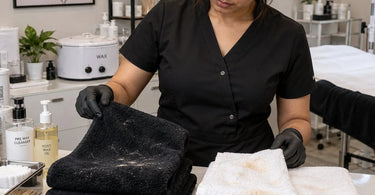
Upgrade client experiences now... starting with something as ordinary as the professional towels stacked beside your treatment table. Black towels and white towels might perform the same basic job, but they have remarkably different ways of announcing that laundry day has gone sideways. One shows every suspicious white speck, while the other reveals discoloration that seems to have appeared during the night. If your salon laundry has ever made you question your washing machine, your detergent, or possibly your entire career in the beauty industry, you are not alone. Understanding why black towels show different problems than white towels can save your spa, salon, barbershop, or massage practice considerable frustration, replacement costs, and embarrassing moments with clients.
Here is the interesting part: black towels are not automatically harder to maintain, and white towels are not automatically cleaner. Each color simply makes certain problems more noticeable while hiding others. Once you understand those differences, choosing the right towels and maintaining them becomes much easier.
Black Towels and White Towels: Same Job, Different Laundry Drama
Imagine pulling two freshly washed towels from your commercial dryer. One is black, and the other is white. Both went through the same wash cycle, but the black towel has little pale flecks scattered across its surface. Meanwhile, the white towel looks slightly gray around the edges.
Congratulations! Your laundry has decided to give you two completely different problems for the price of one.
This happens because towel color changes how we perceive lint, residue, stains, fading, and wear. Light-colored debris stands out dramatically against black fabric. White fabric, meanwhile, makes yellowing, dark stains, and transferred dyes much easier to notice.
The distinction matters in professional environments where towels are constantly exposed to massage oils, lotions, and creams, hair products, makeup, waxing preparations, skincare formulas, and cleaning chemicals.
A towel that looks perfectly acceptable during folding may reveal an entirely different appearance beneath the bright lighting of a treatment room.
Problem #1: Black Towels Reveal Every Speck of Lint
Black towels have a special talent for collecting attention from anything pale and fuzzy. White lint, loose cotton fibers, tissue fragments, and detergent particles can practically sparkle against dark fabric.
Sometimes the towel is clean, but it certainly does not look that way.
Lint becomes especially noticeable when dark towels are washed alongside white towels, fuzzy robes, cotton pads, or other fabrics that shed fibers. Professional treatment rooms often use cotton products, sponges, and wipes, so stray fibers can easily find their way into laundry bins.
To reduce visible lint on black towels, establish a few practical habits:
- Wash black towels separately from white and light-colored linens.
- Keep excessively fuzzy or lint-producing fabrics in separate loads.
- Check towel bundles for disposable tissues, cotton pads, and other loose materials before washing.
- Clean the dryer lint screen before every load.
- Avoid overloading the washer and dryer, which can interfere with cleaning and lint removal.
- Inspect clean towels under bright lighting before returning them to treatment rooms.
New towels may release additional loose fibers during their first several wash cycles. Washing new towels separately according to their care instructions can help prevent lint from spreading throughout your existing inventory.
And remember, finding lint on black fabric does not necessarily mean the towel was washed incorrectly. It may simply mean that the fabric is revealing particles that would be nearly invisible against white.
Problem #2: White Towels Show Yellowing and Gray Discoloration
White towels have their own personality quirks. They may look beautifully fresh when new, but repeated professional use can gradually leave them looking yellow, gray, or generally tired.
Several factors contribute to this discoloration. Body oils, massage products, inadequate soil removal, detergent problems, and mineral deposits can affect the appearance of white towels. Mixing white towels with dark fabrics can also introduce transferred dyes.
Over time, the difference between bright white and slightly dingy becomes impossible to ignore, especially when towels are stacked beside freshly laundered linens.
For businesses offering facials and body treatments, careful product management is essential. Rich lotions, makeup residues, and spa body treatment products can leave soils that require appropriate pretreatment.
Preventive measures include using the correct detergent dosage, separating heavily soiled towels, and selecting a wash temperature appropriate for the fabric and cleaning requirements. Never assume that adding extra detergent will solve everything. Too much can contribute to residue problems, particularly when rinsing is inadequate.
If whitening products are appropriate, follow both the towel manufacturer's care instructions and the chemical product label. Not every white towel or decorative trim can tolerate chlorine bleach.
Problem #3: Black Towels Show Fading, Bleach Spots, and Uneven Color
Black towels may hide certain dark stains, but they are particularly unforgiving when it comes to color loss.
A small splash of an incompatible chemical can leave an orange, pink, reddish, or pale patch that becomes immediately noticeable. Once the dye has been chemically altered, another washing usually cannot restore the original color.
Professional salon environments are full of potential culprits, including hair lighteners, peroxide-based developers, certain acne treatment ingredients, and disinfecting chemicals.
Hair professionals working with hair bleaches and lighteners should pay particular attention to towel exposure. A black towel might appear to conceal an accidental chemical splash at first, only to reveal an obvious discolored patch afterward.
Black towels can also gradually fade from repeated washing, excessive heat, abrasion, or harsh laundry chemistry. This creates another problem for businesses that want every towel in a stack to match.
One towel may look deep black, another charcoal, and a third like it has been contemplating retirement for six months.
To help preserve dark towel color, wash according to the fabric care label, use appropriate detergent, avoid unnecessary high temperatures, and keep incompatible bleaching agents away from dark linens. When buying towels for chemical-intensive services, consider products specifically engineered for that environment, including appropriate options from the Bleachsafe Towels collection.
Even specialty towels should be used within their manufacturer's stated chemical-resistance limits. Bleach resistance does not mean immunity to every salon chemical.
Problem #4: White Towels Expose Makeup, Wax, and Dark Product Stains
White towels provide excellent visibility, but that clarity comes with a price. Foundation, mascara, self-tanning solution, hair color, and darker skincare products can leave noticeable marks.
Professionals performing facials or skincare treatments often encounter products containing pigments, oils, or concentrated ingredients. These materials may leave residues that require more attention than everyday laundry.
Waxing services introduce their own challenge. Wax residue can adhere to towel fibers and may not be removed by an ordinary wash cycle. A conventional detergent is not automatically a substitute for the appropriate wax-removal process.
During services involving professional waxing supplies, using suitable disposable barriers or service-specific protective materials can help prevent unnecessary towel contamination.
For stained towels, first identify the substance involved. Oil-based makeup, cosmetic pigments, wax, and hair color may require different treatment methods. Always check the towel care instructions and test compatible stain treatments in an inconspicuous area.
Professional laundries should also avoid placing towels with unresolved oily residue into high-heat dryers. Oils can remain in fabrics after washing, and certain contaminated textiles can present a fire hazard when heated or stored improperly.
Problem #5: Black Towels Make Detergent Residue More Obvious
Have you ever removed a black towel from the washer and discovered pale streaks, chalky marks, or mysterious white patches?
Before declaring the washer haunted, investigate detergent and rinsing conditions.
Powdered detergent that has not dissolved adequately, an overloaded washer, or insufficient rinsing can contribute to visible deposits. Some fabric care products may also leave residues when used incorrectly.
Because these deposits are generally lighter than the towel, they stand out sharply against black fabric.
Possible solutions include measuring detergent correctly, choosing a formulation appropriate for the washer, making sure products dispense properly, and leaving enough room for towels to move through the wash water.
If visible streaks persist, an additional rinse may help, but repeated residue is a reason to investigate the underlying washing process rather than simply adding more rinse cycles forever.
White towels can experience the same problem, even when the deposits are harder to see. This is an important reminder that appearance alone cannot tell you whether detergent has been properly removed.
Problem #6: Dark Towels Can Conceal Stains That Still Need Cleaning
One of the biggest misconceptions about black towels is that their ability to hide stains makes them more hygienic.
It does not.
A dark towel can conceal makeup, body oils, product buildup, and other residues that would be easy to spot on a white towel. The substance does not magically disappear because the fabric color is cooperating with your interior design.
This matters especially in massage rooms, where professional massage products may leave oily residues even when the towel appears spotless.
Instead of relying on visual inspection alone, establish a consistent laundering routine based on how towels are used, the substances they contact, and applicable sanitation requirements.
Reusable towels should be changed between clients when required for the service, handled to avoid contaminating clean supplies, and laundered using an appropriate process. If a towel has contacted blood, other potentially infectious material, or a substance requiring special handling, follow relevant workplace safety rules and applicable infection-control procedures.
Dark towels may make some cosmetic stains less visible, but they are never a substitute for proper cleaning.
Problem #7: White Towels Make Quality Control Easier, but Not Foolproof
White towels have a practical advantage in some professional settings: visible staining and discoloration can be easier to detect.
That makes them useful when staff must routinely inspect towels for marks or cosmetic residue.
However, a white towel that looks spotless is not necessarily sanitary. Microorganisms and many contaminants are invisible, regardless of fabric color.
Similarly, an older white towel may look gray or yellow despite having been appropriately cleaned. Discoloration is not, by itself, proof that laundering failed.
The goal is to combine visual inspection with consistent procedures, not treat color as a laboratory test.
Facilities can also benefit from examining towel texture, odor, absorbency, and fabric condition. Towels that remain musty, greasy, visibly soiled, or damaged after proper laundering should not return to client service until the issue is resolved.
Are Black Towels Better for Hair Salons and Barbershops?
For many hair salons and barbershops, black towels are an attractive practical choice. They coordinate with professional stations, create a polished appearance, and may make some dark cosmetic residues less conspicuous.
But color-service stations present a special problem: lighteners and developers can discolor ordinary dyed towels.
If your salon routinely handles professional hair color, selecting towels designed for repeated salon chemical exposure may be more important than selecting a particular color.
Consider creating separate towel inventories for shampoo services, hair color application, and general styling. This makes it easier to manage soil levels and reduces the chance of accidentally using a chemically contaminated towel for an unrelated service.
A little organization now is much less expensive than discovering that half your towel inventory has developed surprise copper-colored polka dots.
Are White Towels Better for Facials and Massage Treatments?
White towels can provide the bright, classic appearance associated with facials, massage treatments, and luxury spa services. They also make many stains easy to identify before a towel is reused.
However, frequent contact with massage oils, cosmetic products, and skincare formulas can increase the amount of stain management required.
For facial services, think about where towels contact makeup, cleanser, exfoliating products, or treatment solutions. For massage services, consider which towels regularly encounter oils and creams.
Professionals using towel steamers should also establish clear procedures for laundering, drying, storing, and preparing towels before they enter the warming equipment. A towel warmer is not automatically a substitute for washing, disinfection, or sterilization.
Neither white nor black is inherently the best choice for every treatment. Consider your service menu, chemical exposures, cleaning capabilities, and desired presentation.
How to Build a Smarter Salon Towel Laundry System
Whether your business uses black, white, or multiple towel colors, a simple routine can improve consistency and reduce unnecessary replacements.
Step 1: Separate towels by color and service use. Keep whites and darks apart, and consider additional separation for heavily oiled, dyed, or chemically exposed towels. Follow any special handling requirements for contaminated linens.
Step 2: Inspect before washing. Look for makeup, hair color, wax, heavy oil residue, and damaged fabric. Identify substances needing specific pretreatment rather than assuming every stain responds to the same product.
Step 3: Follow the care label. Water temperature, detergent choice, and drying conditions affect both cleaning and fabric longevity. Use a validated or otherwise appropriate laundering process for your facility's hygiene needs.
Step 4: Avoid oversized loads. Towels require room for mechanical action, rinsing, and proper drying. Packing the washer to the absolute limit may seem efficient until you have to run the same load again.
Step 5: Manage drying carefully. Clean the lint screen, avoid unnecessary overdrying, and ensure towels are fully dry before folding and storage. Do not store damp towels in closed cabinets or piles.
Step 6: Inspect finished towels. Check for visible stains, lint, chemical damage, unwanted odors, and rough or frayed surfaces. Separate questionable towels for reprocessing or retirement.
Step 7: Rotate inventory. Using a consistent rotation system can distribute wear more evenly and prevent a handful of towels from receiving nearly all the daily abuse.
Businesses can also simplify linen management by coordinating towel purchases with other salon and spa bedding supplies. A coordinated inventory is easier to organize, count, and replenish.
When Should You Replace Professional Towels?
There is no universal number of wash cycles that determines when every towel should retire. Fabric quality, frequency of use, chemical exposure, laundering conditions, and service expectations all affect lifespan.
Instead, establish practical replacement standards.
Consider removing towels from client use when they develop persistent unpleasant odors, unresolved staining, excessive lint shedding, substantial fading, rough texture, thinning fabric, frayed edges, holes, or reduced absorbency that affects service quality.
Black towels with widespread discoloration may look inconsistent when presented together. White towels with permanent yellowing or gray patches may undermine the crisp appearance you want in a treatment room.
When towels are no longer suitable for client contact but remain structurally usable, a business may be able to reassign appropriately cleaned items to non-client cleaning duties. Clearly mark and separate these towels so they never return to the clean treatment inventory.
Damaged or unsuitable textiles should be discarded according to applicable facility policies, particularly if contamination makes reuse inappropriate.
Should Your Spa Stock Both Black and White Towels?
For many businesses, the answer is yes.
Using different towel colors for different service categories can make staff organization easier while matching the atmosphere of individual treatment areas.
For example, a spa might use white towels for selected facial services, black towels for general salon styling, and designated specialty towels for treatments involving particular products or chemicals.
Color coding can support inventory organization, but it does not replace training, sanitation procedures, or contamination controls.
It is also worth evaluating towel construction, absorbency, size, laundering durability, and the manufacturer's stated chemical compatibility. A well-made towel suited to the service will generally be a better purchase than one chosen on appearance alone.
Browse High-Quality Towels for professional linen options, explore Bleachsafe Towels for appropriate specialty applications, or consider the Sposh collection when planning a coordinated spa linen presentation.
As a wholesale distributor, Pure Spa Direct offers professional supply options for businesses selecting towels and other essentials for their service environments.
Frequently Asked Questions About Black and White Salon Towels
Why do my black towels look dusty after washing?
Visible lint, detergent deposits, and mineral-related residues can create a dusty appearance on black fabric. Review your sorting routine, detergent dosage, washer loading, and rinsing performance before assuming the towel itself is defective.
Why do white salon towels turn gray?
Gray discoloration may result from accumulated soil, insufficient cleaning, dye transfer, or inappropriate laundry sorting. Assess the washing process and fabric care instructions to identify the likely cause.
Can I use bleach on black salon towels?
Only use a bleaching product when the towel manufacturer and chemical product instructions specifically allow it. Ordinary black cotton towels can experience irreversible color damage from chlorine bleach and certain other salon chemicals. Specialty bleach-resistant towels have their own stated limitations.
Do black towels last longer than white towels?
Not necessarily. Towel lifespan depends on fiber quality, construction, laundering conditions, chemical exposure, and frequency of use. The fabric color mainly changes which forms of wear are easiest to see.
Are black towels more sanitary than white towels?
No. Neither color is inherently more sanitary. Appropriate laundering, handling, drying, storage, and service-specific hygiene procedures determine whether a reusable towel is suitable for client use.
How can I keep salon towels soft without creating buildup?
Measure laundry products carefully, avoid overloading, rinse thoroughly, and follow the textile manufacturer's care instructions. Excessive fabric softener can leave deposits and may reduce towel absorbency, making it less useful for professional treatments.
The Bottom Line: Choose Towels Based on the Problems You Want to Manage
Black towels and white towels are not enemies competing for control of your laundry room. They simply reveal different aspects of daily professional use.
Black towels highlight lint, pale detergent marks, fading, and chemical color loss. White towels make many cosmetic stains, dye transfer, yellowing, and gray discoloration easier to spot. Neither color eliminates the need for thorough cleaning, proper sorting, or careful inspection.
The smartest approach is to match your towel inventory to your services, train staff on appropriate handling, and maintain a consistent laundry routine that protects both presentation and hygiene.
Whether you are refreshing a busy hair salon, upgrading a massage practice, or organizing the treatment rooms of a growing spa, the right towels can help create a smoother professional experience. Explore the selection of professional salon and spa towels and other Spa Essentials for Professionals available through Pure Spa Direct.
After all, your towels should be helping your business look fabulous, not providing a new laundry mystery every Tuesday.
