
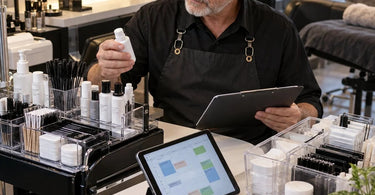
Stock this for success... because a beautiful brow transformation should not come with an equally dramatic inventory bill! Professional brow lamination supplies are essential for delivering gorgeous, professionally styled eyebrows, but ordering more products than your appointment calendar can realistically support is a surprisingly easy way to lose money. Between product expiration dates, limited storage life after opening, changing client preferences, and unpredictable booking patterns, smart inventory planning is every bit as important as mastering the perfect brow shape. The secret is not having the biggest supply cabinet in town; it is having exactly what your brow artists need when clients are ready to book.
Brow lamination has become a valuable addition to professional brow menus because it helps create the appearance of fuller, more uniform eyebrows by temporarily changing the direction and arrangement of brow hairs. For salons, spas, estheticians, and dedicated brow studios, the treatment can generate repeat appointments and introduce clients to complementary services. However, the chemical solutions used during the process require more thoughtful inventory management than everyday disposable supplies. Understanding how actual appointment demand should influence purchasing decisions can help protect product quality, reduce unnecessary spending, and keep your treatment room running smoothly.
Why Brow Lamination Inventory Is Different From Ordinary Salon Supplies
Not every product in your salon has the same relationship with time. A package of unopened disposable applicators may remain useful for a long period when stored appropriately. Brow lamination solutions, on the other hand, come with manufacturer-specific expiration dates, storage requirements, and limitations after opening.
Most professional brow lamination systems include a softening or lifting solution, a setting or neutralizing solution, and potentially a conditioning or nourishing treatment. Depending on the system, kits may also include adhesives, applicators, brushes, or other specialized tools.
These components are designed to work together according to specific manufacturer instructions. Purchasing a large quantity of chemical solutions without enough appointments to use them can create a problem long before the salon reaches the bottom of the box.
That is why effective purchasing begins with an important question: How many brow lamination appointments are actually happening, rather than how many the salon hopes will happen?
Start With Real Appointment Numbers, Not Optimistic Predictions
Every brow professional dreams of a fully booked calendar. Unfortunately, purchasing inventory based entirely on that dream is a little like buying fifty birthday cakes because you might throw a party someday.
Instead, review your completed brow lamination appointments over the previous eight to twelve weeks. Look at the number of treatments performed, not simply the number originally scheduled.
Pay attention to several important details:
- How many brow lamination services were completed each week?
- How many scheduled appointments were canceled or rescheduled?
- Are bookings increasing, decreasing, or remaining consistent?
- Which days of the week generate the most demand?
- How often do existing clients return for another treatment?
- Are clients booking lamination alone or combining it with other brow services?
For example, imagine a brow studio completes 24 lamination appointments over eight weeks. That represents an average of three completed treatments per week. Ordering enough chemical solution for 100 treatments might look economical on a price-per-service basis, but the salon must first determine whether that inventory can be used within the applicable product shelf-life limits.
Actual demand provides a much more dependable purchasing foundation than ambitious sales projections.
Understand How Opened Product Shelf Life Changes the Equation
One of the most important considerations when ordering brow lamination supplies is the difference between unopened shelf life and usable life after opening.
Some professional systems use individually packaged sachets, while others use bottles or multi-use containers. Their storage requirements can vary significantly. Certain manufacturers specify short usage windows after opening, while others allow different periods when products are sealed and stored according to their instructions.
There is no universal rule that applies to every brow lamination formula. Always follow the individual manufacturer's directions for storage, expiration, handling, and disposal.
Consider a hypothetical system where one opened sachet contains enough solution for several treatments but has a limited approved usage window. If your salon schedules only one lamination appointment during that period, the remaining solution may have to be discarded even though the sachet was originally designed to serve multiple clients.
That wasted product increases the real cost of the completed treatment.
For this reason, salons with lower appointment volume may benefit from evaluating smaller package sizes, single-service formats, or systems with packaging better suited to their booking patterns.
Never extend a chemical product's manufacturer-approved usage period simply to reduce waste. Product performance and client safety must remain more important than extracting one extra service from a package.
Calculate the Actual Product Cost Per Brow Lamination Appointment
The price printed on a professional kit is only the beginning of the financial calculation.
To understand whether your purchasing strategy is efficient, calculate the actual cost of the supplies consumed during completed appointments, including unavoidable product waste.
Here is a simple hypothetical example:
- A brow lamination kit costs $120.
- The manufacturer indicates that the kit may provide up to 30 treatments under appropriate usage conditions.
- The theoretical chemical cost is $4 per treatment.
- However, because of low booking volume and opened-product disposal, the salon completes only 20 treatments before the remaining material becomes unusable.
- The actual chemical cost rises to $6 per completed treatment.
That is a 50% increase in the chemical cost per appointment compared with the theoretical estimate.
These figures are illustrative, not specifications for a particular kit. Actual yields and usable periods depend on the product selected and its instructions.
Remember to include other consumables such as professional cotton products, applicators, protective gloves, and appropriate cleansing supplies in your service-cost calculations.
Once the complete treatment cost is clear, it becomes much easier to evaluate pricing, packages, promotions, and purchasing quantities.
Match Order Size to the Number of Clients You Actually Serve
Ordering the right amount of inventory requires balancing three variables: appointment demand, usable product life, and supplier replenishment time.
A practical starting formula is: Expected supply requirement = forecasted completed appointments multiplied by average product usage per appointment, plus a reasonable safety allowance.
For example, if a salon typically performs four brow lamination services per week and plans inventory for the next three weeks, it should expect approximately twelve appointments during that period.
The salon can then calculate how many unopened sachets, bottles, or kits are required to serve those twelve appointments using the manufacturer's realistic treatment yield and storage instructions.
The safety allowance should account for foreseeable booking variation or delivery delays, without creating an excessive stockpile of time-sensitive chemicals.
For supplies with especially short opened-product usage periods, calculate demand within each opening window rather than assuming the contents of every package can be spread across the entire month.
This distinction is important because twelve appointments scattered across a month may consume more opened packages than twelve appointments concentrated into several busy service days.
Separate Chemical Solutions From Everyday Brow Service Essentials
One of the smartest strategies is dividing brow lamination inventory into categories based on how quickly products are consumed and how sensitive they are to storage conditions.
Category One: Time-sensitive chemical products. These include lifting solutions, neutralizers, and other formulas with limited manufacturer-specified usable periods. Order quantities should closely reflect treatment demand and the applicable expiration dates.
Category Two: Supporting professional products. Depending on the system, these may include compatible conditioning treatments, brow cleansers, and styling products. Track their expiration dates and usage rates independently because their shelf lives may differ from the primary lamination solutions.
Category Three: Disposable supplies. Products such as cotton pads, disposable applicators, and single-use tools can often be purchased in larger quantities when storage space, hygiene requirements, and overall consumption justify doing so.
Category Four: Reusable tools. Suitable brow brushes, measuring tools, and implements should be maintained and replaced based on their condition and the manufacturer's cleaning and disinfection instructions rather than simply the number of appointments booked.
Explore Lash & Brow Service Supplies and Spa Tools & Implements for Professionals to organize your supply planning around the different products required for professional services.
Consider Appointment Clustering to Reduce Product Waste
For salons using multi-service sachets or containers with limited approved opened-product life, appointment scheduling can influence inventory efficiency.
Imagine that your brow artist performs four lamination appointments every week. If those bookings are distributed across four separate days, the studio might need to open more product packages than if several appointments occurred closer together.
Where manufacturer instructions permit multiple treatments from an opened package, scheduling brow lamination appointments on designated service days may help improve product utilization.
This approach can be particularly useful for smaller studios, independent estheticians, and salons introducing lamination as a new treatment.
However, appointment clustering should never override proper product handling, contamination prevention, manufacturer restrictions, or client convenience.
For example, a salon might reserve additional brow service availability on Thursdays and Saturdays because historical bookings show stronger demand on those days. Clients still receive flexible booking options, while the business has a clearer picture of when supplies will be consumed.
Think of it as a little strategic matchmaking between your appointment calendar and your inventory cabinet.
Keep Your Brow Lamination System Consistent
Frequent product switching can make inventory planning unnecessarily complicated, especially when different manufacturers use different processing instructions, packaging styles, and chemical formulations.
Establishing a primary professional system can simplify staff training, purchasing forecasts, and service costing.
When evaluating a brow lamination kit, consider the number of treatments advertised, packaging format, manufacturer instructions, unopened shelf life, and usage restrictions after opening.
Pure Spa Direct carries professional brow service options, including the Brow Lamination Kit, which professionals can evaluate alongside their service volume and operating needs.
Remember that Pure Spa Direct is a professional beauty supply distributor, not the manufacturer of every system it carries. Product-specific treatment protocols, usage limitations, and storage guidance should always come from the appropriate manufacturer.
If your team introduces a new system, provide the necessary product training before using it on clients. Never mix incompatible processing steps or chemical solutions from different systems unless the manufacturers explicitly authorize that combination.
Account for Brow Tinting and Other Complementary Services
Brow lamination frequently appears on salon menus alongside brow tinting, shaping, and waxing services. These combinations can increase revenue per appointment, but they also affect inventory planning.
For example, a client booking lamination and tinting may require additional professional lash and brow tint, compatible application tools, and other products specified by the service protocol.
Clients who only request shaping may instead use supplies from your professional waxing collection.
Rather than assuming every brow appointment consumes the same supplies, track each service combination separately.
A simple service breakdown might include lamination only, lamination with approved tinting, brow shaping only, and standalone brow tinting.
Not every tint, wax, or additional treatment is appropriate immediately before or after lamination. Follow the manufacturers' compatibility instructions, required waiting periods, and applicable professional standards. Never add services solely because a product is already open.
Separate tracking prevents a busy brow department from ordering excessive quantities of one product while unexpectedly running short on another.
Build a Reorder Point Around Supplier Lead Time
Ordering only when your last sachet has been opened is not inventory management. It is an invitation for your appointment calendar to develop a personality disorder.
A more reliable approach uses a reorder point based on expected consumption during the time needed to receive replacement supplies.
Consider a hypothetical studio completing five brow lamination appointments per week. If restocking typically takes one week, the business should maintain enough usable unopened inventory to cover approximately five anticipated appointments during replenishment, plus a modest reserve for unexpected demand or delivery delays.
The exact number of packages depends on their usable yield and manufacturer instructions.
Review supplier processing time, delivery expectations, holidays, and possible interruptions when establishing your reorder point.
For unusually busy periods, such as wedding season or a successful promotional campaign, adjust your forecasts using confirmed appointments and realistic historical trends.
The goal is to avoid both extremes: a mountain of unused chemical solutions and an awkward conversation explaining why a confirmed brow service cannot be performed because supplies are unavailable.
Use a Simple Weekly Brow Inventory Checklist
You do not need a complicated inventory platform to make meaningful improvements. A basic spreadsheet or inventory management feature in your salon software can help establish consistent purchasing decisions.
During a weekly review, record the following:
- Completed brow lamination appointments from the previous week.
- Confirmed upcoming appointments and realistic expected additions.
- Unopened stock quantities for each chemical step.
- Expiration dates and lot numbers where applicable.
- Opened packages and their manufacturer-approved discard dates.
- Available conditioning products and related consumables.
- Supplier replenishment times and outstanding orders.
- Products discarded because of expiration, contamination, or exceeded usage windows.
Use a first-expiring, first-out approach whenever appropriate, checking that all products remain within their stated shelf lives and have been stored correctly.
Labeling opened products with the opening date and required discard date can also support accurate stock rotation when this practice is consistent with manufacturer instructions.
This small routine creates valuable data. After several weeks, purchasing becomes less of a guessing game and more of a predictable part of operating the salon.
Watch for the Hidden Costs of Overordering
Excessive inventory affects more than your storage shelves. It can tie up money that could otherwise support marketing, staff development, equipment maintenance, or additional services.
Overordering may also create hidden operational costs:
- Expired inventory: Products may become unusable before they can be applied in a professional treatment.
- Opened-product waste: Chemical solutions may need to be discarded after their approved usage periods.
- Storage complexity: Larger quantities require more space and closer expiration-date monitoring.
- Cash flow pressure: Money spent on unnecessary inventory is unavailable for other business needs.
- Forecasting confusion: Excess stock can conceal changes in actual service demand.
- Increased handling: More inventory means additional receiving, counting, rotation, and recordkeeping.
A discounted bulk order is only a bargain if the salon can use the supplies appropriately before they expire.
That point deserves repeating: the lowest purchase price does not always produce the lowest cost per completed service.
How New Brow Lamination Services Should Be Stocked
If your salon is adding brow lamination for the first time, avoid treating your projected demand as though it were already guaranteed.
Begin with a manageable professional supply quantity suitable for staff training, initial bookings, and a reasonable replenishment window.
Use consultation requests, waitlist interest, and actual appointments to evaluate demand. Social media enthusiasm is encouraging, but a hundred likes on a brow transformation photograph do not necessarily translate into a hundred paying clients.
As bookings become more consistent, expand inventory gradually.
New services also require attention to professional education, product-specific screening and patch-testing instructions, client documentation, and applicable licensing requirements. These operational considerations should be addressed before the service is widely promoted.
Professionals can review broader Lash & Brow Enhancement Services when developing an organized treatment menu and supply strategy.
Adjust Purchasing for Seasonal Brow Service Demand
Some salons experience stronger brow service bookings around weddings, vacations, holidays, and other special events. Others maintain consistent demand throughout the year.
Rather than assuming seasonal patterns are the same everywhere, review your own booking records.
If last year's spring wedding season increased lamination appointments, use that information alongside current confirmed bookings to develop a realistic purchasing forecast.
For businesses without a full year of historical data, start conservatively and adjust based on actual appointments.
Temporary promotions can also affect demand. If a campaign produces additional bookings, ensure that your inventory forecast accounts for those services without assuming the promotional increase will continue indefinitely.
After the campaign ends, return purchasing quantities to normal unless completed appointment data supports a higher ongoing demand level.
Know When Bulk Buying Brow Supplies Actually Makes Sense
Bulk ordering is not automatically a bad decision. For busy brow studios with dependable appointment volume, predictable treatment usage, adequate storage, and suitable product expiration dates, larger orders may offer legitimate advantages.
Bulk buying becomes more attractive when:
- Historical appointment volume supports using the entire order within the approved product life.
- Manufacturer packaging matches the salon's typical service frequency.
- Products can be stored correctly without excessive temperature or moisture exposure.
- The cost savings remain meaningful after accounting for waste and carrying costs.
- Staff members consistently use the same approved professional system.
- The business can maintain a sensible emergency reserve without accumulating aging inventory.
Compare the total usable-treatment cost across available package sizes, not simply the advertised quantity or promotional price.
For high-volume operations, larger orders may simplify purchasing and reduce administrative work. For occasional brow lamination providers, smaller orders may protect more money than bulk discounts save.
Turn Inventory Efficiency Into Better Salon Profitability
Improving brow lamination inventory management does not require increasing treatment prices or rushing appointments. Often, the biggest opportunity is simply reducing the amount of product purchased but never used.
Track your actual chemical cost per completed appointment over time. Compare that figure with your service pricing, labor costs, disposable supplies, and other operating expenses.
If waste is consistently high, investigate whether a different package size, improved appointment forecasting, or adjusted ordering frequency would help.
Also review the profitability of complementary services without treating every upsell as a guaranteed sale. Relevant additions may include compatible brow henna, professional tinting, or appropriate retail styling products, provided the services and products fit client needs and manufacturer guidance.
Reliable supply availability contributes to the client experience, too. A well-organized brow station allows professionals to focus on consultation, careful application, correct processing, and beautiful results rather than searching through a cabinet of questionable leftovers.
Frequently Asked Questions About Brow Lamination Inventory
How many brow lamination kits should a small salon keep in stock?
The ideal quantity depends on completed appointment volume, the number of treatments each kit can realistically provide, unopened expiration dates, opened-product usage limitations, and replenishment time. Start with documented demand and calculate a modest safety reserve rather than choosing a fixed number of kits for every salon.
Is it better to buy brow lamination sachets or bottles?
Neither format is universally better. Sachets may offer convenient portioning, while bottles may suit certain higher-volume workflows. Compare the manufacturer's treatment yield, storage requirements, and usable period after opening against your actual appointment patterns.
How often should salons reorder brow lamination supplies?
Review inventory at least weekly and place orders when usable stock approaches the quantity needed to cover expected demand during supplier replenishment, plus a reasonable buffer. The ordering schedule should change as booking volume changes.
Can opened brow lamination products be saved for another appointment?
Only when the manufacturer explicitly permits reuse within a specified period and provides appropriate storage and handling instructions. Some products have very short opened-product usage windows. Never assume an opened sachet or bottle remains suitable simply because it looks normal.
Should a salon purchase extra supplies before a promotion?
Purchase enough for confirmed appointments and a realistic estimate of additional bookings. Avoid ordering against speculative demand alone, particularly when dealing with chemical products that have limited shelf lives.
What is the biggest mistake salons make when ordering brow lamination supplies?
One common mistake is calculating cost using the maximum advertised treatment yield without considering actual appointment frequency and the usable life of opened products. This can make a large kit appear more economical than it really is.
Keep Your Brow Business Beautifully Stocked With Pure Spa Direct
Successful brow lamination services depend on more than excellent technique. They also require dependable professional supplies, thoughtful purchasing, and a realistic understanding of your clients' booking habits.
Ordering around actual appointment demand helps salons protect their budgets, maintain product rotation, minimize waste, and keep treatment stations ready for the next beautifully shaped set of brows.
At Pure Spa Direct, beauty professionals can explore professional brow lamination supplies, lash and brow essentials, and salon business supplies to support their treatment menus.
Whether your studio performs a handful of laminations each month or manages a bustling brow bar, the smartest purchasing decision is the one that fits your real demand, product requirements, and service goals.
Because perfectly styled brows are fabulous. Perfectly planned inventory? That is fabulous for the bottom line, too!
