
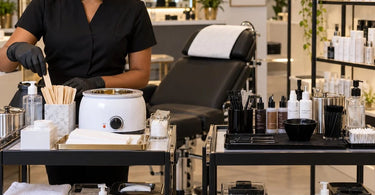
Stay efficient, stay ahead... and keep your brow station from turning into a tiny beauty laboratory where everything somehow ends up covered in wax. Professional brow waxing and tinting services combine precision, timing, chemical products, and close contact with sensitive facial skin. That combination makes workspace organization much more than an aesthetic preference. Creating separate clean zones for waxing and tinting helps estheticians reduce cross-contamination risks, protect supplies, maintain consistent results, and move through appointments without unnecessary scrambling. Whether you operate a dedicated brow bar, a busy waxing studio, or a full-service salon, thoughtful workstation design can make your entire brow service feel more controlled, polished, and professional.
The good news? You do not need an enormous treatment room or a renovation worthy of a television makeover. A few intentional boundaries, properly maintained tools, and a repeatable service routine can transform even a compact brow station into a more efficient workspace.
Why Brow Waxing and Tinting Should Not Share One Chaotic Work Surface
Brow waxing and brow tinting may happen during the same appointment, but they involve different materials, tools, and contamination risks. Waxing requires careful handling of heated wax, applicators, skin preparation products, and materials that contact hair and skin. Tinting involves precise product measurement, mixing equipment, application brushes, processing times, and product-specific chemical precautions.
Combining everything on one crowded counter creates opportunities for mistakes. A used wax applicator might end up beside a clean tint brush. A tint mixing bowl could sit near wax residue. A technician may reach for an item with contaminated gloves or accidentally place clean supplies on a surface that has not been disinfected.
These issues are not just organizational inconveniences. They can compromise hygiene, waste supplies, interrupt service, and make it harder to maintain a consistent professional routine.
Separate clean zones establish clear boundaries for supplies and activities. Instead of relying on memory during a busy appointment, the workspace itself helps guide proper handling.
What Does a Separate Clean Zone Actually Mean?
A clean zone is a designated area where clean, appropriately stored supplies and prepared equipment are protected from used tools, contaminated materials, and service debris. It does not mean every square inch needs a separate room, and it does not mean that an ordinary countertop becomes sterile simply because it looks tidy.
For a combined brow service, a practical setup can include three distinct working areas.
- Waxing preparation and application zone: A designated area for the wax warmer, clean applicators, approved skin preparation products, and waxing-specific tools.
- Tint preparation zone: A separate clean area for authorized brow-color products, dedicated mixing bowls, measuring accessories, and tint application tools.
- Used-tool and disposal zone: A clearly identified location for waste containers, used disposables, and reusable implements awaiting proper cleaning and disinfection.
The third area is especially important. Separate waxing and tinting supplies accomplish very little if contaminated tools eventually land beside clean products.
A well-designed station also includes accessible hand hygiene facilities, appropriate storage, and a clear route for transferring used implements away from clean preparation surfaces.
Zone One: Build a Waxing Station That Keeps Contamination Under Control
The waxing zone should make it easy to prepare the skin, control wax application, and discard used materials without reaching across tinting products.
Start with a stable, cleanable surface for your Professional Wax Warmers for Salons & Spas. Position equipment where cords will not interfere with movement and where hot wax cannot be accidentally bumped during treatment.
Keep clean Professional Wax Spatulas and Applicators in protected storage near the warmer. Separate unused applicators from anything that has contacted a client.
Never return an applicator to a shared wax supply after it has contacted a client's skin. Use a fresh applicator according to the appropriate single-use procedure and your local sanitation requirements. The infamous double-dip has no business making a comeback at the brow bar.
Organize waxing supplies into clearly defined categories. Depending on your technique, these might include Professional Stripless Hard Wax, Soft Strip Wax, and Wax Strips & Rolls.
Keep Pre & Post-Waxing Products accessible without placing their containers in areas where used applicators or loose wax residue can accumulate. Dispense products hygienically and avoid contaminating the original containers.
Professional wax products from collections such as ItalWax, Berodin, and Cirepil can be organized according to the formulas and application methods your business uses. Regardless of brand, follow the manufacturer's heating, handling, and application instructions.
Zone Two: Give Brow Tint Preparation Its Own Clean Space
Tint preparation deserves a dedicated area because color services involve precise measurements, clean application tools, and products that must be handled according to their specific instructions and legal restrictions.
Place tint supplies away from wax warmers, loose hair, used applicators, and cleaning chemicals. A separate tray or cleanable countertop section can establish an effective boundary.
Stock this zone with dedicated Mixing Bowls, suitable measuring accessories, and Brow Tint Brushes. Keep clean tools protected until they are needed, and never return a used applicator to a shared product container.
Use clearly labeled original product packaging and follow each manufacturer's instructions for preparation, permitted use, application, processing, and disposal. Prepare only the amount needed for a service when the product directions permit that approach.
An essential professional precaution: Brow tint products are not automatically authorized for eyebrow use simply because they are marketed to beauty professionals. In the United States, FDA color additive rules restrict which ingredients may be used to dye eyebrows and eyelashes. Silver nitrate is permitted for that purpose only under specific professional-use formulation and application conditions. Other products, including certain hair dyes and henna formulations, must not be assumed appropriate for eyebrow dyeing. Verify the product's legal status, intended use, labeling, and applicable state requirements before performing a service.
Professional suppliers may offer collections such as Professional Lash and Brow Tint and brand-specific brow products. These collections can help technicians research available equipment and formulations, but product availability does not replace regulatory verification.
For salon owners, this means that purchasing decisions, staff training, and workstation organization should all reflect the actual products and services legally permitted in your location.
Why Separating Wax and Tint Products Matters for Skin Safety
Brow waxing temporarily removes hair and can leave treated skin more sensitive. Depending on the client's skin condition, medications, skincare routine, and service technique, the area may be more vulnerable to irritation.
Color products introduce another set of considerations, including the possibility of allergic reactions, chemical sensitivity, and eye exposure.
Keeping the workflows separate helps prevent accidental product transfer, but physical separation alone cannot make every combined treatment appropriate.
Before beginning, review the client's consultation information and evaluate relevant contraindications. Ask about recent exfoliating treatments, retinoid use, previous reactions, irritated skin, and other factors that may affect service suitability.
Do not apply wax or coloring products over broken, inflamed, or otherwise unsuitable skin. Follow product-specific directions for compatibility, sequence, testing, and timing. Some combinations may require delaying one service or choosing a different approach entirely.
A clean station supports good judgment. It does not replace it.
The Best Brow Station Layout for Small Salons
Limited square footage does not mean limited professionalism. Even a narrow treatment counter can support separate workflows with careful positioning.
Consider dividing your station into sections based on the technician's natural working movements.
- One side: Wax warmer, protected clean applicators, and waxing supplies.
- Opposite side: Clean tint preparation tray, dedicated bowls, and color application accessories.
- Separate designated area: Covered or otherwise appropriately managed waste, used disposable materials, and implements awaiting reprocessing.
- Protected storage: Extra clean products, unused gloves, cotton, and tools that are not needed immediately.
Choose smooth, nonporous, cleanable trays and organizers that are compatible with your cleaning and disinfection procedures. Avoid unnecessary decorative containers that trap product residue or make thorough cleaning difficult.
Small covered organizers, clearly labeled containers, and designated tool holders can make a remarkable difference. That gorgeous decorative wicker basket might look adorable on social media, but it is not necessarily the best home for tools that must remain clean.
For larger treatment rooms, a dedicated waxing cart and separate tint preparation counter may offer additional convenience. Whatever the layout, maintain a physical distinction between clean supplies and used equipment.
Preventing Cross-Contamination Between Service Steps
Cross-contamination occurs when potentially harmful microorganisms or unwanted materials are transferred from one person, tool, surface, or product to another.
During brow services, transfer can happen through hands, reusable brushes, tweezers, applicators, containers, linens, or frequently touched workstation surfaces.
Effective prevention involves more than wiping everything down at the end of the day.
Wash or sanitize hands when appropriate, including before service and after contamination. Change gloves when they become contaminated, torn, or unsuitable for the next task. Remember that wearing gloves does not eliminate the need for proper hand hygiene.
Keep unused Protective Gloves & Masks in clean storage. Never reach into a container of fresh supplies with contaminated gloves.
Use disposable items only as intended. Clean reusable implements thoroughly before applying an appropriate disinfectant, following label directions and required contact times. Use products suitable for the surface or equipment being treated.
Explore Professional Cleaners & Disinfectants for Salons and Spas when organizing the supplies needed for your facility's sanitation program.
Cleaning and disinfection are different processes. Cleaning removes visible soil and debris, while disinfection uses an appropriate process to reduce designated microorganisms on suitable surfaces. Both steps matter, and neither should be skipped when required.
Why Dedicated Brow Brushes, Bowls, and Tweezers Make Sense
Shared tools can introduce unnecessary confusion during back-to-back brow services. Dedicated equipment makes it easier to maintain consistent procedures.
Keep separate tool sets for distinct applications when practical, especially when different product categories require different handling or cleaning procedures.
For example, dedicated tint mixing bowls should not double as containers for wax remover or general-purpose skincare products. Tint brushes should be reserved for their intended application rather than appearing mysteriously in every product jar on the counter.
Professional Applicators & Spatulas and Spa Tools & Implements can help technicians build a clearly organized equipment system.
Reusable tweezers and other suitable implements must still undergo required cleaning and disinfection between clients, even if they are assigned to a particular workstation.
Color-coded handles, labeled trays, or separate storage compartments can provide visual reminders. The goal is not to buy every accessory in three matching colors. The goal is to make correct handling the easiest choice.
How Separate Clean Zones Can Speed Up Appointments
At first, creating separate zones may sound like adding another rule to an already busy service. In practice, a logical layout can reduce unnecessary movement and decision-making.
When tools have assigned locations, technicians spend less time searching for a clean brush, relocating a wax container, or clearing an overcrowded counter before preparing tint.
Consider a technician who performs several brow appointments in succession. Without a standardized setup, each appointment may involve rearranging products, gathering missing supplies, and correcting workstation clutter.
A well-organized station creates a more predictable pattern. Supplies are prepared before the client arrives, contaminated items move directly into the appropriate disposal or reprocessing area, and clean tools remain protected.
That consistency can reduce avoidable interruptions and help staff devote more attention to application accuracy and the client's experience.
It may also make inventory tracking easier. When waxing and tinting consumables have dedicated storage locations, technicians can identify low supplies without rummaging through an assortment of half-empty containers.
A Practical Brow Waxing and Tinting Workflow
A repeatable service routine supports hygiene, product accountability, and smoother appointments. Use the following framework as an organizational example, adapting it to your licensing requirements, facility policies, and approved product instructions.
- Prepare the treatment area. Clean and disinfect applicable surfaces and reusable equipment as required. Allow disinfectants to remain wet for their stated contact times.
- Arrange protected clean supplies. Stock the waxing and tinting areas separately. Keep clean applicators, brushes, and bowls protected until use.
- Complete the consultation. Review skin condition, allergies, medications, previous reactions, contraindications, and whether the planned procedures are appropriate.
- Verify product eligibility. Confirm that any color product is legally permitted for eyebrow use and that all equipment and materials will be used according to their instructions.
- Perform hand hygiene. Use appropriate protective equipment and avoid touching clean product containers with contaminated hands or gloves.
- Perform authorized service steps. Follow the applicable waxing and color-product instructions for preparation, sequence, application, timing, and removal. Do not assume that combining treatments is appropriate for every client.
- Control used materials immediately. Discard single-use items properly and move reusable tools into the designated reprocessing area.
- Provide suitable aftercare. Explain relevant skin-care precautions and any manufacturer-directed aftercare without promising that irritation or reactions cannot occur.
- Reset the station. Clean and disinfect required surfaces and reusable implements between clients. Replace consumables and prepare protected clean supplies for the next appointment.
When the process is built into the station layout, technicians can follow it more consistently without turning every appointment into an elaborate scavenger hunt.
Common Brow Station Mistakes That Undermine Clean Zones
Even an attractive, professionally equipped station can develop sanitation problems when daily habits work against the layout.
Keeping clean and used brushes in the same holder: Tools that have contacted a client or product should not be returned to clean storage before appropriate processing.
Placing tint bowls beside hot wax equipment: Crowded arrangements can increase the risk of spills, confusion, and accidental contact with inappropriate products.
Reaching into supply containers with contaminated gloves: This can transfer material to items intended for later clients.
Using attractive but difficult-to-clean organizers: Porous or intricate storage accessories can complicate proper workstation maintenance.
Skipping disinfectant contact times: A quick swipe is not automatically equivalent to following an approved disinfection procedure.
Assuming professional packaging guarantees legal suitability: Brow coloring products must satisfy applicable FDA requirements and state restrictions, regardless of how they are marketed.
Leaving uncapped products near service debris: Product containers should be handled and stored according to their instructions, away from contamination risks.
These mistakes often develop gradually as appointments become busier. Routine station audits can identify problems before they become established habits.
What Brow Professionals Should Keep in Their Supply Inventory
A reliable brow service depends on having the appropriate supplies available without overcrowding the treatment area.
Build your inventory around the procedures your team actually performs, rather than filling every drawer with products that may never be used.
Useful categories can include Waxing Supplies for Professionals, clean single-use applicators, suitable waxing formulas, appropriate skin preparation products, and dedicated tools for approved brow coloring services.
For general hygiene and workspace maintenance, consider Professional Cotton, Sponges, and Wipes, High-Quality Towels, and suitable surface disinfectants.
Disposable protective coverings from the Hygienic Table Paper collection may also support treatment-area preparation when used appropriately.
Keep backup supplies in designated storage rather than stacking everything within the immediate treatment zone. Rotate inventory according to expiration dates, shelf-life instructions, and product storage requirements.
For busy brow bars, standardizing the essential setup across technicians can simplify reordering and reduce unexpected shortages.
Training Your Team to Maintain Separate Clean Zones
Even the most thoughtfully designed workstation will not solve sanitation problems if every technician follows a different routine.
Document your salon's procedures for supply placement, hand hygiene, glove changes, product dispensing, single-use disposables, reusable tool processing, spill response, and station turnover.
Provide specific training for waxing and any legally permitted tinting services. Staff should understand why the procedures matter rather than simply memorizing where the clean bowls belong.
Post a discreet station-reset checklist where employees can reference it. During onboarding, demonstrate the correct handling of every tool and product category used at the station.
Periodically observe actual service workflows. A checklist that looks perfect on paper may reveal practical problems when a technician is juggling an appointment, a timer, and a client who has approximately seventeen questions about eyebrow symmetry.
Encourage employees to identify awkward station arrangements and suggest improvements. The best layout is one that supports compliant, consistent work during a normal busy day.
How Clean Zones Improve the Client Experience
Clients may not know the technical details of waxing sanitation or color-product regulations, but they can recognize an organized and carefully managed treatment environment.
Protected supplies, clearly separated tools, hygienic handling, and orderly preparation communicate professionalism. They can also make the service feel calmer and more intentional.
Clear organization helps technicians concentrate on brow mapping, symmetry, application control, and communication instead of searching for missing equipment.
Clients should also feel comfortable asking about sanitation procedures and product suitability. A confident professional can explain why tools are separated, when disposables are used, and how reusable implements are processed between appointments.
That transparency supports trust without making exaggerated claims about safety or results.
Does Every Brow Bar Need Two Separate Treatment Tables?
No. Separate clean zones are functional boundaries, not necessarily separate pieces of furniture.
A compact workstation with clearly designated areas, protected clean supplies, appropriately managed used equipment, and an effective cleaning routine may support both services when allowed by local regulations and the products being used.
However, separation should be sufficient to prevent accidental mixing of clean and contaminated materials. If the counter is too small to maintain these boundaries during active service, additional trays, storage furniture, or a different preparation location may be needed.
Always follow your state cosmetology board's facility and sanitation requirements. Some rules may dictate specific storage, disinfection, handwashing, or equipment arrangements.
The Bottom Line: Better Brow Results Start With Better Workstation Habits
Brow waxing and tinting require different tools, handling methods, and safety precautions. Treating them as separate workflows within a coordinated service helps professionals maintain cleaner organization, reduce avoidable cross-contamination risks, protect product integrity, and create a more predictable appointment experience.
The essentials are straightforward: establish dedicated preparation areas, protect clean supplies, keep contaminated materials separate, follow correct cleaning and disinfection procedures, and verify that every product is appropriate and legally permitted for its intended use.
For professionals ready to refine their setup, Pure Spa Direct offers a broad selection of Lash & Brow Service Supplies, Professional Waxing Supplies, and Spa Essentials for Professionals to help organize and equip a hardworking brow station. As a professional beauty supply distributor, Pure Spa Direct helps salons and spas source products and equipment from established manufacturers.
Because beautiful brows deserve precision, clients deserve thoughtful care, and your tint brush deserves a better home than the sticky corner beside the wax pot.
