
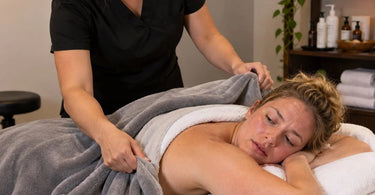
Work better, live easier... and keep your massage clients from turning into human cinnamon rolls baking beneath three layers of blankets! A cozy massage blanket can make a treatment feel wonderfully luxurious, but sometimes that same comforting layer becomes a little too enthusiastic halfway through the session. One minute, your client is blissfully relaxed beneath soft linens, and the next, they are wondering whether anyone would notice if they discreetly kicked the blanket onto the floor. For massage therapists and spa professionals, understanding why clients suddenly become overheated is an important part of delivering consistently comfortable treatments. The solution is not necessarily eliminating blankets, turning down the thermostat, or abandoning that beautifully appointed treatment table. It is learning how warmth accumulates during massage and giving clients comfortable options before their peaceful escape becomes an unexpected tropical adventure.
Temperature management might seem like a minor detail compared with massage technique, pressure, or treatment customization. However, clients experience their appointments through every physical sensation, including the temperature of the room, the texture of the linens, and the amount of heat trapped beneath their draping. A client who feels too warm may struggle to relax, become distracted, or hesitate to speak up because they do not want to interrupt the therapist. Fortunately, a few thoughtful adjustments to your Salon & Spa Bedding, heating equipment, and consultation routine can make a remarkable difference.
Why Does a Massage Blanket Feel Perfect at First and Too Hot Later?
The simplest explanation is that the client's thermal environment changes throughout the appointment. At the beginning of a massage, someone may feel slightly chilly after changing clothes and settling onto the table. A blanket provides immediate insulation and helps reduce heat loss to the surrounding air. As the session continues, that same blanket may retain more warmth than the client actually wants.
Blankets do not need to generate heat to cause overheating. Their primary job is to slow the transfer of body heat into the surrounding environment. When a client remains beneath several layers for an extended period, heat and moisture can accumulate, especially if the treatment room is already warm.
Consider the difference between getting into bed on a cool evening and waking up several hours later with one foot outside the covers. The bedding did not suddenly develop a secret heating element. Your comfort needs simply changed.
Massage sessions can produce a similar experience on a shorter timeline. The combination of insulating linens, a padded table, room temperature, and optional heating equipment can gradually shift a client from pleasantly warm to uncomfortably hot.
The Hidden Heat Trap: Too Many Layers on the Massage Table
Professional massage tables often feature several layers of material intended to improve comfort and hygiene. Depending on the setup, these may include a protective table covering, fitted sheet, fleece topper, flat sheet, blanket, and sometimes an electric table warmer.
Each layer serves a purpose, but layering everything together can create more insulation than necessary. A client may appreciate a soft blanket when first lying down, yet find the combined warmth excessive after 20 or 30 minutes.
Thick fleece and plush fabrics can be especially insulating. That is wonderful during a chilly winter appointment but potentially uncomfortable in a warm treatment room or during a lengthy session.
Massage therapists can avoid this problem by building flexibility into their linen setup. Keep a breathable top sheet as the primary draping layer and use an additional blanket when the client wants extra warmth.
Explore different massage sheets and lightweight blankets to create a setup that feels comfortable without unnecessary bulk. Breathable fabrics can make adjusting coverage easier while maintaining the professional appearance clients expect.
Massage Table Warmers Can Create More Heat Than You Realize
Ah, the beloved massage table warmer. Few things make a treatment table feel more inviting on a cold morning. Unfortunately, a table warmer combined with a thick blanket can sometimes create the massage equivalent of sleeping beneath a winter comforter in July.
Massage Table Warmers & Toppers for Client Comfort are valuable professional tools because they allow therapists to provide adjustable warmth without necessarily heating the entire treatment room.
However, heat from beneath the client and insulation above the client can work together to create an environment that feels increasingly warm over time. The table warmer may initially feel subtle, particularly before the client has been lying on the table for several minutes. Once the body and linens are in place, warmth can become more noticeable.
For this reason, therapists should avoid assuming that a comfortable setting at the beginning will remain comfortable throughout the appointment.
Ask clients whether they would like the table warmer activated, start with an appropriate low setting when suitable, and check their comfort after the session begins. Follow the manufacturer's operating instructions, placement requirements, safety precautions, and any client-specific contraindications.
If someone becomes too hot, lowering or switching off the table warmer may help. However, heated equipment can retain warmth temporarily, so removing an extra blanket may provide another useful adjustment.
Remember that table warmers should never be used as a substitute for monitoring client comfort and safety, especially for people with reduced heat sensation or other conditions that make heat exposure unsuitable.
The Treatment Room Temperature May Be Part of the Problem
A massage room that feels perfectly comfortable to a fully dressed therapist moving around the table may feel very different to a client lying beneath insulated bedding.
Therapists are standing, moving, and performing physical work. Clients are largely stationary and covered with layers that reduce heat loss. Their thermal experiences are not identical.
This creates an interesting challenge: the therapist might feel comfortable, or even slightly chilly, while the client feels overheated.
Room temperature, humidity, ventilation, direct sunlight, and air circulation all influence comfort. A treatment room with limited airflow can feel stuffy even when the thermostat displays a seemingly reasonable temperature.
Rather than relying on one universal thermostat setting, consider the complete treatment environment. Adjust room conditions when appropriate, avoid directing strong drafts across exposed skin, and provide flexible bedding options.
If your facility has multiple treatment rooms, check whether some spaces consistently run warmer than others. A room near a sunny window or heating vent may require a different linen arrangement from a cooler interior treatment room.
Why Some Clients Feel Hotter Than Others
Every client brings a different set of temperature preferences and physical characteristics to the massage table. One guest may adore a heated table and fluffy blanket, while another finds a single lightweight sheet perfectly comfortable.
Individual heat sensitivity can be influenced by several factors, including:
- Personal temperature preferences: Some clients naturally prefer cooler surroundings or lighter bedding.
- Hormonal changes: Menopause, perimenopause, and other hormonal fluctuations may contribute to sudden sensations of warmth or hot flashes.
- Medications: Certain medications can affect sweating, temperature regulation, or sensitivity to heat.
- Recent physical activity: Someone arriving after exercise or a brisk walk may need time to cool down.
- Clothing and remaining layers: Clients who keep additional clothing on during massage may retain more warmth beneath the draping.
- Health considerations: Some medical conditions can alter temperature tolerance or a person's ability to sense heat.
Massage professionals do not need to diagnose the reason a client feels warm. Instead, ask about comfort, respect individual preferences, and adjust the environment within the scope of professional practice.
Clients reporting unexplained, persistent, or concerning symptoms should be encouraged to discuss them with an appropriate healthcare professional.
The Role of Massage Technique and Treatment Products
Another factor worth considering is the type of massage being performed.
During an appointment, the therapist may uncover and re-cover different areas of the body. This can temporarily change how much heat escapes from beneath the draping. Once an area is covered again, the client may gradually feel warmer.
Some massage techniques also create sensations of warmth in the treated area, although these sensations do not necessarily mean the client's overall body temperature has increased significantly.
Products can influence the experience, too. Rich creams, massage oils, and body treatment formulations differ in their textures and sensory properties. A client may perceive a thick product differently from a lighter lotion, particularly when paired with heavy bedding.
Choose appropriate products from Massage Oils, Lotions, and Creams for Therapists based on the service, client preferences, and skin considerations rather than assuming one formula works best for everyone.
Additional heat-based services deserve extra attention. Hot stones, heated compresses, warm towels, and other temperature-enhancing treatments can add to the overall sensation of warmth. Review each service's safety requirements and avoid stacking heating methods simply because they sound luxurious.
Luxury should feel like thoughtful care, not an endurance competition against the thermostat.
Why Clients Often Do Not Tell You They Are Too Hot
Here is one of the trickiest parts of massage temperature management: clients do not always announce their discomfort.
Some are deeply relaxed and do not want to interrupt the experience. Others worry about sounding demanding. A few assume that warmth is simply part of the treatment and that they should tolerate it.
Meanwhile, the therapist may interpret silence as confirmation that everything is perfect.
This disconnect is especially common when a client is receiving a service for the first time or feels uncertain about what requests are acceptable.
A simple invitation can make all the difference. Before beginning, say something like, 'I have an extra blanket and an adjustable table warmer available. If you feel too warm or too cool at any point, please tell me. I can change that immediately.'
This lets clients know that adjusting their comfort is normal, welcome, and easy.
During a longer appointment, a quick temperature check can be especially helpful after the first portion of the service. Keep it brief and natural so the experience remains relaxing.
How to Prevent Clients From Overheating During a Massage
Preventing overheating does not require expensive renovations or complicated equipment. It usually comes down to thoughtful preparation, adaptable linens, and communication.
1. Start With Breathable, Adjustable Draping
Use clean, comfortable sheets that provide appropriate coverage without unnecessary weight. Keep blankets available as optional layers rather than automatically assuming every client wants one.
Professional draping standards must always be maintained. Removing a blanket should never mean removing essential coverage or exposing areas that should remain covered.
The Salon & Spa Bedding collection is a useful starting point when selecting linens for different seasons, treatments, and client preferences.
2. Offer the Table Warmer Instead of Automatically Activating It
Ask whether a client prefers a heated table before the massage begins. If the warmer is used, follow its instructions and select an appropriate setting.
For clients who prefer cooler treatments, leaving the warmer off may be the simplest solution.
For guests who enjoy warmth, maintain the ability to adjust the setting during the session whenever the equipment permits.
3. Check Temperature Comfort Early
Do not wait until the final five minutes to discover that your client has been overheated since the shoulder work.
A short question during the early portion of the session can catch problems before they become distracting.
Try asking, 'Is the blanket temperature still comfortable, or would you prefer a lighter layer?'
This wording gives the client a clear choice without suggesting that they should feel a particular way.
4. Keep a Lighter Blanket Within Reach
Having a second option available makes temperature adjustments quick and professional.
A breathable cotton blanket, lighter cover, or seasonally appropriate alternative can make a noticeable difference for someone who wants a little extra coverage but not the insulation of heavy fleece.
Search for spa blankets and massage linens to compare options suitable for your treatment style.
5. Watch for Signs of Discomfort Without Making Assumptions
Repeated shifting, pulling at the blanket, a flushed appearance, or noticeable sweating may indicate that a client is uncomfortable.
However, those signs can have other explanations. Rather than guessing, discreetly ask how the client feels.
If a client experiences dizziness, nausea, faintness, confusion, or other concerning symptoms, stop the treatment, assess the situation within your training, and obtain appropriate medical assistance when necessary.
6. Match Your Linen Setup to the Season
That thick winter blanket might be wonderful in January and completely unnecessary in August.
Review your bedding combinations as outdoor temperatures, humidity, and building climate settings change throughout the year.
Even during cold weather, remember that individual client preferences should take priority over the season printed on the calendar.
7. Create a Simple Temperature Preference Note
For regular clients, recording basic comfort preferences can help make future appointments feel more personalized.
Notes such as 'prefers lightweight blanket,' 'no table warmer,' or 'likes additional warmth around feet' can help therapists prepare efficiently.
Use your practice's secure recordkeeping process, document only relevant information, and confirm preferences at each visit because comfort needs can change.
Choosing the Right Professional Massage Supplies for Temperature Control
A flexible treatment room starts with versatile supplies. Rather than purchasing one extremely heavy blanket for every table, consider a range of linens and accessories that allow therapists to tailor the experience.
Useful professional categories include:
- Salon & Spa Bedding for comfortable sheets, blankets, and adaptable treatment table layers.
- Massage Table Warmers & Toppers for controlled supplemental warmth when appropriate.
- Massage Tables & Chairs for comfortable, functional treatment room setups.
- Massage Bolsters for positioning support that helps clients remain comfortable during longer appointments.
- High-Quality Towels for appropriate treatment coverage and service-specific needs.
- Professional Massage & Wellness Products for building a complete, adaptable treatment environment.
Pure Spa Direct distributes professional spa and massage supplies from established industry brands, helping business owners compare products that suit their services, facilities, and budgets.
For therapists reviewing equipment, collections featuring Earthlite, Oakworks, and NRG provide additional options worth exploring.
Always review individual product specifications, care instructions, and intended uses before choosing equipment for your practice.
Clean Linens Matter Just as Much as Comfortable Linens
Temperature management is important, but professional massage bedding also needs to support hygienic treatment room practices.
Maintain an appropriate inventory of clean sheets and blankets so therapists are not tempted to use the same bedding arrangement for every client simply because supplies are limited.
Launder reusable linens according to applicable sanitation requirements and the manufacturer's care instructions. Replace damaged, worn, or difficult-to-clean items as needed.
Proper laundering and storage also help preserve the texture and performance of professional bedding. A blanket that has become stiff, excessively heavy, or uncomfortable may no longer deliver the experience it once did.
For busy treatment rooms, maintaining organized linen storage and a dependable supply of fresh bedding makes it easier to customize each table without slowing down service turnover.
A Practical Massage Room Temperature Checklist
Before your next appointment, run through this straightforward comfort checklist:
- Check the treatment room temperature and airflow.
- Prepare a clean fitted sheet and appropriate professional draping.
- Keep at least one alternative blanket weight available.
- Verify that any table warmer is functioning safely and correctly.
- Ask the client about temperature preferences before beginning.
- Review any relevant contraindications for heating equipment or heat-based modalities.
- Check comfort during the session, particularly after the initial relaxation period.
- Adjust blankets, warmer settings, or room conditions when appropriate.
- Maintain secure notes about preferences that may improve future visits.
These steps are simple, but consistency matters. A thoughtful routine helps turn temperature management into a normal part of quality service rather than a last-minute response to discomfort.
Frequently Asked Questions About Massage Blanket Temperature
Should every massage client receive a blanket?
No. Clients should receive appropriate professional draping, but an additional blanket can be optional when not required for a specific treatment. Some guests prefer a lightweight sheet, while others appreciate additional warmth.
Can a massage table warmer make someone too hot?
Yes. A warmer can contribute to excessive warmth, particularly when combined with thick bedding or a warm room. Use heating equipment according to the manufacturer's instructions and individual client needs.
What is the best blanket material for massage therapy?
There is no single ideal material for every treatment. Breathable cotton options may suit clients who prefer lighter coverage, while heavier fabrics can provide additional insulation for those who feel chilly. Consider comfort, durability, laundering requirements, and the services being performed.
Should therapists remove a blanket when a client becomes overheated?
Removing an optional blanket or replacing it with a lighter layer is often an effective adjustment. Always maintain appropriate professional draping, privacy, and client consent.
Why does my client get hot during a massage even when the room feels cool?
The client may be retaining heat beneath insulating layers or receiving warmth from a table warmer. Personal temperature sensitivity and other factors can also contribute. Ask about comfort rather than relying exclusively on the room thermostat.
How often should massage therapists check temperature comfort?
Ask before beginning and check again when appropriate, especially early in longer appointments or when using heating equipment. Additional checks may be useful when the client changes position, heating modalities are introduced, or discomfort is suspected.
Better Temperature Control Means a Better Massage Experience
A successful massage should leave clients thinking about how relaxed and comfortable they feel, not how desperately they wanted to escape the blanket.
The key is remembering that warmth is personal and comfort changes. A blanket that feels fantastic during the first few minutes might feel excessive later. An electric table warmer that delights one guest may be completely unnecessary for the next.
By combining breathable linens, adjustable heating options, appropriate draping, and simple client communication, massage professionals can create treatment environments that adapt instead of assuming.
And that flexibility is a genuine business advantage. Clients appreciate therapists who notice the little things and make adjustments without turning every request into an awkward production.
Ready to refresh your treatment room comfort essentials? Explore professional massage sheets and blankets, massage table warmers and toppers, and massage and wellness supplies at Pure Spa Direct. With the right setup, your clients can enjoy cozy relaxation without feeling like they accidentally booked a session inside a baked potato.
