
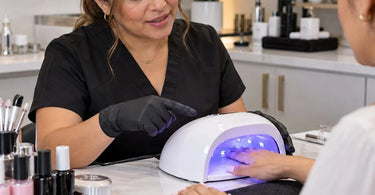
Clients notice the upgrade... but they also notice when those innocent-looking seconds inside a nail lamp suddenly feel warmer than expected. One moment your client is perfectly relaxed, admiring the color choice and planning what she is ordering for lunch; the next, her hand shoots out of the lamp like the machine just asked for her credit score. For nail professionals, understanding why clients interrupt a cure - and setting up the service to prevent it - can make gel appointments smoother, more comfortable, and far more consistent.
Pulling a hand out of a lamp early is not simply an annoying little interruption. Gel products are designed around specific application and curing instructions, and shortening the required exposure can interfere with the intended cure. The best solution is not telling clients to grin and bear it. It is identifying what makes them want to escape in the first place and adjusting technique, communication, product application, and equipment accordingly.
The Most Common Reason: A Sudden Heat Sensation
When certain gel products cure, the chemical reaction can generate heat. A client may describe the sensation as warmth, tingling, a quick sting, or a sudden hot feeling. Nail professionals often refer to this as a heat spike.
The sensation can be more noticeable when a thicker amount of gel is curing at once. Enhancement services involving builder gels or other substantial layers deserve particular attention because product thickness can influence how the curing experience feels. Thin, controlled application is not just about producing an attractive shape; it can also contribute to a more comfortable service.
If your salon regularly performs gel services, having dependable nail lamps and following the curing directions associated with the professional nail system are essential. Avoid assuming that every gel product should be treated exactly the same just because it comes in a bottle or pot and eventually becomes hard.
Do Not Treat Every Lamp and Gel Combination as Interchangeable
A lamp is part of the curing system, not just a convenient glowing box on the manicure table. Different professional products may specify particular lamp types, curing times, operating modes, or other instructions. The safest workflow is to follow the gel manufacturer's directions and use compatible equipment rather than improvising curing times.
This is especially important when working with heavily pigmented colors, specialty gels, builder products, or other formulas that may have curing requirements different from a basic thin layer of gel polish. Professionals stocking Professional Gel Polish should review each system's instructions instead of creating one universal salon timer for everything on the shelf.
And yes, experienced nail techs can develop excellent instincts. Unfortunately, the laws of chemistry do not accept loyalty cards. If the manufacturer specifies a particular curing procedure, follow it.
Explain the Lamp Before the Hand Goes Inside
Clients are more likely to jerk their hands away when a sensation surprises them. A ten-second explanation before curing can prevent a ten-minute service interruption later.
Tell the client that she may notice warmth during curing and ask her to mention discomfort immediately. If the lamp or nail system includes a manufacturer-approved low-heat, gradual-power, or comfort setting, use it as directed when appropriate. That gives the client a plan before anything happens.
A simple explanation also prevents the awkward moment when a client assumes she has done something wrong. She has not. Her instinct is to move away from discomfort. Your job is to structure the service so that you can respond professionally without compromising the product application.
Watch Product Thickness
More product is not automatically better product. Thick gel application can create several problems, including an uneven-looking enhancement and a potentially more noticeable warming sensation during polymerization.
Use the quantity and application technique recommended for the specific system. Build structure deliberately rather than casually piling product onto the nail. When working with enhancement materials, take the time to create controlled layers and architecture appropriate for the service.
Keeping quality Nail Brushes & Tools at the station can make precise application easier. Your brush should help you put product exactly where you want it instead of encouraging the gel equivalent of pouring pancake batter.
Pay Extra Attention to Thin or Sensitive Nails
Not every client experiences curing the same way. Someone with thin, damaged, over-filed, or otherwise sensitive nails may react differently than a client with strong natural nails. A regular client may also feel something during one appointment that she did not notice during the last one.
This is one reason consultation matters even during routine appointments. Ask about changes in nail condition, previous discomfort, recent enhancement removal, breaks, or tenderness. If the nail plate appears compromised or the client reports significant pain, do not simply cover the problem and hope the glitter distracts everyone.
Professional service should always include evaluation of whether the requested treatment is appropriate for the nail condition in front of you.
Teach Clients How to Position Their Hands
Sometimes the problem is not heat at all. Clients pull their hands out because the position feels awkward, a finger touches the lamp, they bump a nail, or they become unsure about where their thumb belongs.
Demonstrate hand placement before starting the cure. Fingers should be positioned according to the lamp manufacturer's instructions so the nails receive the intended exposure. If thumbs require separate positioning with a particular system, follow those directions instead of asking the client to perform manicure yoga inside the lamp.
Clear instructions are especially useful for first-time gel clients. Tell them where to place the hand, how long it will remain inside, and whether the lamp will turn off automatically. That small amount of coaching makes the equipment feel much less mysterious.
Use a Station Setup That Supports Good Technique
A cramped workstation makes everything harder. The client twists her wrist, the lamp gets pushed sideways, cords cross the table, and suddenly everyone is playing a tiny game of salon Tetris.
A well-organized Nail Table or Manicure Station should allow comfortable hand placement, convenient lamp positioning, and easy access to products without forcing either person into awkward movements. Keep frequently used Manicure Essentials organized so you can focus on application rather than hunting through drawers midway through the service.
Good lighting matters too. Clear visibility helps technicians apply gel neatly around the nail without flooding the surrounding skin. Professional LED Bright Lamps can improve task visibility at the manicure table, while the curing lamp itself should be reserved for the function it was designed to perform.
Keep Gel Off the Skin
Precise application around the cuticle and sidewalls is essential. Uncured gel should not be casually left on surrounding skin. Work cleanly, use appropriate tools, and follow the product manufacturer's directions for application and cleanup.
Repeated skin exposure to uncured nail products can be a sensitization concern, which makes tidy professional technique particularly important. The goal is not to race through the manicure. The goal is to apply the material accurately and cure it according to instructions.
Stocking suitable Professional Cotton, Sponges, and Wipes for Salons & Spas and other service essentials helps create a workstation where neat application and cleanup are routine rather than emergency maneuvers.
Do Not Compensate for an Interrupted Cure by Guessing
If a client removes her hand early, do not automatically invent a new curing schedule on the spot. Follow the instructions for the system you are using. Product manufacturers establish curing procedures for a reason, and professionals should know those instructions before beginning the service.
If interrupted curing is becoming a frequent issue in your salon, review the entire process. Is too much product being applied? Are clients reporting excessive heat? Is the lamp compatible with the product system? Are technicians following specified curing times? Is equipment maintained according to the manufacturer's recommendations?
One recurring complaint can reveal a training or workflow opportunity that affects dozens of future appointments.
Make Client Comfort Part of Staff Training
Consistency becomes especially important in salons with multiple nail professionals. One technician should not carefully explain curing while another casually announces, "Just yank your hand out if it gets spicy."
Create a simple service standard covering consultation, application thickness, hand positioning, curing instructions, lamp settings, and what technicians should do if a client reports discomfort. Standardization helps the team provide a predictable experience while still following the instructions for each product system.
Professional education should also include equipment familiarity. Team members need to know which lamps belong with which gel systems, what each lamp mode does, and when a special setting is appropriate. Explore Professional Nail Care Collections when organizing systems so compatible products and service supplies are easier for technicians to identify.
Maintain and Inspect Your Equipment
A busy lamp earns its keep. Keep equipment clean and inspect it according to the manufacturer's instructions. Check cords, interior surfaces, controls, sensors, and other accessible components for obvious signs of damage or wear.
If something is not operating correctly, stop using it until the problem is resolved. Do not create a homemade equipment repair because somebody on social media said a strip of tape "totally works." Professional electrical equipment deserves professional handling.
If replacement components are specified and user-replaceable, Bulbs & Replacement Parts for Spa and Salon Equipment can help salons maintain suitable equipment where applicable. Always verify compatibility with the actual unit.
Turn an Awkward Moment Into Better Client Care
A client who repeatedly pulls her hand from the lamp is giving you useful information. Instead of treating her movement as inconvenient, use it as a signal to review comfort, application, positioning, equipment, and curing instructions.
The conversation can be quick and reassuring. Ask what she felt. Explain what you are doing next. Adjust within the approved procedure for the nail system. That response makes the client feel listened to while preserving professional control of the service.
Clients remember comfort just as much as color. They may not know the difference between every gel formula on your shelf, but they absolutely know whether an appointment felt rushed, confusing, painful, or thoughtfully managed.
A Better Cure Starts Before the Lamp Turns On
Preventing premature hand removal is really about preparation. Apply gel at the appropriate thickness, use compatible professional equipment, communicate clearly, position the hand correctly, pay attention to sensitive nails, and follow the manufacturer's curing directions every time.
For salon owners, it is also worth reviewing the complete gel station rather than looking at the lamp in isolation. Reliable gel nail lamps, professional gel systems, application tools, files, wipes, lighting, and organized furniture all contribute to a smoother service.
Pure Spa Direct supplies professional salons, spas, nail studios, and beauty businesses with the products and equipment needed to build efficient service stations. We are distributors rather than manufacturers, so always pair your purchasing decisions with the specific operating and curing instructions supplied by the brands you use.
And the next time a client starts to launch her hand out of the lamp at record speed, remember: she is not trying to sabotage your manicure. Something made her want out. Find the reason, fix what can be fixed, and make those curing seconds feel like the uneventful little part of the appointment they were always supposed to be.
