
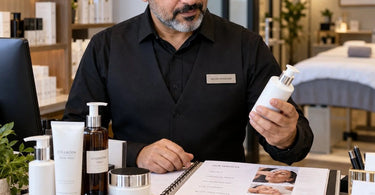
Small steps lead to big success... and few small steps can make as much difference as helping your front desk team understand what your services actually do. A receptionist does not need to perform a facial, formulate hair color, wax an eyebrow, or suddenly become a massage therapist between answering phones, but basic front desk knowledge gives that person the confidence to guide clients toward the right conversation. When the person answering the phone understands the difference between a facial, peel, lash lift, brow tint, massage, waxing appointment, and manicure, booking becomes smoother, clients feel better informed, and your service providers spend less time untangling appointments that never quite belonged on their schedules in the first place.
Your front desk is often the first human interaction a prospective client has with your business. That makes the receptionist much more than the person who says, "Good afternoon, may I put you on hold?" Front desk staff help translate a sometimes enormous service menu into understandable choices. They do not need to diagnose concerns or promise results. They simply need enough service knowledge to explain the basic purpose of an appointment, recognize when a question needs to be transferred to a licensed professional, and book the correct amount of time with the correct provider.
The Front Desk Is Part of the Client Experience
Clients may spend an hour with an esthetician, stylist, massage therapist, nail technician, or waxing professional, but their experience frequently begins and ends at reception. They call with questions, arrive at the desk, check out there, reschedule there, purchase retail there, and often ask one final question while digging through a handbag for keys that somehow disappeared during the appointment.
A knowledgeable receptionist can make those moments feel effortless. If a client asks what Dermaplaning is, the front desk employee should be able to provide a simple description such as professional exfoliation using a specialized blade to remove surface buildup and fine facial hair. That explanation is enough to orient the client without wandering into claims, contraindications, or personalized treatment recommendations that belong with the service provider.
The same principle applies throughout the business. Staff should understand that Professional Stripless Hard Wax is used for professional hair removal, a lash lift enhances the appearance of the natural lashes by creating curl, massage services focus on manual bodywork, and a gel manicure uses a light-cured nail coating designed for durable wear. Basic knowledge sounds simple because it is supposed to be simple.
Service Knowledge Helps Prevent Booking Mix-Ups
Few things make a busy Saturday more exciting in the wrong way than discovering that the client booked for a quick service actually needs twice the allotted appointment time. Surprise! Nobody ordered the scheduling chaos package, yet somehow it arrived.
Understanding the purpose and general format of services helps receptionists ask better booking questions. A guest asking for "a wax" might mean brows, lip, bikini, Brazilian, back, chest, or legs. Those appointments can require dramatically different timing, preparation, and provider availability. Familiarity with Waxing Supplies for Professionals is useful from a retail and operational perspective, but the front desk team primarily needs to understand how the services themselves differ.
Hair services create similar challenges. Someone requesting "color" could be discussing root coverage, dimensional color, lightening, corrective work, or another service entirely. Knowing that Professional Hair Color and Hair Bleaches and Lighteners support different professional processes helps staff understand why one vague word cannot always determine the correct appointment.
Clients Ask Questions Before They Book
Service menus can be intimidating, especially for first-time clients. Industry professionals may immediately understand terms such as microdermabrasion, hydrodermabrasion, brow lamination, sugaring, paraffin treatment, microcurrent, or high frequency. Clients may not.
A receptionist who understands the basic distinctions can remove some of that uncertainty. For example, Microdermabrasion is a professional exfoliation treatment, while Hydrodermabrasion combines exfoliation with a water-based treatment approach. Brow Lamination focuses on shaping and setting brow hairs, while Professional Lash and Brow Tint adds temporary color to enhance their appearance.
That level of explanation can answer the client's immediate question while creating a natural handoff when more personalized guidance is needed. "I can explain the basic difference, and our esthetician can tell you which option may be appropriate for your specific goals" is a far better response than either pretending to know everything or saying, "Ummm... I think they are basically the same?"
Knowledge Creates More Natural Add-On Conversations
Service knowledge also makes add-on conversations feel less like sales scripts and more like useful customer service. Nobody wants to hear a receptionist mechanically recite five upgrades as though announcing airport boarding groups.
If the front desk understands how treatments relate to one another, relevant suggestions become easier. A massage client may ask about aromatherapy, making familiarity with Aromatherapy Supplies useful. A manicure guest may be interested in additional nail care, which naturally connects with Nail Treatments for Healthy Nails or Cuticle Oil. Someone scheduling waxing might ask how professionals prepare the skin before a service, opening a conversation about Pre & Post-Waxing Products.
The goal is not for the receptionist to recommend every possible extra. It is to recognize connections well enough to answer questions and mention relevant options when appropriate.
It Makes Retail Conversations Easier Too
Service knowledge and retail knowledge tend to reinforce each other. When front desk employees understand what happens during professional treatments, the products displayed at checkout stop looking like a mysterious collection of bottles, jars, tubes, and tiny implements whose purpose apparently vanished with the shipping carton.
A spa receptionist who understands facial services can more comfortably talk about categories such as Premium Skincare Products for Spas and Salons. Someone working in a massage practice benefits from recognizing Massage Oils, Lotions, and Creams for Therapists. Nail salon staff should understand the broad differences among Professional Gel Polish, Dipping Powder Systems for Salons, and Acrylic Nail Supplies.
Again, the receptionist does not need the technical knowledge of the licensed professional performing the service. The objective is familiarity, not a surprise second career.
Train for the "What Is It?" Question
One practical way to train staff is to create a one-sentence explanation for every service on the menu. If a new receptionist cannot answer "What is it?" in plain language, that is a useful signal that more training is needed.
For example, your cheat sheet might explain that a lash lift curls and enhances natural lashes, brow lamination sets brow hairs into a groomed shape, a hot stone massage incorporates warmed stones into massage techniques, and paraffin services use warm cosmetic paraffin as part of hand, foot, or body treatments. You can reinforce the education by showing staff the professional supplies involved, such as Lash & Brow Service Supplies, Hot Stones and Warmers, and Paraffin.
Seeing the equipment and products can make an unfamiliar service much easier to understand than memorizing a paragraph from the menu.
Teach the Boundaries Along With the Basics
Good service education includes knowing what front desk employees should not answer. Reception staff should not diagnose skin conditions, determine medical suitability, interpret contraindications beyond established business protocols, promise treatment outcomes, or give personalized advice that requires a licensed professional.
Instead, give employees an easy handoff process. They might say, "I can explain how the service generally works, but your provider will need to answer that question based on your individual situation." That keeps the conversation professional and helps prevent a helpful receptionist from accidentally becoming Dr. Front Desk, MD, DDS, Esthetician, Massage Therapist, Nail Tech, and Supreme Keeper of All Beauty Knowledge before lunch.
Build Service Training Into Onboarding
Do not wait for employees to absorb your menu through osmosis. Include service education in onboarding and revisit it whenever the menu changes.
Have new staff observe the treatment rooms, meet each provider, see common equipment, and review appointment lengths. Let them examine tools such as Facial Steamers, Magnifying Lights, Professional Wax Warmers for Salons & Spas, and Top Quality Massage Tables Chairs for Relaxation & Wellness. Physical familiarity helps connect the service name on the booking screen with what actually happens behind the treatment-room door.
Short quizzes can work surprisingly well too. Keep them conversational. What is a lash lift? What is dermaplaning? Why might one waxing appointment require more time than another? Which provider performs each service? When should a question be transferred to the service professional? Ten minutes of review can prevent hours of future confusion.
Create a Front Desk Service Bible
A simple internal reference guide can become one of the most useful tools at reception. Give every service a short entry containing its basic purpose, typical duration, provider type, important booking questions, available add-ons, preparation instructions approved by management, and situations that require provider consultation.
Keep it easy to scan. Your front desk team rarely has six peaceful minutes to study a novella while three guests are checking out, two phones are ringing, someone is trying to move Thursday's appointment to Friday, and the printer has chosen that exact moment to explore its feelings.
Update the guide whenever new services are introduced. If your spa adds Light Therapy Devices for Wellness Treatments, a new body treatment, or another professional modality, schedule a quick staff briefing before clients begin seeing the service online.
Better Knowledge Supports a More Professional Business
A polished client experience is rarely created by one grand gesture. It comes from dozens of small, competent interactions. The phone is answered clearly. The appointment is booked correctly. The client understands what they selected. The provider has enough time. Checkout feels organized. The next appointment gets scheduled without requiring a committee meeting.
Front desk service knowledge supports every one of those moments. It can help businesses communicate more consistently, reduce scheduling confusion, create more confident retail and add-on conversations, and give clients a smoother path from curiosity to appointment.
For owners and managers, the takeaway is straightforward: teach receptionists enough to understand the service menu, then give them clear boundaries for when a provider should step in. Support that education with demonstrations, cheat sheets, ongoing refreshers, and exposure to the professional equipment and supplies used throughout the business. Pure Spa Direct distributes professional products across spa, salon, waxing, massage, nail, skincare, lash, brow, barber, and wellness categories, making it easy for businesses to explore Must-Have Supplies for Salon & Spa Business Success while building a team that knows what those professional services are all about.
