
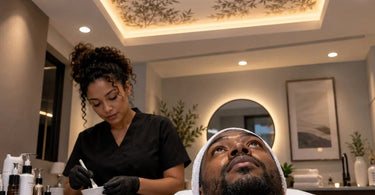
Because quality is non-negotiable, every detail of your treatment room deserves attention, including the one surface you probably never think about: the ceiling. While you are concentrating on flawless facials, beautiful lashes, perfectly shaped brows, or a relaxing massage, your client may be spending a surprising amount of time staring directly overhead. And what are they looking at? Hopefully something peaceful and beautiful, not a mysterious ceiling stain, a flickering light, or a suspiciously determined spider. The ceiling is more than an architectural afterthought. For clients lying on their backs, it becomes one of the most visible parts of the entire spa experience.
Professional spa and salon owners invest considerable time and money in beautiful furniture, luxurious Salon & Spa Bedding, attractive decor, and sophisticated treatment equipment. Yet the ceiling often receives little attention beyond a fresh coat of paint. Understanding why clients look upward and how that view influences their experience can help you create a treatment environment that feels more thoughtful, comfortable, and memorable.
Why Do Clients Spend So Much Time Looking at the Ceiling?
The answer is delightfully simple: gravity, anatomy, and the fact that most people cannot spend an entire facial admiring their own eyebrows.
During facials, lash extensions, brow treatments, waxing, and many massage services, clients spend extended periods lying face-up. Even when their eyes are closed for much of the appointment, there are moments when they open them, glance around, or focus on the ceiling while the practitioner prepares the next treatment step.
These moments can occur during consultations, product application, mask processing, lash preparation, cooling periods, or transitions between treatment stages. Depending on the service, clients might spend several minutes or considerably longer looking upward.
Unlike a restaurant guest who can admire the artwork, or a salon client who can observe the styling stations, someone resting on a treatment table has a much narrower field of view. Their surroundings become concentrated into a few prominent details.
That makes the ceiling an unexpectedly important part of the customer experience.
Your Ceiling Is Quietly Communicating With Your Clients
Clients constantly form impressions of their surroundings, even when they are not consciously evaluating the room. Lighting, cleanliness, organization, temperature, and visual consistency all contribute to their perception of the environment.
Imagine a client settling onto a beautiful treatment table covered with fresh linens. The room smells pleasant, the music is calming, and everything appears perfectly arranged. Then they look upward and discover a discolored ceiling tile, exposed cords, dusty ventilation grille, and one fluorescent light that apparently wants to audition for a horror movie.
Suddenly, the atmosphere feels a little less luxurious.
A neglected ceiling does not automatically mean a business provides poor services. However, visible maintenance issues can raise questions about attention to detail, particularly in an industry where cleanliness and professionalism are essential.
A well-maintained ceiling reinforces the care already demonstrated by your treatment techniques, organized supplies, clean equipment, and comfortable furnishings.
Lighting Is Often the Biggest Ceiling Problem
One of the most common treatment room mistakes is positioning bright overhead lighting directly above the place where clients lie.
From the practitioner's perspective, that fixture might provide excellent visibility. From the client's perspective, it may feel like someone has positioned a miniature sun approximately three feet above their forehead.
And nobody booked a relaxing facial hoping to experience an interrogation-room spotlight.
The challenge is balancing two legitimate needs. Professionals require appropriate illumination for precision work, while clients benefit from lighting that does not create unnecessary glare or visual discomfort.
Fortunately, these goals do not have to compete.
Use Layered Lighting Instead of Relying on One Overhead Fixture
A more flexible treatment room uses multiple sources of light for different purposes. Rather than relying on a single bright ceiling fixture, consider combining ambient lighting with adjustable, treatment-specific equipment.
Ambient lighting: Soft, indirect illumination can make the room feel inviting without shining directly into the client's eyes. Wall sconces, concealed LED strips, and carefully positioned ceiling fixtures can help create this effect.
Task lighting: Adjustable Magnifying Lights and LED Bright Lamps allow professionals to illuminate specific areas during detailed work, including extractions, waxing, and brow services.
Dimmable lighting: Adjustable brightness makes it easier to transition between consultation, treatment, and relaxation without making the entire room excessively dark or bright.
Color-appropriate lighting: Accurate lighting remains important for skin assessment and color-sensitive beauty services. Warm, relaxing room illumination should complement rather than replace the task lighting needed for professional accuracy.
Before purchasing lighting equipment, evaluate the view from the treatment table. A fixture that looks attractive from the doorway may produce uncomfortable glare when viewed from directly underneath.
The Easiest Treatment Room Test Costs Absolutely Nothing
Want to discover what clients actually see? Lie down on your own treatment table.
Seriously. Put down the inventory spreadsheet, turn on the normal treatment lighting, and spend a few minutes looking upward.
Try the positions your clients commonly experience. Lie flat, recline the adjustable backrest, and turn your head slightly to each side.
Notice whether any lighting feels uncomfortable, whether ceiling fixtures appear clean, and whether exposed equipment or unfinished surfaces interrupt the atmosphere.
Pay attention to reflective surfaces that may bounce light into the eyes. Look for dangling cords, crooked ceiling panels, uneven paint, and ventilation grilles that have collected dust.
If you operate several treatment rooms, repeat the test in each one. Different table positions and lighting arrangements can produce surprisingly different viewing experiences.
This simple evaluation may reveal improvement opportunities that are practically invisible when standing.
What Should Clients Actually See Above Them?
The ideal ceiling depends on your brand, the service, and the overall atmosphere you want to create. There is no universal requirement to install elaborate artwork or transform your spa into a miniature planetarium.
In fact, simplicity often works beautifully.
Soft neutral ceilings: Clean whites, warm creams, pale beige, and muted natural colors can create a calm visual background. These choices work especially well in minimalist studios.
Subtle decorative details: Restrained patterns, architectural molding, or professionally installed ceiling artwork can add personality without overwhelming the space.
Nature-inspired imagery: Gentle botanical designs, sky imagery, or soft landscape artwork may provide a pleasant focal point for clients who prefer keeping their eyes open.
Indirect illuminated features: Concealed lighting or softly illuminated ceiling panels can add visual interest while helping avoid exposed bright bulbs.
Minimal visual distractions: In many treatment rooms, an immaculate ceiling with excellent glare control is preferable to elaborate decorations that compete for attention.
Whatever design you choose, prioritize secure installation, appropriate materials, cleanability, and compliance with applicable building and fire requirements.
Different Treatments Create Different Ceiling Experiences
Not every client looks upward for the same amount of time. The type of service determines how much the ceiling matters and which improvements offer the greatest practical benefit.
Facial treatments: Clients may open their eyes during consultation, cleansing transitions, or product processing. Comfortable ambient lighting can support these moments, while adjustable equipment from the Advanced Facial Treatment Products category helps professionals organize their treatment workflow.
Lash extensions and lash lifts: Clients generally need to keep their eyes closed during much of these services. Nevertheless, the overhead environment matters during setup, positioning, and completion. Precision work may benefit from appropriately positioned lighting, alongside professional Lash & Brow Service Supplies.
Brow services: Brow mapping, tinting, lamination, and shaping require controlled illumination. An adjustable task light can support accuracy without forcing bright general lighting throughout the appointment.
Massage treatments: During face-up massage, clients may notice ceiling lighting and decor. Comfortable support from Massage Bolsters and suitable Massage Table Warmers & Toppers contributes to the overall experience, while a visually quiet ceiling helps maintain a restful atmosphere.
Waxing services: Brief periods of looking upward can occur during facial and body waxing appointments. Organized Waxing Supplies for Professionals and conveniently positioned lighting help professionals work efficiently without creating unnecessary visual clutter.
Pedicure services: Clients may spend more time looking forward than upward, depending on the chair position. However, reclining Pedicure Chairs/Spas can make ceiling lighting part of the experience.
Cleanliness Matters Even When the Ceiling Seems Out of Reach
A ceiling is not a work surface, but that does not mean it should disappear from your maintenance routine.
Dusty ventilation openings, stained tiles, peeling paint, cobwebs, and visible moisture damage can undermine the appearance of an otherwise spotless treatment room.
Establish a periodic visual inspection that includes ceiling fixtures, vents, corners, seams, and other overhead areas.
Replace damaged materials when appropriate, and investigate water stains rather than simply painting over them. Moisture problems should be addressed at their source, with qualified professionals involved when necessary.
Use suitable cleaning methods for each surface and follow equipment manufacturers' instructions. Professional Cleaners & Disinfectants can support an overall facility hygiene program when used according to their labels and intended applications.
Remember that an attractive ceiling cannot replace proper treatment sanitation. Clean tools, correctly maintained equipment, and hygienic client-contact surfaces remain essential.
Ceiling Design Can Reinforce Your Spa Brand
The most effective treatment rooms feel visually consistent. The ceiling, lighting, treatment table, linens, furniture, and accessories should work together rather than appearing to belong to five entirely different decorating projects.
For a modern medical spa, restrained ceiling details and controlled lighting may reinforce a clean, professional aesthetic.
For a holistic wellness studio, warm colors, subtle botanical accents, and indirect lighting may complement the overall experience.
For a luxury facial studio, neutral finishes and carefully selected Luxury Spa Furniture can produce a polished appearance without excessive decoration.
The goal is not to fill every surface with design features. It is to make the room feel intentional.
And yes, that includes the square footage directly above someone's nose.
Small Changes That Can Make a Big Visual Difference
You do not need a major renovation to make your ceiling more client-friendly. Some of the most practical improvements are relatively straightforward.
First, address visible maintenance issues. Replace stained ceiling tiles, repair peeling finishes, and arrange professional attention for leaks or electrical concerns.
Second, review fixture placement. Where practical, position lighting so clients are not required to stare directly into exposed bright sources.
Third, improve lighting flexibility. Consider dimming controls or adjustable task lights that support different phases of service.
Fourth, reduce clutter. Securely organize cables and equipment according to manufacturer requirements and applicable safety codes.
Fifth, refresh the visual atmosphere. A clean coat of appropriately selected paint or a subtle decorative improvement can help unify the room.
Sixth, evaluate client comfort beyond the ceiling. Fresh High-Quality Towels, comfortable table coverings, supportive positioning accessories, and thoughtfully organized Spa Essentials for Professionals help create a complete treatment experience.
Importantly, never obstruct sprinklers, smoke detectors, ventilation, emergency lighting, or other building safety systems. Ceiling alterations and electrical installations should be evaluated by qualified professionals when appropriate.
Should You Install Decorative Ceiling Art or Special Lighting?
Decorative ceiling features can be attractive, but they are not necessary for every business.
Before investing, consider whether the feature genuinely improves the client's experience, suits your aesthetic, and can be maintained without difficulty.
A calming visual focal point might work beautifully in a relaxation-focused treatment room. The same installation could feel distracting in a clinical environment where simplicity and precision are central to the brand.
Also consider how the feature looks when the room's lighting changes. Some decorative installations appear elegant under dim light but distracting when bright task lighting is turned on.
Avoid flashing effects, excessive brightness, reflective surfaces that cause glare, or installations that may be uncomfortable for clients with visual or sensory sensitivities.
When in doubt, choose flexible, understated design over something that demands attention.
Your client came for a treatment, not front-row seats to a ceiling light show.
Ask Clients What They Notice During Their Appointment
Business owners sometimes spend money improving details that clients barely notice while overlooking small irritations that affect comfort.
A few thoughtful questions can reveal useful information.
After a service, you might ask whether the lighting was comfortable, whether the room felt relaxing, or whether anything about the treatment environment could be improved.
Keep the conversation natural rather than turning checkout into an interior-design survey.
Listen for repeated comments about bright lights, uncomfortable glare, room temperature, distracting sounds, or positioning.
One client mentioning a fixture does not necessarily justify a renovation. Several clients independently noticing the same issue, however, may identify an opportunity worth addressing.
Small changes can also be tested before a larger investment. For example, adjust an existing fixture where permitted, improve dimming settings, or reposition treatment furniture without compromising safe working clearances.
Then gather feedback and determine whether the change improved comfort.
Build a Treatment Room That Works From Every Angle
The ceiling is one part of a larger environment. Beautiful overhead decor cannot compensate for an uncomfortable table, scratchy linens, poorly organized supplies, or lighting that prevents professionals from performing accurate work.
For the strongest overall experience, think about treatment room design from both perspectives: the professional delivering the service and the client receiving it.
Invest in appropriately selected Spa & Salon Equipment and Furniture, comfortable treatment surfaces, practical lighting, hygienic supplies, and details that support smooth service delivery.
Pure Spa Direct helps spa, salon, massage, waxing, lash, brow, and beauty professionals source supplies and equipment for their businesses. As a professional beauty and wellness distributor, Pure Spa Direct offers access to product categories that can help operators build functional, inviting treatment spaces.
Explore Massage Tables & Chairs, Reception Furniture, and Salon & Spa Business Essentials when planning improvements that extend beyond the ceiling.
The Bottom Line: Your Clients Notice More Than You Think
Clients lying face-up during treatments have a unique perspective on your business. While you are focused on the service, they may be looking at the ceiling, noticing the lighting, or quietly evaluating how comfortable the room feels.
That overhead view can reinforce a sense of care and professionalism, or introduce distractions that interrupt an otherwise enjoyable appointment.
Fortunately, improving it rarely requires dramatic changes. Clean surfaces, well-positioned lights, thoughtful maintenance, and a cohesive design can make the treatment room feel more polished.
So the next time you finish setting up your treatment room, do something unexpected: lie down, look up, and see what your clients see.
If the ceiling looks peaceful, the lighting feels comfortable, and everything appears beautifully maintained, congratulations. Your treatment room is paying attention to the details.
If you spot a dusty vent, an unfortunate water stain, or a spider that appears to have signed a long-term lease, you have just discovered your next improvement project.
Because an exceptional spa experience is not just about what happens on the treatment table. Sometimes, it is also about what happens directly above it.
