
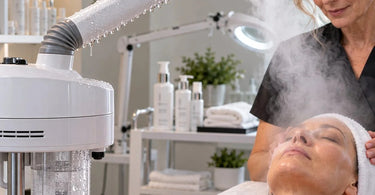
Transform how you work, starting today... by paying attention to one of those tiny treatment-room details that is incredibly easy to ignore until it starts dripping where you do not want it. If you regularly use Facial Steamers, you have probably noticed moisture collecting along the steamer arm, especially during longer services or after the unit has been running for several minutes. That moisture is usually condensation, and while a few droplets can be completely normal, understanding why they form can help estheticians keep their equipment cleaner, treatments smoother, and clients comfortably out of the splash zone.
A professional facial steamer works by heating water until it becomes vapor and directing that warm vapor through an arm toward the treatment area. The steam leaves the machine hot, but the arm, nozzle, and surrounding treatment-room air may be cooler. That temperature difference is where our little moisture mystery begins. Think of it as the same reason a cold drink gets wet on the outside of the glass, except this time the water droplets are showing up on equipment that is supposed to be making steam in the first place. Science has a sense of humor.
Why Condensation Collects Around Facial Steamer Arms
Steam is water in vapor form. As hot vapor travels through or around cooler surfaces, some of it loses enough heat to change back into liquid water. That process is condensation. On a facial steamer, the arm and nozzle can provide exactly the cooler surface needed for tiny droplets to form.
This tends to be particularly noticeable during the beginning of a service, when the machine and its arm have not yet warmed completely. Hot steam begins traveling through an arm that may have been sitting in a cool treatment room for hours. As the arm gradually warms, the amount of visible condensation may decrease.
Room temperature also matters. An air-conditioned spa treatment room can feel heavenly to your client wrapped under cozy linens, but that cooler environment creates a larger temperature difference between the hot steam and the steamer arm. Translation: the steamer may decide to create its own miniature weather system.
A Little Moisture Is Not Automatically a Problem
Seeing a few droplets around the nozzle or exterior of the steamer arm does not automatically mean the equipment is malfunctioning. Condensation is a natural result of warm, moisture-rich vapor meeting a cooler surface. What matters more is the amount of water, where it is collecting, and whether the machine is producing a consistent mist.
A professional unit should deliver steam in a controlled manner appropriate for facial services. If you suddenly notice excessive dripping, sputtering, irregular steam output, or water being expelled toward the client rather than a fine vapor, that deserves attention. Those symptoms are different from a light film of condensation forming on the outside of the arm.
Become familiar with what is normal for each machine in your spa. If several estheticians share the same piece of Advanced Spa Equipment for Professional Use, establish a simple routine so everyone recognizes changes in performance instead of assuming that mysterious puddle belongs to someone else. The treatment-room version of 'not my problem' rarely ages well.
Cold Treatment Rooms Can Make Condensation More Noticeable
Many facial rooms are intentionally kept comfortable and relatively cool. Clients may be under blankets or table warmers while the esthetician is moving around the room, so finding the perfect temperature balance can already feel like negotiating an international treaty.
When a cool metal or plastic steamer arm encounters hot vapor, moisture can form on the surface. If the unit has an adjustable arm that moves up, down, or sideways, droplets may also travel toward a joint or low point depending on how the arm is positioned.
Before beginning the service, allowing the steamer to reach its proper operating temperature according to the manufacturer's instructions can help the equipment stabilize. Your goal is not to make the machine unnecessarily hot; it is simply to operate it exactly as designed rather than rushing from a cold start directly into the client's facial.
Steamer Position Can Influence Where Water Travels
Professional steamers often feature articulated or adjustable arms because estheticians need flexibility when positioning steam around a treatment table. That convenience can occasionally influence where condensation collects.
Water follows gravity. If droplets form inside or around the nozzle, the angle of the arm can determine where those droplets move. Always position the steamer according to its manufacturer's operating instructions and keep the nozzle at an appropriate distance and angle from the client.
Do not position equipment in a way that allows collected water to drip directly onto the client's face, eyes, neck, linens, or electrical equipment. Your facial should feel luxurious, not like your client unexpectedly booked the indoor rain package.
Distilled Water Can Make Maintenance Easier
Water quality is another major consideration with steam equipment. Unless a manufacturer specifies otherwise, many professional steamers are intended to be operated with distilled water. Minerals present in ordinary tap water can remain behind as water evaporates, contributing to buildup inside the reservoir, heating components, nozzle, or steam pathway.
Mineral deposits are not the same thing as condensation, but buildup can eventually affect how smoothly steam exits a machine. If the nozzle starts behaving more like an enthusiastic garden sprinkler than professional facial equipment, maintenance should move rapidly to the top of the to-do list.
Follow the cleaning and descaling directions supplied with your particular machine rather than assuming every steamer should be maintained exactly the same way. Pure Spa Direct distributes equipment from many manufacturers, and designs, materials, reservoirs, controls, ozone functions, and aromatherapy systems can vary considerably between models.
Do Not Put Products Into the Water Reservoir Unless Directed
Aromatherapy during a facial can be lovely, but essential oils, herbs, botanical extracts, or skincare products should never be added directly to a steamer's water reservoir unless the manufacturer specifically says the machine is designed for that use.
Some professional steamers include a dedicated aromatherapy compartment, herb basket, or separate accessory intended to keep aromatic ingredients away from the heating system. Use those features exactly as directed.
Putting oils or other ingredients into a reservoir that was designed for water alone can leave residue, interfere with steam production, contribute to sputtering, or potentially damage components. Your steamer wants water. Your essential oils want their designated compartment. Everybody is happier when boundaries are respected.
Keep the Steamer Arm Clean Between Services
Because the steamer arm lives in a warm and humid environment during operation, regular cleaning matters. Wipe exterior surfaces according to the manufacturer's instructions and your facility's infection-control procedures. Pay particular attention to frequently touched areas, including adjustment handles, controls, arm joints, and the exterior of the nozzle.
Keep suitable Professional Cleaners & Disinfectants for Salons and Spas available for appropriate treatment-room surfaces and equipment, while always confirming product compatibility with the steamer manufacturer.
At the end of the workday, follow the equipment instructions regarding draining, cleaning, and drying the reservoir. Leaving standing water inside equipment longer than recommended can contribute to buildup and make tomorrow morning's first facial less glamorous than everyone deserves.
Watch for the Difference Between Condensation and Sputtering
Normal condensation usually appears as small droplets forming gradually on cooler surfaces. Sputtering is different. If larger droplets are being pushed forcefully out of the steam nozzle, the unit is producing inconsistent vapor, or the machine suddenly sounds or behaves differently, stop and investigate.
Check basic operating factors first. Is the water level within the recommended range? Was the correct water used? Is the reservoir installed correctly? Has the machine been cleaned according to schedule? Is the steam outlet unobstructed? If those basics appear correct and the problem continues, consult the manufacturer's instructions or qualified service support rather than improvising a repair.
Replacement components and compatible parts may also be available through Bulbs & Replacement Parts for Spa and Salon Equipment when equipment requires manufacturer-approved maintenance items.
Build Steamer Checks Into Your Treatment-Room Setup
The easiest maintenance routine is the one that becomes part of normal service preparation. Before your first facial, visually inspect the reservoir, cord, arm, nozzle, wheels, stand, and controls. Make sure the unit sits securely and moves properly before a client is on the table.
During the day, watch for changes rather than waiting for equipment to announce trouble dramatically. A new drip location, unusual noise, weaker steam output, mineral residue, stiff arm joint, or loose component is much easier to address early.
This is especially important in busy environments where equipment may perform multiple services every day. Browse Top-Quality Equipment & Furniture for Spas & Salons with workflow, service volume, adjustability, maintenance requirements, and available treatment-room space in mind rather than choosing equipment based on one feature alone.
Protect the Client Experience While You Protect the Equipment
Clients may never notice the small operational details behind a seamless facial, and that is exactly the point. Professionalism often looks like nothing happening because you handled everything before it became noticeable.
Position the steamer thoughtfully, monitor steam temperature and distance, keep linens dry, and make adjustments before condensation becomes an interruption. A client who is supposed to be relaxing should not need to wonder why something just dripped onto her shoulder.
Pairing dependable equipment with organized Spa Essentials for Professionals, fresh High-Quality Towels, appropriate skincare, and a consistent room-reset routine helps treatments feel polished from beginning to end.
Know When Condensation Is Normal - And When to Look Closer
The big takeaway is simple: condensation around a facial steamer arm is often a normal consequence of hot steam meeting a cooler surface. Room temperature, warm-up time, arm position, and operating conditions can all affect how much moisture you notice.
What should get your attention is a significant change in performance. Excessive dripping, forceful water droplets, unusual noises, leaks, inconsistent steam, visible buildup, electrical issues, or damaged components should never be brushed aside as 'just condensation.' Follow the manufacturer's troubleshooting and maintenance instructions and discontinue use if the machine cannot be operated safely.
For estheticians upgrading a facial room or replacing a hardworking unit that has seen one steam session too many, explore professional Facial Steamers and other Advanced Facial Treatment Products for Salons & Spas available from Pure Spa Direct. The right equipment, maintained correctly, helps keep services consistent, treatment rooms professional, and unexpected indoor rainstorms exactly where they belong: outside.
