
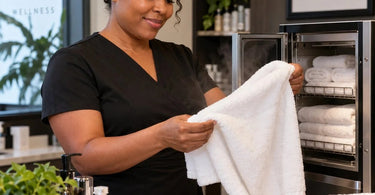
Pros love this for its quality, and when it comes to a perfectly warmed spa towel, quality means more than softness and fluff. There is something undeniably luxurious about placing a beautifully warm, damp towel against a client's skin during a facial, massage, waxing service, or pedicure. Unfortunately, that dreamy warmth can disappear faster than the last clean towel during a fully booked Saturday. If you have ever pulled a steaming towel from your Towel Steamers only to discover that it feels disappointingly lukewarm moments later, you are witnessing a fascinating combination of physics, moisture, airflow, and heat transfer. Understanding why damp towels cool so quickly can help spa and salon professionals deliver more consistent comfort without turning every treatment into a race against the clock.
Warm towels are one of those deceptively simple details that make professional beauty and wellness services feel special. Clients may not know the brand of your treatment table or the technical specifications of your equipment, but they absolutely notice when a towel feels wonderfully soothing. They also notice when it starts warm and finishes cold. The good news? A few practical adjustments to towel preparation, storage, handling, and treatment timing can make a noticeable difference.
Why Damp Towels Cool So Fast Once They Leave the Warmer
The biggest reason damp towels lose warmth so rapidly is evaporative cooling. Water requires energy to change from liquid into vapor. When moisture evaporates from the surface of a warm towel, it carries energy away. Some of that energy comes directly from the towel and its remaining moisture, causing the towel's temperature to fall.
Inside a closed towel warmer, the environment is relatively warm, and moisture can accumulate in the surrounding air. Once the warmer door opens and the towel enters a cooler treatment room, the conditions change dramatically. The towel is suddenly exposed to cooler air, moving air currents, and often a lower relative humidity than the air around it inside the warmer.
Evaporation begins removing heat while other forms of heat transfer also work against the towel. It is essentially a tiny science experiment happening right in your treatment room, except the client did not book a physics lesson.
A damp towel also loses warmth through convection, which occurs when air moving around its surface carries heat away. Heat can transfer through direct contact with cooler objects, a process called conduction. The towel also releases some energy through thermal radiation. Together, these mechanisms explain why a towel that feels wonderfully hot when removed from the cabinet can become merely warm after a short preparation delay.
Evaporation Is the Biggest Temperature Thief
Think about how cool your skin feels when water evaporates after a shower. Even in a comfortable room, moisture evaporating from the skin can produce a distinct cooling sensation. Warm, damp towels behave similarly.
As moisture evaporates, it requires a substantial amount of energy. That energy can be drawn from the warm fibers and water remaining inside the towel. The larger the exposed damp surface, the more opportunity there is for evaporation.
This is why opening a towel completely can cause it to lose useful warmth faster than keeping it neatly rolled or folded. Spreading the fabric exposes more wet material to room air. A loose, unfolded towel also allows air to circulate around more of its surface.
Room conditions matter, too. Dry air generally encourages faster evaporation than humid air when other conditions are comparable. Moving air can accelerate evaporation by carrying moisture away from the towel's surface.
If your treatment room has an air-conditioning vent aimed directly at your towel preparation area, congratulations: you may have accidentally created a very efficient towel-cooling station.
Why Wet and Damp Towels Behave Differently
It seems logical that adding extra water should make a towel stay warm longer. After all, water can store a considerable amount of heat. However, the situation is more complicated.
Water has a relatively high specific heat capacity, meaning it can hold significant thermal energy. A towel containing more properly heated water may have greater thermal mass, which can help it resist temperature changes under certain conditions.
But extra moisture also creates more water available for evaporation. Excessively wet towels can drip, feel heavy, take longer to heat thoroughly, and create inconsistent sensations during treatment. Depending on their exposure to air, very wet towels may also experience substantial evaporative heat loss.
The practical goal is not to make towels as wet as possible. It is to achieve the moisture level recommended by your equipment manufacturer while maintaining a comfortable, consistent temperature.
For many cabinet-style hot towel warmers, manufacturers recommend damp towels that have been thoroughly wrung out rather than dripping wet towels. Always follow the specific preparation directions for your model.
Properly prepared High-Quality Towels can make the process easier by providing suitable absorbency, texture, and durability for repeated professional use.
How Towel Thickness Changes Heat Retention
Not all towels react the same way after leaving the warmer. Their thickness, weave, fiber composition, moisture content, and dimensions influence how they absorb and release heat.
A thicker towel often contains more fabric and can hold more water than a thin towel of similar dimensions. When both towels are heated thoroughly, the thicker towel may contain more stored thermal energy. However, that does not automatically guarantee that it will remain comfortably warm longer in every situation.
A thin towel may heat quickly and feel immediately warm, but it generally has less thermal mass. A thick towel may retain more energy while also taking longer to heat evenly. Dense folds can create temperature differences between the outer layers and the center.
Absorbency matters as well. Cotton towels can hold substantial moisture, while microfiber and blended fabrics may distribute and retain water differently. Fabric compatibility with a particular warmer is another important consideration, especially when the equipment manufacturer specifies acceptable materials.
The best towel is not necessarily the thickest, fluffiest, or most expensive. It is the towel that works reliably with your warming equipment and specific service routine.
For busy treatment rooms, standardizing towel size and material can reduce differences between services. A predictable towel is a surprisingly beautiful thing when your appointment schedule looks like an airport departure board.
Why Opening the Towel Warmer Door Matters
Every time a towel warmer door opens, warm interior air can escape and cooler room air can enter. The effect on towel temperature depends on the equipment, the number of towels inside, and how long the door remains open.
Repeated door openings may interrupt temperature recovery, particularly when several staff members share one warmer during busy service hours.
Overloading the cabinet can introduce another problem. Tightly packed towels may interfere with the circulation and distribution of heat, resulting in uneven warming. Some towels may feel noticeably hotter than others, even when they have spent the same amount of time inside the equipment.
Follow the manufacturer's loading instructions and maintain the recommended spacing or basket arrangement. Avoid placing towels directly against heating surfaces unless the equipment is specifically designed for that contact.
Instead of opening the door repeatedly to check whether towels are ready, establish a preparation routine based on the manufacturer's recommended operating procedure.
For facilities evaluating equipment, professional hot towel warmers are available in different capacities and configurations. Consider the number of treatment rooms, service frequency, cabinet capacity, and manufacturer-specified heating performance when comparing options.
The Hidden Impact of Treatment Room Airflow
Your HVAC system may be working perfectly while making warm towel service more challenging.
Air-conditioning vents, portable fans, ceiling fans, and open doorways create air movement. When air moves across damp fabric, it can remove the warm, moisture-rich layer of air near the towel surface. This encourages additional evaporation and convective heat loss.
The result is especially noticeable when an esthetician unfolds a warm towel directly beneath an air-conditioning vent before placing it on a client's face.
Try identifying where towels are prepared in relation to vents and fans. If possible, keep the short transfer path between the warmer and treatment table away from direct drafts.
This does not mean eliminating necessary ventilation or changing safe room temperatures. It simply means recognizing that towel preparation is sensitive to airflow.
Even a modest adjustment in where towels are staged can improve the consistency of the experience.
Why Towels Feel Cooler After Touching Skin
A towel can lose heat the moment it touches a surface cooler than itself. During a facial, for example, some thermal energy transfers from the towel into the client's skin.
That heat transfer is part of what creates the pleasant warming sensation. However, as the towel gives up energy, its own temperature decreases.
The temperature difference between the towel and skin influences how rapidly heat initially transfers. Fabric thickness, moisture, contact pressure, and the duration of contact also affect the experience.
Once a warm towel has been placed on the face, neck, hands, or feet, it should not be expected to remain at its initial temperature indefinitely. The goal is a pleasant, controlled application, not maximum possible heat.
Always test towel temperature using an appropriate hygienic method before client contact. Be particularly cautious with sensitive, irritated, recently exfoliated, or compromised skin and with clients who may have reduced heat sensation.
Comfort is the objective. Nobody wants their relaxing facial to include a surprise audition for a hot potato competition.
Seven Practical Ways to Keep Towels Warm Longer
Fortunately, improving towel service rarely requires completely redesigning your treatment room. Small changes in how staff prepare and handle towels can make the biggest difference.
1. Prepare towels with consistent moisture. Establish a standard method for dampening and wringing towels. Follow the warmer manufacturer's instructions rather than relying on individual guesses about the ideal water level.
2. Keep towels folded until needed. A compact fold or roll reduces the amount of damp surface directly exposed to room air. Unfold the towel immediately before application instead of leaving it open on a tray.
3. Shorten the distance to the treatment area. Position the warmer in a convenient, safe location that complies with equipment clearance and electrical requirements. A shorter transfer distance helps reduce unnecessary exposure to cooler air.
4. Remove towels only when ready to use. Prepare the treatment station, confirm the next step, and position the client before removing the towel. Do not leave warmed towels sitting on an open counter while finishing unrelated tasks.
5. Avoid direct airflow. Keep towels away from active vents and fans during transfer and preparation. A calm preparation area helps limit unnecessary evaporative cooling.
6. Load the warmer correctly. Use the designated basket or rack, respect capacity limits, and follow manufacturer guidance regarding heating time. More towels squeezed into one cabinet does not necessarily mean more usable warm towels.
7. Standardize the process across staff. Create a simple towel preparation procedure covering fabric type, moisture level, folding method, loading, removal, temperature checks, and cleaning. Consistency improves when everyone follows the same routine.
These adjustments work particularly well when combined. No single trick stops heat loss entirely, but reducing unnecessary exposure and improving preparation can preserve more useful warmth for the moment it matters.
Should You Use a Hotter Towel Warmer?
When towels cool too quickly, it is tempting to increase the warmer temperature. However, hotter is not automatically better, and attempting to compensate for cooling by overheating towels can create a burn hazard.
Many professional towel cabinets operate with manufacturer-defined heating systems and may not offer adjustable temperature controls. Even equipment that provides temperature settings should be operated strictly within its stated limits.
Also remember that cabinet air temperature, cabinet wall temperature, and the temperature of the towel itself are not necessarily identical.
A towel can contain localized hot spots, especially if heating is uneven. The center of a tightly folded towel may also differ in temperature from the outer layers.
Never assume that a towel is safe for skin contact merely because the warmer is operating normally. Use the recommended handling tools, assess the towel's temperature before application, and consider the treatment area and client's sensitivity.
If towels consistently emerge insufficiently warm after proper preparation and loading, consult the manufacturer's troubleshooting instructions. The cause may involve inadequate preheating, incorrect loading, equipment maintenance, or a heating problem rather than the need for a higher temperature.
When Towel Temperature Is Actually an Equipment Problem
Not every disappointing towel is a victim of evaporation. Sometimes the warmer itself needs attention.
Look for patterns. Are all towels cooling unusually quickly, or are certain towels never warming evenly in the first place? Does the equipment seem to require more time than usual to heat its contents? Is the cabinet door closing securely?
Possible issues include an overloaded basket, an improperly positioned rack, a poorly closing door, inadequate preheating, or a heating component that is not operating as intended.
Inspect accessible components only as permitted by the manufacturer's instructions. Keep ventilation openings clear, maintain appropriate electrical safety, and perform routine cleaning after the unit has been switched off, unplugged, and allowed to cool as directed.
For worn or damaged components, explore compatible Bulbs & Replacement Parts for Spa and Salon Equipment, but verify the exact equipment model and replacement compatibility before purchasing.
If the cabinet cannot reach or maintain its intended operating performance, stop using it until the issue has been properly evaluated.
Warm Towels During Facials: Timing Is Everything
Warm towels are frequently used during professional facial treatments to assist with product removal and provide a comforting transition between steps.
During a facial, the esthetician may be managing cleansers, exfoliating products, masks, brushes, and other supplies. With so many moving pieces, it is easy to remove a towel too early and leave it exposed while completing another step.
A more effective routine is to arrange supplies first, prepare the client, and retrieve the warm towel immediately before it is required.
For facial services involving Advanced Facial Treatment Products for Salons & Spas, coordinate towel use with product directions. Some treatments require cool water, specific removal techniques, or avoidance of additional heat.
Freshly exfoliated or sensitized skin may not tolerate warmth as comfortably as untreated skin. Adjust the service accordingly, and do not apply hot towels to skin when warmth is contraindicated.
When appropriately used, a comfortably warm towel can make a routine cleansing step feel like an intentional part of the spa experience.
Massage Therapists Need a Different Towel Strategy
Warm towels can also enhance massage services, particularly when removing excess massage products or providing a relaxing finishing touch.
However, massage therapists often move between treatment areas and perform techniques that require uninterrupted attention. Removing a towel prematurely can create an unnecessary delay between heating and application.
Organize the treatment sequence so the towel is retrieved immediately before the intended use. Avoid setting warm, damp towels on cold countertops or other surfaces that can draw away heat through conduction.
For massage rooms, comfortable Salon & Spa Bedding and properly selected Massage Table Warmers & Toppers can support overall client comfort independently of the towel warming process.
These products should not be used to heat or reheat wet towels unless the equipment manufacturer explicitly permits that application. Electrical warming products and moisture require careful attention to safety instructions.
A thoughtful combination of room comfort, appropriate bedding, and well-timed towel application often works better than expecting one towel to provide lasting warmth throughout an extended treatment.
Hot Towels for Waxing, Pedicures, and Barber Services
Warm towel service is not limited to facials and massages. Depending on the procedure, it may also appear in waxing preparation, pedicure rituals, and professional barber services.
For waxing professionals, product instructions should determine whether and when warmth is appropriate. A comfortably warm towel may be suitable for certain preparatory steps, but freshly waxed or irritated skin may benefit from cooling rather than additional heat.
When working with Waxing Supplies for Professionals, prioritize the requirements of the waxing system and the condition of the client's skin rather than adding heat simply for a luxury effect.
Pedicure professionals may incorporate warmed towels during suitable cleansing or finishing steps. Because clients can have circulation issues, neuropathy, or reduced temperature sensitivity, careful temperature assessment is especially important before applying warmth to the feet.
Barbers may use warm towels during traditional grooming and shaving services. Here, preparing the towel immediately before use helps maintain a consistent experience without leaving the client waiting while the towel cools.
Across all these services, proper timing and temperature control are more important than maximizing heat.
Can a Covered Tray Keep Towels Warm?
Keeping a warm towel folded and protected from moving air can slow some forms of heat loss. However, a covered tray is not a replacement for a properly operated warmer, and it should not be treated as an approved heated storage or sanitation system.
A covering may reduce direct exposure to airflow, but it can also trap moisture. The effect on towel temperature depends on the materials, towel moisture, exposure time, and surrounding conditions.
If your service setup uses a tray or designated staging accessory, choose items that are appropriate for professional towel handling and can be cleaned according to the facility's infection-control procedures.
Avoid improvising insulated storage methods that conflict with manufacturer instructions or permit damp towels to sit for extended periods.
For the most predictable results, keep clean towels inside the correctly operated warmer until they are needed and minimize time spent in temporary staging areas.
Clean Towels and Warm Towels Are Not the Same Thing
One important distinction deserves its own conversation: heating a towel does not automatically make it disinfected or sterilized.
A standard hot towel cabinet may be designed primarily to warm towels. Unless a device has an appropriate, validated disinfection or sterilization function and is used exactly as directed, it should not be relied upon to eliminate pathogens.
Even when equipment includes a UV feature, that does not mean every towel surface receives an effective sanitizing dose. Fabric folds, shadows, and the device's actual performance all matter.
Begin with properly laundered, clean towels, handle them hygienically, and follow applicable sanitation rules for your professional license and location.
Used towels should not be returned to the warmer for another client. Store and transport clean towels in a manner that protects them from contamination, and follow the manufacturer's cleaning instructions for the warmer itself.
Professional Cleaners & Disinfectants for Salons and Spas can help support a facility's cleaning program when products are selected for the appropriate surfaces and used according to their labels.
A beautifully warm towel adds comfort. Proper sanitation protects the client. Great professional service requires both.
Build a Better Hot Towel Workflow
For spa owners and managers, inconsistent towel temperatures are often a workflow issue rather than a mystery of equipment performance.
Observe the actual sequence from towel preparation to client application. How long are damp towels left exposed? How frequently is the warmer opened? Do employees use different folding techniques? Is the towel cabinet overloaded during peak appointments?
Consider conducting a simple internal comparison using the same towel material, moisture preparation, warmer settings, and safe handling procedures. Record how each workflow affects towel temperature at the intended point of application.
For example, compare a routine in which a towel is removed immediately before use with one in which it is unfolded and exposed to room air during several preparation steps. The difference may help identify avoidable heat loss.
Use suitable temperature measurement methods and follow the equipment manufacturer's guidance. Remember that surface readings may not represent every layer of a folded towel.
A short written procedure can help employees reproduce the better-performing method across shifts. It also makes training new staff easier.
Choosing the Right Supplies for Consistent Service
A dependable warm towel experience starts with the right combination of equipment, textiles, and treatment-room organization.
When choosing a towel warmer, consider the manufacturer's recommended capacity, heating method, maintenance requirements, physical dimensions, electrical specifications, and suitability for your intended towel material.
When selecting towels, think about absorbency, durability, laundering performance, softness, size, and compatibility with the warmer. A consistent inventory of professional towels helps reduce surprises during busy treatment days.
Explore the Towel Steamers collection for professional warming equipment and the High-Quality Towels collection for towel options suited to spa and salon operations.
Additional Spa Essentials for Professionals can help complete an organized service station, while Top-Quality Equipment & Furniture for Spas & Salons offers options for creating functional professional treatment environments.
Pure Spa Direct supplies professional spa and salon products from a wide range of manufacturers, making it easier to compare equipment and supplies that fit your facility's needs.
Frequently Asked Questions About Cooling Spa Towels
Why does a damp towel cool faster when unfolded? Unfolding exposes more damp fabric to surrounding air. That increases opportunities for evaporative cooling and heat transfer, especially in a cool or drafty room.
Does using more water keep towels hotter? Not necessarily. Additional water can increase thermal mass when fully heated, but it also increases the available moisture for evaporation and may require more heating time. Follow the manufacturer's recommended moisture level.
Will thicker towels stay warm longer? Thicker towels often have greater thermal mass, which may help retain useful warmth. Actual performance depends on material, water content, heating uniformity, folding, and room conditions.
Can air conditioning make hot towels cool faster? Yes. Cooler surrounding air increases the temperature difference, while direct airflow can increase both convective and evaporative heat loss.
Should towels be left in the warmer all day? Follow the specific manufacturer's operating and holding-time instructions. Do not assume that extended heating or storage is safe, sanitary, or appropriate for every model.
Can I microwave a towel if it cools? Do not improvise reheating methods. Microwaving wet towels can create uneven heating and dangerous hot spots. Use equipment specifically approved for the intended application and follow its instructions.
What is the easiest way to improve towel warmth during service? Prepare towels consistently, keep them properly folded, minimize warmer door openings, and remove each towel immediately before application. Always confirm a safe, comfortable temperature before client contact.
The Secret to a Better Warm Towel Experience
Warm towels may be a small part of a professional spa or salon service, but their impact on the client's overall impression can be surprisingly large. That brief moment of soothing warmth can make a facial feel more relaxing, a massage more complete, or a grooming appointment more polished.
The reason damp towels cool quickly is not necessarily poor equipment or low-quality fabric. It is the natural result of evaporation, convection, conduction, and the temperature difference between the warmer and the treatment environment.
By controlling moisture, choosing suitable towels, avoiding unnecessary airflow, following equipment instructions, and refining the timing of application, professionals can deliver a more consistent experience without compromising safety.
Browse professional towel warming equipment and spa and salon towels at Pure Spa Direct to support a more efficient treatment routine.
Because the perfect warm towel should make your client sigh with relaxation, not leave your esthetician wondering where all the heat went. A little towel science, a reliable workflow, and a touch of professional finesse can go a long way toward keeping that cozy feeling exactly where it belongs.
