
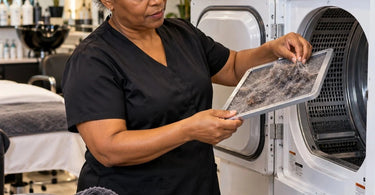
Excellence is always within reach... even when it starts with something as unglamorous as cleaning the dryer lint filter. In a busy salon or spa, fresh towels are practically a love language, and that hardworking dryer deserves a little appreciation for keeping them coming. But while a household dryer might handle a few loads each week, a professional salon dryer can spend much of the workday processing towels, robes, capes, and treatment linens. That difference in workload makes dryer filter maintenance far more important than many salon owners realize. Ignore that little screen, and you could be inviting longer drying cycles, higher operating costs, unnecessary equipment wear, and potentially serious fire hazards into your business.
Professional laundry equipment might not get the attention of a beautiful styling station or a luxurious treatment bed, but it plays an enormous role in keeping appointments running smoothly. Whether your business specializes in hairstyling, massage therapy, facials, or nail services, understanding why dryer filters matter is one of the simplest ways to protect your equipment, your employees, and your bottom line.
Why Salon Dryers Work So Much Harder Than Household Dryers
Think about the average household laundry routine. A family might wash several loads over the course of a week, with the dryer enjoying plenty of downtime between cycles. Now picture a bustling salon on a Saturday morning. Towels are moving from shampoo bowls to laundry baskets, massage linens are being changed between appointments, and the laundry machine seems to have developed a full-time personality of its own.
For professional salons and spas, laundry is not simply a household chore. It is part of the service delivery process. Fresh, clean textiles support client comfort, sanitation procedures, and an organized treatment environment.
A high-volume business may wash and dry multiple loads each day. Depending on the services offered, those loads might include professional salon and spa towels, facial linens, robes, washable salon capes, and other reusable textiles.
Each drying cycle releases fibers from fabrics. These fibers become lint, which the dryer filter is designed to capture before they travel farther into the appliance and exhaust system.
The more laundry a salon processes, the more opportunities there are for lint to accumulate. That means the filter requires consistent attention, even when the dryer appears to be operating normally.
What Does a Dryer Lint Filter Actually Do?
A dryer lint filter is a deceptively simple component with a very important job. As warm air circulates through tumbling laundry, small fabric fibers separate from the textiles. The lint screen catches much of this material while allowing air to continue moving through the drying system.
Proper airflow is essential because a dryer relies on circulating heated air to remove moisture from fabrics. When lint accumulates on the filter, airflow can become restricted.
That restriction can interfere with drying performance. The appliance may need longer cycles to remove moisture, and temperatures inside parts of the machine may rise beyond normal operating conditions.
A lint filter is not designed to capture every particle. Some lint can still travel into internal passages or the exhaust duct. That is why cleaning the removable filter is essential but does not replace professional inspection and periodic vent maintenance.
For salon owners, the important distinction is that the lint filter is both a routine maintenance component and an important part of a broader equipment safety system.
The Hidden Fire Risk Behind a Neglected Dryer Filter
Let's discuss the issue nobody wants showing up on the salon appointment calendar: a dryer fire.
Dryers generate heat, and lint is combustible. When lint collects in a filter, exhaust passage, or internal compartment, it can contribute to hazardous conditions, especially if restricted airflow leads to overheating.
Busy salons face additional operational challenges because equipment may run repeatedly throughout the day. A neglected filter can become heavily loaded during periods of frequent use, while busy employees may overlook maintenance between loads.
Several conditions deserve particular attention:
- Heavy lint accumulation: Layers of lint can restrict airflow and contribute to overheating.
- Blocked exhaust ducts: Lint escaping the primary filter may build up inside venting and reduce the removal of hot, moist air.
- Crushed or improperly installed venting: Restricted ducts can interfere with normal dryer operation.
- Excessive laundry loads: Overloading equipment can reduce drying performance and increase operational strain.
- Contaminated textiles: Towels exposed to certain oils, solvents, or flammable products may present hazards that ordinary washing does not fully eliminate.
That final concern is particularly relevant in beauty and wellness businesses. Salon towels can come into contact with massage oils, styling products, cleaning chemicals, and other substances during daily operations.
Do not assume that laundering automatically makes every contaminated textile safe for heated drying. Follow the chemical product's safety information, textile care instructions, and dryer manufacturer's guidance. Items exposed to flammable solvents or substantial oil contamination may require special handling and should not be placed in a heated dryer unless the applicable safety instructions specifically permit it.
Cleaning the lint filter before or after every load, keeping exhaust systems clear, and following equipment operating instructions are foundational fire prevention practices. If a dryer smells unusually hot, produces smoke, or shows signs of overheating, stop using it and arrange qualified service rather than continuing to run loads.
How Clogged Filters Quietly Increase Salon Operating Costs
Not every dryer problem announces itself with an alarming noise or dramatic malfunction. Some simply appear on the utility bill.
When airflow becomes restricted, a dryer may need additional time to dry the same quantity of laundry. Longer cycles generally mean additional energy consumption and reduced productivity.
Imagine your salon normally dries a full towel load in 45 minutes. If restricted airflow contributes to a cycle stretching to 60 minutes, that extra quarter-hour adds up over repeated loads. Actual drying times vary by appliance, load size, fabric type, and moisture content, but the operational lesson remains the same.
Longer drying times can create several business expenses:
- Additional electricity or gas consumption.
- More employee time spent monitoring and handling laundry.
- Reduced availability of clean towels during busy appointment periods.
- Additional operating hours for laundry equipment.
- Potential service costs if overheating or repeated poor performance contributes to equipment problems.
A clogged filter does not necessarily increase energy use by a predictable percentage. The impact depends on the machine and how severely airflow is restricted. Nevertheless, keeping filters clean supports efficient drying and helps operators notice developing problems before they disrupt appointments.
For a salon with limited laundry capacity, equipment efficiency is especially important. A dryer that runs longer than necessary can become a bottleneck affecting the entire treatment schedule.
Why Salon Towels Make Lint Management Especially Important
Salon towels lead surprisingly demanding lives. They absorb water during shampoo services, help remove treatment products, protect clients during services, and move through repeated washing and drying cycles.
Many cotton towels release loose fibers as they age or experience repeated laundering. New towels can also shed noticeable lint during their first few wash cycles.
The amount of lint produced depends on fabric construction, fiber quality, age, laundering conditions, and drying practices. Cotton, cotton-blend, microfiber, and synthetic textiles can behave differently inside a dryer.
Professional operators should consider several practical habits:
- Sort towels and other textiles according to their care instructions.
- Avoid overloading dryers beyond their rated capacity.
- Inspect heavily worn or deteriorating towels that shed excessive fibers.
- Follow textile and equipment guidance regarding drying temperatures.
- Clean the lint filter consistently, particularly during high-volume laundry periods.
Choosing durable high-quality towels can also support a more reliable laundry operation. The right textiles should be selected for their intended professional use, laundering requirements, absorbency, and durability rather than appearance alone.
Beautifully folded towels might impress clients, but towels that withstand routine laundering without quickly deteriorating are the true behind-the-scenes champions.
Dryer Lint Filters Need Cleaning After Every Load
One of the simplest dryer maintenance rules is also one of the most valuable: clean the lint filter before or after every drying cycle, following the appliance manufacturer's instructions.
For a busy salon, making this a required part of the laundry routine is more reliable than expecting employees to remember it whenever the laundry room gets quiet. Spoiler alert: on a Saturday afternoon, that quiet moment may never arrive.
A practical routine begins by allowing the cycle to finish and following the appliance's instructions for safe filter removal. Remove accumulated lint from the screen, inspect it for damage, and reinstall it correctly before starting another load.
Never operate a dryer with its lint filter missing, damaged, loose, or improperly installed.
Some equipment manufacturers recommend cleaning the filter both before and after each cycle, especially during periods of frequent use. Always prioritize the guidance for the actual dryer model.
A salon with multiple employees should designate responsibility clearly. Whoever transfers laundry into the dryer can check the filter before starting the cycle, while the employee unloading the machine can remove lint afterward if that is part of the established procedure.
This shared approach creates a simple accountability system without turning lint removal into a complicated management project.
The Invisible Residue That Can Block a Clean-Looking Screen
Here is a maintenance surprise: a dryer lint screen can appear relatively clean and still have restricted airflow.
Some laundry detergents, fabric softeners, and laundry additives can leave residues on the filter mesh. Over time, these deposits may obstruct airflow even after visible lint has been removed.
Residue buildup is worth considering if the screen appears clear but drying performance has deteriorated.
Depending on the manufacturer's instructions, periodic cleaning with warm water, a mild liquid detergent, and a soft nylon brush may help remove accumulated film.
However, not every lint filter is designed for the same cleaning procedure. Consult the dryer manual before washing the screen, and never reinstall a wet filter unless the manufacturer specifically allows it.
Make sure the filter is completely dry and properly seated before operating the dryer.
Also pay attention to the laundry products used in your business. If towels are repeatedly exposed to excessive detergent or fabric softener, buildup may become a recurring maintenance concern.
Do not add extra detergent simply because professional towels look heavily used. Follow the laundry product's dosing instructions and the washing machine's requirements.
Cleaning the Lint Screen Is Not the Same as Cleaning the Dryer Vent
One of the biggest misconceptions about dryer maintenance is that an empty lint screen means the entire dryer is clean.
Unfortunately, the lint filter is not a magical force field. Some fibers can escape into the machine's internal components and exhaust pathway.
Over time, lint may accumulate behind the dryer, inside the exhaust duct, or near the exterior vent opening. These areas require separate inspection and maintenance.
For salons using commercial laundry equipment, the exhaust system may be more complex than a typical residential installation. Longer duct runs, frequent operation, and shared venting arrangements can make professional maintenance especially important.
Dryer vent maintenance should include checking for restricted airflow, damaged ducting, accumulated lint, and exterior vent openings that do not function correctly.
The appropriate cleaning frequency depends on manufacturer requirements, operating hours, vent configuration, and local codes. Heavy commercial use may justify more frequent inspections than a household schedule.
Qualified service professionals should handle internal dryer cleaning and duct maintenance whenever specialized tools, equipment disassembly, or access to potentially hazardous areas are required.
If the dryer uses gas, qualified personnel should also inspect relevant gas connections and combustion-related components according to applicable service requirements.
Remember that the lint screen is your everyday maintenance responsibility, while the broader exhaust system requires its own planned maintenance schedule.
Warning Signs Your Salon Dryer Needs Attention
A busy salon does not always have time to investigate every equipment quirk immediately. However, certain dryer symptoms deserve prompt attention rather than another cycle and a hopeful pep talk.
Clothes and towels take longer to dry. If routine loads suddenly require extra cycles, investigate the lint filter, exhaust path, load size, and dryer condition.
Dryer temperatures seem unusually high. Excessive heat, unusual exterior temperatures, or overheating warnings may indicate airflow or equipment problems.
There is a burning odor. Stop using the equipment immediately. Disconnect power if it is safe to do so, and arrange qualified inspection. If there is smoke or fire, follow emergency procedures and contact emergency services.
Lint appears around unexpected openings. Accumulation behind the machine or around duct connections may point to cleaning needs or venting defects.
The exterior exhaust flap does not open properly. A blocked or restricted exhaust outlet can interfere with normal airflow.
The dryer shuts off or displays error messages. Repeated interruptions may be related to overheating or other mechanical and electrical issues.
These symptoms do not prove that the lint filter is responsible. A failing heating component, airflow sensor, blower, thermostat, or other part may be involved. If normal filter maintenance does not resolve the issue, schedule professional service instead of repeatedly restarting the dryer.
How Often Should a Busy Salon Inspect Dryer Equipment?
A reliable salon laundry maintenance program separates quick employee checks from periodic professional service.
The following sample schedule can help establish responsibilities, but it should be adjusted to your equipment manufacturer's requirements, actual usage, and applicable safety rules.
Before or after every load: Remove lint from the filter, confirm that the screen is correctly installed, and look for obvious damage.
At the end of each workday: Keep the laundry area free of loose lint, towels, cardboard, and other clutter. Check for unusual performance complaints and make sure the dryer is not left running unattended after closing.
Weekly: Review whether drying times have changed, inspect accessible exterior areas for lint accumulation, and verify that staff are consistently following the maintenance procedure.
Monthly: Review maintenance records and inspect accessible ventilation components according to the manufacturer's instructions. Arrange additional checks if heavy use or performance changes justify them.
At manufacturer-recommended intervals: Have qualified personnel inspect and clean dryer exhaust ducting and internal components as necessary.
Commercial installations may require different service intervals than residential appliances. Follow local fire and building requirements, particularly for high-volume laundry areas or shared exhaust systems.
Documenting inspections helps demonstrate that equipment maintenance is being handled consistently instead of being left to whoever happens to discover the problem first.
Make Laundry Maintenance Part of Staff Training
Even the best maintenance checklist is useless if nobody knows where it lives.
Salon employees are trained to follow precise procedures for sanitation, client preparation, product handling, and service delivery. Laundry equipment deserves similarly clear operating instructions.
Start by placing a simple, readable maintenance checklist near the laundry station. Include filter cleaning, safe loading, equipment warning signs, and the person responsible for reporting problems.
For salons with several shifts, explain the procedure during onboarding and include it in routine operational reviews.
Employees should understand why the task matters, not merely that management expects it.
A clogged dryer filter can affect airflow, drying efficiency, equipment condition, and fire safety. These are business concerns, not cosmetic housekeeping preferences.
Staff should also know what they are not authorized to do. Removing lint from a removable screen is generally a routine user task. Taking apart electrical components, disconnecting gas equipment, or dismantling exhaust systems requires appropriate training and qualifications.
Establish a straightforward reporting procedure so employees can flag unusual noises, odors, drying delays, or damaged equipment without feeling pressured to repair the problem themselves.
Salon Laundry Safety Goes Beyond the Filter
Good dryer maintenance is one part of creating a safe and efficient laundry workspace.
Keep the area surrounding washers and dryers organized, with enough clearance for ventilation and access as specified by the equipment manufacturer.
Do not stack boxes, spare towels, or product containers against hot equipment or exhaust openings. Avoid storing combustible materials near dryers.
Use the proper venting materials approved for the appliance and installation. Plastic or unsuitable foil accordion-style exhaust ducts can create restrictions and lint accumulation hazards in installations where they are not permitted.
Make sure exhaust air is directed to the appropriate exterior location rather than into occupied salon areas, ceiling spaces, or storage rooms, unless an appliance is specifically designed and approved for a different venting arrangement.
Never leave a running dryer unattended in a closed business. Employees should be present and able to respond to operating problems while laundry equipment is in use.
Special care is also necessary with towels that have absorbed massage oils, wax-related products, or chemical residues. Separate contaminated laundry as appropriate and consult product safety instructions before laundering and drying.
For example, linens used during treatments involving massage oils, lotions, and creams may require specific laundering practices to address remaining product residue.
Similarly, businesses that perform waxing services should follow appropriate textile handling procedures whenever reusable items come into contact with wax removers or other treatment chemicals.
Never assume that a hot dryer will make an improperly cleaned or chemically contaminated textile safe.
Choose Professional Linens That Support Your Laundry Workflow
While cleaning lint filters is essential, your choice of salon textiles also affects everyday laundry management.
A busy salon benefits from maintaining enough clean linens to support its appointment schedule without constantly rushing partially dried loads back into service.
Consider textile durability, laundering instructions, drying requirements, and storage space when planning inventory.
For hair salons and barber shops, an adequate supply of absorbent towels helps accommodate shampoo services, color appointments, and general client preparation. Explore professional hair salon and barber shop supplies when organizing the broader service area.
For massage studios, esthetic treatment rooms, and day spas, coordinated salon and spa bedding helps maintain a comfortable, professional treatment environment.
Keeping sufficient inventory can reduce the temptation to overload machines or rush drying cycles during peak demand.
It also allows time to identify damaged linens, separate textile categories, and follow proper laundering requirements.
And let's be fair: nobody wants the luxury facial experience interrupted because the final clean towel is still enjoying a 20-minute extension in the dryer.
Should Salons Use Commercial Dryers Instead of Household Models?
The answer depends on the volume of laundry, available utilities, equipment specifications, installation requirements, and business needs.
A small solo esthetician studio might have substantially different laundry demands than a large salon with multiple shampoo stations or a day spa operating several treatment rooms.
Commercial laundry equipment may offer features designed for frequent use, higher capacities, and professional serviceability. However, commercial equipment is not exempt from lint cleaning, vent inspections, or fire prevention requirements.
In fact, increased operating hours make consistent maintenance particularly important.
Before selecting a dryer, evaluate the expected number of daily loads, fabric types, available electrical or gas service, ventilation requirements, local regulations, and manufacturer-approved use.
Do not assume that a residential model is suitable for continuous commercial operation. Check its intended duty cycle, warranty terms, and installation specifications.
Likewise, do not assume that simply purchasing a larger dryer will solve laundry delays if the exhaust system is undersized or poorly configured.
Qualified installers and equipment specialists can help assess whether an appliance and venting arrangement are appropriate for the intended workload.
How to Build a More Efficient Salon Laundry Routine
Keeping the dryer filter clean is an excellent starting point, but a few additional workflow improvements can make salon laundry operations noticeably smoother.
Establish a consistent collection system. Designate suitable containers for used towels and linens so employees know where items belong after each appointment. Follow applicable sanitation rules for handling soiled textiles.
Sort laundry according to fabric care needs. Separating incompatible materials helps prevent damage and supports appropriate washing and drying conditions.
Use the correct load size. Follow washing machine and dryer capacity limits rather than packing the drum as tightly as possible.
Choose appropriate drying settings. Use textile care labels and equipment guidance to determine suitable temperatures and cycles.
Clean the lint filter consistently. Make filter maintenance part of every load rather than an occasional deep-cleaning project.
Track unusual drying times. If similar loads suddenly take longer, investigate promptly instead of treating the change as normal.
Store clean linens properly. Keep dried towels and treatment linens in a clean, designated storage area protected from contamination.
These improvements help create a dependable flow of laundry from the treatment room through cleaning, drying, and organized storage.
Salon owners reviewing their overall operational setup can also browse must-have supplies for salon and spa business success to support a more organized professional environment.
Frequently Asked Questions About Salon Dryer Filters
How often should a salon clean its dryer lint filter?
Clean the filter before or after every load according to the dryer manufacturer's instructions. High-volume salons should make this an assigned employee responsibility rather than waiting until the filter looks full.
Can a clogged dryer filter really cause a fire?
Lint buildup can restrict airflow and contribute to overheating. Because lint is combustible, accumulated lint in dryers and exhaust systems is a recognized fire hazard. Routine filter cleaning and proper vent maintenance help reduce the risk.
Why does my salon dryer take longer to dry towels?
Possible causes include a clogged lint screen, blocked exhaust duct, overloaded drum, inappropriate drying settings, excessive initial moisture, or an equipment malfunction. Begin with manufacturer-approved maintenance checks and arrange service if the problem continues.
Do microfiber towels produce less lint than cotton towels?
Lint production varies with fabric quality, construction, age, and laundering conditions. Some microfiber textiles may shed less visible lint than certain cotton towels, but both require proper washing, drying, and filter maintenance. Always follow the textile manufacturer's care instructions.
Should the lint filter be washed with water?
Some manufacturers recommend periodic washing to remove detergent or fabric softener residue. Others specify different maintenance procedures. Consult the owner's manual, remove visible lint first, and make sure any washed filter is completely dry before reinstalling it.
Does cleaning the lint screen eliminate the need for vent cleaning?
No. Lint can accumulate beyond the removable filter. Exhaust ducts and internal dryer components require separate inspection and cleaning at appropriate intervals.
Can a salon dry towels that contain massage oil?
Oil-contaminated textiles can pose additional hazards, and some residues may remain after laundering. Follow the oil manufacturer's safety information, the textile care instructions, and the dryer manufacturer's restrictions. Do not heat-dry textiles that may retain hazardous amounts of combustible material.
What should employees do if a dryer smells like it is burning?
Stop the dryer, avoid restarting it, and follow the workplace emergency procedure. If there is smoke or fire, evacuate as necessary and contact emergency services. Have qualified personnel inspect the equipment before it returns to service.
The Small Maintenance Habit That Makes a Big Difference
Running a successful salon means paying attention to dozens of details clients may never notice. Clean treatment rooms, properly maintained equipment, comfortable linens, and reliable sanitation procedures all contribute to a professional experience.
Dryer lint filter maintenance belongs on that list.
A simple check between laundry loads helps preserve airflow, supports efficient drying, and reduces avoidable safety risks. Combined with appropriate vent inspections, employee training, careful handling of contaminated textiles, and regular equipment service, it becomes an important part of responsible salon operations.
At Pure Spa Direct, we understand that maintaining a beautiful, productive salon takes much more than great styling tools and treatment products. From professional towels and spa linens to spa essentials for professionals, having the right supplies helps your team focus on delivering excellent services.
So the next time someone starts another load of salon towels, remember that little lint filter. It might not be glamorous, but neither is an unexpected equipment breakdown five minutes before a fully booked afternoon. Give it the attention it deserves, and let your dryer keep doing its job safely and efficiently behind the scenes.
