
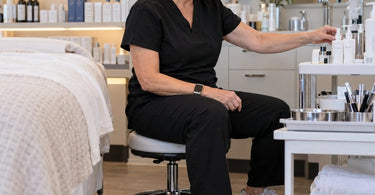
Elevate your business today... and preferably keep your esthetician stool elevated, too! You begin the morning at the perfect working height, comfortably positioned beside your treatment bed, with your supplies within reach and your posture looking surprisingly respectable. Three facials later, you suddenly realize your knees are practically touching your chin, your shoulders are creeping toward your ears, and your stool has quietly lowered itself without permission. If your professional stool seems determined to turn every treatment into an accidental squat workout, there is usually a mechanical explanation. Understanding why esthetician stools slowly sink during the day can help you troubleshoot the problem, protect your working posture, and decide whether your equipment needs an adjustment, a replacement part, or a well-deserved retirement.
A sinking stool might seem like a minor inconvenience, but professional estheticians spend hours performing detailed services that demand consistent positioning. Whether you specialize in facials, waxing, lash extensions, brow treatments, or advanced skincare, dependable seating is an important part of a productive treatment room. Fortunately, the mystery of the disappearing seat height is usually easier to understand than it first appears.
The Most Common Culprit: A Failing Gas Lift Cylinder
Many adjustable esthetician stools rely on a pneumatic gas lift cylinder to raise and lower the seat. This sealed component sits between the stool base and seat mechanism. When you activate the height adjustment lever, an internal valve allows the cylinder to change position. Releasing the lever closes the valve so the stool can remain at the selected height.
Inside the cylinder, pressurized gas and internal sealing components help control the movement of the piston. Over time, seals may deteriorate, valves may stop sealing properly, or internal wear may interfere with the cylinder's ability to maintain its position under load.
The result? Your stool can gradually descend while you are sitting on it, even though you never touched the adjustment lever.
This is particularly common with seating that has experienced years of repeated adjustments and frequent professional use. A stool might continue lifting normally while becoming increasingly unreliable at holding the selected position.
One important distinction: although adjustable salon stools are sometimes casually described as hydraulic stools, many actually use pneumatic gas lift systems. True hydraulic equipment operates differently. Identifying your stool's actual adjustment mechanism is essential before ordering replacement components or attempting service.
Why Does the Stool Sink More as the Day Goes On?
If your stool behaves beautifully at opening time but starts sinking during afternoon appointments, the timing may seem suspicious. Is the stool tired? Is it protesting another back-to-back facial? Unfortunately, furniture has not yet developed the ability to request a lunch break.
The more practical explanation involves repeated loading, mechanical wear, and how the defective component behaves during normal use.
Throughout the day, estheticians repeatedly sit, stand, reposition themselves, and adjust their working height. Each movement applies changing forces to the seat and lift assembly. A deteriorating cylinder may maintain its position briefly before gradually slipping under sustained pressure.
Several circumstances can make the problem more noticeable:
- Repeated sitting and standing: Frequent changes in loading may expose an already weakened height adjustment mechanism.
- Long treatment sessions: Continuous pressure gives a defective lift more opportunity to creep downward.
- Frequent height adjustments: Repeated operation can reveal wear in the cylinder, lever, or valve mechanism.
- Shifting body position: Leaning and repositioning during detailed services change how forces are applied to the stool.
- Progressive component deterioration: An existing mechanical defect may become more obvious as the stool continues to be used.
Temperature and operating conditions can influence gas pressure and component behavior, but a stool that repeatedly loses substantial height under normal use should not be dismissed as ordinary temperature-related movement. Persistent sinking is a reason to inspect the seating system.
Could the Height Adjustment Lever Be the Problem?
Absolutely! A worn gas cylinder is a common explanation, but it is not the only possibility. The height adjustment lever and its connecting mechanism deserve attention before you declare the entire stool a lost cause.
On many pneumatic stools, the adjustment lever activates a small valve mechanism. If that lever becomes stuck, bent, misaligned, or obstructed, the cylinder may remain partially activated even after you release the control.
Imagine trying to close a faucet while something keeps the handle slightly open. The mechanism never fully returns to its intended position. A similar problem with a stool's release control can interfere with proper height retention.
Check whether the lever moves freely and returns to its normal resting position. Look for anything pressing against it, including an improperly positioned seat component or an obstruction near the control linkage.
Do not force the lever, bend metal components into position, or attempt to modify the release mechanism without manufacturer-approved instructions. If the control appears damaged, discontinue use until the issue has been evaluated.
How to Tell Whether the Gas Cylinder Is Failing
Before ordering a replacement stool, take a few minutes to observe exactly what is happening. Different symptoms can point toward different problems.
Symptom one: The stool rises normally but gradually lowers while occupied. This pattern strongly suggests that the lift cylinder or its valve system is failing to maintain the selected position.
Symptom two: The stool lowers even when nobody is sitting on it. Check whether the adjustment lever is being activated unintentionally or failing to return to its resting position. An internal cylinder problem is also possible.
Symptom three: The stool suddenly drops when someone sits down. This is a more serious warning sign. Remove the stool from service because unpredictable movement creates a fall risk.
Symptom four: The stool seems shorter, but the height mechanism has not moved. Inspect the seat cushion, mounting hardware, and base. Compressed padding, loose connections, or structural problems can create a different sensation from actual cylinder movement.
Symptom five: The stool tips, rocks, or leans while rolling. This may indicate problems with the casters, base, seat mounting, or floor contact rather than the height adjustment mechanism.
Observing these differences can save money by helping you identify the component that actually needs attention. It can also prevent you from overlooking a potentially unsafe structural defect.
Why Professional Treatment Rooms Are Tough on Adjustable Stools
Professional spa seating faces a demanding environment. Unlike a decorative stool that sits untouched in the corner, an esthetician stool may be used continuously throughout a busy service schedule.
Consider the typical workday. You move between the treatment bed and your professional facial supplies, reposition beside a magnifying lamp, roll toward a trolley, and occasionally adjust your height to accommodate different services or client positions.
During waxing appointments, the preferred working height may differ from what you use during a facial. Lash and brow services may require an entirely different seating position. The ability to adjust quickly is convenient, but the mechanism must also hold securely once adjusted.
Additionally, spa environments frequently involve cleaning products, moisture, skincare formulations, and occasional product spills. These conditions can affect exposed hardware, casters, finishes, and external mechanisms if maintenance is neglected.
That does not mean everyday cleaning automatically damages a gas lift. The cylinder is normally sealed. However, inappropriate chemicals, excessive liquid exposure, and contamination around accessible moving parts may contribute to equipment deterioration.
Keeping your spa equipment and furniture clean, dry, and maintained according to manufacturer guidance helps support reliable daily operation.
Can a Sinking Esthetician Stool Be Repaired?
Sometimes! The answer depends on the stool's design, available replacement parts, warranty coverage, and whether the problem involves the gas cylinder or an external component.
If the lift cylinder has failed internally, replacing the complete cylinder is generally more appropriate than attempting to repair the pressurized mechanism itself. Some professional stools are designed to accommodate compatible replacement cylinders, while others have proprietary assemblies or limited service options.
Before purchasing a replacement component, identify the stool's manufacturer and model. Check the original documentation or contact the supplier for guidance.
Important compatibility considerations include the cylinder dimensions, mounting connections, overall travel range, rated load capacity, and manufacturer requirements.
Do not assume that every cylinder advertised as universal will fit your particular stool. Professional spa furniture varies considerably, and using an incorrect component can affect seating stability.
You can explore replacement parts for spa and salon equipment when appropriate, but confirm compatibility before ordering.
Safety matters: Never puncture, drill, cut, heat, disassemble, or attempt to refill a pressurized gas cylinder. Avoid makeshift clamps, adhesives, or improvised supports intended to bypass a defective adjustment mechanism. Such modifications can create unpredictable movement or other hazards. Follow the manufacturer's approved replacement procedure or use a qualified service professional.
When Is It Smarter to Replace the Entire Stool?
Replacing a cylinder can make sense when the rest of the stool is in excellent condition and an approved replacement part is readily available. However, sometimes a complete replacement is the more practical business decision.
Consider replacing the stool when the base is cracked, the seat mounting structure is damaged, multiple components have deteriorated, or the manufacturer no longer supports the necessary repair.
Replacement may also be appropriate when the stool no longer meets your treatment room's ergonomic or functional needs.
For example, perhaps you originally purchased a basic adjustable stool for occasional facial appointments. Now your schedule is packed with lengthy treatments, and you need more substantial cushioning, a supportive backrest, an appropriate foot ring, or a wider adjustment range.
At that point, replacing the old stool is not simply solving a mechanical problem. It is an opportunity to improve your workspace.
Explore professional salon stools and adjustable spa stools to compare seating styles suited to your services.
How a Sinking Stool Can Affect Esthetician Posture
A slowly descending stool can have a surprisingly large effect on your working position. And unfortunately, your shoulders, back, and neck are usually the first to notice.
Imagine beginning a facial with your elbows comfortably positioned and your shoulders relaxed. As the stool descends, the treatment bed remains at the same height. You may compensate by lifting your arms, shrugging your shoulders, leaning forward, or extending your neck.
These changes can increase muscular effort during tasks that already require sustained concentration and precise hand movements.
For professionals performing extractions, lash work, detailed brow shaping, or extended facial treatments, even a modest change in seat height can affect comfort and positioning.
An appropriate working setup generally allows you to maintain a supported, balanced position without excessive reaching or prolonged shoulder elevation.
Depending on the service, useful adjustments may include changing the treatment bed height, repositioning equipment, supporting the feet, or selecting a stool with a more suitable height range.
For additional workstation flexibility, consider the relationship between your seating and electric facial beds. Adjustable treatment furniture can help professionals position clients more comfortably while maintaining access to the treatment area.
The goal is not to remain perfectly motionless in one supposedly ideal posture. Comfortable movement and regular position changes are important during long professional workdays.
What to Look for When Buying a Better Esthetician Stool
If your sinking stool is ready for retirement, choosing its replacement carefully can help prevent another frustrating experience. Not all stools offer the same combination of comfort, durability, mobility, and adjustability.
Reliable height adjustment: Choose a model with an adjustment range appropriate for your treatment bed and working preferences. Review the manufacturer's specifications for the lift mechanism.
Appropriate weight capacity: The stool's published capacity should accommodate its intended users and comply with manufacturer requirements.
Stable base: A well-designed base helps provide dependable support during routine repositioning. Stability matters particularly when professionals lean or reach during services.
Suitable casters: Wheels should be appropriate for your flooring material and treatment room layout. Check that they roll smoothly without creating unnecessary resistance or instability.
Comfortable upholstery: Look for seating that provides adequate support throughout repeated appointments. Upholstery should also be compatible with the cleaning procedures required in your professional environment.
Backrest options: Some estheticians prefer a compact backless stool for freedom of movement. Others benefit from back support during longer procedures. Your services and seating habits should guide the decision.
Foot support: For higher working positions, a properly positioned foot ring may help prevent the feet from hanging unsupported.
Serviceability: Ask whether replacement casters, cylinders, or other components are available. Access to manufacturer-approved parts can help extend the useful life of professional seating.
When comparing options, consider not only the purchase price but also how frequently the stool will be used and whether its design suits your daily workflow.
Do Saddle Stools Have the Same Sinking Problem?
Saddle-style seating has become popular in some professional beauty environments because its distinctive seat shape encourages a different hip and leg position from conventional round stools.
But does purchasing a saddle stool eliminate the risk of unwanted height changes? Not necessarily.
If a saddle stool uses a pneumatic gas lift, it can experience the same general cylinder and valve problems as other gas-adjustable seating.
The seat shape affects how you sit; it does not automatically change the mechanical reliability of the height adjustment system.
When exploring saddle stools, examine the construction, height range, stability, and serviceability rather than assuming the style alone guarantees durability.
Also remember that saddle seating is not universally comfortable for every professional or every procedure. The best stool is one that fits your body, working environment, and treatment requirements.
Simple Maintenance Habits That Help Professional Stools Last
A little routine attention can prevent small equipment concerns from becoming disruptive treatment room surprises. While maintenance cannot reverse the failure of an internal gas cylinder, it can help you identify developing problems and protect other stool components.
Inspect the stool regularly. Check for unexplained height changes, loose mounting hardware, cracked bases, damaged casters, and unusual movement.
Clean according to manufacturer instructions. Use approved cleaning products and avoid soaking the lift assembly or exposing sensitive components to unnecessary moisture.
Keep wheels free of debris. Hair, lint, and other materials can accumulate around casters, making them harder to roll and potentially affecting mobility.
Use the stool within its rated capacity. Never exceed the manufacturer's published load limit or use the stool for purposes outside its intended design.
Avoid rough handling. Dropping heavily onto the seat, using the stool as a step, or rolling aggressively into furniture can place unnecessary stress on the structure.
Document recurring problems. Record when sinking begins, how frequently it occurs, and whether the problem changes after adjustments. This information can be useful when contacting a supplier or manufacturer.
Remove defective seating from service. If the stool drops unexpectedly, feels unstable, or shows structural damage, stop using it until it has been properly evaluated.
Professional maintenance supplies, including suitable cleaners and disinfectants for salons and spas, can support a tidy treatment room. Always confirm material compatibility and follow the stool manufacturer's cleaning instructions.
Why a Dependable Stool Is a Business Investment
It is tempting to think of seating as a minor purchase compared with treatment beds, facial machines, or other large equipment. After all, it is just a stool, right?
Not quite.
Professional seating supports the person performing the service. That means it influences how comfortably you can work, how easily you move around clients, and how consistently you can maintain an appropriate working position.
An unreliable stool may interrupt treatments, create unnecessary distractions, and force professionals to spend time readjusting equipment. It may also become a safety concern if the seat suddenly moves or loses stability.
Think about the cumulative effects during a busy schedule. A few unnecessary adjustments during each appointment can become a persistent annoyance. Add the discomfort of working at the wrong height, and that bargain stool may not feel like such a bargain anymore.
Thoughtful equipment purchasing is particularly important for growing spas, multiroom facilities, and beauty businesses with several professionals sharing furniture.
Consistent equipment specifications across treatment rooms can simplify training, maintenance planning, and replacement part management.
Explore professional spa furniture and salon and spa business essentials when planning improvements to your working environment.
Frequently Asked Questions About Sinking Esthetician Stools
Why does my esthetician stool sink when I sit on it?
A worn pneumatic gas lift cylinder or defective height adjustment valve is a common cause. If the stool maintains its height while empty but gradually lowers under your weight, the lift assembly should be inspected.
Can I repair the gas cylinder myself?
A pressurized cylinder should never be opened or internally repaired. Some stools permit replacement of the complete cylinder using manufacturer-approved parts and procedures. If you are uncertain, consult the manufacturer or a qualified technician.
Does a sinking stool mean I exceeded its weight limit?
Not necessarily. Internal components can deteriorate through ordinary use, age, and mechanical wear. However, exceeding the rated capacity can increase stress on the stool and should always be avoided.
Will lubricating the cylinder stop it from sinking?
External lubrication generally will not restore an internally damaged gas lift or defective seal. Apply lubricants only where the manufacturer specifically recommends them.
Is a sinking stool dangerous?
It can be. Unexpected changes in seat height may compromise balance or encourage awkward working positions. A stool that suddenly drops, rocks, or becomes unstable should be removed from service.
How long should an esthetician stool last?
Service life varies according to construction, frequency of use, operating conditions, load, and maintenance. There is no single reliable lifespan that applies to every professional stool. Manufacturer guidance and regular inspections are more useful than relying on a fixed number of years.
Should I choose a round stool or a saddle stool?
Both designs can work well in professional treatment rooms. Consider your preferred posture, the services you perform, seat comfort, height range, mobility, and the reliability of the adjustment mechanism.
Keep Your Treatment Room Running Smoothly, Not Slowly Sinking
Why esthetician stools slowly sink during the day usually comes down to a straightforward mechanical issue: the pneumatic lift cylinder may no longer hold its position, or the height adjustment mechanism may not be operating correctly. Although the movement can begin gradually, it deserves attention before the stool becomes unreliable or unsafe.
Start by identifying the symptoms, inspecting accessible controls, and reviewing the manufacturer's recommendations. If an approved replacement component is available, repair may be practical. If the stool has structural damage, lacks compatible replacement parts, or no longer meets your professional needs, replacing it may be the better investment.
At Pure Spa Direct, we understand that comfortable, dependable equipment helps beauty professionals focus on what matters most: delivering excellent services. As a distributor of professional spa, salon, and wellness supplies, we make it easier to explore equipment options for treatment rooms of all sizes.
Browse our selection of esthetician stools, professional spa and salon equipment, and treatment room essentials when it is time to refresh your workspace.
Because the only thing that should be dropping during your workday is your stress level, not your seat height!
