
Efficiency drives success with this pick, but efficiency has a dirty little secret in the spa and salon world: when you train your team together, you multiply both the learning and the exhaustion. One therapist practicing a new technique is manageable. Six therapists practicing that same technique in the same room, all asking questions at the same time, all needing hands-on correction, all wanting to know if they are doing it right? That is a beautiful, chaotic, wonderful mess. And it requires more power management than you probably realized when you scheduled that group training session.
Group training in the beauty industry is not just a nice-to-have. It is how you keep your team aligned, your service standards consistent, and your clients happy. But group training demands something that solo learning does not. It demands a different kind of energy infrastructure, both human and electrical. Let us talk about what that actually means for your spa, salon, or wellness practice.
Why Group Training Creates a Unique Power Drain
When you bring your team together for training, you are doing something incredibly smart. You are building a shared language, a shared standard, and a shared sense of purpose. But you are also concentrating human effort and human attention into a single window of time. That concentration creates a power drain that you do not experience when training happens one-on-one or through self-paced online modules.
Think about it this way. A single esthetician practicing Facial Steamer techniques at her own workstation uses her own energy. She stops when she needs a break. She asks for help when she is stuck. Now imagine five estheticians in the same room, all working with Ozone Steamers, all looking for feedback, all needing the educator to watch their hand position, their timing, their client communication. That educator is now managing five streams of attention simultaneously. The cognitive load does not add up linearly. It multiplies.
And it is not just the educator who feels it. The team members feel it too. When one person asks a question, everyone listens. When one person struggles, everyone watches. The social pressure of learning in front of colleagues adds a layer of emotional management that solo learners never experience. That is not a bad thing, but it is a real thing. And if you do not plan for it, you will see your team dragging by the second half of the session.
The Physical Infrastructure Nobody Talks About
Here is where the conversation gets practical. Group training requires more power management in the most literal sense. If you are running a training session that involves multiple workstations, you need to think about electrical capacity, equipment distribution, and the sheer logistics of keeping multiple treatment setups functional at the same time.
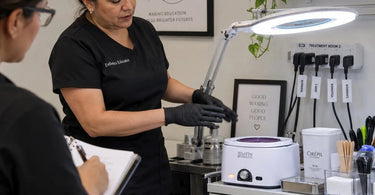
Consider a waxing training session. You might have four or five technicians practicing with Professional Wax Warmers at the same time. Each warmer draws power. Each station needs Professional Wax Spatulas and Applicators within reach. Each technician needs access to Pre & Post-Waxing Products without having to walk across the room every time they need something. The setup that works for one technician does not automatically work for five.
Now think about massage training. If you are teaching a new modality to a group of therapists, you need multiple tables set up, which means multiple Massage Table Warmers & Toppers if you are simulating real client conditions. You need Massage Oils, Lotions, and Creams for Therapists distributed across every station. You need Massage Bolsters positioned correctly at every table. And if you are working with portable tables, you need to think about setup and breakdown time, because what takes five minutes for one table takes half an hour for six.
This is what power management looks like in practice. Not just the electrical power, but the logistical power of having the right supplies, in the right quantities, in the right places, so that training time is spent on learning rather than on scrambling for a missing bottle of Cuticle Oil.
Human Energy Management: The Factor Most Trainers Ignore
Let us talk about the human side of power management, because this is where group training really separates the successful sessions from the ones that leave everyone exhausted and frustrated.
When you train a group, you are working with a spectrum of learning styles, energy levels, and communication preferences. Some team members will want to practice the same technique twenty times until it feels automatic. Others will want to understand the theory first. Some will ask questions constantly. Others will stay quiet and hope they figure it out. Some will be energized by the group dynamic. Others will be drained by it.
Managing this requires a kind of intentional energy design. It means building in breaks before people realize they need them. It means pairing up team members strategically, not just by skill level but by temperament. It means giving the educator permission to step back and let the group practice without constant interruption, because sometimes the best learning happens when people are allowed to struggle a little.
It also means recognizing that Soft Strip Wax training for a group is a different animal than soft strip wax training for one person. With one person, you can afford to let them make mistakes and learn slowly. With a group, every mistake becomes a teaching moment for everyone. That is powerful, but it is also tiring. You cannot run a four-hour group waxing session the same way you would run a private tutorial.
Equipment Choices That Support Group Training
If group training is going to be a regular part of your practice, your equipment choices need to support that reality. This is where thoughtful investment pays off in ways you might not immediately see.
Start with your tables. Portable Massage Tables are essential if you are training in a space that gets reconfigured regularly. But not all portable tables are created equal. You want tables that set up quickly, that are stable enough for hands-on practice, and that do not require a degree in engineering to adjust. The Athena table, for example, is a staff favorite because it retains movement so you feel fresher at the end of the day, which matters even more when you are practicing techniques repeatedly in a training environment .
For facial training, think about how many stations you can realistically run. Facial Steamers are essential for many advanced facial protocols, but if you are running a group session, you need enough units that no one is waiting. That might mean investing in additional equipment, or it might mean structuring your training so that steam-based steps happen in rotation rather than simultaneously.
For nail training, the same logic applies. Multiple technicians practicing Professional Gel Polish application need multiple LED Bright Lamps, multiple stations with Nail Files & Buffers, and a setup that allows each person to work independently without crowding. The Nail Tables and Manicure Stations you choose for your training space should be durable enough to handle repeated use and flexible enough to accommodate different learning activities.
The Emotional Power of Group Learning
Here is the part that makes all the power management worth it. When group training works well, it creates something that solo learning cannot replicate. It creates a shared identity. Your team does not just learn a technique together. They experience the learning together. They laugh at the same mistakes. They celebrate the same breakthroughs. They build the kind of trust that shows up in how they support each other on the floor during busy days.
That emotional power is real, and it is a resource. But like any resource, it needs to be managed. If you drain it without replenishing it, you end up with a team that associates training with exhaustion rather than growth. The goal is to design training sessions that leave people feeling energized, not emptied.
That means shorter sessions with more breaks, not longer sessions that push through fatigue. It means variety in activities, not four hours of the same type of practice. It means acknowledging effort and progress, not just correcting mistakes. It means ending on a high note, with something the team can celebrate together, rather than letting the session fizzle out when everyone is too tired to care.
Practical Strategies for Better Power Management
Let us get concrete. Here are some strategies that work for managing the unique power demands of group training in the spa and salon industry.
First, design your training environment before you design your curriculum. Walk through the space. Figure out where each station will be. Test the electrical capacity. Make sure there are enough outlets, enough surfaces, enough access to water if needed. If you are running waxing training, make sure your Professional Wax Warmers are distributed so that no one is walking across the room to get to theirs. If you are doing massage training, position tables so that the educator can see everyone without having to run back and forth.
Second, build in energy management from the start. Schedule breaks every 45 to 60 minutes, even if people do not feel like they need them. Energy dips happen before you notice them. A break scheduled proactively prevents the crash that happens when you push through. Use breaks for hydration, snacks, and casual conversation. That is not wasted time. That is how you maintain focus for the next block of learning.
Third, vary the intensity. Not every segment of group training needs to be hands-on practice. Mix in demonstration, discussion, and observation. Some people learn best by doing. Others learn best by watching. Structuring your session to include multiple modes of engagement keeps everyone fresher and reaches more learning styles.
Fourth, think about group size. The ideal group training size depends on what you are teaching and how much individual attention is needed. For technique-heavy training like Professional Stripless Hard Wax application, smaller groups work better because the educator can actually see what each person is doing. For discussion-based training like client consultation or retail recommendation skills, larger groups can work because the learning happens through conversation rather than hands-on correction.
Fifth, invest in the right supplies. Nothing drains a group training session faster than running out of something essential. Make sure you have enough Compressed Sponges, enough Professional Cotton Products, enough Protective Gloves & Masks. If your training involves product application, make sure you have enough product for everyone to practice multiple times. Running out of product halfway through a session is a guaranteed way to lose momentum.
When Group Training Goes Wrong (And How To Fix It)
Let us be honest. Group training does not always go smoothly. Sometimes it goes spectacularly wrong. The educator is late. The equipment does not work. Two team members are in the middle of a workplace tension and it is radiating through the room. The technique that seemed simple in theory turns out to be much harder in practice, and everyone is getting frustrated.
These moments are not failures. They are opportunities to model the kind of resilience and problem-solving you want your team to bring to client interactions. If something goes wrong, name it. Acknowledge the frustration. Adjust the plan. Maybe you need to shift to a different activity while you troubleshoot the equipment. Maybe you need to give people a five-minute break to reset. Maybe you need to acknowledge that this technique is challenging and that struggling with it is normal and expected.
The worst thing you can do when group training goes off the rails is pretend it is not happening. Your team can feel the tension. They can see the educator getting flustered. They can sense when the session is not working. Acknowledging it and adjusting creates trust. Pretending everything is fine creates distance.
The Long Game: Building a Culture of Learning
Group training is not just about acquiring specific skills. It is about building a culture where learning is valued, where growth is expected, and where team members support each other in getting better. That culture is one of the most powerful assets a spa or salon can have. It affects retention. It affects service quality. It affects the client experience in ways that are hard to measure but impossible to ignore.
But building that culture requires commitment. It requires investing time and energy in training even when the schedule is busy. It requires treating training as a priority, not an afterthought. It requires recognizing that the power management involved in group training, both the literal and the metaphorical, is not an inconvenience. It is the work.
And it requires the right tools. Whether you are training on ItalWax Hard Wax and Soft Wax, practicing advanced facial techniques with Advanced Facial Treatment Products, or learning new lash application methods with Premium Lash Extensions & Supplies for Pros, having the right supplies at the right quantities makes everything easier.
At Pure Spa Direct, we understand that spa and salon professionals are not just buying products. They are building practices. They are training teams. They are creating experiences for clients that require skill, care, and the right equipment. We are proud to be the wholesale source that supports that work, from the first training session to the thousandth client appointment.
So yes, group training requires more power management. It requires more planning, more equipment, more energy, and more attention to the human dynamics of learning together. But it also creates something that solo learning cannot. It creates a team that grows together, that supports each other, and that brings a shared standard of excellence to every client they serve. And that is worth managing a little extra power.
)