
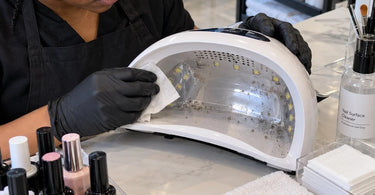
Simplify your day, amplify your success... and do not let a few innocent-looking fuzzies turn your manicure station into a miniature dust bunny resort. A professional UV or LED nail lamp sits right in the middle of one of the busiest parts of a gel service, so lint, filing dust, dried product residue, and other tiny debris can gradually find their way inside. It may not look dramatic enough to earn its own emergency meeting, but keeping the lamp interior clean is a small maintenance habit that can support a tidier workstation, more dependable equipment use, and the polished experience clients expect from a professional salon.
Lint can arrive from more places than you might think. Towels, clothing, cotton products, wipes, paper products, filing dust, and everyday airborne debris can all contribute. Add a full appointment book, repeated hand movements in and out of the lamp, and a workstation where filing and gel application happen only inches apart, and suddenly the inside of that sleek curing lamp is collecting souvenirs from the entire day.
Why Does Lint End Up Inside a Nail Lamp?
A nail station is an active workspace. During prep, shaping, enhancement services, and removal, technicians create fine dust and move through a variety of products and disposable supplies. Even with excellent housekeeping, lightweight particles can travel.
Filing is one obvious source. Whether you are refining natural nails, smoothing enhancements, or removing product, Nail Files & Buffers and electric filing work can create particles that settle around the station. Lint can also shed from certain fabrics and disposable products. That is one reason professional nail services often rely on appropriate Professional Cotton, Sponges, and Wipes for Salons & Spas, including lint-free options where the service requires them.
The lamp is especially inviting to debris because clients repeatedly slide their hands underneath it. Depending on the design, the unit may have a removable base, reflective surfaces, sensors, small seams, ventilation openings, or recessed areas around the light sources. Those little spaces are basically tiny vacation homes for dust.
A Dirty Interior Can Make a Professional Station Look Less Professional
Clients notice details. They may not understand the engineering of a curing lamp, but they absolutely understand whether equipment looks clean and well maintained.
A pristine manicure table with beautiful bottles of Professional Gel Polish can lose some of its sparkle if the client places her hand into a lamp containing visible dust, fuzz, cured gel spots, and yesterday’s mysterious pink fluff. Nobody wants to wonder whether that fluff has seniority.
Visible cleanliness is part of the service experience. A clean lamp supports the overall impression created by an organized table, fresh implements, tidy cords, clean surfaces, and thoughtfully arranged Manicure Essentials. In a business built around close-up beauty services, those details matter.
Lint and Dust Can Collect Around Important Lamp Components
UV and LED nail lamps vary considerably in design, so technicians should always follow the cleaning and maintenance instructions supplied by the manufacturer. Depending on the model, there may be LED diodes, UV bulbs, reflective interior surfaces, motion sensors, timers, removable hand plates, vents, or magnetic bottom trays.
Allowing debris to build up around those areas is not a great maintenance strategy. Dust or residue on interior surfaces can make the unit harder to keep clean, while debris around a motion sensor may interfere with the sensor’s ability to operate as intended on some models. If a lamp uses ventilation openings, those openings should remain unobstructed according to the manufacturer’s directions.
The goal is not to panic over one microscopic fiber. It is to prevent gradual accumulation from becoming the salon version of that junk drawer everyone swears they are going to organize next weekend.
Keep Curing Performance Separate From Guesswork
If gel is not curing properly, do not automatically blame lint. Proper polymerization depends on factors including the gel system, compatible lamp, light output, curing time, product thickness, hand placement, and the manufacturer’s instructions.
That is why professional nail technicians should use compatible products and equipment rather than assuming that every lamp cures every gel identically. Whether you work with CND, OPI, Gelish, or another professional system, follow that system’s application and curing directions.
If you notice recurring service issues such as unexpectedly soft product, wrinkling, inconsistent curing, or changes in lamp behavior, inspect the whole process. Check application thickness, client hand placement, product and lamp compatibility, equipment condition, and cleanliness. Cleaning is good maintenance, but it should not become a substitute for troubleshooting the actual cause.
Filing Dust Deserves Its Own Plan
Lint is only part of the housekeeping story. Professional nail services can create considerable filing dust, especially during enhancement shaping and removal. Keeping that dust controlled at the workstation can help reduce the amount that drifts onto bottles, lamps, tools, furniture, and other nearby surfaces.
A well-planned manicure setup may include appropriate dust collection, routine surface cleaning, strategic placement of supplies, and enough working space to separate dusty prep steps from clean gel application whenever practical. Browse Stylish and Functional Nail Salon Furniture Essentials when planning stations that support efficient professional workflows.
Good housekeeping is less glamorous than selecting next season’s colors, but it has one major advantage: nobody has ever complained that their nail tech was too organized.
Clean the Lamp According to the Manufacturer’s Instructions
Before cleaning any electrical nail lamp, disconnect it from power and follow the manufacturer’s specific instructions. Different housings, finishes, light components, sensors, and removable pieces may require different care.
Many professional-style lamps allow a removable base or hand plate to be cleaned separately, while the main unit is wiped carefully rather than saturated. Avoid spraying liquid directly into electrical equipment unless the manufacturer specifically instructs you to do so. Also avoid automatically reaching for the strongest solvent within arm’s reach. Some cleaners can damage plastics, finishes, reflective surfaces, sensors, or other components.
If the lamp manufacturer recommends a particular cleaner, cloth, disinfectant, or procedure, use that guidance. A soft lint-free wipe is especially logical here. Cleaning a lint problem with something that leaves more lint behind is the beauty-equipment equivalent of washing your car with a mud pie.
For the rest of the station, keep suitable Professional Cleaners & Disinfectants for Salons and Spas available and use each product according to its label and intended application.
Create a Quick Between-Service Visual Check
Not every maintenance task needs a clipboard, committee, and twelve-page standard operating procedure. A quick visual inspection between clients can catch obvious debris before it accumulates.
Look at the removable tray or hand plate, interior floor, accessible corners, exterior touch points, and sensor area if your model has one. Remove visible debris using the method approved for the equipment. If filing dust has settled around the lamp or nearby table, address that too.
This can be incorporated into the same station reset that includes disposing of single-use items, processing reusable implements according to your required procedures, wiping appropriate surfaces, replacing supplies, and preparing the next service.
Schedule a More Thorough Equipment Check
Between-client cleaning handles the obvious mess. A recurring deeper inspection helps catch what daily resets miss.
Set a schedule appropriate to how heavily each lamp is used. A lamp serving back-to-back gel appointments will naturally need attention more often than equipment used occasionally. Examine the unit for accumulated dust, product residue, damaged components, cord problems, unusual operation, or other concerns described in the manufacturer’s maintenance instructions.
If the manufacturer specifies replacement components or service intervals, follow those requirements. Pure Spa Direct is a distributor of professional beauty and wellness supplies, so salons can also explore Bulbs & Replacement Parts for Spa and Salon Equipment when compatible replacement items are needed.
And yes, writing the cleaning date somewhere on a maintenance log may feel slightly less exciting than opening a box of new polish colors. Future You, however, will be delighted.
Do Not Forget the Products Surrounding the Lamp
A clean lamp works best as part of a clean station rather than as one sparkling island surrounded by chaos. Gel bottles, brushes, files, dust collectors, tool containers, cords, arm rests, and table surfaces should all have logical places in the workflow.
Keep frequently used Nail Brushes & Tools organized so they are easy to access without crowding the curing area. Store disposables where they are protected from unnecessary dust. Remove filing debris before opening clean products whenever possible. Replace worn or heavily soiled supplies instead of letting them hang around because they have apparently become part of the family.
For busy professional stations, shopping categories such as Professional Nail Care Collections can make it easier to keep core service supplies stocked while maintaining an orderly setup.
Train the Whole Team to Notice the Small Stuff
If several nail professionals share equipment, lamp cleanliness should not depend on whichever employee finally loses a staring contest with the dust bunny.
Create a simple team standard for checking, cleaning, and reporting equipment issues. Make sure staff members know which cleaning products are approved for each device, what parts may be removed, when equipment must be unplugged, and what signs should be reported to management.
Consistency is especially helpful in salons with multiple manicure stations because clients receive the same professional impression no matter which technician they book. It also reduces the chances of one person carefully maintaining equipment while another treats the lamp like an archaeological dig.
A Cleaner Lamp Supports a Better Professional Workflow
The biggest lesson is wonderfully unglamorous: tiny maintenance habits add up. Keeping lint and filing dust from accumulating inside a UV or LED nail lamp supports a cleaner-looking station, makes routine inspection easier, and helps technicians notice equipment issues before they become buried beneath layers of salon debris.
Pair regular lamp care with sensible dust control, organized supplies, manufacturer-approved maintenance, and professional nail salon supplies. The result is a workstation that feels intentional from prep through final cure.
Because your nail art deserves the spotlight. The lint does not.
