
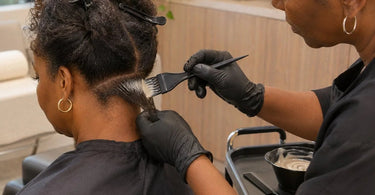
Set yourself up for greatness... because gorgeous, even hair color starts with understanding that not every inch of your client's hair follows the same schedule! The nape area, tucked beneath all those fabulous layers at the back of the head, can behave differently during professional color services. Sometimes it needs a little extra attention, sometimes a faster hand, and sometimes a carefully planned head start. Understanding why nape hair can need a different application pace during color services helps professional stylists prevent uneven saturation, inconsistent lift, and those frustrating little patches that only reveal themselves when the blowout is finished. With the right technique, thoughtful sectioning, and dependable professional hair color, even the trickiest nape can become a perfectly polished part of the finished look.
For busy salon professionals, application pace is about much more than moving a color brush quickly. It involves choosing where to begin, controlling subsection size, maintaining consistent saturation, and understanding how hair texture, density, porosity, and previous chemical services influence the result. The nape deserves its own moment in the spotlight, even if it spends most of the day hiding under a fabulous head of hair.
Why Is Nape Hair Different From the Rest of the Head?
The nape is the lower rear portion of the head, extending toward the neckline. Although it may look like one continuous section of hair, its characteristics can differ noticeably from the crown, sides, and front hairline.
Some clients have unusually fine, delicate strands along their neckline. Others have coarse, resistant growth or tightly packed hair that makes product distribution challenging. Curl patterns, growth direction, previous chemical processing, and the amount of natural pigment can also vary throughout the head.
These differences matter because hair color does not respond solely according to the clock. The condition and structure of the individual strands influence how readily color or lightener penetrates and how efficiently the desired result develops.
A stylist who recognizes these variations during consultation can build a more effective application strategy rather than treating every section as though it came from the same perfectly behaved mannequin.
Hair Texture Can Change the Ideal Application Pace
Texture describes the diameter of individual hair strands, not how straight or curly the hair appears. Fine, medium, and coarse strands may respond differently to the same professional color formula.
Fine nape hair can be more vulnerable to chemical stress, particularly when it has previously been lightened or colored. Highly porous fine strands may absorb color quickly, making them susceptible to darker or more intense results when applying deposit-only color or toner.
Coarse nape hair may present the opposite challenge. Resistant strands with compact cuticle layers can be slower to accept color or achieve the intended lift.
Neither situation means stylists should automatically increase developer strength or extend processing time. Instead, the appropriate response begins with hair assessment, product selection, and application planning.
For a client with resistant nape hair, beginning in that area may provide a useful timing advantage when the color manufacturer's directions support that sequence. For delicate, porous nape hair, applying product later or using an appropriately adjusted formula may be more suitable.
Hair Density Makes Saturation More Challenging
Density refers to the number of hair strands within a given area of the scalp. It is entirely possible for a client to have fine individual strands but extremely dense hair at the nape.
Dense hair creates an application challenge because thick subsections can prevent color from reaching the interior strands. The outside may look beautifully coated while the center remains almost untouched. Surprise! That is not exactly the grand reveal anyone ordered.
During dense nape applications, stylists should prioritize controlled subsection sizes and thorough saturation instead of racing through the area.
A few professional techniques can make a substantial difference:
- Divide dense hair into smaller, manageable subsections.
- Work methodically so the underneath strands receive adequate product.
- Check saturation on both sides of each subsection when the technique requires it.
- Use clean partings to maintain visibility and control.
- Keep previously completed sections organized so they do not interfere with the remaining application.
Reliable professional hair brushes and combs and appropriately sized hair color brushes help create the precise sectioning and product placement required for consistent salon results.
Scalp Heat and Processing Time Are Not the Same Everywhere
The scalp naturally produces warmth, and this heat can accelerate certain oxidative hair color and lightening processes near the roots. That is why stylists frequently distinguish between the regrowth area, mid-lengths, and ends when developing an application plan.
However, scalp heat does not automatically mean every strand at the nape will process faster or slower than hair elsewhere.
Hair texture, porosity, existing pigment, previous processing, and product saturation may influence the result more noticeably than small differences in local temperature. Hair immediately adjacent to the scalp can also behave differently from the lengths extending away from it.
For virgin lightening services, product instructions may call for applying lightener to the mid-lengths before approaching the scalp area to prevent excessively warm or light roots. For regrowth color, the application sequence may be completely different.
The important distinction is that application timing and chemical processing time are related but not interchangeable. A stylist can change the order of application without disregarding the manufacturer's recommended development window.
How Porosity Changes Color Absorption at the Nape
Porosity describes how readily hair absorbs and retains moisture and chemical products. It is one of the most important characteristics to evaluate before choosing the pace of a color service.
Hair with low or resistant porosity has relatively compact cuticle layers, which can make color penetration more challenging. Highly porous hair has a more compromised cuticle structure and may accept certain color molecules quickly while struggling to retain them over time.
Different porosity levels may exist within the same nape section. For example, new growth may be relatively resistant while previously highlighted ends are substantially more porous.
Applying the same mixture from roots to ends without considering these differences can produce uneven results.
Professional colorists can improve predictability by assessing the condition of the hair, identifying previously processed areas, and choosing formulas and placement strategies appropriate to each zone.
A strand test is especially valuable when the nape contains fragile, heavily processed, or unusually resistant hair.
Why Application Order Matters During Root Touch-Ups
Root touch-ups require an organized approach because the goal is generally to color new growth while minimizing unnecessary overlap onto previously treated hair.
For clients with resistant gray or coarse hair at the nape, a stylist may choose an application sequence that gives the resistant area sufficient development time, provided that approach matches the chosen color system's instructions.
However, if the nape contains fine, porous strands that accept color readily, beginning elsewhere may help avoid excessive deposit.
Clean sectioning is particularly important because regrowth at the neckline can be easy to overlook, especially when short hairs curl tightly against the skin.
Use a suitable tint brush to apply product precisely along the regrowth rather than dragging color unnecessarily through the lengths.
Check behind the ears and along the lower hairline before processing. These small areas can make a surprisingly large difference in the overall professional finish.
Special Considerations for Lightening Services
Nape hair deserves particular attention during highlighting, balayage, and full-head lightening because the consequences of uneven application can be more noticeable.
Coarse or deeply pigmented nape hair may require careful planning to achieve a comparable level of lift to lighter or finer strands elsewhere on the head.
Conversely, delicate, previously lightened nape hair may be more susceptible to breakage or excessive lift if treated without consideration of its condition.
For these services, the goal is not simply to make every subsection process at the same speed. It is to help the different areas arrive at a compatible final result while protecting hair integrity.
Professional stylists should follow the manufacturer's instructions for their selected hair bleaches and lighteners, including developer compatibility, mixing ratios, application methods, processing limits, and any restrictions involving heat or scalp contact.
Monitor the hair throughout the service and make decisions based on its actual condition and development. Never compensate for slow lift by exceeding a product's maximum processing time.
The Importance of Smaller Sections and Consistent Product Placement
One of the most practical ways to improve nape color consistency is to adjust subsection size to match the hair's density and the product being used.
Thin, even subsections help ensure that product reaches the strands that would otherwise remain hidden between layers of hair.
For detailed lightening work, very fine sections may be appropriate. For other color services, slightly larger subsections may provide sufficient coverage while supporting an efficient application.
There is no universal subsection thickness that works for every service. The correct size depends on the manufacturer's instructions, hair density, technique, and the stylist's ability to achieve complete saturation.
Prepare the workstation with mixing bowls, sectioning clips, and the necessary brushes before beginning. Having everything within easy reach reduces interruptions and helps maintain a consistent pace.
Because nobody wants to discover halfway through a complicated color application that the one perfect sectioning clip has mysteriously disappeared into the salon universe.
How to Build a More Efficient Nape Color Application Routine
A successful routine balances speed, precision, and thoughtful chemical processing. The following workflow can help stylists approach this area consistently while adapting to individual client needs.
Step 1: Assess the hair before mixing. Examine texture, density, porosity, elasticity, previous color history, scalp condition, and the amount of regrowth. Identify any fragile or unusually resistant areas.
Step 2: Select the appropriate formula. Choose professional products according to the desired service, existing hair condition, and manufacturer guidance. Consider whether different zones require separate formulas.
Step 3: Determine application order. Decide whether the nape should be addressed earlier, later, or in separate stages. Base this decision on the type of color service and the observed characteristics of the hair.
Step 4: Organize manageable sections. Create clean partings and secure the surrounding hair. Avoid taking sections so thick that complete saturation becomes difficult.
Step 5: Apply with consistent control. Maintain even product distribution while avoiding unnecessary overlap on previously processed hair. Adjust your working speed without sacrificing precision.
Step 6: Monitor development. Track application timing and evaluate the hair at appropriate intervals. Follow the specific product's recommended development time and processing limits.
Step 7: Complete the service professionally. Rinse, cleanse, condition, and finish according to the product directions. Assess the nape alongside the rest of the hair under appropriate lighting.
For complex correction services, detailed client records documenting formulas, processing observations, and application order can make future appointments more predictable.
Common Nape Color Application Mistakes to Avoid
Even experienced professionals can encounter challenges when working with the lower hairline. Recognizing common mistakes helps prevent avoidable corrections.
- Rushing through dense sections: Speed without saturation can leave untouched strands and inconsistent results.
- Assuming all nape hair is resistant: Some clients have extremely fine or porous nape hair that requires a gentler approach.
- Overlapping lightener: Repeatedly applying lightener over previously processed hair can increase the risk of breakage.
- Ignoring shorter neckline hairs: These strands may require careful placement and additional attention during the finishing inspection.
- Using the same formula without assessment: Different porosity levels and previous color histories may call for different strategies.
- Extending development beyond product directions: Additional processing time is not a substitute for proper formulation or application technique.
- Skipping the final inspection: The finished color should be assessed with the hair lifted, parted, and viewed from multiple angles.
Remember, a beautifully colored crown cannot completely distract from a patchy neckline. The little details deserve their beauty moment, too.
Professional Salon Supplies That Support Better Color Results
Technique is essential, but having dependable professional supplies makes precise color application easier and more efficient.
For a well-organized color station, consider stocking the following essentials:
- Professional Hair Color for a range of permanent and other color services.
- Hair Bleaches and Lighteners for professional lifting and highlighting techniques.
- Hair Color Applicator Brushes for controlled placement around the hairline and nape.
- Mixing Bowls for preparing formulas according to product directions.
- Hair Sectioning Clips for organized, manageable subsections.
- Protective Gloves and Masks for appropriate professional protection during salon services.
- Salon and Barber Apparel for keeping service uniforms protected and professional.
- High-Quality Towels for efficient rinsing and cleanup.
- Premium Hair Care Products for completing the service and supporting the finished color.
Professional colorists can also explore the Wella, Clairol Professional, and Framar collections for salon color and styling supplies. Always select products based on their intended professional use and compatibility with the chosen color system.
Can a Different Nape Application Pace Improve Salon Efficiency?
Absolutely, when the adjustment is based on sound professional judgment rather than simply working faster.
Planning ahead can reduce the likelihood of missed sections, unnecessary color corrections, product waste, and inconsistent results. It may also improve the overall flow of the appointment by allowing the stylist to work through each area in a logical order.
Efficient application does not mean every section receives the same amount of attention. It means spending the appropriate amount of time where that attention creates the greatest benefit.
A dense, resistant nape may justify smaller subsections and a deliberate starting position. A delicate neckline may benefit from careful timing and more conservative product placement.
The objective is a service that remains organized, predictable, and protective of the client's hair.
How to Explain Different Processing Needs to Clients
Clients may wonder why their stylist spends extra time working around the neckline or changes the application sequence from one appointment to another.
This creates an excellent opportunity for professional education.
Explain that hair naturally varies in texture, density, and condition throughout the head. Different areas may require slightly different application methods to achieve an even, attractive result.
Keep the explanation reassuring and easy to understand. For example, a stylist might explain that the hair underneath is denser than the hair on top, so smaller sections help ensure thorough coverage.
Clients do not need a chemistry lecture with their cappuccino. They simply appreciate knowing their stylist is paying attention to the details that make their finished color look beautiful.
Documenting these observations can also demonstrate the value of a customized professional service and support consistency during future visits.
Frequently Asked Questions About Nape Hair Coloring
Should stylists always apply hair color to the nape first?
No. The best starting point depends on the color service, hair condition, product instructions, and desired result. Some techniques begin in the back, while others require a different application sequence.
Does nape hair always take longer to process?
No. Nape hair may be fine, coarse, porous, resistant, dense, or previously processed. These characteristics influence its response to color, so processing behavior varies from client to client.
Why does the nape sometimes look darker after coloring?
Possible causes include differences in natural pigment, porosity, existing artificial color, formula selection, and application timing. A proper assessment is needed to identify the reason.
How can stylists avoid missing hair underneath dense sections?
Use clean partings, appropriately sized subsections, adequate product, and a consistent saturation technique. Inspect the underside of sections before moving on.
Can the nape require a different color formula?
Yes. Different formulas may be appropriate when there are meaningful differences in porosity, previous chemical processing, or desired lift. Formula selection should follow professional assessment and manufacturer instructions.
Is it safe to leave lightener on the nape longer than recommended?
No. Never exceed the manufacturer's specified processing limits. If the desired result is not developing as expected, reassess the hair and the service plan rather than extending exposure beyond the instructions.
Beautiful Color Starts With Understanding Every Section
Why nape hair can need a different application pace during color services comes down to one essential professional principle: great color is customized color. Texture, density, porosity, scalp proximity, previous processing, and product selection all influence the way a stylist should approach the neckline.
By adjusting application order, subsection size, and product placement thoughtfully, salon professionals can create more consistent results while respecting the integrity of the hair and the requirements of their color products.
From precise sectioning tools to professional hair salon and barber shop supplies, Pure Spa Direct helps beauty professionals find the essentials needed for efficient, polished salon services. Explore the available professional color products, tools, and accessories to keep your color station ready for everything from a simple root refresh to a detailed full-head transformation.
Because beautiful hair color should look fabulous from every angle, including the one your client only sees with a second mirror!

