
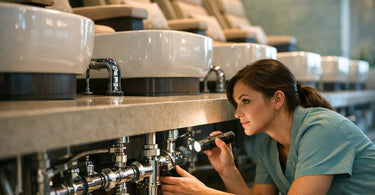
Pros rave about this innovation in salon comfort, but they often forget the hardworking plumbing system hiding beneath that luxurious leather. Let’s be real: your pedicure chairs are the unsung heroes of your spa or salon. They’re the thrones where your clients kick off their flip-flops, sink into bliss, and spill their deepest secrets while you work your magic. But underneath all that relaxing glory lies a complex network of pipes, pumps, and jets that, if neglected, can turn your serene sanctuary into a scene straight out of a horror movie. We’re talking funky smells, sluggish drains, and the kind of bacterial drama that would make a health inspector faint. That’s exactly Why Pedicure Chairs Need a Plumbing Maintenance Schedule that’s more reliable than your favorite barista remembering your order. Ignoring it is like buying a fabulous pair of shoes and never cleaning them—eventually, they’re going to get funky and fall apart. So, grab a notepad and your favorite pen, because we’re about to dive deep into the world of drains, disinfectants, and dodging disaster.
The Not-So-Pretty Truth About What’s Hiding in Your Pipes
You might think your Pedicure Chairs/Spas are sparkling clean because you wiped down the basin after your last client. But here’s the kicker: the real party zone is happening where you can’t see it. Inside those pipes, a delightful cocktail of dead skin cells, excess lotion, and standing water is creating a five-star resort for bacteria and fungus . This biofilm, as the pros call it, is the primary reason your plumbing starts to smell less like lavender and more like a swamp. According to industry experts, the number-one problem causing pedicure chair malfunction isn’t old age—it’s straight-up neglect . A regular plumbing maintenance schedule is your first line of defense against this invisible gunk. It’s not just about smell; it’s about safety. You wouldn’t reuse a Professional Cotton, Sponges, and Wipes for Salons & Spas on a client, so why let them soak in a basin that’s circulating old cooties?
Save Your Sanity (and Your Wallet) with Routine Care
Think of your pedicure chair like a luxury car. You wouldn’t drive a Ferrari for three years without an oil change, right? The same logic applies here. Without any maintenance, a high-end chair can break down after only three years of service. However, with proper care, that same chair can last up to a decade . That’s a huge difference in your bottom line! By sticking to a maintenance schedule, you’re not just cleaning; you’re protecting a massive investment. This means checking those UV Sterilizers, ensuring the discharge pump is functioning (especially if your salon is on an upper level where gravity drainage isn’t an option), and inspecting for leaks or worn seals . Catching a small drip early is a hundred-dollar fix. Ignoring it until it floods your floor could mean a thousand-dollar repair, not to mention the cost of replacing ruined flooring or dealing with a closed salon for a day. Plus, think of the downtime! A broken chair means lost revenue. That’s 5 to 15 clients a day you’re turning away or trying to reschedule . A little bit of routine love goes a long way in keeping your business booming.
The Daily Grind: Simple Steps for a Sanitary System
Alright, let’s talk about the nitty-gritty of what you should be doing every single day. This isn’t just about making the chair look pretty; it’s about ensuring the plumbing stays happy. After every single client, the foot basin needs a thorough scrub with a brush and a hospital-grade disinfectant to remove any visible debris . Pay special attention to the jets. If you have a piped system, you need to run the disinfectant through the system to clean the internal parts . For pipeless pedicure chairs, while they are easier to clean on the surface, you still need to remove and clean the jet covers to prevent buildup . At the end of each day, do a more thorough flush. Fill the basin with warm water and the recommended amount of a non-corrosive, EPA-approved cleaning solution (skip the bleach, ladies—it corrodes your gaskets and seals!) and let it circulate for 10-15 minutes . This simple daily habit will drastically reduce the chances of system malfunctions and keep those Professional Cleaners & Disinfectants for Salons and Spas working their magic.
Monthly Check-Ups: Becoming Best Friends with Your Plumbing
While daily cleaning is like your morning coffee—non-negotiable—monthly maintenance is your deep-tissue massage. It’s time to get hands-on with the parts you don’t normally see. Once a month, schedule a date with your chairs to inspect all the mechanical and electrical components . Check for loose wires, frayed cords, or any signs of water leakage near the motor and pump. If your chair has a removable filter or screen (often found in pipeless systems), take it out and give it a deep clean . This is also the time to listen. Is the massage motor making a grinding noise? That’s a cry for help . A little bit of manufacturer-approved lubricant on moving parts can work wonders, but if the noise persists, it might be time to call in a pro . And while you’re down there, show some love to the upholstery. Treating the leather or vinyl with a protective conditioner prevents cracking and keeps it looking fabulous, ensuring your Professional Spa Apparel and setup always look top-notch .
Don’t Be a Bleach Buff: Using the Right Products
Let’s clear up a common misconception: more bleach does not equal cleaner. In fact, using bleach incorrectly is one of the fastest ways to destroy your pedicure chair’s plumbing. Pouring straight bleach into the basin will corrode the rubber gaskets, plastic drains, and metal components faster than you can say “health code violation” . If you absolutely must use it for deep cleaning, the golden rule is only one tablespoon for every five gallons of water . For everyday and weekly cleaning, stick to pH-neutral, non-corrosive disinfectants, like hydrogen peroxide-based or quaternary ammonium compounds . These are tough on germs but gentle on your equipment. Always check the manufacturer’s guidelines for your specific chair—whether it’s a high-end Continuum Pedicure or a model from Whale Spa—to ensure you’re using safe products and not voiding your warranty. And remember, after using any cleaning solution, a thorough rinse with clean water is a must to prevent chemical residues from irritating your clients’ skin .
The Professional Touch: Why You Need a Plumber in Your Contacts
Sometimes, DIY just doesn’t cut it. While you can handle the daily and monthly upkeep, scheduling a professional service call every six months is the secret sauce to a long-lasting chair . A qualified technician, preferably a licensed plumber who understands salon equipment, can perform a comprehensive checkup. They’ll ensure proper pipe slope for drainage, check for code compliance (like backflow preventers and GFCI outlets), and inspect the pump and motor in ways you can’t . They can also spot potential problems before they become emergencies, saving you from a mid-Saturday crisis when you’re fully booked. This is especially crucial if you’re dealing with hard water, which can cause scale buildup and reduce the lifespan of your Hydrodermabrasion equipment and other water-based tools. Think of it as a spa day for your spa equipment—a little professional TLC that ensures everything runs smoothly.
Signs Your Chair is Begging for Help (Don’t Ignore These!)
Your pedicure chair will tell you when it’s unhappy. You just have to listen. If you notice the water draining slower than a melting glacier, that’s a sign of a clog in the pipes or a failing pump . Strange noises from the motor—grinding, rattling, or excessive vibration—are the equipment equivalent of a scream . And if you smell a musty or foul odor even after cleaning, that biofilm we talked about has likely taken over. Other red flags include water leaking from the base of the chair (check those seals and hoses!), jets that have stopped working or have weak pressure, and a massage function that feels more like a jackhammer than a gentle knead . Catching these signs early can mean the difference between a simple fix and a full-blown replacement. If you find yourself needing new parts, remember that Bulbs & Replacement Parts for Spa and Salon Equipment are available to help you get things back in order.
The Cost of Neglect vs. The Joy of Maintenance
Let’s talk dollars and sense. We know you’re busy perfecting your Brow Lamination Supplies for Perfect Brows and stocking up on ItalWax, but ignoring your pedicure chairs is a financial trap. A cheap, neglected chair might only last 2-3 years, and the repair costs for low-quality motors and jets can pile up fast . We’re talking $150 to $450 for a single motor repair, not including the technician’s time . On the flip side, a high-quality chair from a trusted brand like La Palm or Earthlite, when properly maintained, can serve you faithfully for 5-10 years . The joy of maintenance is that it’s a fraction of the cost of replacement. You get to keep your gorgeous Stylish and Functional Nail Salon Furniture Essentials looking and working like new, which keeps your clients happy and your reputation sparkling. Plus, passing a health inspection with flying colors? Priceless.
Your Handy-Dandy Plumbing Maintenance Cheat Sheet
To make this super easy to remember (and to stick on your staff fridge), here’s a quick cheat sheet for your pedicure chair plumbing maintenance schedule:
After Every Client:
* Drain and scrub the basin with a brush and disinfectant .
* Wipe down all surfaces: seat, armrests, footrest .
* If using a piped system, run a flush with clean water .
Daily (End of Day):
* Remove and clean jet covers/filters .
* Fill basin with water and EPA-approved disinfectant; circulate for 10-15 minutes .
* Rinse thoroughly and dry all parts to prevent mold .
Weekly:
* Deep clean the entire system with an enzyme or oxygen-based cleaner to remove biofilm .
* Inspect and clean the inlet screens on your pump .
Monthly:
* Inspect all hoses, connections, and seals for leaks .
* Check electrical cords and GFCI function .
* Lubricate moving parts as recommended by the manufacturer .
Bi-Annually (Every 6 Months):
* Schedule a professional service call to check the pump, motor, and overall plumbing health .
Conclusion: Keep Calm and Flush On
Creating a plumbing maintenance schedule for your Pedicure Chairs/Spas might not be the most glamorous part of running a salon, but it is absolutely one of the most important. It’s the foundation of a clean, safe, and profitable business. By staying on top of the daily cleanings, monthly inspections, and bi-annual professional checkups, you’re not just extending the life of your expensive equipment; you’re protecting your clients and your reputation. You’re ensuring that every person who sits in your chair feels nothing but relaxation, with zero worries about what might be lurking in the pipes. So, schedule that time, train your staff, and make friends with your plumber. Your future self (and your future bank account) will thank you. Now, go forth and conquer, you fabulous spa owner, and remember that at Pure Spa Direct, we’ve got your back with all the supplies, equipment, and essentials you need to keep your empire thriving!
)