
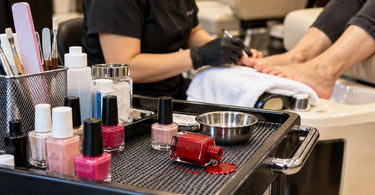
Simplify your workday with a smarter approach to pedicure supplies and station organization, because nobody has time for a runaway nail polish bottle during a busy salon day. One minute, you are creating the perfect glossy pedicure, and the next, a beautiful shade of cherry red is making an unauthorized appearance on your trolley, towel, or floor. Sound familiar? Polish bottles seem to have a special talent for tipping over at pedicure stations, and there are several surprisingly practical reasons behind this frustrating little salon mystery. Fortunately, a few simple adjustments can help nail technicians keep their polish upright, their workstations organized, and their appointments running smoothly.
Pedicure stations present a different set of challenges than traditional manicure tables. Between lower working positions, limited counter space, moving equipment, wet surfaces, and the constant choreography of foot treatments, even an innocent-looking bottle of polish can become a tiny workplace troublemaker. Understanding what causes these spills is the first step toward preventing them.
Why Polish Bottles Tip Over More Often at Pedicure Stations
The biggest reason nail polish bottles tip over more frequently during pedicures is the combination of unstable placement, frequent movement, and awkward working angles. A manicure station typically provides a dedicated, flat tabletop where polish can remain within easy reach. A pedicure station often requires technicians to work around a chair, footrest, basin, trolley, and client legs, all while maintaining comfortable access to their tools.
That difference matters. A bottle that remains perfectly stable on a manicure table may become surprisingly vulnerable when placed on a narrow trolley shelf, a slightly sloped chair attachment, or a temporary surface near the footrest.
Polish bottles are small, but their stability depends on several factors, including base width, bottle shape, weight distribution, surface texture, and the force applied while opening or using them. Add a busy technician reaching across a pedicure chair, and the chances of an accidental tip increase.
1. Pedicure Stations Often Have Less Stable Working Surfaces
One of the biggest differences between manicure and pedicure setups is the available workspace. Manicure tables are generally designed specifically for detailed nail services, while pedicure stations must accommodate water basins, adjustable footrests, client seating, and treatment equipment.
This often leaves nail technicians placing polish bottles on whatever surface happens to be available.
Common problem areas include narrow trolley shelves, curved chair arms, uneven accessory trays, and surfaces that are not completely level. Even a small slope can make a narrow bottle more vulnerable to tipping, especially when the brush is pulled sideways during application.
A bottle may appear perfectly upright until the technician removes the brush. That tiny sideways force can be enough to send an unstable bottle into its dramatic final performance.
The professional fix: Establish a dedicated, level polish placement area at every pedicure station. A sturdy trolley with a flat shelf or a properly fitted nail polish bottle holder can help keep bottles in place during application.
2. Pedicure Chairs and Footrests Create More Movement
Pedicure stations are busy environments. Clients adjust their legs, technicians reposition footrests, rolling stools move across the floor, and nearby equipment may vibrate during operation.
None of these movements necessarily causes a spill on its own. However, repeated bumps or vibrations can shift a poorly positioned bottle closer to the edge of a working surface.
Some pedicure chairs also include massage functions. Depending on the chair design and where supplies are placed, vibration may be transferred to attached trays or nearby accessories. A bottle sitting on an unstable tray can gradually move or become easier to knock over.
Rolling carts add another consideration. If a trolley is bumped by a technician's knee or repositioned while an open bottle is sitting on top, the sudden movement can create a spill.
The professional fix: Keep open polish bottles on a stationary surface whenever possible. If a rolling trolley is necessary, engage its wheel locks, position it away from frequently moving chair components, and avoid relocating it while bottles are open.
For salons evaluating their layout, choosing practical Pedicure Chairs and Spas and appropriately sized accessories can make everyday services easier to manage.
3. Technicians Work at Awkward Angles During Pedicures
During a manicure, the technician generally works with the client's hands resting directly in front of them. Pedicures are different. The client's feet may be elevated, extended, turned slightly, or repositioned several times throughout the treatment.
This creates a constantly changing working angle.
A technician may need to lean forward to reach a smaller toenail, rotate toward a supply cart, or stretch around a footrest to retrieve polish. These movements increase the chance of accidentally brushing against an open bottle.
There is also the issue of brush handling. Removing a brush from a bottle requires an upward motion, but technicians sometimes pull at a slight angle when the bottle is positioned too far away. That sideways pressure can destabilize a lightweight or narrow bottle.
The professional fix: Place the polish bottle on the technician's dominant-hand side, close enough to reach without stretching, but outside the path of elbows, knees, and moving equipment. Position the open bottle so the brush can be lifted vertically without dragging against the bottle neck.
A good setup should let the technician focus on the toenails, not perform an Olympic-level balancing routine.
4. Different Polish Bottle Shapes Have Different Stability
Not all nail polish bottles are created equal. Some have wide, square bases that provide excellent contact with a flat surface. Others feature tall, slim designs, rounded bottoms, or unusual decorative shapes.
While beautiful packaging can look fantastic on a retail display, bottle geometry also affects stability during professional application.
A narrow base provides a smaller support area. A tall bottle can be more vulnerable to tipping if force is applied near the top. Rounded or irregular bases may not sit as securely on certain trays, especially when the surface is slippery.
The amount of polish remaining inside the bottle can also change its balance and handling characteristics. However, bottle shape and placement usually matter more than simply whether the bottle is full or nearly empty.
The professional fix: Pay attention to the bottle shapes used most frequently at your pedicure stations. Consider using a flexible silicone holder or appropriately sized bottle cradle for shapes that tend to wobble.
Pure Spa Direct carries a Nail Polish Bottle Holder Stand made from flexible silicone rubber that accommodates many bottle shapes and helps hold polish securely during use. This type of accessory can be particularly helpful for technicians working with several bottle designs throughout the day.
5. Wet Towels, Lotion, and Product Residue Make Surfaces Slippery
Pedicure services involve more moisture and skincare products than a typical polish-only manicure. Between soaking, exfoliation, lotion application, and towel handling, it is easy for a working surface to become damp or slippery.
A bottle sitting on a wet tray may slide more easily when bumped. The same problem can occur when lotion, massage cream, or oil residue remains on a surface.
Even a small amount of product residue can reduce friction between the bottle and the surface beneath it.
Another surprisingly common problem is placing a polish bottle directly on a folded towel. Towels may look soft and stable, but their uneven fibers and folds can create an unreliable base, particularly for narrow bottles.
The professional fix: Keep the polish application zone clean, dry, level, and separate from wet treatment supplies. Use dedicated areas for Sugar Scrubs, lotions, and soaking accessories so these products do not interfere with polish application.
Keep clean salon towels nearby for their intended uses, but avoid relying on a folded towel as the foundation for an open bottle.
6. Crowded Pedicure Trolleys Increase the Risk of Spills
Take a quick look at a busy pedicure trolley. You might find polish bottles, base coats, top coats, files, cuticle implements, lotion, cotton products, toe separators, and several mysterious items that apparently moved in without paying rent.
As more supplies accumulate on a small surface, every movement becomes more complicated.
A technician reaching for a nail file may bump a polish bottle. A bottle of Cuticle Oil may crowd the space needed for color application. A towel or cotton pad can catch on an open polish brush.
Clutter creates multiple opportunities for accidental contact, particularly during quick appointment turnovers.
The professional fix: Divide the pedicure station into clearly defined work zones. Keep active polish bottles in one area, clean implements in another, and treatment products in their own designated storage spaces.
Use a compact nail tool organizer for frequently used implements and keep backup inventory off the immediate working surface.
A well-organized trolley should support the service rather than resemble the aftermath of a very glamorous tornado.
7. Opening Tight Polish Caps Can Accidentally Knock Bottles Over
Another overlooked cause of polish spills is the way technicians open and close bottles.
Nail polish can dry around the bottle neck, causing caps to become sticky or difficult to turn. When the cap resists movement, technicians may apply additional twisting force.
If the bottle is sitting freely on a small tray, that twisting action can shift or overturn it. The problem becomes worse when a technician attempts to loosen a stubborn cap without firmly stabilizing the bottle.
Even during ordinary application, pulling a brush through a tight bottle opening at an angle may disturb a poorly positioned bottle.
The professional fix: Open stubborn bottles while holding them securely on a stable surface, rather than trying to loosen them with one hand while they sit unsecured on the trolley.
Keep bottle necks clean according to product instructions, close caps properly after use, and inspect frequently used bottles for dried polish buildup. Avoid allowing cleaning materials or solvents to contaminate the polish itself.
8. Why Pedicure Spills Can Cost More Than a Bottle of Polish
One spilled bottle might seem like a minor inconvenience, but the true cost can extend beyond the wasted product.
A significant spill may interrupt the appointment while the technician secures the area, cleans the affected surface, replaces contaminated materials, and retrieves another bottle.
Depending on the surface, nail polish may also stain towels, damage certain finishes, or leave residue that requires special attention. Strong cleaning solvents can damage furniture and upholstery, so removal methods should always be appropriate for the affected material.
If polish reaches the floor, the area must be addressed promptly to reduce slipping hazards. A spill near electrical equipment also requires additional care.
For a busy nail salon, repeated incidents may contribute to wasted inventory, additional cleaning expenses, unnecessary supply replacement, and scheduling delays.
Imagine a technician losing only a few minutes to a spill several times each month. Multiply that across multiple pedicure stations, and an otherwise small problem becomes a recurring operational annoyance.
Preventing spills is not only about protecting the polish. It is about protecting the efficiency of the entire service.
9. The Best Ways to Keep Nail Polish Bottles Upright
Fortunately, most polish bottle stability problems can be reduced without redesigning the entire nail salon.
Use a dedicated bottle holder. A properly fitted holder helps support bottles during brush removal and application. Look for a stable design that works with the shapes and sizes of your most frequently used polish bottles.
Choose a flat, non-slip surface. Place polish on a rigid, level shelf or tray rather than a curved armrest, fabric towel, or unstable accessory.
Keep bottles away from edges. Leave enough space around each open bottle to prevent accidental contact with neighboring tools or moving equipment.
Position polish within comfortable reach. Technicians should be able to dip and remove the brush without excessive leaning or twisting.
Limit the number of open bottles. Keep only the color and finishing products currently in use within the active work zone. Return other products to their storage locations.
Separate wet and dry activities. Complete soaking and messy treatment steps before preparing the final polish application area.
Stabilize rolling furniture. Lock trolley wheels where available and avoid moving carts while open containers are on top.
Check station stability regularly. Loose shelves, damaged trays, worn wheel locks, and wobbly accessories should be addressed before they lead to accidents.
These simple habits can make a noticeable difference, particularly in high-volume salons where technicians complete multiple pedicure services each day.
10. Are Nail Polish Bottle Holders Worth Using at Pedicure Stations?
For many nail technicians, yes. A bottle holder is a relatively simple accessory that addresses one of the most common causes of polish accidents: an unsecured bottle sitting on a busy work surface.
Different holder styles serve different purposes. Flexible silicone holders may accommodate several bottle shapes and help maintain a secure grip. Rigid cradles can provide a designated placement point. Display stands can be useful for organizing or presenting polish, although the design should be evaluated for stability during actual application.
For example, the 2-Way Polish Bottle Holder by DL Pro is a compact acrylic stand designed to support a polish bottle at an angle. It can provide an organized placement option on an appropriate, stable surface.
The best choice depends on the bottle shape, working height, available space, and technician preference.
Before purchasing holders for every station, test a few with the polish bottles your team uses most often. Make sure each bottle fits securely and that the holder itself remains stable during normal brush removal.
A holder should make the process easier, not become another accessory that needs rescuing from the floor.
11. Set Up a Pedicure Station That Prevents Problems Before They Start
An efficient pedicure station should follow the natural order of the service. The technician should be able to move from preparation to treatment to polish application without repeatedly reaching across crowded equipment.
Begin with a comfortable, properly positioned pedicure chair and footrest. Place clean implements and Nail Files and Buffers within easy reach, while keeping used implements in their designated collection area.
Keep treatment products such as scrubs and lotions organized away from the dry polish zone. Store extra colors in a suitable organizer, rack, or cabinet so the technician does not need to crowd the immediate application surface.
During the final polish stage, prepare a stable holder for the base coat, selected color, and top coat. The technician should be able to reach each product comfortably without crossing over the client's feet or moving equipment.
For salons that offer a broad range of nail services, thoughtful storage for Premium Nail Polish, Professional Gel Polish, and related products can simplify both inventory management and service preparation.
Remember that conventional air-dry nail lacquer and gel polish have different handling and curing requirements. Keep products in appropriate storage conditions and follow the manufacturer's instructions for each system.
12. A Quick Pre-Pedicure Station Checklist
Before the next client settles into the pedicure chair, take a moment to check the essentials:
- Surface: Is the polish placement area flat, clean, dry, and stable?
- Position: Can the technician reach the polish without stretching across the chair?
- Equipment: Are trolley wheels locked and moving accessories clear of the work zone?
- Organization: Are unnecessary bottles and tools removed from the active surface?
- Polish: Are bottle caps clean, functional, and properly closed until needed?
- Holder: Does the holder fit the selected bottle securely?
- Safety: Are wet products, electrical equipment, and client belongings away from the polish application area?
- Cleanup: Are appropriate cleaning supplies accessible in case an accidental spill occurs?
This quick inspection is especially valuable when multiple technicians share the same station or when the salon handles back-to-back appointments.
13. What to Do If a Polish Bottle Does Spill
Even an excellent station setup cannot eliminate every accident. When a bottle tips over, responding quickly and safely can help limit the damage.
First, stabilize or close the bottle if it is safe to do so. Keep clients and staff away from the spill, particularly if polish has reached a walking surface.
Identify the material affected before selecting a cleaning method. Nail polish remover may work on some compatible surfaces, but acetone can damage certain plastics, painted finishes, fabrics, and other materials. Never assume that a solvent is safe for salon furniture simply because it removes nail polish.
Follow the polish manufacturer's spill guidance and the furniture manufacturer's cleaning recommendations. Provide appropriate ventilation, keep flammable products away from ignition sources, and use suitable protective equipment when necessary.
Absorb and contain the spill using compatible materials, dispose of contaminated waste according to applicable requirements, and clean the area thoroughly before resuming service. Keep clients away from wet or slippery flooring until the area is safe.
For routine workstation care, maintain an appropriate selection of Professional Cleaners and Disinfectants for Salons and Spas, remembering that ordinary surface disinfectants are not necessarily designed to remove nail polish spills.
After cleanup, identify why the accident happened. Was the tray unstable? Was the bottle too close to the edge? Did the technician have to reach awkwardly? Correcting the underlying cause helps prevent an encore performance.
14. Small Station Improvements Can Make a Big Difference
One of the most useful lessons from polish bottle spills is that salon efficiency often improves through small, practical changes rather than expensive renovations.
A dedicated holder, a better-positioned trolley, or a clearly defined dry work zone can improve consistency without requiring additional floor space.
Salon managers can also involve their nail technicians in workstation planning. After all, the professionals completing pedicures every day know exactly which shelves wobble, which carts are difficult to reach, and which bottle shapes have a suspicious tendency to misbehave.
Ask technicians to identify recurring problems and test improvements before standardizing a setup across multiple stations.
Consider keeping an extra bottle holder at each pedicure station, along with essential Manicure Essentials and frequently used finishing products. Having everything within reach reduces unnecessary movement and makes it easier to maintain an orderly working environment.
For larger salons, consistent station layouts also help technicians transition between work areas without repeatedly searching for supplies.
The Bottom Line: Keep the Color on the Toenails, Not the Trolley
So, why do polish bottles tip over more often at pedicure stations? The answer usually comes down to workspace design, movement, bottle stability, and technician positioning. Pedicure services introduce more potential obstacles than a traditional manicure setup, from adjustable footrests and narrow trays to wet surfaces and crowded supply carts.
The good news is that these problems are largely manageable. A stable work surface, a thoughtfully positioned trolley, and an appropriate bottle holder can help prevent unnecessary spills while making everyday services more comfortable and efficient.
At Pure Spa Direct, we understand that professional nail technicians need practical tools that work as hard as they do. Explore our selection of Professional Nail Care Collections, Pedicure Supplies, and Nail Polish Bottle Holders to find useful additions to your salon setup.
Because gorgeous polish belongs on perfectly finished toenails, not halfway across the pedicure station. Your trolley has enough responsibilities already. It does not need a fresh coat of Raspberry Disaster.
