
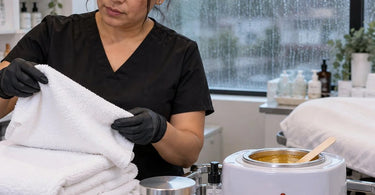
Boost client satisfaction with a little rainy-day awareness behind the scenes. When wet weather rolls in, the extra moisture in the air can quietly change how High-Quality Towels, professional waxes, and powder products feel and behave during services. Suddenly the towel that was fluffy yesterday feels slightly heavier, your wax seems a bit different, and that beautifully loose powder decides it would rather form a tiny committee of clumps. Welcome to humidity season, where the weather outside can absolutely invite itself into the treatment room.
For spa, salon, nail, barber, massage, and waxing professionals, these subtle changes matter because consistency matters. Clients may never know why a towel feels less crisp or why a powder product takes a little more effort to dispense, but professionals notice immediately. Understanding what humidity can do makes it much easier to organize storage, rotate inventory, and keep service supplies performing more consistently regardless of what the forecast is doing.
Why Rainy Weather Can Affect Professional Supplies Indoors
Rain itself is not sneaking through the door and attacking your inventory. The bigger issue is the change in moisture levels and relative humidity that often accompanies damp weather. Indoor conditions can fluctuate as doors open, outside air enters the building, HVAC systems cycle, steam is produced, laundry runs, and treatment rooms generate their own heat and moisture.
Many materials naturally exchange moisture with the surrounding air. Textiles are especially responsive, which is why towels can feel different in a humid room than they do in a dry, climate-controlled space. Fine powders can also pick up moisture from their environment, encouraging particles to stick together instead of remaining loose and free flowing. Wax is different from either towels or powders, but heat, humidity, repeated opening, storage conditions, and contamination can all influence how professional wax products handle.
The takeaway is not that one rainy afternoon ruins everything. It is that repeated exposure to warm, damp conditions can gradually make storage and handling less predictable.
Towels Are Basically Tiny Moisture Magnets
Professional towels are designed to absorb moisture. That is fantastic when you are drying hands, removing treatment products, or creating a warm towel service. It becomes slightly less fantastic when the towel is sitting on a shelf absorbing moisture before the service even begins.
Cotton fibers can take up moisture from humid air, and dense towels have plenty of material available to hold it. As a result, freshly laundered towels may feel heavier, softer, cooler, or slightly less crisp on humid days. If towels were put away before they were completely dry, damp indoor conditions can make the problem more noticeable.
Good airflow is your friend here. Keep clean linens in a dry, ventilated storage area rather than packing them tightly into a humid utility room. Avoid placing fresh towel inventory immediately beside sinks, showers, steam equipment, or other moisture sources whenever your layout allows.
If warm towels are part of the service experience, organize your Towel Steamers so the quantity being heated reasonably matches expected service demand. There is generally no prize for loading enough towels for an entire zip code first thing in the morning.
Do Not Confuse Humidity With Laundry Problems
Weather is only one variable. Towels can also feel stiff, coated, or less absorbent because of excess detergent, fabric treatment residue, insufficient rinsing, overloading, or drying practices. If your towels consistently feel unusual regardless of weather, review the complete laundry process rather than blaming every cloudy sky.
Professional linen inventory also benefits from rotation. Instead of repeatedly using the easiest stack to reach, rotate clean towels so inventory experiences more even use. If you manage larger quantities of Salon & Spa Bedding, a simple first-in, first-out approach can make organization much easier.
Why Wax Can Seem Different During Damp Weather
Professional wax formulations are manufactured to perform within expected working conditions, but their day-to-day handling can still be influenced by the environment. Temperature is especially important because wax viscosity changes as its temperature changes. Humidity can complicate matters by affecting storage conditions, surface moisture, client perspiration, and the surrounding workspace.
Keep unopened and backup wax inventory in a clean, dry area away from obvious heat and moisture sources. Once opened, protect products from water, debris, and cross contamination. Bags, containers, and lids should be properly closed whenever practical rather than left open throughout the day.
If you use Professional Stripless Hard Wax, resist the temptation to assume that every textural difference means the wax itself has suddenly changed. Check the warmer setting, room conditions, product storage, and normal preparation procedures first.
Your Wax Warmer Deserves Attention Too
A rainy day can be cooler than the day before, and changes in room temperature can affect how quickly products reach or maintain their preferred working consistency. Your Professional Wax Warmers for Salons & Spas should therefore be managed according to the wax manufacturer's instructions rather than by assuming yesterday's routine will always produce identical results.
Professionals working with Soft Strip Wax for Effective Salon Hair Removal, hard wax, or Efficient Roll-On Wax Cartridges for Quick Waxing should also keep lids, cartridges, tools, and surrounding surfaces clean. Good housekeeping is boring right up until it saves you from wondering why something is behaving strangely during a fully booked afternoon.
Humidity And Powder Products: The Clump Is Real
Powders can be particularly sensitive to moisture because fine particles have a large amount of exposed surface area. When moisture gets involved, particles that normally flow independently may begin sticking together. Depending on the formulation, that can mean small clumps, slower dispensing, uneven scooping, or a texture that simply does not feel as loose as usual.
This is relevant across several professional beauty categories. Nail professionals working with Dipping Powder Systems for Salons or Acrylic Nail Supplies, for example, should be especially mindful about keeping containers properly closed between uses and protecting powders from nearby water sources.
Repeatedly leaving a jar open in a humid treatment area gives the surrounding air more opportunity to interact with the contents. Open what you need, complete the service, and close the container. Simple, glamorous, revolutionary? No. Effective? Absolutely.
Storage Location Matters More Than Many Businesses Realize
One of the easiest operational improvements is simply reconsidering where backup supplies live. A storage shelf beside a sink, washing machine, shower, steamer, or frequently opened exterior door may experience very different conditions from an interior cabinet in a climate-controlled area.
Think of storage in zones. Keep clean dry goods and moisture-sensitive products in the driest practical location. Separate opened service inventory from bulk backup inventory when possible. Use appropriate closed containers for products that benefit from additional protection, and browse Bottles & Jars when your treatment setup requires professional dispensing or organizational containers.
Also avoid storing products directly on floors, particularly in basements, utility areas, or places where spills and minor water intrusion could occur. Shelving makes inventory easier to inspect, rotate, and protect.
Watch The Entire Treatment Room Environment
Rainy weather is a useful reminder that your treatment room is its own little ecosystem. Facial Steamers, towel equipment, showers, laundry activity, wet cleaning procedures, and even a full day of clients can contribute moisture to the space.
That does not mean you should stop using equipment designed for professional services. It means storage strategy should account for what is happening around it. Backup powders probably do not need front-row seats next to the steamer, and your bulk towel inventory does not need to vacation beside the laundry sink.
Regularly inspect cabinets and storage areas for condensation, unusual dampness, damaged packaging, or lingering odors. If a product's appearance, smell, packaging, or consistency seems abnormal, follow its manufacturer guidance rather than attempting to improvise a fix.
Use Smaller Working Quantities When Practical
Busy professionals often purchase supplies in larger quantities because dependable inventory is essential. Bulk purchasing and bulk exposure, however, do not have to be the same thing.
For frequently used supplies, consider keeping the main inventory properly stored while maintaining a practical working quantity at the service station. This can reduce how often the entire stock is opened, handled, and exposed to changing treatment room conditions.
Waxing professionals can organize commonly used items together with Waxing Supplies for Professionals, Professional Wax Spatulas and Applicators for Salons & Spas, and Pre & Post-Waxing Products while keeping unopened backup inventory protected elsewhere.
Create A Rainy-Day Supply Check
You do not need a complicated spreadsheet called Operation Humidity Apocalypse. A quick environmental check can become part of opening procedures during prolonged wet weather.
Feel the clean towels. Check that powder lids are secure. Look for wax packaging that was accidentally left open. Confirm that storage cabinets feel dry. Make sure wet laundry is not sitting around longer than necessary. Give products enough breathing room instead of crowding damp items together.
This takes only a few moments, yet it can prevent small storage issues from becoming service frustrations later in the day.
Consistency Feels Professional
Clients may not know that humidity affects textiles or that a powder container needs careful protection from moisture. They simply experience the result. A warm towel should feel fresh and intentional. Wax should be prepared correctly for the service. Powders should dispense and handle the way the professional expects.
That is why supply management belongs right beside technique in a successful operation. Stocking dependable Spa Essentials for Professionals is only part of the equation. Protecting, rotating, storing, and handling those supplies correctly helps you get consistent value from them.
Let It Rain Outside, Not In Your Supply Cabinet
Rainy days do not have to disrupt a busy spa or salon. They simply provide a good reminder that environmental conditions can influence the materials professionals use every day. Towels exchange moisture with their surroundings, powders may become more prone to clumping, and wax handling can feel different when temperature, humidity, storage, and treatment room conditions shift.
Keep clean linens thoroughly dry, close containers promptly, protect backup inventory from moisture, review storage locations, and pay attention whenever a familiar product suddenly feels unfamiliar. A little prevention keeps the drama where it belongs: outside with the thunderstorm, not inside the cabinet five minutes before your next appointment.
