
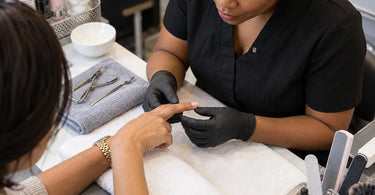
Pros love this for good reason... a nail appointment can look perfectly ordinary right up until the client casually says, "Oh, by the way, this nail has been doing something weird." Naturally, this revelation tends to arrive after the coat is off, the client is settled in, and your carefully planned appointment has officially entered the plot twist portion of the day. Understanding why clients wait until the last minute to mention a nail problem can help nail professionals respond calmly, protect the service experience, and create better consultation habits without embarrassing the person sitting across the table.
For professionals working with Professional Nail Care Collections every day, these surprise conversations are not necessarily evidence that a client was deliberately hiding something. Quite often, the client simply did not realize the issue mattered. A tiny area of discoloration, tenderness, lifting, splitting, thickening, irritated skin, or another unusual change may have seemed like a cosmetic inconvenience rather than information the nail professional needed before beginning.
Clients Do Not Look at Nails the Way Nail Pros Do
A nail professional develops an eye for details most people barely notice. Clients, meanwhile, may classify nail conditions using an extremely sophisticated personal system consisting of categories such as "weird," "probably fine," and "I was hoping you could cover that with polish."
That difference in perspective explains a lot. The client may have noticed the issue days ago but assumed it was insignificant. Only once the manicure or pedicure begins do they realize the professional is going to see the nail up close. Suddenly the forgotten little concern becomes very relevant.
This is one reason a brief visual consultation before starting can be so valuable. Before reaching for the Manicure Essentials, enhancement products, polish, or soaking supplies, take a moment to look at the nails and surrounding skin and ask whether anything has changed since the previous appointment.
Sometimes Clients Are Embarrassed
Nail concerns can feel surprisingly personal. A client might worry that discoloration, damaged skin, a broken nail, unusual odor, lifting, or another visible change reflects poorly on personal hygiene. Even when that assumption is completely unnecessary, embarrassment can make people postpone the conversation until they absolutely cannot avoid it.
The technician sets the emotional temperature of the interaction. A startled expression or dramatic "What happened HERE?" can make the client want to teleport directly through the pedicure chair. A neutral, professional response is much more useful. Something as simple as explaining that you want to take a closer look before continuing keeps the conversation focused on service decisions rather than judgment.
The goal is not to make the client feel as if they have arrived for an interrogation. It is to establish that mentioning changes early helps the professional determine which cosmetic service, if any, is appropriate that day.
They Hope the Nail Tech Can Just Fix It
Clients often see nail professionals as the people who make nail problems disappear. Chipped enhancement? Fixed. Rough cuticle area? Improved. Uneven length? Handled. Polish disaster twenty minutes before vacation? Challenge accepted.
Because nail professionals solve so many cosmetic problems, clients can easily assume every nail concern belongs in the same category. That creates the familiar last-minute question: "Can you just fix this while I am here?"
This is where professional boundaries matter. Nail technicians provide cosmetic nail services within their permitted scope of practice. They should not diagnose a medical condition simply by looking at a nail. When something appears outside normal cosmetic care, especially when there is pain, swelling, drainage, broken skin, significant irritation, pronounced discoloration, unusual thickening, substantial separation, or another concerning change, the appropriate response may be to modify or postpone the affected service and recommend that the client seek evaluation from a qualified healthcare professional.
Local licensing rules and salon policies can vary, so every professional should know the requirements that apply where they work. Being cautious is not being difficult. It is being professional.
The Appointment Feels Like Their Best Chance to Ask
Some clients genuinely do not know whom to ask about a nail concern. They may not consider the issue urgent enough to schedule a medical appointment, but once they are sitting with someone who works with nails every day, the question finally comes out.
This is another reason language matters. A nail professional can describe what is visible without turning that observation into a diagnosis. For example, you can explain that you are seeing an area that looks different from the surrounding nail and that you are not comfortable performing the planned service over it. You can then recommend appropriate professional evaluation when necessary.
That distinction protects the client and helps keep the salon team inside its professional role. Your job is not to solve every mysterious nail situation. Sometimes excellent service means knowing when not to proceed.
Clients May Be Afraid You Will Cancel the Service
Here comes another major reason clients wait: they really want those nails done.
There may be a wedding tomorrow, vacation on Friday, a birthday dinner tonight, or simply three weeks of staring at grown-out gel that has reached the stage where every glance at the hands becomes emotionally complicated. The client may suspect that mentioning a concern could change the appointment, so the information remains hidden until the technician notices it.
A good consultation process reduces that incentive. Let clients know that mentioning a problem does not automatically mean the entire appointment disappears. Depending on what is observed and what local rules allow, the professional may be able to modify the service, avoid the affected area, perform another appropriate service, or reschedule the nail portion that should not be worked on.
Never promise that a service can continue before you have evaluated the situation. The important message is simply that honesty helps you make the safest and most professional decision available.
A Better Consultation Can Catch Problems Earlier
You do not need a fifteen-minute intake interview before every manicure. A few consistent questions can uncover useful information surprisingly quickly.
Ask whether the client has noticed any new tenderness, irritation, lifting, cracking, discoloration, sensitivity, or changes since the previous appointment. Ask whether any nail was injured. If enhancements are being worn, ask whether anything lifted, cracked, caught on something, or became uncomfortable between visits.
For pedicures, the same principle applies to both nails and surrounding skin. A client may have ignored an irritated spot for a week because it seemed minor. Discovering it before soaking, filing, exfoliating, or applying products gives the technician an opportunity to make a better service decision.
Professionals should also keep their workstation equipped for appropriate service modifications. Organized Nail Files & Buffers, clean implements, single-use supplies, Protective Gloves & Masks, and properly maintained sanitation supplies make it easier to respond without turning the appointment into a scavenger hunt.
Do Not Diagnose What You See
One of the easiest traps is confidently naming a condition based only on appearance. Many nail changes can look similar while having very different causes. Discoloration does not automatically identify one specific problem. Nail lifting does not automatically tell you why it happened. Thickening, brittleness, irritation, tenderness, or changes around the nail can have numerous possible explanations.
The safest professional vocabulary focuses on observation. You can say that the nail appears discolored, lifted, unusually thickened, irritated, damaged, or different from its previous appearance. You can explain that the change falls outside what you are comfortable addressing cosmetically.
Then stop there. The medical detective badge can remain safely in the drawer.
If a concern requires diagnosis or treatment, refer the client to an appropriate healthcare professional. Once the issue has been evaluated and it is appropriate to resume cosmetic services, you can return to what you do best.
Create a Clear Salon Policy Before the Awkward Moment Happens
Policies are much easier to enforce when they already exist. Decide how your salon handles visible nail or skin concerns before a fully booked Saturday forces the issue.
Your policy might explain that services may be modified or postponed when nails or surrounding skin show signs that fall outside routine cosmetic care. Staff should understand who makes that decision, what gets documented, how clients are informed, and how rescheduling is handled.
Consistency is especially important in multi-technician salons. Clients quickly become confused if one technician refuses a service while another casually says, "Oh, I work over that all the time." Team training helps everyone communicate the same professional standards.
Keeping Professional Cleaners & Disinfectants for Salons and Spas properly stocked is another essential part of a professional nail environment. Follow product directions, applicable regulations, manufacturer instructions, and salon sanitation protocols for implements, surfaces, and equipment.
Document What Happened
A simple client record can save everyone from relying on memory three appointments later. Note what you observed, which service was requested, whether the service was modified or postponed, what recommendation was provided, and any relevant information the client shared.
Keep the wording objective. Instead of recording a diagnosis, describe the visible observation. For example, documentation might state that discoloration was visible on a particular nail and that product application on that nail was not performed. Neutral documentation is clearer and keeps the technician focused on what was actually observed.
If your business uses consultation forms, consider adding a reminder asking clients to disclose recent nail injuries, unusual changes, irritation, or other concerns before services begin.
Make Prevention Part of the Rebooking Conversation
The easiest time to prevent a future last-minute revelation is before the client leaves the current appointment.
Tell regular clients that if something unusual happens between appointments, they should contact the salon rather than waiting until they are back in the chair. A quick photo may sometimes help the salon determine whether the client should come in for a visual assessment, postpone the upcoming service, or seek professional medical advice before returning.
For routine cosmetic maintenance, professionals can also discuss proper aftercare and recommend suitable retail products when appropriate. Options from Nail Treatments for Healthy Nails and Cuticle Oil can support normal nail and cuticle care when they are appropriate for the client and used according to their directions. These products should never be positioned as treatments for suspected medical conditions.
Train the Front Desk to Ask the Right Question
This issue is not only the nail technician's responsibility. Front desk staff can help uncover concerns before the client ever reaches the manicure table.
When a client calls and says a nail is "doing something funny," staff should resist the temptation to guarantee that the technician can repair it. Instead, they can ask the client to describe what changed and explain that the technician will need to assess the nail before deciding whether the scheduled service can proceed.
This small wording change manages expectations beautifully. No promises are made, nobody diagnoses anything over the telephone, and the client understands that service decisions depend on what the professional actually sees.
Give Nail Professionals the Supplies to Adapt
A strong consultation process works even better when the workstation is ready for changes. Nail salons should routinely evaluate inventory of Nail Brushes & Tools, disposable supplies, gloves, files, buffers, sanitation products, towels, implements, and other frequently used essentials.
If an appointment needs to change from enhancement maintenance to a simpler cosmetic service on unaffected nails, the technician should not have to raid three neighboring stations looking for supplies. Good stocking supports good decision-making.
This is where salon purchasing strategy becomes part of client care. Reliable access to professional supplies allows technicians to follow established protocols instead of improvising because the proper item is missing.
Turn the Surprise Into Better Client Trust
A last-minute nail concern can derail an appointment, but it can also become one of those moments that demonstrates why professional service matters. Clients remember the technician who stayed calm, explained the situation without making them feel embarrassed, and prioritized appropriate care over squeezing one more polish application into the schedule.
Over time, clients learn what information matters. The person who once waited until minute twenty-five to mention a suspicious-looking change may eventually become the client who sends a message three days before the appointment saying, "Something looks different on my thumbnail. Should I still come in?"
That is progress. Beautiful nails are part of the business, but professional judgment is part of it too. Create a culture where clients feel comfortable mentioning changes early, technicians know exactly how to respond, and the salon has the Must-Have Supplies for Salon & Spa Business Success needed to maintain consistent professional standards.
Clients may always save the occasional surprise for the manicure table because, apparently, nails enjoy drama. A calm consultation, clear boundaries, thoughtful documentation, proper sanitation practices, and a well-prepared workstation make those surprises much easier to manage. The result is a smoother appointment, stronger client trust, and a nail professional who can confidently say, "Let me take a look first," before the plot thickens.
