
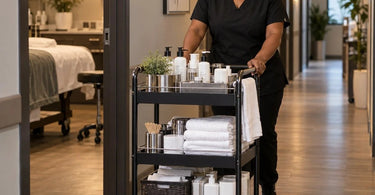
Your clients expect this quality daily... and sometimes the smallest operational detail is the one that suddenly feels enormous. A rolling cart that seems perfectly normal inside a busy treatment room can sound like a tiny freight train the second it enters a peaceful hallway. In a spa, salon, waxing studio, massage practice, or esthetics business where calm is part of the experience, every rattle, click, squeak, and mysterious wheel wobble becomes surprisingly noticeable.
The good news is that your cart probably has not developed a personal vendetta against tranquility. Rolling carts naturally create vibration as their wheels travel across flooring, seams, grout lines, thresholds, and tiny pieces of debris. Quiet hallways simply make those sounds easier to hear, and certain wheel materials, loose components, overloaded shelves, and hard flooring can amplify them even more.
Why Rolling Carts Sound Extra Loud in Quiet Hallways
Sound is all about contrast. Inside a treatment room, there may be conversation, equipment operating, cabinets opening, water running, music playing, and supplies being handled. Those everyday sounds help mask the little noises coming from a cart.
Move that same cart into a quiet hallway and suddenly there is nothing competing with it. Each caster rotation, floor joint, vibrating bottle, and loose metal accessory gets its own solo performance. Congratulations, your cart has accidentally booked the main stage.
Hard hallway surfaces can make the effect stronger. Tile, polished concrete, vinyl, laminate, and other firm flooring materials do not absorb much vibration. Instead, vibration from the wheels can travel through the caster assembly and cart frame, creating the familiar rumbling or clattering sound professionals sometimes notice between service rooms.
The Wheels Usually Deserve the First Inspection
The caster wheels underneath a cart have a major influence on both sound and smoothness. Hard wheels tend to transmit more vibration from a hard floor into the cart frame, while softer wheel materials can absorb more of the little impacts created by grout lines, seams, and surface imperfections.
This does not mean every professional should immediately replace every wheel in the building. Different carts are designed for different loads and environments. It does mean that if one cart is dramatically louder than similar carts, its casters are an excellent place to begin investigating.
Look for flat spots, cracks, chips, embedded debris, hair wrapped around axles, damaged bearings, and wheels that no longer rotate smoothly. Even a small piece of hardened product or debris stuck to a wheel can create a repetitive thump that becomes impossible to ignore once you hear it.
Check What Is Riding on the Cart Too
Sometimes the wheels are innocent. The real percussion section may be sitting on the shelves.
Bottles touching one another, stainless steel implements in an open container, removable trays, unsecured lids, bowls, jars, appliances, and other Spa Tools & Implements for Professionals can vibrate while the cart moves. A tiny vibration at the wheel can travel through the entire frame and make objects on the upper shelves chatter together.
Before blaming the cart itself, roll it once while fully stocked and once while empty. If it becomes dramatically quieter when empty, investigate how the supplies are organized. Separating hard items, securing removable trays, and eliminating unnecessary clutter may solve a surprising amount of noise.
Overloading Can Turn a Smooth Cart Into a Rumbler
Professional carts are convenient, which means they have an unfortunate tendency to attract supplies. One jar becomes six jars. A few backup products become an entire back bar. Eventually the hardworking little cart is carrying enough inventory to open its own treatment room.
Excessive weight can place additional stress on casters, bearings, axles, shelves, and the cart frame. It can also make the cart harder to steer, especially if the weight is distributed unevenly.
Keep frequently used supplies on the cart and store excess inventory elsewhere when possible. Professionals who need more working storage can explore Top-Quality Equipment & Furniture for Spas & Salons rather than asking a small utility cart to perform the duties of a rolling stockroom.
Floor Seams and Thresholds Create Little Impacts
A hallway may look perfectly smooth while still containing dozens of small transitions. Tile grout lines, vinyl seams, door thresholds, elevator transitions, and changes between flooring materials all create tiny impacts as wheels pass over them.
Small or hard wheels can make these transitions particularly noticeable because they follow surface irregularities more closely. Larger wheels generally negotiate small obstacles and seams more smoothly, although the correct wheel size and caster type always depend on the cart design and intended load.
Watch the cart while another team member rolls it through the noisy area. You may discover that the mysterious hallway racket happens at exactly the same threshold every time. That observation can prevent plenty of unnecessary cart surgery.
Clean Wheels Are Happier Wheels
Spa and salon floors collect more wheel troublemakers than most people realize. Hair, thread, cotton fibers, lint, dried product, wax residue, dust, and miscellaneous tiny debris can accumulate around casters and axles.
Regularly inspect the wheel area as part of routine equipment care. Hair wrapped tightly around an axle can interfere with free rotation. Sticky residue can attract additional debris. A wheel that drags instead of rolling freely may create more vibration, require more pushing force, and make steering less pleasant.
Keeping the surrounding environment clean matters too. Professional facilities already depend on Professional Cleaners & Disinfectants for Salons and Spas for everyday sanitation routines, and clean floors provide the added benefit of giving cart wheels fewer surprise obstacles to collect.
Loose Hardware Can Amplify Every Little Bump
Rolling equipment naturally experiences repeated vibration. Over time, removable components or hardware may loosen. A wheel assembly, handle, shelf, drawer, tray, or accessory that has developed a little play can create rattling whenever the cart crosses an uneven area.
Periodically inspect your carts according to the manufacturer's care and maintenance instructions. If something feels unstable, stop using the cart until you can determine whether it simply needs permitted maintenance or requires professional repair or replacement.
Never improvise modifications that could compromise the cart's stability. A quieter cart is lovely. A cart held together through creative optimism is considerably less lovely.
How You Push the Cart Matters
Speed changes sound. Push a cart quickly across hard tile and every little seam produces a sharper impact. Move it smoothly at a moderate walking pace and the same route can sound noticeably calmer.
Direction changes matter as well. Swivel casters need to rotate when the operator changes direction, and abrupt turns can cause additional movement and noise. Instead of yanking a heavily stocked cart sideways, guide it smoothly into turns and give the casters time to align.
This also makes the cart easier to control around clients, treatment beds, doorframes, stools, and expensive equipment.
Consider the Client Experience Outside the Treatment Room
A peaceful environment does not begin and end at the treatment table. Clients experience the hallway, reception area, restroom route, changing area, and every little transition between those spaces.
A beautifully designed treatment room can lose some of its serenity if a rattling supply cart repeatedly travels outside the door during a massage or facial. Professionals investing in Luxury Spa Furniture, calming music, soft lighting, comfortable linens, and thoughtful decor should include mobile equipment in that same environmental planning.
Think of noise management as part of workflow design. Store frequently needed supplies close to the room where they are used. Reduce unnecessary cart trips. Restock between appointments when practical. Avoid moving noisy equipment directly past relaxation areas unless necessary.
Different Services Put Different Demands on Carts
A waxing professional may stock warmers, applicators, gloves, pre and post products, and plenty of Waxing Supplies for Professionals. An esthetician may need bowls, towels, cotton products, skincare, implements, and devices. Nail professionals might be transporting bottles, tools, disposables, and Manicure Essentials.
The ideal cart setup depends on what is actually being moved. Heavy equipment needs suitable furniture designed for the load, while lightweight disposables may require bins or organizers that keep them contained. Do not select mobile storage based exclusively on how many shelves you can cram into a corner. Consider weight, stability, maneuverability, cleaning requirements, wheel construction, and the route the cart travels every day.
Try the Quiet Hallway Test
If you want to evaluate carts before clients make the evaluation for you, perform a simple hallway test during a quiet part of the day.
Load the cart as it would normally be used. Roll it slowly through its usual route. Listen while traveling straight, turning corners, crossing thresholds, and stopping. Then check each source of sound individually.
Is it a squeak? A rhythmic click? A low rumble? Bottles tapping together? A loose tray rattling? One wheel bumping once per rotation? Identifying the character of the noise can make troubleshooting much easier.
Repeat the test with the cart empty. If the sound remains, focus on wheels, casters, hardware, and the frame. If the sound disappears, focus on how the cart is loaded and organized.
A Small Operational Detail Can Make the Whole Space Feel Better
Rolling cart noise may seem minor compared with treatment protocols, staffing, inventory, sanitation, or scheduling, but client experience is built from dozens of small details. Quiet equipment contributes to a professional atmosphere just like organized supplies, clean surfaces, comfortable furnishings, and thoughtfully selected Spa Essentials for Professionals.
A quick caster inspection, cleaner wheels, better organization, sensible loading, smoother pushing habits, and the right mobile furniture for your services can turn an attention grabbing hallway cart back into what it was supposed to be: useful equipment nobody really notices.
And in a peaceful spa environment, being unnoticed is sometimes the highest compliment a rolling cart can receive.
