
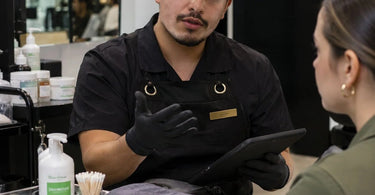
Your key to success is here... and it might be hiding in the fifteen minutes between appointments! If your salon charges for a 45-minute service but your team spends another 15 minutes preparing, cleaning, disinfecting, and resetting the station, that appointment is taking up a full hour of valuable business time. Those extra minutes are doing important work, even if they never make an appearance on the client's receipt. Understanding why salon service pricing should account for setup and cleanup time can help owners create more profitable menus, realistic schedules, and happier teams without making clients feel like they are paying extra for someone to sweep up a few stray hairs.
Professional beauty services involve much more than the moments a stylist, nail technician, esthetician, or massage therapist spends directly working with a client. Every appointment has a beginning before the client arrives and an ending after the client leaves. If those activities are missing from your pricing calculations, your profit margins may be thinner than they appear.
The Appointment Starts Before the Client Sits Down
Picture a busy salon on a Friday afternoon. Your stylist has a color appointment scheduled for 1:00 p.m. By 12:45, she is gathering supplies, organizing her workstation, preparing clean towels, checking her color inventory, and making sure everything is ready for the service. The client arrives, receives the treatment, pays, and leaves. Then the stylist cleans the station, handles used linens, disinfects appropriate surfaces, organizes equipment, and prepares for the next appointment.
The booking system may show a two-hour color service, but the actual resources required could extend well beyond those two hours. That difference matters because the salon is paying for staff time, workspace, utilities, supplies, and operational overhead throughout the entire process.
Clients see the finished hairstyle. Salon owners need to see the complete workflow.
This is especially important for businesses offering multiple treatment categories. A haircut, facial, lash service, manicure, and massage may each require different preparation and turnover routines. Applying one universal cleanup allowance across every service can leave some appointments improperly priced.
The Real Cost of Those Invisible Minutes
Let's explore a hypothetical example. A salon offers a treatment for $75. The hands-on service takes 45 minutes, and the appointment requires an additional 15 minutes of setup and cleanup.
If you calculate revenue using only the hands-on service time, the appointment appears to generate $100 per hour. But once you include the entire 60-minute appointment cycle, the actual gross service revenue is $75 per occupied hour.
That is a meaningful difference, and it happens before accounting for wages, product usage, rent, utilities, insurance, processing fees, and other business expenses.
Now imagine that same service being performed five times daily. Those extra 15 minutes add up to 75 minutes of preparation and turnover work each day. Across a five-day workweek, that becomes 375 minutes, or six hours and fifteen minutes of operational time.
No, the towels are not secretly stealing money from your business. But the time spent managing them is absolutely part of your operating reality.
The important distinction is between revenue and profit. Including the entire appointment cycle gives you a more accurate revenue-per-hour figure, while a complete cost calculation helps determine whether that revenue produces an acceptable profit margin.
What Should Count as Setup Time?
Setup includes the tasks necessary to prepare a safe, organized, professional environment for the service. Depending on the treatment, these activities may include:
- Preparing and arranging sanitized or disinfected tools and equipment as appropriate.
- Gathering fresh towels, capes, protective coverings, and linens.
- Measuring, mixing, or dispensing professional products.
- Preparing treatment beds, salon chairs, or manicure stations.
- Checking equipment settings and operational readiness.
- Organizing client-specific supplies and treatment materials.
- Preparing waxing stations and confirming equipment temperatures.
For example, a professional waxing appointment may require preparation involving Waxing Supplies for Professionals, clean applicators, protective coverings, and properly maintained equipment. A facial treatment may involve selecting products, organizing tools, and preparing linens and treatment accessories.
These activities are not optional decorations around the actual service. They support consistent quality, efficient service delivery, and professional working conditions.
Cleanup Is Part of the Service, Not an Afterthought
Cleanup deserves just as much attention as preparation. Professional environments need appropriate cleaning and disinfection procedures between clients, based on applicable regulations, product instructions, and the equipment being used.
Cleanup responsibilities can include removing disposable materials, managing used linens, cleaning tools, disinfecting appropriate surfaces, disposing of waste, restocking products, and returning the station to its standard setup.
Products such as Professional Cleaners & Disinfectants for Salons and Spas, High-Quality Towels, and Hygienic Table Paper for Waxing, Spa & Massage Tables are practical parts of many professional workflows.
Importantly, cleaning and disinfection are not interchangeable. Some surfaces and tools require cleaning before disinfection, and disinfectants must be used according to their labels, including required contact times. Local licensing and sanitation requirements also apply.
If a product requires a specific contact time, your scheduling system should allow for that requirement rather than assuming a quick wipe is sufficient. Some disinfection processes can occur while staff perform other appropriate tasks, but the necessary treatment time cannot simply be ignored.
Rushing through cleanup to squeeze in another appointment is not a sustainable strategy. The better approach is to account for necessary turnover time when creating the service menu and schedule.
How to Calculate a More Realistic Service Price
A practical salon pricing calculation begins with the full appointment cycle rather than just the treatment duration.
Step 1: Identify the complete time commitment. Measure the average minutes needed for preparation, client service, and post-service cleanup. Use real observations across several appointments rather than relying on the fastest service your team has ever completed.
Step 2: Calculate operating cost per productive minute. Estimate the labor and overhead expenses your service revenue must support, then divide those costs by realistic productive capacity. Account for breaks, administrative responsibilities, cancellations, and other periods that reduce the number of appointments you can actually sell.
Step 3: Determine product cost per service. Include actual quantities of consumables, including treatment products, disposable supplies, and reasonable allowances for waste.
Step 4: Establish your desired operating margin. Your price should support business expenses and an appropriate profit, not simply reimburse the cost of materials.
Step 5: Compare the calculated price with your market position. Consider your expertise, customer experience, local demand, service complexity, and competitive positioning before finalizing your menu.
For a simplified illustration, assume a treatment occupies 75 minutes of total appointment capacity. If your estimated labor and allocated overhead cost is $0.80 per occupied minute, the time-related cost is $60. Add $12 in treatment supplies, and your estimated service cost becomes $72.
If you want a 25% margin on the selling price under this simplified model, the calculation is $72 divided by 0.75, producing a price of $96.
This is an illustrative pricing model, not a universal salon benchmark. Your actual numbers will depend on staffing arrangements, capacity, product usage, overhead allocation, and profitability goals.
Different Services Need Different Turnover Allowances
One of the biggest mistakes in service menu planning is assuming every appointment requires the same amount of preparation and cleanup.
Hair Services: Hair coloring may involve mixing bowls, brushes, foils, protective capes, shampoo areas, and multiple product containers. Organizing Professional Hair Color and maintaining efficient workstation routines can help reduce unnecessary preparation time.
Nail Services: Manicures and pedicures involve tools, product handling, workstation cleaning, and equipment-specific sanitation requirements. A structured layout using Nail Tables and Manicure Stations can improve organization. Pedicure services may require additional basin cleaning and disinfection time that cannot be eliminated merely by using disposable liners.
Waxing Services: These appointments involve product preparation, applicators, protective coverings, treatment-area cleanup, and appropriate hygiene practices. Organizing Professional Wax Warmers for Salons & Spas and Professional Wax Spatulas and Applicators can help streamline routine preparation.
Facial Services: Estheticians may prepare multiple products, treatment tools, equipment attachments, and linens. Afterward, the treatment area must be reset for the next client. Keeping commonly used Advanced Facial Treatment Products for Salons & Spas organized can reduce wasted motion.
Massage Services: Massage therapists may need to replace linens, prepare bolsters, clean appropriate equipment surfaces, and restock Massage Oils, Lotions, and Creams for Therapists. A 60-minute massage should not automatically be scheduled in a 60-minute room-occupancy window if the room needs additional turnover time.
Service-specific scheduling provides a more accurate foundation for both pricing and staffing decisions.
Why Overbooking Creates a Profitability Problem
At first glance, scheduling appointments back-to-back seems like an excellent way to maximize revenue. Every minute is booked, every chair is occupied, and the calendar looks delightfully full.
Unfortunately, a packed calendar is not necessarily a profitable calendar.
Without adequate turnover allowances, employees may fall behind, clients may wait longer, and service quality can suffer. Staff might also feel pressured to complete cleaning and preparation responsibilities faster than appropriate.
When delays accumulate, the final appointment of the day can turn into an unexpected overtime adventure. Nobody wants their closing routine to become a surprise endurance event.
A better system distinguishes between client-facing service duration and the total time a station, room, or professional is occupied.
For instance, a 50-minute treatment with ten minutes of necessary turnover may require a 60-minute booking block. The customer can still receive the advertised 50-minute treatment, while your scheduling system protects the remaining operational time.
Some businesses use separate room and staff buffers because a room may remain unavailable while the professional can complete another task. This can improve capacity planning without compromising necessary procedures.
Smart Supply Organization Can Reduce Time Without Cutting Corners
Accounting for setup and cleanup time does not mean accepting every inefficient routine as permanent. Small operational improvements can reduce wasted effort while protecting the quality of each appointment.
Consider creating standardized workstation layouts so frequently used products remain easy to locate. Keep clean supplies separated from used items, organize treatment-specific materials, and establish clear replenishment responsibilities.
For salon and spa businesses, reliable access to Professional Cotton, Sponges, and Wipes for Salons & Spas and Applicators & Spatulas can help technicians prepare efficiently without searching through multiple storage areas.
Preassembled service supply kits can also make routine preparation more predictable, provided that items are stored, handled, and prepared according to hygiene requirements.
Use a written station-reset checklist for repeatable tasks. This helps new employees learn expectations and reduces variation between technicians.
Inventory planning matters, too. Running out of gloves, towels, or treatment materials in the middle of a busy day creates unnecessary interruptions. A simple reorder-point system can help ensure the essentials are ready before appointments begin.
The goal is to remove unnecessary movement and confusion, not to remove necessary cleaning, disinfection, or safety practices.
Should Clients See a Separate Setup and Cleanup Fee?
Usually, the easiest approach is to incorporate ordinary preparation and turnover expenses into the advertised service price rather than surprising clients with an extra charge at checkout.
Customers generally expect a professional salon to maintain clean equipment, fresh supplies, and properly prepared workstations. These are fundamental elements of the service experience.
For example, a salon might determine that a $65 service needs to be priced at $72 to support the actual appointment cycle. Instead of advertising $65 and introducing an unexpected $7 cleanup fee, the business could establish a transparent $72 service price.
This approach makes the menu easier to understand and helps clients assess the full value of the appointment before booking.
Specialized services that involve unusual preparation, extended product usage, or additional staff requirements may justify separate pricing structures. If additional charges are necessary, explain them clearly before the service and follow applicable pricing and consumer disclosure requirements.
Transparent pricing builds confidence. Surprise fees tend to build awkward conversations at the front desk.
Train Your Team to Track the Entire Service Cycle
Accurate pricing becomes much easier when the team understands what information matters.
Ask employees to track preparation, active treatment, and cleanup separately for a representative sample of appointments. Record the service category and any factors that affected the timing.
One stylist may need extra time for long or dense hair. A nail technician may require additional cleanup following certain enhancement services. A facial treatment that uses specialized equipment may need a longer reset than a basic treatment.
Collect enough observations to identify realistic averages and meaningful variations. Do not build the entire menu around one unusually quick technician or one unusually complicated appointment.
Use those findings to develop standard booking durations, staffing expectations, and pricing guidelines.
It is also useful to distinguish between tasks performed during downtime and tasks that directly occupy a revenue-producing station. A product restocking activity that can be completed between appointments elsewhere in the salon may affect staffing costs differently from room disinfection that prevents the next appointment from beginning.
This distinction helps prevent double-counting costs while still recognizing that operational labor needs to be funded.
Review Your Pricing When Operating Costs Change
Even an accurately priced service can become less profitable over time. Payroll expenses, rent, utilities, product prices, laundry costs, and equipment maintenance can all change.
Review service costs periodically and after meaningful operational changes, such as adding new equipment, changing treatment protocols, expanding staffing, or introducing additional service categories.
For example, investing in new Professional Salon Equipment for Top Stylists and Barbers may improve the client experience or operational efficiency, but it may also affect equipment depreciation, maintenance, and preparation responsibilities.
Likewise, introducing a more involved lash or brow treatment may change the preparation time and product usage associated with that category. Exploring Lash & Brow Service Supplies can help owners plan the materials required for those services as part of the overall cost evaluation.
Look beyond whether the current service price covers the product cost. Determine whether it supports the complete operating cycle and contributes appropriately to the business.
How Pure Spa Direct Fits Into a More Efficient Salon Workflow
A well-managed salon depends on dependable products, thoughtfully organized supplies, and equipment suited to its services. Pure Spa Direct is a professional beauty, spa, and wellness supply distributor offering resources for salon owners, estheticians, nail professionals, massage therapists, waxing specialists, and other industry professionals.
Whether you are improving your cleaning supply inventory, organizing treatment stations, or evaluating equipment for a new service, having appropriate materials available supports more consistent daily operations.
Explore Must-Have Supplies for Salon & Spa Business Success to support your operational planning, or browse Spa Essentials for Professionals for supplies relevant to professional treatment environments.
Efficient product organization and purchasing decisions can contribute to smoother workflows, but they work best when paired with realistic appointment timing and accurate service costing.
The Bottom Line: Every Minute Has a Job
Your clients are paying for more than the visible treatment. They are paying for professional expertise, a prepared environment, appropriate hygiene practices, reliable supplies, and a service experience that feels organized from beginning to end.
That is why salon service pricing should account for setup and cleanup time. Those minutes require labor, occupy valuable business capacity, and contribute to the quality of every appointment.
Start by measuring your complete service cycles, reviewing your actual costs, and adjusting your scheduling and pricing models where necessary. Streamline inefficient processes, but never compromise required sanitation or the client experience simply to fit another booking into the day.
A profitable salon is not necessarily the one squeezing the most appointments into a calendar. It is the one making sure every appointment has enough time, enough resources, and a price that supports the business behind it.
After all, the beauty industry runs on creativity, care, and fabulous results. But a little spreadsheet magic behind the scenes? That is beautiful, too.
