
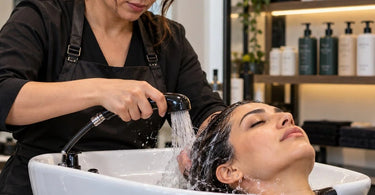
Tools that work as hard as you deserve a shampoo station that keeps the water in the bowl instead of sending it down your client's back. But every stylist knows that one mysterious client position can turn a perfectly ordinary rinse into an unexpected water park experience. One client stays completely dry, while the next leaves the shampoo chair wondering whether she accidentally booked a swimming lesson. The surprising truth is that shampoo bowl splashing often has less to do with the equipment being defective and more to do with how the client's neck, shoulders, head, and back interact with the bowl. Understanding these positioning differences can help salon professionals deliver cleaner, more comfortable services without constantly reaching for another towel.
Whether you operate a busy hair salon, an intimate styling studio, or a luxury head spa, the shampoo station is an important part of the client experience. Proper positioning, thoughtful equipment selection, and a few simple rinsing adjustments can make a noticeable difference. Let's explore why certain neck positions create splashing, how to identify the real cause, and what salon professionals can do to keep their shampoo services running smoothly.
Why Does Client Neck Position Affect Shampoo Bowl Splashing?
The relationship between a client's neck and the shampoo bowl is more complicated than it appears. Most professional shampoo bowls have a curved opening designed to accommodate the neck while allowing the head and hair to extend over the basin. This opening provides support, but it also creates a potential escape route for water.
When the client's neck rests comfortably against the intended contact area, the bowl can direct most rinse water toward its interior. However, when the client sits too far forward, slides down in the chair, twists her head, or arches her back, the relationship between her neck and the opening changes.
Even a relatively small gap can allow water to travel outside the basin. Water running along wet hair or skin may follow the neck contour and reach the collar, cape, or chair rather than dropping into the bowl.
This explains why the same shampoo station can perform beautifully for one person and create a soggy surprise for another. The bowl has not necessarily changed. The contact points have.
The Neck Opening Is Not a Universal Fit
Professional shampoo bowls are designed to accommodate a broad range of clients, but human bodies do not come in one convenient salon-equipment size.
Clients have different shoulder widths, neck lengths, head sizes, postures, and levels of flexibility. These variations influence how naturally someone fits into the bowl.
For example, a client with broad shoulders may contact the outer edges of the basin before her neck settles comfortably into the opening. A petite client may have difficulty reaching the support area without sliding backward or reclining farther. Someone with limited neck mobility may be unable to adopt the angle that works well for another client.
The goal is not to force everyone into an identical position. It is to adjust the washing station to accommodate the individual.
Salon owners evaluating professional shampoo bowls should consider the shape and width of the neck opening alongside overall basin dimensions, adjustability, and comfort.
Seven Common Neck Positions That Cause Shampoo Bowl Splashing
Understanding the specific positions that encourage water leakage makes troubleshooting much easier. Here are seven situations worth watching during daily salon services.
1. The Client Sits Too Far Forward in the Shampoo Chair
When clients sit too far forward, their necks may barely reach the basin opening. Instead of resting naturally against the intended support, they stretch backward to place their heads over the bowl.
This can create a gap beneath the neck or cause uncomfortable pressure at the edge of the basin.
Water flowing from the hairline toward the nape may then pass through that opening and travel down the back.
Professional fix: Before beginning, ask the client to move comfortably against the chair back. Adjust the chair or basin according to the equipment instructions so the neck reaches the support without excessive stretching. Confirm that her lower back is supported and that she can relax her head naturally.
2. The Client Slides Down During the Shampoo
This one is especially common during longer services. A client begins in a good position, relaxes during the scalp massage, and gradually slides down the chair.
By the time the conditioning treatment begins, her shoulders have shifted, her neck is approaching the bowl at a different angle, and your formerly splash-free setup has become a tiny indoor waterfall.
Professional fix: Recheck the client's position during longer shampoo sessions, especially before extensive rinsing. If she has moved, pause the water and help her reposition comfortably rather than trying to compensate by changing the sprayer angle alone.
3. The Head Is Tilted Too Far Back
It may seem logical that tilting the head farther backward should keep water inside the basin. However, excessive extension can create new problems.
Depending on the bowl design and the client's anatomy, too much backward tilt may increase pressure against the rim, reduce comfortable contact at the neck opening, or place the head where water rebounds toward the front edge.
It can also create unnecessary neck strain.
Professional fix: Use the manufacturer's recommended washing position. The client should be supported without having to force her chin upward or hold her neck in an uncomfortable position. Where available, adjust the bowl tilt or chair recline rather than asking the client to bend farther.
4. The Client Keeps Her Chin Too Close to Her Chest
At the opposite extreme, some clients resist reclining and keep their heads relatively upright.
This may leave the back of the head too close to the neck opening. Water from the sprayer can reach the upper rim rather than falling deeper into the basin.
Hair hanging outside the bowl may also carry water directly onto the client's clothing.
Professional fix: Check whether the chair position, basin height, or head support can be adjusted to achieve a more natural washing angle. Do not push the client's head backward if she reports discomfort or limited mobility.
5. The Client Turns Her Head Sideways
Turning the head may help a stylist reach behind the ears, but it also changes how the neck sits inside the opening.
As the head rotates, one side of the neck may press more firmly against the bowl while the opposite side develops a gap.
A direct stream aimed toward that gap can send water onto the cape or chair.
Professional fix: Use small, comfortable movements and direct rinse water toward the interior of the bowl. When possible, reposition the handheld sprayer instead of repeatedly rotating the client's head. Reduce water pressure when rinsing around the ears and nape.
6. The Client Has Broad Shoulders or a Shorter Neck
Some clients simply cannot achieve the ideal contact with a particular basin design.
Broad shoulders may prevent the neck from moving close enough to the support area. A shorter neck can create similar challenges, particularly with deeper basins or poorly matched shampoo chairs.
The result may be an awkward combination of shoulder pressure, an unsupported head, and water escaping around the collar.
Professional fix: Assess the chair-to-basin relationship before starting. A compatible adjustable shampoo station or manufacturer-approved support may provide a better fit. Avoid forcing the shoulders against the bowl edges to achieve a tighter contact point.
7. The Client Cannot Recline Comfortably
Clients with limited mobility, chronic neck discomfort, recent procedures, or other positioning concerns may need a different approach.
A standard shampoo position may be inappropriate for someone who experiences pain, dizziness, numbness, or significant discomfort when reclining.
Professional fix: Ask about positioning limitations before the service. Consider a more upright washing arrangement, an appropriately designed adjustable station, or another accessible shampoo method. Stop the service if the client develops pain, dizziness, numbness, weakness, or other concerning symptoms. Comfort and safety always take priority over preventing a few drops of water.
Why Water Pressure Makes Positioning Problems Worse
Client positioning determines where water can escape, but sprayer pressure often determines how dramatic the escape becomes.
A high-pressure stream striking the basin, hair, or neck area can rebound in unexpected directions. The effect is particularly noticeable when the client's head sits close to the rim.
Even a well-positioned client may experience splashing if the stylist aims a concentrated stream directly at a hard surface near the opening.
Try starting with moderate water pressure and adjusting the flow as needed. Keep the nozzle reasonably close to the hair without pressing it against the scalp, and direct water inward toward the basin.
When rinsing near the neckline, a controlled stream is generally more useful than maximum faucet power. Your goal is clean hair, not testing whether the shampoo station can launch a water feature across the salon.
Professionals can explore shampoo bowl sprayers, shampoo hoses, and compatible replacement components when an existing sprayer is difficult to control.
The Difference Between Water Splashing and Water Running Down the Neck
These two problems can look similar from the client's perspective, but they often have different causes.
Splashing occurs when water droplets rebound from the hair, scalp, basin, or other surfaces and travel beyond the intended washing area.
Water runoff occurs when a stream follows the hair or skin and escapes through a gap near the neck opening.
If droplets land on the stylist's clothing, nearby counter, or floor, examine the sprayer angle, flow rate, and bowl depth.
If the client's upper back becomes wet while the surrounding area remains mostly dry, investigate the neck contact, hair placement, support accessories, and chair alignment.
Both conditions may occur simultaneously, but identifying the first wet area gives the stylist a useful troubleshooting clue.
How Shampoo Bowl Shape and Depth Affect Splash Control
Not every shampoo basin handles rinse water in exactly the same way.
The shape, depth, width, interior slope, and rim height all influence how water moves inside the bowl. These design characteristics also affect the space available for thick hair, long extensions, and larger hair volumes.
Deeper bowls may help contain water and provide more room for longer hair, although their suitability depends on the complete chair-and-basin arrangement.
Wider bowls can offer more working room around the head, potentially making it easier to direct water away from the neck opening.
Adjustable or tilting bowls can help align the basin with different client positions when used within the manufacturer's operating limits.
Fixed bowls may work very well when properly matched with their chairs, but offer fewer adjustment options when a particular client does not fit the station comfortably.
The best choice is not automatically the largest or deepest bowl. It is the design that suits your clients, available space, washing techniques, and compatible furniture.
Explore Professional Salon Equipment for Top Stylists and Barbers and Stylish Salon & Barber Furniture when comparing equipment configurations for a new or updated shampoo area.
Can Shampoo Bowl Neck Rests Help Prevent Splashes?
They can help in certain situations, but a neck rest is primarily a comfort and support accessory rather than a guaranteed waterproof seal.
A properly fitting cushion may improve the way the client's neck contacts the basin and reduce pressure from a hard rim. Some designs may also reduce small gaps where water tends to escape.
However, an overly thick cushion can raise the head, change the rinse angle, or interfere with the intended basin geometry. A poorly fitting accessory may actually make splashing worse.
Look for shampoo bowl neck rests or shampoo bowl neck cushions designed for the particular basin configuration.
Choose accessories that can be cleaned appropriately between clients, remain securely positioned, and do not create uncomfortable pressure. Follow the equipment manufacturer's compatibility and care instructions rather than assuming every cushion fits every shampoo bowl.
Why Thick Hair and Extensions Can Increase Splashing
Sometimes the neck position is only part of the story. Hair density, length, texture, and extensions can dramatically change the way rinse water travels.
Thick hair can temporarily hold substantial amounts of water. When the stylist lifts or moves a large section, that water may suddenly release in an unexpected direction.
Long hair can extend across the basin opening or hang over the rim. Wet strands outside the bowl may act like little drainage channels, directing water toward the client's neckline.
Extensions also require careful rinsing around attachment areas, which can encourage additional head movement if the stylist does not adjust her working position.
To reduce these issues, keep the bulk of the hair inside the basin, work in manageable sections, and avoid piling wet hair against the neck opening. Use controlled rinsing movements around extensions and delicate attachment areas.
Professional Premium Hair Care Products for Salons & Barber Shops can support the service itself, but excellent product selection still needs to be paired with thoughtful rinsing technique.
How to Set Up a Shampoo Station for Different Client Heights
A shampoo chair and bowl should function as one coordinated washing system.
If the seat is too far from the basin, clients may stretch their necks backward to reach it. If the bowl is too low or the chair too high, the client may experience uncomfortable pressure or an awkward angle.
Start by checking the relationship between the backrest, seat depth, basin opening, and intended head position.
Where adjustments are available, use the chair and bowl controls to accommodate each client. Follow the particular system's instructions because backwash and sidewash arrangements can require different seating angles.
Do not assume that reclining the chair farther will always improve the fit. A backwash system intended for a more upright posture may leak when a client slouches or reclines beyond its intended geometry.
If your salon routinely serves a diverse clientele, adjustable configurations may be particularly valuable. Consider equipment flexibility as part of your purchasing decision, not merely an optional luxury.
The Five-Step Pre-Rinse Positioning Check
A quick positioning routine can help stylists and assistants catch problems before water starts running. Build these five steps into your regular shampoo service.
Step 1: Check the client's seat position. Make sure her lower back is appropriately supported and that she is not sliding forward or arching awkwardly.
Step 2: Confirm comfortable neck contact. The client's neck should rest naturally in the intended support area without excessive pressure, twisting, or stretching.
Step 3: Check head and hair placement. Confirm that the head is positioned appropriately above the basin and that longer hair remains inside its edges.
Step 4: Test the water gently. Confirm a comfortable temperature, begin with controlled flow, and observe whether water travels toward the opening. Avoid directing water toward the client's face or ears.
Step 5: Ask about comfort. A quick question about neck support and reclining comfort can reveal a problem before it becomes an unpleasant surprise.
This routine takes only a short moment, yet it can prevent interruptions, unnecessary towel changes, and uncomfortable repositioning halfway through a service.
What to Do When Water Still Escapes After Repositioning
If you have adjusted the client position and controlled the spray but still notice water escaping, investigate the equipment and surrounding workflow.
Start with the exact location of the water.
Water near the neck opening: Reevaluate client fit, accessory placement, hair position, and spray direction.
Water rebounding over the sides: Check whether the stream is striking the basin walls or whether the hair is positioned too close to the rim.
Water accumulating inside the basin: Inspect the drain and hair trap for restrictions according to the manufacturer's instructions. Slow drainage can allow water to collect and increase the chance of overflow.
Water beneath the bowl: Inspect accessible plumbing connections, hoses, and fittings for visible leakage. Stop using the station if a plumbing defect is suspected, and arrange an appropriate repair.
Water around a loose sprayer: Check the sprayer and hose for wear, damage, or improper connections.
Compatible shampoo bowl replacement parts may help resolve equipment-related problems, but accessories and replacement components should match the installed system.
Why Towels and Capes Are Backup Protection, Not the Main Solution
Every salon professional appreciates a well-placed towel. But towels should not become the primary solution for an incorrectly positioned shampoo station.
A towel at the neckline can help catch occasional droplets, while an appropriately fitted waterproof cape can protect clothing from minor splashing.
However, a towel cannot reliably correct poor basin alignment or prevent a concentrated stream from running through a large gap.
Bulky towels placed beneath the neck may also raise the client's head or alter how the neck contacts the bowl.
Use towels and capes as secondary protection after addressing client position and rinse direction. Keep clean supplies accessible, and replace damp textiles between clients according to salon sanitation procedures.
For busy shampoo areas, High-Quality Towels and Salon & Barber Apparel are useful categories to consider when maintaining a comfortable, professional service environment.
How to Train Salon Assistants to Prevent Shampoo Bowl Splashing
Consistent shampoo services become much easier when the entire team follows the same basic positioning principles.
Instead of teaching assistants only how to operate the sprayer, include client seating, bowl compatibility, hair placement, and water-flow control in the training process.
Practice with different client heights and hair lengths so assistants understand that the same washing technique may require small adjustments.
Teach team members to identify the difference between droplets rebounding from the basin and water running through the neck opening.
Encourage assistants to pause and reposition when something feels wrong rather than attempting to save time by increasing water pressure or stretching the client's neck.
A simple checklist at the station can reinforce the process: seat position, neck support, head placement, gentle water test, and comfort confirmation.
It also helps to keep essential shampoo supplies organized so the stylist is not searching for a fresh towel while holding a running sprayer. Explore Must-Have Supplies for Salon & Spa Business Success for practical salon operations and service essentials.
When Should a Salon Replace or Upgrade a Shampoo Bowl?
Not every splash calls for a new shampoo station. If the problem occurs only with occasional client positions and responds to simple adjustments, the current equipment may be perfectly serviceable.
However, repeated water leakage across different clients deserves closer investigation.
Consider an equipment assessment when clients consistently struggle to fit comfortably, the basin angle cannot accommodate normal washing positions, accessories repeatedly slip, or the station requires awkward posture from both the client and stylist.
Other reasons to investigate include cracked components, damaged fittings, persistent drainage problems, or sprayers that cannot provide controllable flow.
Before purchasing a replacement, measure the available space and confirm chair-to-bowl compatibility, plumbing requirements, neck-opening dimensions, cleaning needs, and the manufacturer's installation specifications.
Professionals researching backwash shampoo units, salon shampoo chairs, and tilting shampoo bowls should compare how each design accommodates different clients rather than focusing on appearance alone.
Frequently Asked Questions About Shampoo Bowl Splashing
Why does water run down only some clients' backs during shampooing?
Differences in neck length, shoulder width, posture, head position, and chair fit can create gaps around the basin opening. The same equipment may fit one client comfortably while allowing water to escape around another client's neckline.
Does a shampoo bowl neck cushion stop water leakage?
A compatible neck cushion may improve support and reduce certain gaps, but it does not create a guaranteed waterproof seal. Proper client positioning and controlled rinsing remain essential.
Should clients lean farther back to prevent splashing?
Not necessarily. The correct position depends on the shampoo station design. Excessive reclining can create uncomfortable neck extension or change how the neck contacts the opening. Follow the equipment instructions and prioritize a naturally supported position.
Can high water pressure make a shampoo bowl splash more?
Yes. Strong streams can rebound off the basin or wet hair and travel outside the bowl. Reducing flow and changing the sprayer direction often helps minimize these splashes.
Why does water escape when a client turns her head?
Rotating the head changes the contact between the neck and the curved basin opening. A small gap may develop on one side, allowing rinse water to follow the neck or escape toward the cape.
Are deeper shampoo bowls better for preventing splashes?
Deeper bowls can provide greater water containment and more space for long hair, but depth alone does not determine performance. The rim, neck opening, chair height, sprayer angle, and client position all contribute.
What should a stylist do if the client cannot comfortably recline?
Do not force the client into an uncomfortable position. Consider an appropriately adjustable station or alternative washing arrangement. If reclining causes dizziness, pain, numbness, or other concerning symptoms, stop and address the client's safety before continuing.
Better Shampoo Positioning Creates a Better Client Experience
A comfortable shampoo service should feel relaxing, not like an unpredictable experiment in indoor rainfall. While the occasional splash is part of life behind the chair, recurring water leakage usually deserves more attention than an extra towel and a hopeful smile.
The key is understanding how the client's body interacts with the shampoo station. Seat position, neck contact, shoulder placement, bowl geometry, hair length, and water pressure all affect where rinse water travels.
Small changes in setup and technique can often improve the experience without requiring major equipment purchases. And when the washing station truly does not accommodate the salon's clients, investing in more suitable equipment may improve comfort, workflow, and consistency.
Pure Spa Direct helps salon and spa professionals shop for the equipment, accessories, and everyday supplies that support exceptional services. As a professional distributor, Pure Spa Direct offers access to a wide selection of salon products without claiming to manufacture the equipment itself. Browse Professional Hair Salon & Barber Shop Supplies and explore shampoo station accessories to find options that complement your salon's existing setup.
Because the only thing your client should take home from the shampoo bowl is beautiful, freshly washed hair. A surprise waterfall down the back? Definitely not on the service menu.
