
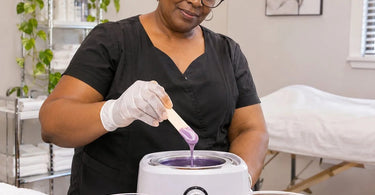
Set yourself up for success with a waxing station that works as hard as you do! Whether you are performing back-to-back Brazilian waxes, perfecting an eyebrow shape, or preparing for a fully booked afternoon, the format of your professional hard wax can influence how smoothly your day runs. Hard wax beads and wax discs might look like two different personalities at the same party, but their differences are more practical than dramatic. The real question is whether those little pieces of wax can make a meaningful difference in melting, refilling, portion control, and treatment room efficiency. Spoiler alert: the shape can matter, but it is not the only thing deserving a spot on your professional waxing checklist.
For licensed estheticians, waxing specialists, salon owners, and spa managers, choosing between beads and discs should involve more than picking whichever package looks prettier on the supply shelf. Understanding how each format behaves before melting can help you organize your workstation, manage appointments, reduce unnecessary handling, and maintain consistent service quality.
Hard Wax Beads vs. Wax Discs: What Is the Actual Difference?
Both hard wax beads and hard wax discs are solid formats of stripless wax designed to be heated in a compatible professional warmer. After melting, the wax is applied to the skin, allowed to set, and removed without a separate waxing strip, following the manufacturer's instructions.
The primary difference is their physical shape before melting.
Hard wax beads are generally small pieces that may resemble pearls, pellets, granules, or tiny beans. Their compact format makes them convenient to pour, scoop, and add to a warmer in controlled amounts.
Hard wax discs are usually flatter, wider pieces that may also be marketed as tablets, coins, or pastilles. They can be convenient to handle individually and may offer a different approach to measuring refills.
Here is an important distinction: there is no universal manufacturing standard requiring all beads or discs to have identical dimensions. One manufacturer's small, thin discs may behave differently from another manufacturer's large tablets. Likewise, two bead products may have different sizes, densities, and melting characteristics.
That means shape is useful information, but not a substitute for reading the formula specifications.
Does the Shape Affect How Quickly Hard Wax Melts?
Potentially, yes. But before crowning beads the undisputed champions of melting speed, there are a few details worth considering.
Small wax pieces generally expose more surface area relative to their volume than larger, thicker pieces. Under comparable conditions, smaller pieces may melt more evenly or reach a fully melted state sooner. However, thickness, total wax quantity, warmer design, temperature settings, and the formulation itself also affect heating time.
Some discs are surprisingly thin, giving them a relatively large exposed surface area. These can melt efficiently, particularly when spread across the bottom of a compatible warmer. Larger, thicker discs may require additional time for their centers to melt.
Imagine placing a handful of small beads in a warmer next to a substantial wax tablet. The smaller pieces may begin softening more uniformly because heat does not have to travel as far into each piece. However, this does not guarantee that every bead product melts faster than every disc product.
For professionals, the practical takeaway is simple: compare actual melting performance using the same warmer, similar wax quantities, and appropriate manufacturer-approved settings.
Explore Professional Wax Warmers for Salons & Spas when assessing equipment compatibility and capacity.
Why Wax Formulation Matters More Than Shape Once Everything Is Melted
Here is where the debate gets interesting. After wax beads or discs have completely melted into a uniform working consistency, their original shapes no longer exist.
What matters during application is the actual wax formula.
Professional hard waxes may differ in flexibility, working temperature, viscosity, setting time, fragrance, ingredients, and suitability for particular treatment areas. These characteristics affect how the wax spreads, grips hair, sets, and removes.
A flexible hard wax formulated for larger application areas may behave differently from a formula intended for precision facial waxing, regardless of whether it originally came in beads or discs.
Similarly, a wax formulated to work at a lower temperature should not be assumed to perform identically to a conventional formula simply because both arrive in the same shape.
Consider professional collections such as ItalWax, Berodin, and Cirepil when comparing formulations and intended professional applications.
The best buying strategy is to evaluate the actual product specifications first and treat physical shape as an additional workflow consideration.
Portion Control: Are Beads Easier to Measure?
One of the biggest workflow advantages of smaller wax pieces is flexibility when replenishing a warmer.
Beads can be poured or scooped in relatively small increments. This may be particularly helpful for specialists operating smaller wax warmers or maintaining different formulas for different services.
For example, an esthetician finishing eyebrow appointments before an afternoon facial waxing schedule might prefer adding a modest quantity of beads rather than loading more product than necessary.
Discs offer their own convenience. When a manufacturer produces consistently sized discs, staff may find it easy to add a few pieces during preparation. The format can feel tidy and predictable, especially when replenishment quantities are established through experience.
However, counting discs does not automatically provide accurate weight measurements. Disc dimensions and weight vary by manufacturer, and pieces within a package may not always be perfectly uniform.
If precise portion control matters, measure wax by weight rather than assuming a particular number of beads or discs represents a fixed quantity.
For busy professional teams, standardized refill procedures are often more important than the shape itself.
Refilling a Wax Warmer Without Disrupting Appointments
Picture the scene. Your client is comfortable, your treatment room is organized, and your wax has reached that beautiful, spreadable consistency. Then you realize the pot is running low.
Nothing adds excitement to a waxing schedule quite like discovering you should have refilled the warmer fifteen minutes ago.
Smaller beads can make topping up a warmer convenient because they allow gradual additions. Thin discs may also be easy to replenish individually.
But adding solid wax to a working pot can temporarily lower the overall temperature and alter consistency. A product that was perfectly ready for application may need additional time to return to its intended working condition.
The best practice is to anticipate wax consumption rather than continuously improvising between clients.
Consider keeping an approved second warmer or compatible insert available for high-volume treatment rooms. Maintain adequate stock, follow equipment capacity limits, and prepare wax early enough to achieve a stable working consistency before appointments begin.
For busy studios, Complete Waxing Kits for Salons & Spas can also help organize essential supplies around a consistent service setup.
Storage and Organization: The Overlooked Shape Advantage
Professional waxing efficiency begins long before your first client walks through the door.
Loose beads can be convenient to transfer into suitable, clearly labeled storage containers, depending on manufacturer instructions. They may also spill more easily during hurried handling. Anyone who has chased tiny wax pellets across a treatment room floor knows those little escape artists have absolutely no respect for appointment schedules.
Discs are typically larger and easier to pick up individually. Depending on their size and packaging, they may create less loose-product scatter during handling. However, they can also require more space when stored in rigid stacks or bulky containers.
Neither format automatically wins the storage contest.
For either option, keep the original product identification, lot information, ingredient details, and manufacturer instructions accessible. Use clean, dry, appropriately labeled storage containers when repackaging is permitted, and protect supplies from excessive heat, moisture, and contamination.
Organize your Waxing Supplies for Professionals so staff can identify products quickly without opening multiple containers during appointments.
Do Wax Beads Create Less Waste Than Discs?
Not necessarily. Waste depends primarily on how accurately your team estimates consumption, handles product, and manages inventory.
Smaller beads may allow more precise replenishment of low-volume warmers, potentially reducing the amount of unused product prepared for a particular service period.
Discs may support efficient replenishment when staff know approximately how many are required for the day's appointment schedule.
Neither format guarantees lower overall wax consumption. Application thickness, technician technique, product performance, and service mix are usually more influential.
For example, a technician who regularly applies excessive amounts of wax may use more product regardless of whether it began as beads or discs. Improving technique can offer a more meaningful opportunity for savings than changing the shape of the wax in the package.
Remember that wax exposed to contamination must be discarded appropriately. Never attempt to save money by returning used wax to a warmer or reusing removed wax.
For businesses focused on purchasing efficiency, explore Bulk Wax Deals and compare actual cost per usable ounce or pound.
Which Format Works Better for Different Waxing Services?
Because both beads and discs can be available in professional stripless formulas, neither shape should be considered automatically better for a particular body area.
Eyebrow and facial waxing: Small-volume warmers and specialized formulas may make easy portioning particularly valuable. The correct formulation, application control, and manufacturer guidance remain the deciding factors.
Underarm waxing: Consistent working temperature, flexibility, and appropriate application technique are more important than whether the wax originally arrived as a bead or disc.
Bikini and Brazilian waxing: High-demand treatment schedules benefit from reliable preparation, sufficient warmer capacity, and formulas suited to the service. Both formats may work well when properly selected.
Back and larger body areas: Greater product consumption can make bulk purchasing, equipment capacity, and replenishment procedures especially important. Evaluate whether the chosen hard wax formula is appropriate for the treatment area.
If you provide a mix of facial and body services, selecting several appropriate formulas may be more beneficial than insisting that every product arrive in the same physical format.
How the Right Wax Warmer Changes the Comparison
The wax warmer is an important part of this conversation. In fact, the same wax can behave differently in different heating systems.
Warmer wattage, temperature regulation, pot depth, insert material, and wax volume all influence melting and working consistency.
A deep pot containing a large quantity of discs may heat differently from a smaller pot containing a modest amount of beads. Likewise, placing too much product into an undersized warmer can interfere with efficient melting, regardless of shape.
Professionals should choose equipment designed for their wax format and service volume, following the manufacturer's operating instructions.
Never assume the highest thermostat setting is an appropriate application temperature. Initial melting and maintaining the wax at a safe working consistency are separate stages. Follow the wax manufacturer's directions, monitor consistency, and test temperature safely before client application.
Do not use an unapproved microwave or stovetop as a shortcut. Reliable temperature control is critical for both professional results and client safety.
And remember: a wax warmer is not a sterilizer. Proper infection prevention requires appropriate single-use procedures, clean equipment, and compliance with applicable licensing and sanitation requirements.
Sanitation Standards Stay the Same for Beads and Discs
Whether your wax starts as tiny pellets or broad tablets, professional hygiene expectations do not change.
Use clean procedures when transferring unused wax into the warmer. Avoid touching stored product with contaminated gloves or applicators. Follow applicable state board rules and manufacturer guidance for preventing cross-contamination.
For application, use fresh, single-use applicators as required and never return a contaminated stick to the wax pot. Maintain proper workstation cleaning and disinfecting procedures between clients.
Professional collections including Professional Wax Spatulas and Applicators, Protective Gloves & Masks, and Professional Cleaners & Disinfectants can help support a properly equipped waxing station.
Product shape should make handling easier, not create exceptions to safe treatment practices.
Can Wax Shape Affect the Cost of a Professional Service?
Indirectly, it can. The biggest financial considerations are product price, amount used, preparation time, and overall operational efficiency.
Suppose two hard wax products are equally appropriate for your services. One is supplied as beads and the other as discs. The bead format may be easier for your staff to measure into smaller warmers, while discs may fit your existing storage and replenishment routine better.
Those operational differences can influence staff convenience and preparation time. However, they do not necessarily translate into a lower cost per service.
To make a meaningful comparison, calculate the following:
Wax cost per service = total wax weight consumed per service multiplied by the purchase cost per unit of weight.
Then evaluate preparation time, discarded product, equipment needs, and staff handling requirements separately.
For example, if a wax costs $0.60 per ounce and a service uses 2 ounces, the material cost is $1.20. If another format costs $0.50 per ounce but requires 2.5 ounces for the same service, its material cost is $1.25. The lower purchase price per ounce did not create a cheaper treatment.
This is why comparing package prices alone can be misleading. Track actual use and look at the entire service workflow before switching formats.
How to Test Beads and Discs in Your Own Treatment Room
Instead of relying entirely on product descriptions, conduct a structured in-house comparison.
Begin with products that are suitable for your specific treatments. If possible, compare the same formulation offered in two physical formats. This helps isolate shape as the variable rather than comparing completely different wax recipes.
Step 1: Standardize the warmer. Use the same compatible warmer model and follow each product's heating instructions.
Step 2: Measure equal quantities. Weigh a consistent amount of wax rather than estimating by handfuls or counting pieces.
Step 3: Record preparation time. Observe how long each sample takes to reach the manufacturer's recommended usable consistency. Avoid assuming identical thermostat settings produce identical wax temperatures.
Step 4: Evaluate handling. Note whether each format pours, scoops, stores, and replenishes conveniently.
Step 5: Assess application performance. Qualified professionals can evaluate appropriate application thickness, flexibility, setting behavior, and removal performance according to the product's directions.
Step 6: Track operational costs. Compare purchase price, actual wax consumption, discarded material, and preparation requirements.
Step 7: Gather technician feedback. Your waxing team may identify small handling differences that significantly affect their daily routines.
Repeat observations across more than one session before making a purchasing decision. One unexpectedly speedy melting session is not enough to declare a lifelong wax soulmate.
Common Mistakes When Comparing Wax Beads and Discs
Assuming beads always melt faster: Individual piece size, thickness, formulation, wax volume, and warmer characteristics all affect melting behavior.
Assuming discs are automatically more economical: Larger pieces do not guarantee lower product consumption or a better price per service.
Comparing different formulas as though only shape changed: A softer, more flexible formula may perform differently because of its ingredients rather than its original physical appearance.
Adding too much solid wax during appointments: Frequent large refills can interrupt temperature stability and delay services.
Ignoring manufacturer instructions: Different wax products may have distinct melting, maintenance, application, and removal requirements.
Changing several variables at once: Switching brands, warmer models, application techniques, and wax formats simultaneously makes it difficult to understand what actually improved your workflow.
Professional efficiency comes from controlled processes and consistent products, not simply choosing the trendiest shape on the shelf.
What About Wax Beads, Discs, Blocks, and Tablets?
Professional waxing catalogs can include several names for solid hard wax formats. Beads, beans, pellets, pearls, discs, tablets, and blocks may describe different physical shapes or sizes.
These terms are not always standardized across brands, so reading product descriptions carefully is essential.
Small pellets generally offer convenient pouring and incremental measuring. Flat discs can offer easy individual handling. Larger blocks may be economical in certain packaging configurations but can require additional attention to portioning and melting.
The important first question is whether the product is a suitable stripless hard wax formula for your services. Do not confuse the solid shape of hard wax with other product categories, such as Soft Strip Wax or Paraffin, which have different purposes and application methods.
Choosing the Best Format for a Busy Waxing Business
If your salon handles a high volume of appointments, prioritize dependable stock levels, reliable equipment, easy replenishment, and a formula that performs consistently for your team's techniques.
If you operate a boutique studio with specialized facial waxing services, smaller quantities and precise portion control may be more relevant.
If several estheticians share an inventory system, standardized purchasing and refill procedures may create greater benefits than the physical shape of the product.
And if you already use a wax that your team loves, do not feel obligated to replace it simply because another format looks more convenient. A familiar, reliable formula with proven results may be worth far more than a minor packaging advantage.
Consider your appointment volume, treatment mix, warmer capacity, storage space, purchasing budget, technician preferences, and client experience before making a decision.
You can also pair the right wax with Pre & Post-Waxing Products to support proper treatment preparation and aftercare.
Where Pure Spa Direct Fits Into Your Professional Waxing Workflow
Pure Spa Direct helps professional beauty businesses shop for the products and equipment needed to maintain efficient waxing services. As a distributor of professional supplies rather than a wax manufacturer, Pure Spa Direct provides access to a variety of brands and product categories for comparing options.
That variety matters because the ideal wax setup is rarely identical across every salon, spa, or waxing studio.
Browse Professional Stripless Hard Wax to compare formulas and available formats. Explore Professional Wax Warmers for equipment suited to your services, or review Bulk Wax Deals when planning inventory for a growing client schedule.
Professionals can also search specifically for Hard Wax Beads and Hard Wax Discs to explore relevant purchasing options. Always confirm current product availability, formulation details, and equipment compatibility before ordering.
The Final Verdict: Does Hard Wax Shape Really Matter?
Yes, but primarily before the wax reaches its final working consistency.
Beads may offer convenient incremental measuring, easier pouring, and potentially faster melting under certain conditions. Discs may provide convenient individual handling, organized portioning, and efficient melting when their dimensions and warmer setup are favorable.
Once both formats are completely melted, the original shape no longer determines application performance. Formula, temperature control, technician technique, and appropriate service selection become much more important.
For professional waxing businesses, the smartest approach is to select a dependable formula first, then evaluate whether the physical format supports daily operations.
Because at the end of a fully booked day, your clients are not judging whether their wax began life as a bead or a disc. They care about a comfortable, professional experience and excellent results. Your staff cares about a smooth, predictable workflow. And your business cares about keeping appointments on schedule without turning the wax warmer into a daily guessing game.
Choose the formula that performs, the shape that fits your routine, and the supplies that help your team work efficiently. That is a professional waxing strategy worth sticking with!
