
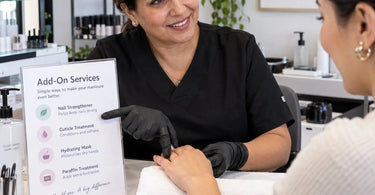
Quality drives loyalty with this tool that sits quietly on your reception desk and yet has the power to make or break your entire service experience. Yes, we are talking about your spa menu, that humble piece of paper or digital screen that clients scan while waiting for their appointment. But here is the kicker: if your add-ons sound like they were named by a dermatology textbook from 1987, your clients are not booking them. They are smiling politely, nodding, and secretly wondering if a "keratolytic enzyme infusion" is something that requires a prescription or a hazmat suit. The truth is, your clients want to feel pampered, not enrolled in a clinical trial.
Let us be honest with each other for a moment. The beauty industry has a love affair with jargon. We throw around words like microcurrent, hydrodermabrasion, and ultrasonic skin scrubbers with the confidence of a sommelier describing wine notes. But your client, the lovely woman who just wants to look fresh for her high school reunion, does not speak that language. She speaks the language of feelings: soft, glowing, smooth, confident. When your menu uses clinical terminology for add-ons, you create an invisible wall between your client and the upgrade she would absolutely love if she understood it. And that wall is costing you money every single day.
The Plain English Problem: Your Client Is Not A Dermatologist
Think about the last time you walked into a restaurant and the menu described a dish as containing "emulsified polysaccharides with a albumin reduction." You would probably order the chicken fingers instead, right? The same psychology applies to your spa menu. When a client sees an add-on called "Glycolic Acid Peel," her brain might instantly flash to images of chemical burns and dramatic before-and-after photos. But if you call that same service a "Brightening Glow Boost," suddenly it sounds like something she deserves on a Tuesday afternoon.
The stakes are even higher for service add-ons specifically. According to research into menu psychology, a well-designed menu can steer customer choices and increase spend per head without a single discount being offered . Your menu is not just a list of services. It is your hardest-working salesperson, and unlike your front desk staff, it never takes a lunch break.
When add-ons are buried in technical language, clients do not ask questions. They do not want to appear ignorant, so they simply nod and move on. They skip the upgrade. They book the basic service. And you leave money on the table while your Professional Wax Warmers for Salons and Spas sit idle during what should have been a premium appointment. The solution is not lowering your prices. The solution is speaking human.
The Psychology Of Naming: Speak Human, Not Scientist
Here is a little secret from the world of conversion optimization: people do not buy what a service is. They buy what a service does for them. This is the difference between a feature and a benefit, and it is the single most powerful distinction in all of marketing.
Instead of listing "Chemical Peel" on your menu, try "Resurfacing Glow Treatment." One sounds like a science experiment. The other sounds like you are about to get your best skin ever. If you offer Hydrodermabrasion, consider renaming the add-on "Hydra-Lift Infusion" or "Quench and Glow Facial." It is descriptive, alluring, and sounds like a tall drink of water for your face.
The same principle applies across every service category. Your Microdermabrasion add-on could become "Diamond Polish Resurfacing" or "Skin Revival Scrub." Your Professional Stripless Hard Wax upgrade could be presented as "The Smooth Operator" or "Silk Finish Enhancement." The goal is to make the client feel like she is treating herself to something special, not subjecting herself to a lab procedure.
When you shift the language from clinical to conversational, two things happen. First, the perceived value of the service goes up because the outcome is clear. Second, the intimidation factor goes down, which means more clients actually ask about the add-on instead of silently wondering.
Waxing Add-Ons: From Sani to Sensational
Nowhere is the naming game more critical than in waxing services. This is an area where clients are already slightly nervous, and the wrong words can send them running for the door. The term "Brazilian" is a perfect example of a name that is instantly understood and carries a certain glamour. But why stop there?
If you offer ItalWax - Wax as an upgrade option, do not just call it "Hard Wax." Call it "The Comfort Wax Experience" or "Gentle Glide Upgrade." If your salon uses Natural Sugaring Products for Gentle Hair Removal, rename that add-on to "Sweet Honey Sugar" or "Gentle Sugaring Glow." This highlights the natural and gentle benefits while setting client expectations for a more pleasant experience.
For your Lycon or Cirepil services, think about creating tiered experiences rather than just listing brands. A client does not care that you use Cirepil. She cares that her wax will be fast, comfortable, and leave her skin feeling like silk. Call your premium wax option "The Velvet Finish" and watch how many clients suddenly decide that comfort is worth the upgrade.
Do not forget about the men in your life either. For male clients, avoid clinical terms like "Back Wax" and go for something like "Back Smoothing" or "Manscape Refresh." It is less intimidating and sounds more like a grooming choice than a necessary evil.
Nail Add-Ons That Sell Themselves
Nail services are another area where creative naming can work wonders, and the stakes are surprisingly high because clients are often booking multiple add-ons at once. A client sitting in your Pedicure Chairs/Spas is already in a relaxed, receptive state. This is the perfect moment for your menu to shine.
You can transform a simple "Paraffin Wax Treatment" into a "Luxury Melt Mask" or "Silky Soft Dip." It sounds indulgent and relaxing. Instead of a basic Cuticle Oil application, make it an "Essential Nail Nourish" treatment. It sounds like you are giving the nails a vital health treatment, not just a little oil.
A Professional Gel Polish application can become "High-Shine Armor" or "Chip-Proof Gloss." You are selling durability and shine, not just a color. And if you offer Nail Art Supplies add-ons like rhinestones or custom designs, do not call it "Nail Art Add-On." Call it "The Sparkle Upgrade" or "Custom Bling Booster." Suddenly, it sounds like a party on her fingertips.
For manicure services, consider how your Manicure Essentials can be packaged as experience upgrades. A simple callus treatment becomes a "Heel Renewal Ritual." A basic massage becomes "Therapeutic Hand Relief." These small language shifts make the add-on feel like a natural extension of the service rather than an unnecessary extra charge.
Facial And Skin Add-Ons: Sell The Glow, Not The Gizmo
Your facial menu is where the jargon problem gets really expensive. Clients are already paying a premium for skin treatments, and if your add-on descriptions are packed with technical terms, they will assume the basic service is enough. But the truth is, your most profitable add-ons are often the simplest ones to explain.
If you have a Facial Steamer, do not just list "Steam Add-On." Call it the "Deep Pore Purifier" or "Steam and Glow Boost." If you offer High Frequency Machines, rename that add-on to "Clear Skin Zapper" or "Blemish Banisher." One sounds like a medical device. The other sounds like a solution to a problem your client actually has.
For your Hydrodermabrasion service, think about how you frame the upgrade. "Hydra-Infusion Boost" sounds like a nourishing treat. "Hydrodermabrasion Add-On" sounds like an invoice line item. The difference in perceived value is enormous, and it costs you nothing to make the change.
Consider your Dermaplaning service as well. Instead of listing it as a clinical add-on, call it "The Peach Fuzz Polish" or "Silk Skin Smoothing." Clients understand smooth. They understand glow. They do not necessarily understand cellular turnover. Meet them where they are.
The Rule Of Three: Your New Best Friend
One of the most effective, psychologically proven strategies you can borrow from the hospitality industry is the Rule of Three. This principle suggests that when people are presented with options in groups of three, they almost never choose the cheapest option. They are naturally drawn to the middle or the premium choice because it feels like a balanced, sensible decision.
Let us apply this to your add-on menu. Instead of listing one massage upgrade and one fancy massage upgrade, create three tiers. For example: Essential Add-On, Signature Upgrade, and Ultimate Wellness Experience. Your clients see three clear choices. The Essential is there, but the Signature suddenly looks like the perfect sweet spot. You have just upsold them without ever saying a word.
This works beautifully for waxing services, where you can feature three tiers of experience: Comfort Wax, Luxury Wax, and Ultimate Smooth. It works for facials, where you can present three levels of glow enhancement. The Rule of Three gives clients the illusion of choice while gently guiding them toward the option that benefits both of you.
Visual Storytelling: A Picture Is Worth A Thousand Dollars
We are visual creatures, and a menu that is a wall of black text on white paper is not just boring. It is a missed opportunity. High-quality photos can boost sales of specific items by up to thirty percent, and your add-ons are the perfect place to use this to your advantage.
You do not need to photograph everything. That would be visual overload. Instead, be selective. Use mouth-watering, aspirational images for your star performers, the high-profit add-ons you really want to sell. A client booking a gel polish manicure might not read a paragraph about your Nail Art Rhinestones, but if she sees a beautiful, high-quality image of the finished look, the seed is planted. When she sits down in the chair, she is already thinking about adding a little sparkle.
For body treatments, a stunning image of your Sugar Scrubs or Salt Scrubs in action can communicate more than a paragraph of text. The image does the selling for you, and it does it in the split second before your client turns the page.
Making Your Menu Work For You (Not Against You)
Your menu is often the first detailed interaction a client has with your services beyond the front desk greeting. It is not just a list of prices. It is a roadmap to their relaxation, a story of what you offer, and if designed cleverly, a guided tour toward a higher ticket size.
The next time you sit down to update your spa menu, ask yourself one simple question: Would my client understand this? If the answer is no, it is time for a rewrite. Your Advanced Facial Treatment Products for Salons and Spas deserve better than clinical jargon. Your Professional Wax Warmers deserve better than names that sound like they came from a chemistry exam.
Plain English is not dumbing down. It is smarting up. It is meeting your client where she is and inviting her into an experience she can actually understand and get excited about. And when she understands, she books. She upgrades. She tells her friends about the amazing add-on she discovered at your spa. That is the kind of marketing that no advertising budget can buy.
So go ahead. Rename that "Glycolic Acid Add-On" to "The Glow Boost." Change "Paraffin Treatment" to "The Silky Soft Dip." Your clients will thank you. Your bottom line will thank you. And your spa menu will finally start doing the work it was always meant to do.
)