
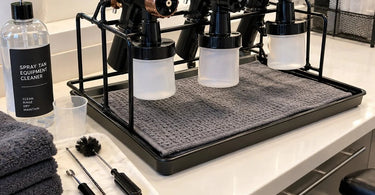
Make every service count... especially the ones where your spray gun is expected to behave like the dependable little workhorse it is. After cleaning a professional spray tan gun, giving it a proper drying area is not an optional finishing touch; it is part of the cleaning process itself. A dedicated place where components can drain, air dry, and remain protected from contamination helps reduce trapped moisture, dried solution buildup, inconsistent spraying, and the dreaded pre-appointment equipment tantrum that nobody invited.
For busy sunless tanning professionals, cleaning is usually already built into the end-of-day routine. The step that deserves just as much attention is what happens immediately afterward. Your Professional Sunless Tanning Equipment for Salons may be clean, but if freshly rinsed components are tossed into a drawer, reassembled while still wet, or left cup-side-up on a crowded counter, moisture can linger where you really do not want it.
Cleaning Is Only Half of the Equipment Care Routine
Spray tan solution is designed to coat skin evenly, which also means residue can cling stubbornly to equipment when maintenance gets rushed. Professional cleaning generally involves removing remaining solution, rinsing the cup, flushing appropriate passages with clean water according to the equipment manufacturer's instructions, and cleaning removable components as directed.
Once that rinse is complete, the goal changes. Now you want residual water to leave the equipment instead of becoming trapped inside it. Depending on the spray gun design, moisture can remain around threads, caps, nozzles, solution passages, cup connections, and other small surfaces. Allowing those areas to dry thoroughly helps prepare the applicator for its next service.
This is why a drying station belongs right alongside your cleaning supplies. It turns equipment care into a complete workflow instead of a clean-it-and-hope-for-the-best situation.
What Can Happen When a Spray Tan Gun Stays Wet?
Leaving excess moisture in or around spray equipment can create several practical problems. The exact risks depend on the materials and construction of your particular gun, so always follow the manufacturer's care instructions, but thorough drying is a common maintenance principle for professional spray equipment.
One concern is corrosion on susceptible metal components. Another is water collecting in areas that affect airflow or solution delivery. Moisture can also mix with leftover tanning solution that was not completely removed, creating residue around small openings and moving parts.
Then there is spray performance. Nobody wants to discover five minutes before a client arrives that the applicator is sputtering like it is trying to send a message in Morse code. Clean, dry, properly maintained equipment gives you a much better starting point for consistent professional services.
A Proper Drying Area Encourages Drainage
A useful drying area should allow cleaned pieces to drain rather than trapping water. For example, removable solution cups can often be positioned open-side-down after cleaning so excess water can escape. Follow the manufacturer's instructions for your exact equipment and components.
Place parts on a fresh, clean, absorbent surface or another sanitary drying surface designated specifically for equipment. The goal is to prevent freshly cleaned pieces from sitting in puddled water or touching a countertop that is also hosting phones, appointment books, product bottles, coffee cups, and whatever mysterious object appeared during the afternoon rush.
Separating your drying zone from the general workstation makes the routine easier for everyone on the team to follow.
Give Air Somewhere to Go
Air circulation is your friend during drying. A cramped container or closed drawer traps humidity around damp components, while an open, protected drying location allows moisture to evaporate naturally. Avoid immediately sealing wet parts in bags, bins, cabinets, or cases unless the equipment manufacturer specifically instructs you to do so.
Some professional systems may use airflow from the equipment itself as part of the drying process. For example, certain spray tan maintenance instructions recommend running the gun until it no longer emits moisture after rinsing. Manufacturer instructions always take priority because designs vary from one applicator to another.
If you operate several tanning stations, assigning each gun its own drying position can make equipment rotation considerably easier. No guessing which cup was cleaned, which gun is dry, or why someone has placed a damp nozzle beside the retail display again.
Keep the Drying Zone Clean, Too
A drying area is only useful if the area itself stays clean. Freshly washed equipment should not be placed on an old towel that has been sitting beside the tanning tent since Tuesday.
Use clean disposable coverings, freshly laundered towels where appropriate, or another sanitary surface that fits your facility's cleaning protocols. If you need to refresh your backbar setup, professional High-Quality Towels, Professional Cotton, Sponges, and Wipes for Salons & Spas, and Professional Cleaners & Disinfectants for Salons and Spas can help support an organized professional environment.
Remember that the cleaner or disinfectant you use on surrounding work surfaces is not automatically appropriate for internal spray gun components. Only use cleaners approved for your specific equipment. Strong household chemicals, soaps, solvents, or other improvised mixtures can potentially damage seals, finishes, passages, or other parts.
Do Not Rush Reassembly
One of the easiest mistakes in a busy salon is cleaning the gun and immediately putting every component back together while it is still damp. It feels satisfyingly efficient. Unfortunately, efficiency stops being efficient when water gets trapped between assembled surfaces.
Whenever the manufacturer permits components to air dry before reassembly, let them become fully dry first. Keep small pieces organized so nothing disappears into the black hole where bobby pins, lash brushes, and your favorite pen apparently live.
A shallow designated tray or organized drying mat can help keep air caps, cups, collars, and other removable parts together without piling them on top of one another. The exact arrangement will depend on the spray gun model and which parts the manufacturer approves for routine removal.
Keep the Gun Upright or Properly Supported
After cleaning, avoid casually tossing the spray gun onto its side unless that storage orientation is specifically recommended for your model. Many professional guns are designed to hang or rest in a dedicated holder. Proper support reduces the chance of freshly cleaned parts contacting contaminated surfaces and can prevent accidental damage to delicate components.
If your tanning system includes a manufacturer-provided holder, use it as directed. Otherwise, develop a secure storage method that keeps the equipment stable, protected, and separated from client traffic.
Your spray gun should not have to play Jenga with bottles of prep spray and tanning solution.
A Drying Station Can Improve Your Entire Workflow
The biggest advantage of a dedicated drying area may actually be consistency. Once the process has a clearly defined location, equipment care becomes easier to train, repeat, and verify.
A simple professional workflow might look like this: remove remaining solution according to your salon protocol, rinse and clean the gun following manufacturer instructions, flush approved passages, remove and clean designated components, drain excess water, place everything in the drying area, allow components to dry completely, reassemble as instructed, and store the gun securely for the next service.
That routine is much easier to follow when the cleaning sink, drying station, and storage location are planned rather than improvised.
Think About Drying Space When Designing Your Tanning Area
Professionals frequently think about the tanning tent, extraction, lighting, solution storage, and client preparation when arranging a sunless tanning room. Equipment drying space deserves a spot on that list.
The area does not need to be huge. It simply needs enough room to keep components separated, supported, and protected while moisture drains and evaporates. Ideally, it should be away from overspray, treatment products, open trash containers, heavy foot traffic, and other sources of contamination.
If you are building or reorganizing a professional sunless service area, browse Professional Sunless Tanning Products for Salons and Spas and Professional Sunless Tanning Equipment for Salons with the entire workflow in mind, from client prep through cleanup and equipment storage.
Do Not Forget the Solution Cup
The solution cup deserves special attention because its shape can easily retain water after rinsing. Allowing a cleaned cup to drain in an appropriate inverted position can help prevent water from collecting at the bottom.
Before the next appointment, make sure the cup and its connecting surfaces are clean, dry, correctly assembled, and ready for solution. Water unintentionally left inside the cup may dilute tanning solution, while moisture around connecting areas can complicate troubleshooting if the gun begins behaving inconsistently.
Also inspect seals, threads, tubes, and other parts identified in your manufacturer's maintenance instructions. A clean gun cannot compensate for a worn or damaged component.
Dry Equipment Makes Morning Setup Easier
Picture two versions of tomorrow morning. In version one, you arrive to a properly cleaned, fully dried, organized tanning setup. The gun is where it belongs, the cup is dry, the parts are assembled correctly, and you can move straight into preparing for your first client.
In version two, someone cleaned the gun and put it away damp. You find water in the cup, a component still sitting on yesterday's towel, and the applicator needs attention precisely when your first client walks through the door looking gloriously punctual.
We vote enthusiastically for version one.
Create a Simple Team Standard
If multiple technicians share equipment, write down your cleaning, drying, inspection, and storage procedure based on the equipment manufacturer's instructions. Keep it near the cleaning area so every staff member follows the same sequence.
You can even label the drying zone so freshly cleaned equipment does not mysteriously migrate across the salon. Something as simple as a dedicated tray, hook, holder, or protected shelf can remove ambiguity.
For businesses carrying multiple applicators, consider rotating guns so one can dry thoroughly while another is ready for service. Backup equipment can also reduce disruption if a component needs replacement or additional maintenance.
Maintenance Is Part of the Client Experience
Clients may never see the complete cleanup routine that happens after their appointment, but they absolutely experience the result. Professional equipment care supports smooth appointments, predictable application, an organized treatment area, and confidence behind the spray gun.
A dedicated drying area costs very little space compared with the value of maintaining equipment properly. It also reinforces an important mindset: cleaning does not end when the rinse water runs clear. The equipment still needs to drain, dry, be inspected, be reassembled correctly, and be stored safely.
Whether you perform a handful of spray tans each week or run a packed sunless tanning schedule, those small habits matter. Stock your service area with the right Spray Tan Supplies, professional tanning equipment, cleaning essentials, and an intentional place for freshly washed components to dry. Your spray gun will be better prepared for its next client, your workstation will stay more organized, and your future self will have one less reason to whisper dramatic things at a nozzle before the first appointment of the day.
