
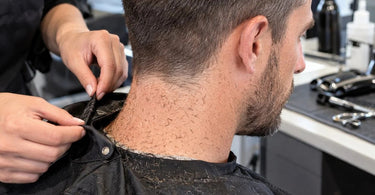
Your time matters - make it count... especially when your client is sitting in the chair wondering how approximately 47 microscopic hair clippings managed to sneak down their shirt despite wearing a perfectly respectable salon cape. You wrapped them carefully, fastened the neckline, and covered practically everything from shoulders to knees. Yet somehow, those tiny freshly cut hairs have infiltrated the collar like they have a personal invitation. Before you blame the cape, the scissors, or the mysterious forces of salon physics, there is a surprisingly practical explanation for this itchy little situation.
For professional hairstylists, barbers, salon owners, and beauty educators, preventing loose hair from reaching the skin is more than a minor housekeeping detail. It is part of delivering a comfortable, polished service that clients remember for the right reasons. Understanding how short clippings travel, where capes leave openings, and which protective accessories actually help can make a noticeable difference during busy haircutting appointments.
The good news? You do not need to wrap every client like a burrito. You simply need to understand the escape routes.
Why Do Tiny Cut Hairs Get Through Salon Capes?
The biggest misconception about haircutting capes is that they create a completely sealed barrier. They do not. Most professional capes are designed to protect clothing from loose hair, water, styling products, and other salon debris while still allowing clients to move and breathe comfortably.
Even a well-designed cape usually has small openings around the neckline, closures, and overlapping fabric. Those openings are particularly important because the cape must accommodate different neck sizes without creating uncomfortable pressure.
Freshly cut hair can slip through these spaces because it is lightweight, narrow, and often surprisingly stiff. Short clippings may fall directly toward an opening, move with airflow, or cling to another surface before eventually reaching the skin.
In other words, the cape is doing its job, but those little hair fragments have apparently decided that rules are optional.
The Neckline Is Usually the Biggest Trouble Spot
The neckline is where many haircutting cape problems begin. Even if the cape appears snug from the front, small gaps may remain around the back or sides of the neck.
These openings can develop for several reasons:
- The cape closure does not match the client's neck circumference precisely.
- The fabric bunches or folds around the collar.
- The client turns their head during the haircut.
- The stylist lifts or adjusts the cape while working.
- A closure sits over loose hair instead of resting smoothly against the protective barrier.
- The cape shifts when the client leans forward or backward.
Short clippings falling from the nape are particularly likely to encounter this area. Once a hair fragment slips underneath the protective layer, gravity and clothing movement can carry it farther down the neckline.
That is why salon neck strips deserve a permanent place in a professional haircutting setup.
Why Neck Strips Make Such a Difference
A neck strip creates an additional barrier between the cape and the client's skin. Properly applied, it helps cover small spaces along the neckline while keeping the cape closure from resting directly against the skin.
Disposable paper neck strips are commonly used in barber shops and hair salons because they are convenient to replace between clients. Other neck protection options may include reusable, cleanable collars or compatible protective accessories designed specifically for professional haircutting.
For the best results, wrap the neck strip comfortably around the client's neck before fastening the cape. Follow the strip manufacturer's directions, overlap the ends appropriately, and position the cape so its closure rests securely over the protective strip rather than leaving an exposed gap.
The goal is a smooth, comfortable barrier, not a tourniquet disguised as salon equipment.
A properly fitted neck strip will not prevent every clipping from reaching the skin, but it can reduce the number of particles slipping through the most vulnerable area.
Short Cut Hairs Behave Differently From Long Hair
Long hair clippings generally have enough length and weight to drape over surfaces and fall away from the body. Very short clippings can behave differently.
When hair is cut into tiny pieces, especially during clipper work, fades, neckline detailing, and precision trimming, the resulting fragments may be stiff enough to stand against fabric or skin rather than simply lying flat.
These short, pointed pieces can become trapped in shirt collars, folds of fabric, and small spaces around cape closures.
They can also produce that familiar prickly sensation when they contact sensitive skin.
A few common services that generate especially troublesome clippings include:
- Skin fades and close clipper cuts.
- Men's neckline and sideburn detailing.
- Short pixie cuts and precision detailing.
- Beard trimming and shaping.
- Clipper-over-comb techniques.
- Final cleanup with detail trimmers.
Professional shears, clippers, and trimmers allow stylists to create precise finishes, but those precision services also produce the tiny fragments that clients notice most.
Static Electricity Can Make Hair Clippings Stick Around
Static electricity is another reason tiny cut hairs can become difficult to manage.
Friction between hair, clothing, cape materials, and other surfaces can create electrostatic charges. Under certain conditions, especially when indoor air is dry, lightweight hair fragments may cling to capes instead of sliding off immediately.
That cling matters because hair stuck to the cape can transfer later when the client moves, when the fabric shifts, or when the stylist removes the cape.
A cape that initially catches loose hair may therefore become a temporary storage facility for the exact clippings everyone wants to avoid.
This is where cape material selection becomes important.
Some professional cutting capes are made with smooth, low-cling fabrics or feature antistatic treatments designed to reduce the buildup of static electricity. These properties may help clippings release more easily during cleanup.
However, antistatic does not mean that hair will never stick. Product performance depends on the actual fabric, treatment, condition, and working environment.
Does Cape Fabric Really Matter?
Absolutely. Not all haircutting capes are designed with identical materials or performance priorities.
Different professional capes may emphasize water resistance, chemical resistance, breathability, lightweight construction, static control, or ease of cleaning.
For dry haircutting services, a smooth fabric that allows hair clippings to slide away can be particularly helpful.
Consider these features when comparing hair cutting capes:
- Smooth surface: Helps reduce places where short hairs can become caught.
- Antistatic properties: May reduce unwanted cling and improve hair release.
- Adjustable neckline: Allows a more appropriate fit across different clients.
- Generous coverage: Helps keep falling hair away from exposed clothing.
- Durable closures: Support consistent positioning during repeated appointments.
- Easy-care construction: Makes thorough cleaning between clients more practical.
It is also worth distinguishing water resistance from hair resistance. A cape that performs beautifully during shampooing or color applications is not necessarily the best option for managing extremely short, dry clippings.
Professional salons offering a variety of services may benefit from stocking more than one cape style instead of expecting a single cape to handle every situation equally well.
Your Clippers May Be Helping the Hair Escape
Clippers and trimmers can contribute to the movement of short hair particles during a haircut.
As cutting blades move through hair, they release small fragments at different angles. The movement of the tool, the stylist's hands, and the surrounding air can influence where those pieces land.
Some clippers also have internal motors or ventilation systems that create localized airflow. Depending on the tool's construction and positioning, this may contribute to movement around loose hair.
However, the more important practical issue is often cutting direction.
For example, detailed work performed along the back of the neck may send clippings toward the cape's upper edge. If the protective strip is loose or the neckline is folded, the fragments have a convenient landing zone.
Stylists can minimize the problem by maintaining a smooth cape neckline, controlling loose hair during detailing, and clearing accumulated clippings before they build up around the collar.
Explore professional barber clippers, hair trimmers, and accessories suited to the services your business performs most frequently.
The Cape Removal Mistake That Sends Hair Everywhere
Picture this: the haircut is finished, the client looks fabulous, and the stylist dramatically whips off the cape like a magician revealing the final trick.
Unfortunately, the trick is now approximately 200 little hair fragments flying toward the client's shirt.
Cape removal is an often-overlooked source of unwanted hair transfer.
When a cape is pulled upward or shaken close to the client, accumulated clippings can fall onto exposed clothing, enter the collar, or settle against the neck.
A more controlled removal process can help:
- Remove visible loose hair from the cape's upper area before opening the closure.
- Ask the client to remain still while the cape is loosened.
- Release the closure completely rather than pulling a fastened cape over the head.
- Fold the cape inward to contain accumulated clippings.
- Guide the cape away from the client's clothing without brushing its hair-covered surface against the body.
- Dispose of loose hair in the appropriate waste container and clean the cape according to its care instructions.
The entire process takes only a little extra attention and helps protect the finishing touches of the appointment.
How to Keep Tiny Hairs Off Clients During a Haircut
Instead of relying on one protective accessory to solve everything, create a repeatable routine that addresses several opportunities for hair transfer.
Step 1: Begin with a clean cape. Inspect the neckline, closure, and fabric for clippings left from a previous service. A cape that already contains short hairs starts the appointment at a disadvantage.
Step 2: Apply a fresh neck strip when appropriate. Make sure it sits smoothly without gaps, excessive tightness, or uncomfortable bunching.
Step 3: Adjust the cape to the client. Check the sides and back of the neck, not just the front. Different neck sizes may require different closure positions.
Step 4: Keep the cape surface smooth. Avoid creating folds near the shoulders and neckline where hair can accumulate.
Step 5: Manage clippings throughout the haircut. Remove accumulated loose hair with appropriate clean tools and methods rather than allowing it to pile up near the collar.
Step 6: Pay special attention during neckline detailing. Short clippings from close trimmer work are particularly likely to cause discomfort.
Step 7: Perform a careful finishing cleanup. Use a clean, soft barber neck duster or other suitable tool to remove loose clippings from intact skin before the client leaves.
Step 8: Remove the cape slowly. Keep the hair-covered surface folded inward and away from clean clothing.
These habits are simple enough for busy shops and consistent enough to incorporate into staff training.
Are Neck Dusters Better Than Towels?
Neck dusters and towels serve different purposes, so the best choice depends on the task and your salon's sanitation requirements.
A soft neck duster is designed to remove loose hair fragments from the neck, shoulders, and surrounding areas. It can be useful after fades, short cuts, and beard detailing.
Clean towels can also help protect clothing, catch moisture, or assist with appropriate final cleanup procedures.
For professional use, the important considerations are softness, cleanliness, client comfort, and whether the tool can be properly cleaned or replaced between services.
Do not use the same visibly contaminated brush or towel repeatedly across clients. Follow manufacturer instructions and applicable state cosmetology or barbering sanitation rules.
Keeping an adequate supply of professional salon towels and appropriate cleaning accessories makes consistent hygiene easier during busy appointment schedules.
Can Hair Clippings Actually Get Through the Cape Fabric?
Sometimes clients describe hair as passing through the cape when it actually entered through the neckline or transferred during removal.
That distinction matters.
A smooth, intact cape made from tightly constructed material should generally provide a physical barrier against ordinary cut hair fragments. Hair is not typically passing straight through an undamaged, tightly woven or coated surface as though the cape were invisible.
However, worn fabric, open stitching, damaged seams, mesh sections, or poorly constructed closures can create opportunities for clippings to reach underlying clothing.
Inspect capes regularly for:
- Loose or damaged stitching.
- Frayed neckline edges.
- Broken snaps or weakened closures.
- Areas where fabric has become worn or thin.
- Persistent roughness that traps clippings.
- Damage caused by laundering or chemical exposure.
If a cape is no longer protecting clients adequately, replacing it may be more practical than endlessly adjusting an accessory that has reached the end of its useful life.
Why Clients Notice Tiny Hair Clippings So Much
Those short hairs might be barely visible, but the sensation they create can be surprisingly irritating.
Freshly cut strands have ends that can feel stiff or prickly, especially against delicate skin around the neck and upper back.
When these fragments become trapped between clothing and skin, ordinary movement can repeatedly press or rub them against the same area.
Clients may experience itching, tickling, or a persistent feeling that something is crawling down their collar.
For people with sensitive skin, the resulting friction can be especially unpleasant.
Professional stylists should also recognize that not every complaint of irritation is caused by loose hair. Persistent redness, a rash, or discomfort may involve other factors, including friction, products, or an existing skin concern.
If the skin appears irritated or broken, avoid aggressive brushing and follow appropriate salon safety procedures.
A gentle cleanup is always preferable to scrubbing away the evidence of a haircut.
Make Short-Hair Services More Comfortable
Barber shops and salons that perform frequent fades, buzz cuts, and detailed trimming should pay particular attention to their caping routine.
These services can produce large numbers of small clippings during a relatively short appointment. Even with excellent technique, some particles may collect around the neck.
A practical station setup might include:
- Multiple clean, professional haircutting capes.
- A reliable supply of disposable neck strips.
- A properly maintained neck duster or approved cleanup alternative.
- Clean towels for appropriate client protection and cleanup.
- Professional clippers and trimmers maintained according to manufacturer instructions.
- Suitable cleaning and disinfecting supplies for reusable equipment and surfaces.
Businesses can explore Professional Hair Salon & Barber Shop Supplies, Salon & Barber Apparel, and Professional Cleaners & Disinfectants for Salons and Spas to support a more organized, service-ready station.
Keep protective supplies close enough to reach without interrupting the service. When everything is ready before the client sits down, proper caping becomes a natural part of the workflow rather than an afterthought.
How Salon Owners Can Improve Cape Performance Without Slowing Down Appointments
For salon owners and managers, preventing hair clippings from reaching clients is an operational issue as well as a comfort issue.
If every stylist uses a different caping method, clients may receive inconsistent service experiences even when the haircut quality is excellent.
A straightforward salon standard can help.
Start by evaluating the capes currently in use. Are they appropriate for short cuts? Are the closures adjustable enough? Do the fabrics release loose hair easily? Are staff members using neck strips consistently when required?
Next, review your inventory of protective accessories. Running out of neck strips during a busy Saturday is not exactly the glamorous salon moment anyone had planned.
Establish reasonable reorder points for disposable accessories, and keep enough clean reusable capes in rotation to accommodate the number of appointments performed between cleaning cycles.
For example, a shop performing frequent clipper cuts may use neck strips at a higher rate than a business focused mainly on longer haircutting and styling services. Purchasing decisions should reflect actual service volume rather than a one-size-fits-all estimate.
Finally, include cape application and removal in new employee training. Consistency at this stage can reduce unnecessary interruptions, improve cleanliness, and help create a more professional client experience.
Common Cape Mistakes Worth Avoiding
Even experienced salon professionals can develop habits that accidentally make clipping problems worse.
Fastening the cape too loosely: A large neckline gap creates a direct pathway for hair. Adjust the closure so the protective barrier sits securely without restricting comfort.
Fastening the cape too tightly: Excessive pressure can cause discomfort and encourage clients to tug or reposition the fabric, potentially creating new gaps.
Skipping neckline protection: When the client or service calls for a neck strip, omitting it removes a useful protective layer.
Using a cape covered in old clippings: Hair from a previous haircut can transfer to the next client. Clean and prepare reusable capes properly between services.
Allowing hair to gather in fabric folds: Pooled clippings can migrate when clients shift position or the cape is removed.
Shaking the cape next to the client: This sends loose hair back into the very area the cape was supposed to protect.
Ignoring damaged closures: A worn snap or unreliable fastener can compromise even an otherwise excellent cape.
The solution is not necessarily buying the most expensive cape available. Proper fit, appropriate materials, regular maintenance, and consistent technique often matter just as much.
What Should You Look for When Restocking Professional Salon Capes?
When purchasing capes for a salon or barber shop, consider the specific services your team provides rather than shopping entirely by appearance.
A gorgeous cape may look wonderful hanging on a station, but if its neckline shifts every time a client moves, beauty alone will not solve the clipping problem.
For high-volume haircutting businesses, prioritize comfortable adjustable closures, practical coverage, durable construction, and fabrics that are easy to maintain.
If your team regularly performs very short cuts, consider testing cape materials and closure designs during actual services before committing to larger quantities.
Ask stylists which designs stay in place most reliably and which are easiest to clean. Client feedback can also reveal whether a particular cape or neck strip combination is performing well.
Browse professional barber capes, cutting capes, and disposable neck strips to compare options suited to your business.
Frequently Asked Questions About Hair Getting Under Salon Capes
Why does hair get under a cape even with a neck strip?
Neck strips reduce exposed gaps but do not create a perfect seal. Hair may enter through folds, openings near the closure, or during cape removal. The strip's fit and position also affect performance.
Do antistatic salon capes stop short hair from sticking?
Antistatic materials can reduce static-related cling, making loose clippings easier to manage. They do not guarantee that every hair will slide off, particularly when moisture, fabric texture, or product residue is involved.
Are disposable neck strips necessary for every haircut?
Requirements depend on applicable sanitation rules, the type of cape, the service, and the protective system being used. Follow your local regulations and product instructions. A properly used neck strip is a practical way to improve comfort during many haircutting services.
Why are tiny hairs worse after a fade or buzz cut?
Close clipper work produces numerous short, relatively stiff fragments. These pieces can collect near the neckline and feel prickly when trapped against the skin.
Should stylists use the same cape for haircuts and chemical services?
Only if the cape is suitable for both uses according to its manufacturer. Haircutting and chemical services may have different protection requirements, so many professional businesses keep specialized capes available.
What is the easiest way to keep cut hair out of a client's shirt?
Use a clean, properly fitted cape with suitable neckline protection, prevent clippings from accumulating near the collar, and remove the cape carefully. A gentle final cleanup helps catch any remaining loose hairs.
The Little Details Make a Big Difference
Tiny cut hairs get through salon capes because of small neckline openings, shifting fabric, static cling, cutting direction, and the way short clippings behave against skin and clothing. The problem is common, but that does not mean salon professionals have to accept an itchy finish as part of every haircut.
A thoughtfully selected cape, appropriate neck protection, careful clipping management, and a consistent removal technique can help keep clients more comfortable from consultation to final mirror check.
For salon owners and professional stylists, these small improvements also support efficient operations, cleaner stations, and stronger service consistency.
Explore Professional Hair Salon & Barber Shop Supplies at Pure Spa Direct to find products and accessories for your daily service needs. As a wholesale distributor serving beauty professionals, Pure Spa Direct helps salons and barber shops source the essentials that keep their teams prepared.
Because your client should leave talking about that amazing haircut, not wondering why their shirt suddenly feels like it has been filled with miniature pine needles.
