
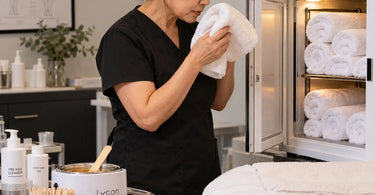
Because excellence is always the goal, even the smallest details of a spa treatment deserve attention. A perfectly warmed towel can make a facial, massage, or body treatment feel extra luxurious, but what happens when that freshly laundered towel develops an unexpected smell after sitting in a warming cabinet? One minute, your spa towels smell perfectly fresh, and the next, they have a mysterious aroma that definitely was not part of your relaxation menu. If you have ever opened a hot towel cabinet and wondered why the towels smell different than they did before warming, you are not imagining things. Heat, moisture, laundering habits, cabinet maintenance, and even leftover skincare products can all influence how towels smell during professional spa services.
The good news? Understanding why these odor changes happen can help spa owners, estheticians, massage therapists, nail technicians, and salon professionals maintain a fresher towel experience. A little troubleshooting and a consistent cleaning routine can make a meaningful difference in the comfort and presentation of your treatments.
Why Do Warm Towels Develop a Different Smell?
Warm towel cabinets create a heated environment designed to keep prepared towels comfortably warm for professional treatments. Depending on the equipment, towels may be placed inside slightly damp, and that combination of warmth and moisture changes how scents are released from the fabric.
Heat can make existing odors more noticeable because some odor-producing compounds become more volatile as temperatures rise. A towel that smells nearly neutral at room temperature may reveal traces of detergent, body oils, fragrance, or lingering laundry residue when warmed.
Sometimes the difference is simply an intensified clean-laundry scent. Other times, a sour, stale, musty, or unpleasant smell suggests that something in the laundering, storage, or cabinet maintenance process needs attention.
Think of it like warming yesterday's coffee. Heat does not necessarily create every aroma, but it can certainly make you notice what was already there. Unfortunately, nobody wants their hot towel service to inspire memories of forgotten gym clothes.
Moisture Is Often the Biggest Factor
Many professional hot towel cabinets are designed to warm clean, damp towels. Moisture is part of the process, but excess moisture can become a problem when towels remain enclosed for too long or the cabinet is not properly maintained.
Damp fabrics can support microbial growth when storage conditions are unfavorable. Although a towel warmer produces heat, it should not automatically be treated as a sterilizer or a substitute for proper laundering and sanitation.
Potential moisture-related problems include:
- Overly wet towels: Towels placed inside dripping wet can create unnecessary condensation and moisture accumulation.
- Extended holding periods: Damp towels left sitting in a cabinet for prolonged periods may develop stale or unpleasant odors.
- Residual cabinet moisture: Water collecting in drip trays, corners, or around seals can contribute to unwanted smells.
- Poor overnight drying: A cabinet that remains damp between operating days can develop persistent odor problems.
- Overcrowding: Tightly packed towels may heat unevenly and make it harder to manage moisture effectively.
For cabinets designed to hold damp towels, follow the manufacturer's instructions for moistening and loading. In many models, towels should be damp rather than soaked, with excess water thoroughly wrung out before loading.
Leftover Detergent and Fabric Softener Can Change the Scent
One of the more surprising causes of warm towel odor starts long before the towels reach the treatment room.
Professional spa towels are washed frequently, often with detergents, stain treatments, and other laundry products. If those products are used excessively or are not rinsed away adequately, residue may remain in the fibers.
When the towels are heated, that residue can produce a stronger fragrance or an unusual chemical-like scent.
Fabric softeners are another potential contributor. Some formulations leave conditioning substances on fabric, and those residues can build up with repeated washing. This may affect absorbency and change how towels smell when exposed to heat.
For professional towel laundering, consider these practices:
- Measure detergent according to the product label, washer capacity, and actual laundry load.
- Avoid assuming that more detergent automatically produces cleaner towels.
- Use laundry products appropriate for the towel material and professional setting.
- Follow fabric care labels when selecting washing and drying temperatures.
- Consider whether heavily fragranced products are suitable for scent-sensitive clients.
- Investigate persistent residue or odors rather than trying to cover them with additional fragrance.
Fresh, clean towels should not need a perfume intervention worthy of a department store fragrance counter.
Massage Oils and Skincare Products May Be Hiding in the Fibers
Spa towels often encounter products that ordinary household towels never see in such concentrated amounts.
During facials, waxing treatments, massage sessions, and body services, linens may contact massage oils, lotions, and creams, cleansing products, and other treatment formulations.
Even after laundering, some oily residues may remain if the wash process is not appropriate for the products involved. Heating can make residual product odors more noticeable, especially when the oils or fragrance components have changed during storage or repeated washing.
For example, towels used to remove rich massage oils may require different laundry attention than towels used for a simple warm compress.
Separating heavily product-soiled towels from lightly used facial towels can help professionals develop more effective laundry procedures.
If your treatment menu includes spa body treatments, consider reviewing how product-heavy linens are pretreated and washed. Follow the textile manufacturer's instructions and the laundry product label, particularly when dealing with oil-based residues.
The Cabinet Itself Might Be Responsible
Sometimes the towels are innocent. The cabinet is the troublemaker.
Hot towel cabinets experience repeated cycles of heating, moisture exposure, loading, and unloading. Over time, moisture deposits, lint, product residue, and mineral buildup may accumulate on interior surfaces, racks, drip trays, and door seals.
If the cabinet is not cleaned regularly, these deposits can contribute to unpleasant smells that transfer to freshly prepared towels.
Pay particular attention to these areas:
- Interior walls: Inspect for visible residue, staining, and moisture accumulation.
- Wire racks and baskets: Remove lint and deposits according to the manufacturer's cleaning directions.
- Drip trays: Empty and clean them at the recommended intervals, typically including the end of the workday.
- Door seals: Check for trapped moisture and residue in creases or contact areas.
- Cabinet corners: Inspect areas that may not be reached during a quick daily wipe-down.
Use only cleaning products and procedures approved for the specific equipment. Disconnect the cabinet from power and allow it to cool as directed before cleaning. Avoid abrasive materials, excessive water near electrical components, or unauthorized chemical treatments.
For additional treatment-room maintenance needs, explore professional cleaners and disinfectants appropriate for their labeled uses and compatible surfaces.
How Long Should Towels Stay in a Warming Cabinet?
There is no universal holding time that applies to every towel warmer, towel material, and operating procedure.
Cabinet designs vary in temperature, capacity, heating method, moisture handling, and manufacturer recommendations. A towel cabinet is intended to warm towels, not provide indefinite storage for damp linens.
The safest approach is to follow the equipment manufacturer's instructions and prepare towels in quantities that match actual appointment demand.
For example, a spa with three scheduled facials may not need to prepare an entire day's worth of damp towels first thing in the morning.
Smaller, freshly prepared batches can reduce unnecessary holding time while helping keep towel preparation organized.
Many equipment manuals also instruct operators to remove unused towels at the end of the day. Do not simply leave damp towels inside overnight and expect yesterday's leftovers to deliver tomorrow's luxury experience.
If towels have developed an unpleasant odor, remove them from service and launder them appropriately before considering reuse.
Can a New Hot Towel Cabinet Have Its Own Smell?
Yes. Some new warming cabinets may produce a temporary odor during initial operation.
Depending on the equipment, residual manufacturing materials or newly heated components can create a noticeable smell during the first few uses. Certain manufacturers specifically address this possibility in their instructions and provide initial operating procedures.
However, a persistent strong chemical smell, smoke, unusual overheating, or an electrical burning odor should never be dismissed as normal.
If anything suggests an electrical or mechanical problem, stop using the equipment, disconnect it safely when appropriate, and contact the manufacturer or an authorized service professional.
Never attempt unauthorized repairs on electrical warming equipment.
Professional spa equipment should always be operated according to its specific safety and maintenance instructions.
Does a UV Light Prevent Towels From Developing Odors?
Some hot towel cabinets include ultraviolet lighting, which can sound like the ultimate solution to towel freshness. However, the presence of a UV lamp does not mean every towel inside the cabinet is sterile or free of contamination.
UV effectiveness depends on factors such as equipment design, lamp performance, exposure time, and whether the surfaces receiving treatment are actually exposed to the light.
Folded towels, overlapping fabric, and shaded areas may not receive the same exposure as directly illuminated surfaces.
UV features also do not remove detergent residue, massage oil buildup, or existing unpleasant smells from fabric.
Unless a particular device has validated disinfection or sterilization claims and is used according to its labeled directions, do not rely on UV lighting as a replacement for laundering, equipment cleaning, or required infection-control procedures.
How to Keep Warm Towels Smelling Fresh During Spa Treatments
A reliable towel routine does not need to be complicated. The key is consistency, clear responsibilities, and attention to what happens before, during, and after each treatment.
Step 1: Start With Properly Laundered Towels
Use freshly cleaned towels that have been processed according to the textile care label and applicable salon or spa sanitation requirements.
Inspect towels for lingering odors before placing them inside the warmer. If a towel smells questionable while cool, warming it is unlikely to improve the situation.
Step 2: Prepare the Correct Moisture Level
For a cabinet designed for damp towels, follow the manufacturer's preparation instructions. Wring out excess moisture and avoid loading dripping towels.
Do not place dry towels, scented additives, essential oils, or other materials in a cabinet unless the manufacturer specifically permits them.
Step 3: Avoid Overloading the Cabinet
Place towels in the recommended arrangement and maintain the capacity limits specified by the equipment manufacturer.
Trying to squeeze in just one more towel, followed by six more because appointments are running behind, can interfere with proper operation.
Step 4: Prepare Manageable Batches
Estimate how many towels are needed for upcoming appointments and prepare them accordingly.
A manageable inventory system can help prevent damp towels from remaining in the cabinet longer than necessary.
Step 5: Clean and Empty the Cabinet
Follow the manufacturer's routine maintenance instructions. This commonly includes removing unused towels, emptying the drip tray, wiping approved surfaces, and allowing the cabinet to dry appropriately after use.
Step 6: Keep Used Towels Separate
Never return towels that have contacted a client to the clean towel supply. Place used linens in the designated laundry container and follow required handling procedures.
A consistent separation between clean and used linens is essential in professional treatment environments.
Choosing Towels That Work Well for Professional Warming Services
The type and condition of the towel can influence performance, laundering requirements, and the overall treatment experience.
Professional spas may prefer different towel sizes, thicknesses, and materials depending on whether they are providing a facial, hand treatment, pedicure, massage, or body service.
Consider these practical features when selecting professional spa and salon towels:
- Material compatibility: Confirm that the textile is appropriate for the intended warming method.
- Absorbency: Choose towels that effectively hold the desired amount of moisture without becoming excessively saturated.
- Wash durability: Look for materials designed to withstand frequent professional laundering.
- Size: Match towel dimensions to the treatment and cabinet capacity.
- Condition: Replace towels that remain discolored, damaged, or unpleasant-smelling despite proper cleaning.
Collections such as Bleachsafe Towels and Turkish Towel Company offer additional options to evaluate based on care requirements and service needs.
Always follow the individual product's laundering instructions rather than assuming every professional towel can tolerate the same chemicals or temperatures.
A Simple Odor Troubleshooting Guide for Busy Spa Teams
Not every unusual scent has the same cause. Identifying when the smell appears can help narrow down the next step.
- Towels smell unpleasant before warming: Review laundering, rinsing, drying, and clean-linen storage procedures.
- Towels smell fine until heated: Investigate residual laundry products, treatment oils, and other substances that may become more noticeable with warmth.
- Every towel develops the same musty odor: Inspect cabinet cleanliness, trapped moisture, seals, and drip trays.
- Only certain towels smell different: Check whether those towels were used with particular treatment products or washed in a separate load.
- The cabinet smells even when empty: Investigate residue, maintenance problems, or equipment-related odors before loading more towels.
- There is a burning or electrical smell: Stop operating the cabinet and seek appropriate professional guidance.
Odor alone cannot reliably identify the presence or absence of harmful microorganisms. If towels smell sour, musty, or otherwise unacceptable, keep them out of client service while the underlying problem is investigated.
Make Towel Preparation Part of Your Team's Daily Routine
Consistency becomes especially important when several professionals share the same warming cabinet.
One esthetician may prepare towels for facials, another may need them for waxing services, and a massage therapist may be ready for the next appointment. Without a clear system, towels can easily remain inside longer than intended.
Create a short written procedure covering towel laundering, preparation, loading, holding practices, removal, cabinet cleaning, and end-of-day shutdown.
Assign responsibility for checking the drip tray and documenting recurring maintenance concerns.
Keep your clean towel storage organized and ensure the team understands when a questionable towel must be removed from service.
For a treatment room refresh, professionals can also explore spa essentials, salon and spa bedding, and other supplies that support an organized, comfortable service environment.
The Bottom Line: Warm Towels Should Feel Wonderful, Not Smell Mysterious
Warm towels sometimes smell different after sitting in a cabinet because heat can reveal residual fragrances and oils, while moisture, prolonged holding, and insufficient cabinet maintenance may contribute to unwanted odors.
The solution is not automatically a stronger detergent, a more powerful fragrance, or a brand-new cabinet. Start by reviewing the towel laundry process, moisture preparation, holding practices, and cleaning routine.
When warm towels are properly prepared and handled, they can remain one of those simple finishing touches that clients genuinely appreciate. Whether you are performing a relaxing facial, preparing for a massage, or adding comfort to a manicure, a fresh warm towel helps the service feel thoughtful and professional.
Explore professional towel warmers and towel steamers, high-quality spa towels, and salon and spa business essentials to find options suited to your treatment room and daily workflow.
After all, the only thing clients should be wondering about their warm towel is whether they can have another one, not what mysterious adventure it had inside the cabinet.
