
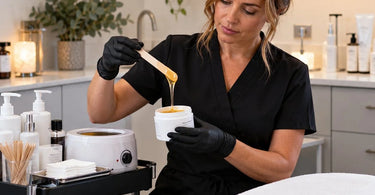
Boost client loyalty with this gem... a fabulous new salon treatment can attract attention, generate excitement, and make your appointment book look like it just received a glamorous makeover. But before you give that shiny new service a permanent home on your menu, there is an important question to answer: will it actually make your business more profitable? At Pure Spa Direct, we know that introducing professional treatments involves much more than choosing exciting products and creating an irresistible service description. The smartest salon owners evaluate demand, operating costs, staff capabilities, client satisfaction, and long-term profitability before making a commitment. Because while a trendy treatment might look amazing on Instagram, your accountant would probably prefer something that consistently makes money.
Learning how to evaluate whether a new salon treatment belongs on your permanent menu can help you avoid expensive equipment purchases, unnecessary inventory, and services that occupy valuable appointment slots without delivering meaningful returns. Whether you are considering advanced facials, specialty waxing, luxury pedicures, lash enhancements, or customized body treatments, a structured evaluation process makes the decision much easier.
Start With Client Demand, Not Social Media Excitement
Every beauty professional knows the temptation. A new treatment starts appearing everywhere, clients mention it during appointments, and suddenly you are picturing an entirely new section on your service menu. Before ordering supplies, however, determine whether that excitement represents real purchasing demand.
Begin by reviewing your existing clientele. Are customers regularly asking for the treatment? Does it address a concern your current services do not adequately solve? Could it appeal to clients who already visit your salon, or would you need to attract an entirely different audience?
Consider gathering feedback through consultation conversations, appointment follow-up messages, or a short client survey. Ask whether customers would book the treatment, how frequently they might return, and what they would reasonably expect to pay.
Pay attention to the difference between curiosity and purchase intent. Ten clients saying a service sounds interesting is encouraging. Ten clients asking when they can book and what it costs is considerably more valuable.
A treatment that complements existing appointments may be particularly attractive. For example, a waxing studio considering brow services could explore Lash & Brow Enhancement Services for Professionals because the addition may appeal to clients already visiting for hair removal.
Calculate the True Cost of Each Treatment
A profitable treatment must generate enough revenue to cover more than the products applied during the appointment. Many new services appear attractive until every expense is included.
Start with direct product consumption. Calculate the actual amount of cleanser, serum, wax, polish, lotion, disposable materials, or treatment solution used during one appointment. Divide package costs by realistic service yields rather than assuming every container delivers the maximum number of treatments advertised.
Next, account for professional labor, setup time, cleanup, laundry, payment processing, and the share of operating overhead associated with occupying the treatment area.
For example, imagine a new treatment has the following estimated expenses:
- Professional products and consumables: $14
- Staff compensation and related labor expense: $32
- Allocated overhead and additional operating costs: $18
- Total estimated cost per appointment: $64
If the treatment sells for $110, the estimated contribution after these assigned costs is $46 per appointment, or approximately 41.8% of the selling price. This example is hypothetical, and your actual calculation should reflect your business model, compensation arrangements, and cost structure.
That $46 also needs context. If the treatment occupies two hours, it generates considerably less contribution per treatment-room hour than a profitable service completed in 45 minutes.
Review Must-Have Supplies for Salon & Spa Business Success when planning the ongoing materials and operational essentials needed to support a new service.
Measure Profitability Against Treatment Duration
Your salon does not have unlimited appointment availability. Every new treatment competes for the same staff schedules, chairs, and treatment rooms that support your established services.
That makes time-based profitability especially important.
Compare the contribution generated per occupied hour, not simply the price charged to the client. A $150 treatment requiring two hours may be less attractive than a $95 service completed in 45 minutes, depending on direct expenses and staffing requirements.
Include consultation, preparation, sanitation, room turnover, and equipment reset time. A facial marketed as a 60-minute service might occupy a room for 80 minutes once everything is considered.
Ask whether the treatment can be performed during existing appointment gaps, combined with other services, or offered as a convenient upgrade. Services that fit naturally into your scheduling structure may improve revenue without requiring additional treatment rooms.
Also consider peak-hour capacity. A new treatment that displaces popular appointments on Saturdays needs to outperform the contribution of the services it replaces. A treatment that fills otherwise unused Tuesday afternoons has a different economic opportunity.
Evaluate Equipment Requirements Before Investing
Some treatments require little more than additional professional products and staff training. Others involve specialized equipment, dedicated furniture, electrical requirements, maintenance, and ongoing replacement parts.
Before purchasing anything expensive, determine whether your existing setup can support the treatment safely and efficiently.
For example, a spa considering advanced facial services may compare Hydrodermabrasion equipment, Microdermabrasion options, and other suitable professional technologies based on training requirements, client suitability, treatment protocols, and operating costs.
Calculate the total initial investment, including equipment, accessories, training, installation, and opening inventory. Then estimate how many profitable appointments will be necessary to recover that investment.
If initial setup costs $3,000 and each appointment generates $50 in contribution after recurring expenses, you would need approximately 60 appointments to recover the initial investment. This simple calculation assumes that the $50 contribution is available for recovering the startup cost and does not include financing charges or unexpected additional expenses.
Do not overlook maintenance. Equipment that requires frequent servicing, expensive replacement components, or specialized consumables can change the long-term economics of a treatment.
Explore Top-Quality Equipment & Furniture for Spas & Salons when comparing the practical requirements of expanding your professional treatment offerings.
Make Sure the Treatment Fits Your Brand
Your service menu communicates what your business does best. A carefully selected addition should strengthen that identity rather than leave clients wondering whether your salon has developed a completely new personality overnight.
Consider whether the proposed treatment aligns with your current expertise, target clientele, price positioning, and overall customer experience.
A luxury day spa might find that an upgraded exfoliation ritual using professional Spa Body Treatments complements its existing services. A busy nail salon might introduce a premium pedicure enhancement featuring Sugar Scrubs and moisturizing finishing products.
In both examples, the treatment builds on services customers already understand and appreciate.
However, a highly specialized treatment requiring an entirely different environment, extensive training, and unfamiliar marketing may introduce more complications than benefits.
Brand consistency does not mean refusing innovation. It means selecting innovations that make sense for your business and your clients.
Confirm Licensing, Training, and Safety Requirements
No treatment should become part of your service menu until you have verified that it can be performed legally, safely, and within the appropriate professional scope of practice.
Licensing requirements vary by state and locality. Some services may require additional professional credentials, specific supervision, facility approvals, or training beyond a standard cosmetology or esthetics license.
Review applicable regulations, manufacturer protocols, insurance coverage, contraindications, and required client documentation before launching the service.
Staff training should cover far more than the visible treatment steps. Professionals need to understand consultation procedures, product handling, appropriate client selection, infection control, potential reactions, and post-treatment guidance.
For services involving reusable tools or shared equipment, plan appropriate cleaning and disinfection procedures using products suited to the equipment and applicable regulatory requirements. Browse Professional Cleaners & Disinfectants for Salons and Spas when evaluating supplies for compliant salon sanitation protocols.
Finally, confirm that your business insurance covers the proposed treatment. A service that looks profitable on paper but creates an uninsured liability is definitely not the kind of surprise anyone wants on the appointment calendar.
Run a Limited Trial Before a Permanent Launch
One of the smartest ways to evaluate a new salon treatment is to introduce it as a limited pilot rather than immediately committing to a permanent menu listing.
A trial period gives your team a chance to validate demand, refine appointment timing, track actual product usage, and collect meaningful customer feedback.
Consider a four-to-eight-week pilot or a predetermined number of appointments, depending on the treatment and your normal booking volume. Set clear success criteria before the trial begins.
During the test, record:
- Number of inquiries and confirmed bookings
- Percentage of available appointments filled
- Actual treatment duration, including setup and cleanup
- Product consumption and cost per appointment
- Client satisfaction and reported concerns
- Staff feedback and operational difficulties
- Requests for repeat appointments
- Revenue and contribution generated per occupied hour
A pilot should use a realistic price whenever possible. Heavy introductory discounts can create the appearance of demand that disappears once regular pricing begins.
If you offer a promotional price, track whether clients express willingness to return at the intended permanent price.
The goal is not simply to get people through the door. It is to determine whether the treatment can become a reliable, sustainable service.
Compare New Services With Existing Menu Favorites
A treatment should not be evaluated in isolation. Compare its performance with established services that use similar staff time, equipment, and treatment space.
For example, a nail salon considering a premium enhancement should compare its contribution per occupied hour with standard manicures, gel services, and existing pedicure upgrades.
Professional products from categories such as Professional Gel Polish, Manicure Essentials, and Pedicure Supplies may support different service combinations and cost structures.
A waxing specialist evaluating a new hair removal option might compare appointment duration, recurring consumables, client preferences, and room turnover with current services supported by Waxing Supplies for Professionals.
Evaluate whether the new service brings incremental revenue or merely shifts existing clients from a more profitable treatment.
Cannibalization is not always bad. If clients strongly prefer the new treatment and it improves retention, the change may still make business sense. But that tradeoff should be intentional rather than an unpleasant discovery three months after launch.
Look for Repeat Booking and Retail Opportunities
A treatment that encourages appropriate repeat visits can become a valuable addition to your permanent menu.
Consider how frequently clients may reasonably need or want the service, whether they are satisfied with the experience, and whether it fits into an ongoing professional care routine.
Some services create natural follow-up opportunities. Nail maintenance, certain waxing services, and ongoing brow grooming may encourage regular appointments when appropriate for the client.
Others may be more occasional, seasonal, or event-driven. That does not automatically make them poor choices, but their revenue potential should be assessed differently.
Retail compatibility can also strengthen a new service. A professional facial may introduce clients to appropriate home-care products, while a manicure enhancement may create an opportunity to recommend cuticle care.
Review Must-Have Spa Retail Products for Enhanced Client Experience when identifying products that complement your treatment recommendations.
Keep retail expectations realistic and separate service contribution from retail profit when evaluating performance. A treatment should not depend on unrealistic product sales assumptions to justify its place on the menu.
Consider Inventory Management and Supply Reliability
Adding a treatment also means adding responsibilities to your inventory system.
Before making a permanent commitment, examine product shelf life, minimum order quantities, storage conditions, reorder frequency, and supplier availability.
Could the service require specialized solutions that expire before you use them? Are essential consumables available consistently? Would an unexpected shortage force you to cancel appointments?
Services that use products already included in your existing inventory may be easier to introduce and maintain. Shared consumables can simplify purchasing, reduce waste, and make inventory management more predictable.
For example, a facial service extension may use existing professional cleansing products, treatment accessories, and Professional Cotton, Sponges, and Wipes for Salons & Spas.
However, never substitute products simply because they happen to be in stock. Every product must be appropriate for the intended procedure and consistent with manufacturer instructions.
Develop a simple reorder plan before the service becomes widely available. Your future self will appreciate not discovering a missing essential supply five minutes before a fully booked appointment.
Evaluate the Staff Experience, Too
Your team will determine whether a new treatment succeeds in everyday operation.
Ask participating professionals whether the service is comfortable to perform, fits their expertise, and can be delivered consistently without unnecessary physical strain or scheduling complications.
A treatment that requires extensive preparation, awkward positioning, or repeated equipment adjustments may be more difficult to maintain than expected.
Also evaluate staffing flexibility. Can several qualified team members provide the treatment, or does the service depend entirely on one specialist?
When only one professional is trained, vacations, sick days, and scheduling changes can create availability problems. If the treatment performs well during its pilot, consider whether additional appropriate training would improve operational reliability.
Document a consistent service protocol, including consultation, preparation, treatment steps, product quantities, sanitation, room turnover, and aftercare guidance.
Consistency helps protect service quality and makes financial tracking more accurate across different providers.
Build a Simple Permanent Menu Decision Scorecard
After your trial, review the results using a structured scorecard rather than relying on excitement alone.
Rate each category from one to five, with five representing the strongest performance:
- Client demand: Are customers booking at the intended regular price?
- Profitability: Does the service meet your contribution targets?
- Time efficiency: Does it make productive use of valuable appointment capacity?
- Brand alignment: Does the treatment strengthen your business positioning?
- Operational feasibility: Can your staff deliver it safely and consistently?
- Supply reliability: Can you maintain inventory without excessive waste?
- Client satisfaction: Are customers pleased with the experience?
- Retention potential: Does it support appropriate repeat business?
A total score can help organize the discussion, but do not treat all categories as interchangeable. A serious safety problem, inadequate insurance coverage, or lack of appropriate licensing should stop the launch regardless of how many points the treatment earns elsewhere.
For treatments that meet mandatory requirements, establish your own financial and operational thresholds before the pilot. Compare the actual results with those thresholds and with the performance of your existing menu.
The scorecard is a decision-making tool, not a substitute for sound professional judgment.
Know When to Keep, Adjust, or Remove a Treatment
After evaluating performance, you generally have three choices.
Make it permanent: The treatment demonstrates reliable demand, acceptable contribution, positive client experiences, and manageable operating requirements. Add it to your booking system, establish normal pricing, and maintain consistent protocols.
Refine and retest: Clients love the treatment, but appointment timing, material costs, or pricing need improvement. Adjust the service design, staff workflow, or price structure and conduct another limited evaluation.
Keep it seasonal or discontinue it: Demand is inconsistent, operating costs are excessive, or the service does not fit your business goals. Consider offering it only during specific seasons or special events, or removing it altogether.
Discontinuing an underperforming service is not a failure. It is an informed business decision that protects resources for stronger opportunities.
And remember, a permanent menu is not a lifetime contract. Continue reviewing treatment performance periodically. Costs, demand, regulations, and client preferences can change.
Market Your New Treatment Without Overpromising
Once a treatment earns its place on your menu, communicate its benefits clearly and professionally.
Use language that explains what the appointment includes, who it may be appropriate for, how long it takes, and what clients should realistically expect.
Avoid exaggerated promises or guarantees that the treatment cannot consistently deliver. Accurate descriptions build trust and help clients choose services suited to their needs.
Train your reception team to explain the treatment and answer common scheduling questions. Update online booking descriptions, consultation materials, pricing information, and appropriate aftercare instructions.
Where relevant, introduce the service to existing clients through personalized recommendations rather than assuming every customer needs every new treatment.
The goal is not to make your menu longer simply for the sake of having more choices. It is to make the menu more useful, profitable, and appealing to the clients you serve.
Let Pure Spa Direct Support Your Smart Service Expansion
Successful salon growth comes from choosing treatments that work for your clients, your staff, and your bottom line. A carefully evaluated service can strengthen customer loyalty, create new appointment opportunities, and support sustainable revenue without introducing unnecessary complexity.
Pure Spa Direct helps beauty and wellness professionals explore supplies and equipment across a broad range of treatment categories. As a professional distributor rather than a manufacturer, we offer access to products for salons, spas, waxing studios, nail businesses, massage practices, and other professional service environments.
Whether you are considering a specialized facial, a new waxing option, a luxurious nail enhancement, or an additional body treatment, explore Spa Essentials for Professionals and Advanced Facial Treatment Products for Salons & Spas as you compare suitable products and plan your service requirements.
The next time an exciting new treatment catches your attention, give it more than a quick glance and a hopeful addition to the booking menu. Test the demand, calculate the real costs, listen to your team, measure client satisfaction, and review the numbers.
Because the best permanent salon treatments do more than impress clients during their first appointment. They keep delivering value long after the initial excitement fades. And a beautiful service menu paired with healthy profit margins? Now THAT is a treatment plan worth celebrating!
