
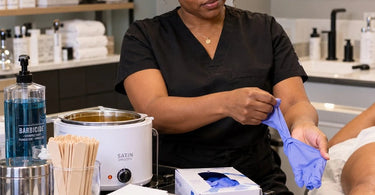
Stand out with this simple professional habit that can make a waxing room feel cleaner, more organized, and more intentional: changing gloves more often. For busy waxing professionals, a fresh pair of protective gloves may seem like a tiny detail compared with temperature control, technique, client positioning, and keeping the appointment on schedule. But gloves are part of the working barrier between your hands, the client, wax, tools, products, and treatment-room surfaces, which means one pair should not automatically be expected to survive every stage of a service just because it still looks perfectly fine.
That is the sneaky thing about gloves: they can look innocent while having already traveled farther around the waxing room than your favorite esthetician stool. A waxing service often involves touching the client, reaching for supplies, adjusting linens, handling applicators, dispensing products, opening containers, repositioning equipment, and perhaps touching a lamp, cart, or wax warmer control. The question is not simply whether gloves are being worn. The better question is whether the pair currently on your hands still makes sense for the task you are about to perform.
Why Waxing Gloves Should Be Changed More Often Than Many Professionals Think
Professional waxing is a hands-on service with frequent transitions between products, tools, treatment areas, and surfaces. That makes glove management less about wearing one pair from beginning to end and more about recognizing the moments when a clean transition is useful.
Think of disposable gloves as task-specific supplies rather than a costume you put on at the beginning of the appointment and remove during checkout. If your gloves become visibly soiled, damaged, sticky with product, or contaminated during the service, changing them is the obvious move. But professionals may also decide a fresh pair is appropriate when moving between distinctly different stages of a treatment or after touching something outside the immediate clean working field.
A practical glove routine can complement an organized selection of waxing supplies for professionals, disposable applicators, clean linens, and properly maintained treatment surfaces. It is one piece of a larger workflow designed to keep services polished and professional.
The "But They Still Look Clean" Trap
Visible dirt is wonderfully obvious. It waves a little flag and says, "Please change me." Unfortunately, professional sanitation decisions cannot depend entirely on what can be seen.
A glove can touch multiple surfaces without developing a dramatic smear of wax or product. Consider how easily a professional might move from the client to a drawer handle, product bottle, wax warmer control, magnifying lamp, towel, phone, appointment tablet, or rolling cart. Those quick contacts are easy to forget because they are part of the normal rhythm of a busy treatment room.
This is why it helps to develop intentional clean-to-working-area habits. Arrange the workstation before the client is positioned, keep frequently needed supplies accessible, and avoid unnecessary trips around the room while wearing treatment gloves. A well-planned setup using professional wax spatulas and applicators, strips, pre-wax products, post-wax products, and disposables can reduce the number of times you have to interrupt the service.
One Pair of Gloves Does Not Have to Last the Entire Appointment
There is no prize for getting through an entire waxing appointment on a single pair of disposable gloves. No trophy. No tiny golden glove statue. No client has ever floated out of the treatment room whispering, "Incredible eyebrow shaping, and she only used one pair."
Gloves are consumables. Their purpose is to support the service, not become a resource that professionals feel pressured to stretch beyond the point where a change would make the workflow cleaner or more comfortable.
Depending on the service, glove changes may be appropriate after contamination, after a glove tears or becomes compromised, when moving from one distinct treatment area to another, after handling potentially contaminated items, or after touching surfaces that should not then be followed immediately by touching the client or clean supplies.
For facilities performing high volumes of waxing, maintaining an easy-to-reach supply of correctly sized disposable gloves can make frequent changes feel routine rather than disruptive. Browse nitrile gloves and other professional options so each treatment room can stay properly stocked.
Glove Changes Should Fit Naturally Into the Waxing Workflow
The easiest sanitation habits are the ones built into the service sequence. If glove changing feels like a random extra step, it may get skipped when appointments run behind. If it becomes part of the normal procedure, it is far easier for the whole team to remember.
For example, a waxing station can be prepared before the service with the expected number of applicators, strips, cotton products, protective table coverings, and pre- and post-wax items. Professionals can then identify natural transition points where hands are cleaned and fresh gloves are applied as appropriate.
This type of preparation also supports inventory planning. If the business decides that certain services routinely involve multiple glove changes, glove usage can be estimated realistically when ordering supplies. That is much better than discovering halfway through a Saturday schedule that the glove box contains three lonely gloves, all left hands in spirit if not technically in design.
Keeping essential disposables together can help. Consider organizing gloves near professional cotton, sponges, and wipes, applicators and spatulas, and other single-use service supplies so the professional can access what is needed without wandering around the room.
Do Not Forget What the Gloves Touch Between Wax Applications
Waxing professionals naturally focus on direct client contact, but treatment-room surfaces deserve equal attention in the workflow. The wax warmer dial, trolley handle, product pump, bottle cap, light switch, drawer pull, and magnifying lamp adjustment handle may all be touched during an appointment.
This is where smart workstation design earns its keep. Before the client arrives, portion or arrange supplies where appropriate, position equipment, prepare the treatment bed, and make sure disposables are within comfortable reach. When possible, separate clean supplies from used or working items instead of allowing everything to mingle together like guests at an overly enthusiastic cocktail party.
Professional cleaners and disinfectants for salons and spas belong in the broader sanitation routine, while disposable gloves help support appropriate personal protective practices during applicable tasks. Each has a different role. Gloves do not magically make a surface clean, and a disinfected surface does not eliminate the need for thoughtful glove use.
Sticky Gloves Are Trying to Tell You Something
Anyone who performs waxing services knows the moment: suddenly everything is sticking to everything. The applicator sticks to the glove, the glove sticks to the bottle, the bottle threatens to join the glove permanently, and what began as a beautifully controlled treatment starts resembling an arts-and-crafts emergency.
If wax or another product has compromised comfortable, precise glove use, changing to a fresh pair can improve dexterity and help prevent product from being transferred to equipment and surfaces. This matters especially during detailed work where professionals need reliable grip and controlled hand movements.
Using appropriate professional waxes and maintaining good application technique can also help keep the station manageable. Pure Spa Direct offers options including professional stripless hard wax, soft strip wax, and roll-on wax cartridges for different professional service preferences.
Damaged Gloves Get an Immediate Retirement Party
A torn, punctured, or otherwise compromised disposable glove has completed its shift. Thank it for its service and send it directly to the appropriate waste container.
Waxing involves repetitive hand motions, stretching, gripping, pressing, and handling tools, so glove durability and fit matter. Gloves that are too tight can feel restrictive, while oversized gloves can bunch at the fingertips and interfere with precision. Stocking multiple sizes helps professionals choose a comfortable fit for their hands instead of trying to make one universal size work for everyone.
Material preferences can vary as well. Many professionals use nitrile gloves because they offer a practical combination of fit, dexterity, and durability for beauty and spa environments. Pure Spa Direct carries disposable gloves suitable for professional service settings, making it easier to keep treatment rooms supplied according to the needs of the business.
Gloves Are Not a Substitute for Hand Hygiene
This deserves its own giant imaginary neon sign over the treatment room door: gloves and hand hygiene are partners, not substitutes.
Putting disposable gloves over hands does not create a permanent force field. Hands can become contaminated while gloves are being removed, tiny defects can occur, and touching personal items or inappropriate surfaces before donning gloves can undermine an otherwise careful routine. Professionals should follow applicable workplace requirements, licensing rules, manufacturer directions, and established hand-hygiene procedures before and after glove use as appropriate.
Make hand hygiene convenient by ensuring the treatment area is organized around realistic staff movement. If professionals have to trek across the facility every time they need basic sanitation supplies, compliance becomes harder during a packed day. Good operations make the preferred behavior the easy behavior.
Changing Gloves Can Also Improve the Client Experience
Clients notice cleanliness. They may not understand every step of a professional sanitation protocol, but they notice organized supplies, clean linens, a tidy workstation, freshly prepared disposables, and deliberate professional behavior.
A fresh glove change at an appropriate transition point can quietly communicate that the provider is paying attention. There is no need to turn it into theater or narrate every glove change like a cooking show. The process can simply be calm, efficient, and routine.
This is especially helpful for first-time waxing clients, who may already feel nervous about the service. A professional environment supported by clean hygienic table paper, fresh linens, organized tools, and thoughtful disposable use can reinforce confidence before the first strip of wax is ever applied.
Create a Simple Glove-Change Standard for the Team
Consistency is easier when everyone working in the business follows a clearly defined procedure. Rather than leaving glove changes entirely to habit, owners and managers can incorporate them into written service protocols and training.
Review the sequence of each waxing service and identify the likely contamination points, glove-change moments, hand-hygiene steps, surface-cleaning steps, and disposal procedures. Then train the process exactly as it will be performed during a real appointment. Procedures should also be reviewed against applicable state board rules, workplace safety requirements, local regulations, and product manufacturer instructions.
New team members benefit from learning these expectations immediately. Experienced professionals benefit from refreshers too, particularly when treatment room layouts, services, equipment, or product lines change. Familiar routines can become automatic, and periodic review helps catch little shortcuts before they become permanent habits.
Stock Gloves Like the High-Use Supply They Are
If a business encourages appropriate glove changes but orders gloves as though every professional will use one pair per client forever, someone is eventually going to be staring into an empty box at 4:47 p.m. on a fully booked Friday.
Track actual consumption for several weeks. Note average glove usage by treatment type, staff member, and appointment volume. Include a reasonable cushion for damaged gloves, cleaning tasks, unexpected service needs, and particularly busy periods.
Keep backup boxes accessible without overcrowding the treatment room. A centralized supply area can hold case quantities, while individual rooms maintain smaller working inventories. The broader must-have supplies for salon and spa business success collection can help professionals plan frequently used operational essentials alongside their treatment products.
Pair Better Glove Habits With Better Waxing-Room Organization
Glove changes work best as part of a complete waxing workflow. Consider the entire sequence from room setup through cleanup. Is the professional wax warmer positioned where it can be reached without leaning across clean supplies? Are fresh applicators separated from used ones? Are pre- and post-waxing products accessible without rummaging through drawers? Is there a clear location for used disposables?
Every unnecessary touch creates another opportunity for the workflow to become messy. A well-designed room reduces reaching, searching, crossing back and forth, and opening drawers with treatment gloves. It also makes services faster without forcing the professional to rush.
That is the sweet spot: sanitation and efficiency supporting each other instead of competing for attention.
A Small Disposable Can Support a Very Professional Impression
Professional waxing depends on dozens of small decisions repeated throughout the day. Glove use is one of them. The goal is not to change gloves theatrically every thirty seconds or waste supplies without purpose. It is to recognize that a disposable glove is only useful while it remains appropriate for the task being performed.
Build sensible glove changes into the service flow, keep enough stock on hand, organize the room to reduce unnecessary surface contact, and make hand hygiene part of the routine before and after glove use as appropriate. Then support that workflow with dependable professional waxing supplies, disposables, applicators, linens, cleaning products, and equipment.
Because in a busy waxing room, the humble glove may not be glamorous, but neither is discovering halfway through a Brazilian that your last clean pair has mysteriously vanished. Stock generously, change thoughtfully, and keep the service moving with the polished professionalism clients expect.
