
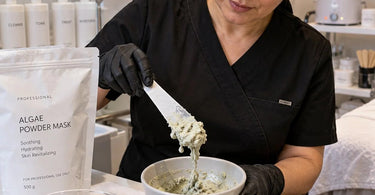
Quality matters - here's why a tiny drop of water on your spa spatula can create a surprisingly big problem for your professional powder masks. You carefully select a beautiful mask, prepare your treatment room, and get ready to deliver a luxurious facial experience. Then you reach into the powder container with a slightly damp spatula, and suddenly your silky powder starts behaving like it has a personal vendetta against smooth application. What happened? That innocent little bit of moisture may have started hydrating the formula before you were ready, changing the texture, creating stubborn clumps, and making your carefully planned treatment a whole lot more interesting than anyone requested.
For professional estheticians, consistency matters. Clients expect facial treatments that feel smooth, comfortable, and expertly executed. Understanding why wet spatulas can change the texture of powder masks helps you protect your products, reduce waste, and maintain reliable treatment results. Fortunately, preventing this problem requires only a few thoughtful adjustments to your preparation routine.
Why Powder Masks React to Moisture Before Mixing
Professional powder masks are designed to remain dry until they are combined with a specified liquid. Depending on the formula, they may contain clay minerals, botanical powders, starches, alginates, or other ingredients that absorb water, swell, thicken, or form a gel.
The key is controlling when and how that hydration begins. A dry powder remains relatively easy to measure, dispense, and distribute. Once moisture touches it, however, certain particles begin absorbing water immediately.
That is wonderful when you are intentionally preparing a facial mask. It is considerably less wonderful when the reaction starts inside the original container.
Imagine adding just a few drops of water to a container of flour. Instead of remaining beautifully powdery, the damp areas begin forming little lumps. Many facial powders behave similarly, although the exact reaction depends on their ingredients.
When a wet spatula enters a powder mask container, moisture can transfer directly onto the surrounding particles. The result may include localized clumping, sticky deposits, uneven hydration, or changes in how the powder dispenses during future treatments.
The Science Behind Those Annoying Little Clumps
Several physical processes explain why moisture can change a powder mask's texture. Understanding them makes it easier to recognize the problem and prevent it.
Localized hydration: Water contacts a small concentration of powder rather than being distributed throughout a measured portion. The affected particles absorb moisture and may become thicker or stickier than the surrounding material.
Particle adhesion: Moisture can create temporary liquid bridges between neighboring powder particles. These bridges encourage particles to stick together, producing visible clumps.
Swelling and thickening: Certain starches, gums, and other water-responsive ingredients absorb moisture and increase in volume or viscosity. That can turn loose powder into small, gummy masses.
Premature gel formation: Some professional alginate masks are designed to form a gel after the proper amount of water is added. Accidental moisture exposure can begin localized hydration or setting processes before the full batch is mixed.
Uneven dispersion: Once a clump develops, its outer surface may become hydrated while dry powder remains trapped inside. During preparation, these lumps can resist mixing and create an inconsistent texture.
Not every powder mask responds identically. Clay-based masks, enzyme powders, botanical formulations, and setting masks each have different ingredient systems. However, keeping the original dry product away from unintended moisture is a sensible general practice.
Why a Wet Spatula Is Different From Properly Adding Water
Here is an important distinction: adding water to a powder mask is not inherently a problem. Many professional masks specifically require water or another manufacturer-approved liquid for activation.
The difference is control.
When you measure powder into a separate mixing bowl and add the recommended liquid, you can control the ratio, mixing technique, temperature, and timing.
When water arrives unexpectedly on a damp spatula, none of those factors is controlled. Some powder receives moisture while the rest remains dry, creating an uneven starting point.
Think of it like making pancake batter. Measuring everything properly produces a predictable mixture. Randomly introducing a few wet spots into the flour container before breakfast? That is how you end up questioning every decision you made before coffee.
Professional powder masks deserve the same precision as any other treatment formula.
How Moisture Changes Different Types of Professional Powder Masks
Understanding the differences between mask categories helps estheticians anticipate texture problems and select appropriate handling procedures.
Clay powder masks: Formulations containing kaolin, bentonite, or other clay minerals typically absorb water to create a spreadable paste. Accidental moisture can produce small compacted areas or hardened deposits as damp portions dry. Depending on the formula, some clumps may resist smooth blending.
Alginate and rubber modeling masks: These formulations often contain ingredients that hydrate, thicken, and eventually form a flexible gel. Once the measured portion contacts water, the working time may be limited. Moisture introduced into the storage container can interfere with powder flow and lead to localized premature hydration.
Botanical powder masks: Plant-derived powders may absorb moisture and become sticky, pasty, or unevenly textured. Their response varies with particle size and the other ingredients in the formula.
Enzyme powder treatments: Certain enzyme-based products are formulated to be activated with water. Premature moisture exposure may affect product stability or performance, depending on the specific ingredients. Following the manufacturer's storage and activation instructions is especially important.
Combination powder masks: Products containing clay, starches, botanical extracts, or gelling agents may show several texture changes simultaneously. A small amount of moisture can create both granular clumps and sticky sections.
The takeaway is simple: a dry storage environment helps protect the intended behavior of powder masks until the moment of preparation.
Signs Your Powder Mask Has Been Exposed to Unwanted Moisture
Sometimes moisture exposure is obvious. Other times, the clues are subtle enough to escape notice during a busy treatment day.
Watch for these changes:
- Small lumps appearing in an otherwise fine powder.
- Powder sticking to the container walls or dispensing spatula.
- Hard or compacted areas that were not present previously.
- Uneven blending when preparing a fresh batch.
- Unexpectedly thick or grainy areas in the mixed mask.
- Visible differences in powder flow between treatments.
- Changes in odor, color, or overall appearance.
One important caution: clumping alone does not prove that a mask is contaminated, and some powders naturally contain small aggregates. However, unexpected moisture exposure should prompt a product-condition check.
If water has entered the original container, do not automatically assume the remaining powder is suitable for professional use. Follow the manufacturer's instructions and your facility's product-handling procedures. Discard compromised material when required or when its safety and quality cannot be established.
The Simple Dry Spatula Rule Every Treatment Room Needs
One of the easiest ways to prevent texture problems is establishing a dedicated dry dispensing routine.
Keep a clean, completely dry spatula or scoop exclusively for removing powder from its original container. Transfer the required amount into a separate mixing bowl before introducing any liquid.
Once the powder is portioned, use the appropriate mixing tool to combine the ingredients according to the product instructions.
This approach prevents a wet tool from returning to the original container and helps protect the remaining inventory.
For treatment rooms that prepare multiple masks daily, having extra applicators and spatulas available can simplify the workflow. Designating one tool for dry dispensing and another for wet mixing also reduces confusion.
Just remember that a clean-looking spatula is not necessarily dry. Water can remain around handles, edges, joints, or flexible silicone surfaces after washing.
Allow reusable tools to dry completely after cleaning and any required disinfection, following the applicable product and tool manufacturer instructions.
And please, resist the temptation to wipe a wet spatula on your apron and declare the problem solved. Your uniform is not a magical moisture-removal device.
How to Mix Powder Masks for a Smooth, Professional Texture
Proper preparation starts before the powder ever meets the liquid. A consistent workstation setup makes the process more predictable and less stressful.
Step 1: Prepare your equipment. Begin with a clean, dry mixing bowl, suitable applicators, a measuring device, and the correct liquid specified by the mask manufacturer.
Step 2: Dispense the dry powder. Use a dedicated dry scoop to transfer only the amount needed for the service. Close the original container promptly.
Step 3: Measure the liquid. Follow the product's specified powder-to-liquid ratio. Avoid estimating quantities by appearance, particularly for setting masks.
Step 4: Combine ingredients in the recommended order. Some formulations instruct professionals to add powder to water, while others recommend a different sequence. Follow the instructions for the specific product rather than assuming all masks behave alike.
Step 5: Mix thoroughly. Use the recommended mixing motion and duration to create a uniform texture. Scrape the sides of the bowl as appropriate and break up dry pockets before application.
Step 6: Apply within the working time. For products that gel or set, complete mixing and application promptly. A mask that has begun setting should not be diluted or reworked unless the manufacturer specifically permits it.
Step 7: Handle leftovers correctly. Never return mixed product or unused dispensed powder to the original container. Dispose of leftovers according to the manufacturer's directions and facility procedures.
Consistency comes from following the individual formula's instructions, not from using one universal recipe for every powder mask.
Does Water Temperature Affect Powder Mask Texture?
Absolutely, for certain formulations. Temperature can influence how quickly ingredients hydrate, thicken, dissolve, or form a gel.
With some alginate and modeling masks, warmer water may shorten the available mixing and application time. Cooler water may allow more working time, depending on the specific formula.
Other powder masks may have very different temperature requirements. Some manufacturers specify room-temperature water, while certain products require precise temperature ranges.
For that reason, avoid using hot or ice-cold water simply because it seems convenient. Follow the instructions on the professional product packaging.
Water quality may also matter. If a formula specifies distilled water, use distilled water. Minerals and other substances in the mixing liquid can influence certain ingredient systems.
A reliable treatment protocol should document the required ratio, liquid type, temperature, mixing method, and application window for each professional mask in your inventory.
Why Clumpy Masks Can Affect the Client Experience
Clients may not know the chemistry behind their facial masks, but they can certainly notice the difference between a smooth application and an uncomfortable, uneven one.
A properly prepared mask should have the texture and spreadability intended by its manufacturer. Depending on the product, that might mean a creamy paste, a smooth clay mixture, or a uniform gel that sets into a peelable layer.
Unexpected clumps can make application less consistent. They may cause the esthetician to spend additional time mixing, leave visible irregularities, or make it harder to achieve an even layer.
For setting masks, uneven preparation may also complicate removal or create areas with different thicknesses.
None of these situations automatically means a treatment is ineffective. However, they can interfere with the polished, repeatable experience clients expect from a professional spa.
Consistency also supports staff training. When every esthetician follows the same preparation procedure, it becomes easier to identify whether an unexpected texture comes from technique, product condition, or formulation differences.
Preventing Powder Mask Waste in Busy Spas
Product waste has a direct impact on treatment costs. For spas performing multiple facials daily, even small preparation mistakes can add up over time.
Moisture-related clumping may make a portion of the powder difficult to dispense or unsuitable for use. Incorrect liquid measurements can create batches that are too thin, too thick, or unusable within their working time.
Reducing these problems starts with simple inventory and preparation habits.
- Keep original containers tightly closed between uses.
- Store products under the conditions specified by the manufacturer.
- Keep powder containers away from sinks, steam, splashes, and damp countertops.
- Use clean, completely dry dispensing tools.
- Measure portions instead of routinely over-preparing.
- Rotate inventory according to expiration dates and manufacturer guidance.
- Train staff to recognize unexpected texture changes before application.
These habits work especially well when combined with organized treatment stations and reliable spa essentials.
Investing in suitable mixing bowls, measuring tools, and applicators can support more efficient preparation without introducing unnecessary complexity.
How Treatment Room Humidity Can Contribute to Clumping
Wet spatulas are not the only potential source of moisture. Environmental humidity can also affect certain powder formulations, particularly when containers are left open for extended periods.
Think about a busy spa treatment room with warm towels, running water, facial steaming equipment, and frequent cleaning. Depending on ventilation and room conditions, humidity may increase around open product containers.
Powders containing moisture-sensitive ingredients can gradually absorb water from humid air. Over time, this may change powder flow or encourage clumping.
Store dry products away from direct moisture sources and keep containers closed whenever they are not actively being used.
Professional facial steamers can be valuable treatment equipment, but open powder mask containers should not be positioned where steam or condensation can reach them.
Likewise, storing powder masks directly beside damp towels or sinks can introduce avoidable exposure risks.
For businesses with multiple facial rooms, consistent storage standards help every team member protect shared inventory.
What Should You Do If a Wet Spatula Touches the Powder?
First, stop using that spatula in the original container. Set it aside for proper cleaning and drying before reuse.
Next, assess what happened. Did a visibly wet tool touch only a portion already dispensed into a mixing bowl, or did it enter the bulk container?
If the moisture contacted a separate portion intended for immediate preparation, follow the manufacturer's instructions to determine whether the mixture can still be prepared correctly. Do not guess at additional water amounts or attempt to rescue a product that has already begun setting.
If moisture entered the original container, treat it as a potential product-quality concern. Do not simply stir the clumps back into the surrounding powder or return them to the container.
Follow the manufacturer's guidance regarding accidental moisture exposure. If the remaining product's suitability cannot be established, discard the affected stock according to your facility's procedures.
The goal is not to save every last scoop at any cost. It is to maintain professional product quality and appropriate sanitation practices.
Choosing Practical Tools for Professional Facial Mask Preparation
Reliable mask preparation becomes easier when the right equipment is already within reach.
A dedicated preparation area should include appropriate mixing bowls, dry dispensing scoops, reusable or single-use applicators, and measuring equipment suitable for the formulas being used.
Explore Spa Tools & Implements for Professionals when organizing a practical facial workstation. Having the correct tools available can reduce improvised preparation methods that introduce moisture or inconsistent measurements.
Professionals offering a variety of facial services can also explore Advanced Facial Treatment Products for Salons & Spas and Premium Skincare Products for Spas and Salons.
For specific formulas, browse powder facial masks, jelly masks, and facial mask brushes to find options appropriate for your treatment menu.
Pure Spa Direct distributes professional spa and salon products from a range of manufacturers, allowing businesses to source treatment supplies and equipment while following each product brand's individual usage instructions.
Frequently Asked Questions About Wet Spatulas and Powder Masks
Can one drop of water really change powder mask texture?
Yes. Depending on the formula, a small amount of water can cause localized clumping, swelling, or premature hydration. The impact depends on the ingredients, amount of moisture, and how the powder is stored.
Can I break apart clumps and continue using the powder?
Not automatically. Some powders naturally form harmless aggregates, but clumps caused by accidental moisture exposure may indicate changes in product condition. Follow the manufacturer's guidance, particularly if water entered the original container.
Should spatulas always be dry?
Spatulas used to dispense powder from its storage container should be completely dry. Tools used for mixing an intentionally hydrated mask may become wet as part of the normal preparation process.
Does this apply to clay masks and alginate masks?
Yes, although their responses differ. Clay powders may clump or compact when exposed to moisture, while alginate-based formulas may begin hydrating or setting. Specific handling requirements vary by manufacturer.
Can I add more water to fix a thick mask?
Only when the manufacturer's instructions allow adjustments. Additional liquid may not restore a mask that has already begun setting and can produce an incorrect formulation ratio.
What is the best way to prevent accidental moisture exposure?
Use a dedicated clean, dry dispensing tool, measure powder into a separate bowl, keep the original container closed, and store supplies away from steam and damp surfaces.
The Bottom Line: A Dry Spatula Protects More Than Just Texture
Why wet spatulas can change the texture of powder masks comes down to a surprisingly simple concept: moisture activates or alters ingredients before you intend to mix them. That early contact can encourage clumping, uneven hydration, and unpredictable preparation.
For estheticians, maintaining proper powder handling is about more than avoiding a lumpy mask. It supports consistent treatments, efficient product usage, staff training, and a smoother client experience.
Keep dispensing tools dry, measure ingredients carefully, follow manufacturer instructions, and maintain a clean, organized workstation. Those small habits protect the professional quality of every facial service.
After all, your clients booked a relaxing facial, not a surprise demonstration of how powder can turn into tiny cement pebbles. Save the drama for reality television and let your masks deliver the smooth finish they were designed to provide.
