
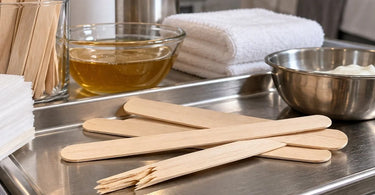
Simplify brilliance with this pro essential... because even the smallest tool in your treatment room can cause a surprisingly big headache. Wooden applicators are the unsung heroes of professional waxing, quietly scooping, spreading, and smoothing product through countless appointments. But occasionally, one decides to develop a personality of its own, splitting down the middle or producing a tiny splinter just as you are trying to create a flawless wax application. Understanding why wooden applicators split or splinter can help you protect your clients, avoid unnecessary interruptions, and keep your waxing services running smoothly.
Every experienced esthetician knows that a reliable wooden wax applicator should feel smooth, sturdy, and predictable. Nobody schedules a Brazilian wax expecting an unexpected woodworking demonstration. Fortunately, most applicator problems become easier to manage once you understand how wood behaves, what causes damage, and which handling habits make a difference.
Why Wooden Applicators Split or Splinter in the First Place
The short answer is that wood is a natural material made of fibers that run primarily along its grain. Those fibers provide strength, but they can also separate when exposed to moisture changes, manufacturing imperfections, or excessive mechanical stress.
Unlike molded plastic tools, wooden applicators are cut from a material that naturally varies in density, grain direction, and internal structure. Two applicators from the same package may look practically identical while responding differently to pressure.
Splitting generally happens when the wood separates along its grain, creating a visible crack or opening. Splintering occurs when smaller fibers break loose from the surface or edges, sometimes forming sharp projections.
Both problems matter in professional waxing because applicators come into direct contact with products and may pass close to delicate skin. A damaged edge can scratch a client, interfere with smooth wax distribution, or introduce unwanted wood fragments into the product.
The good news? Understanding the causes makes prevention much more manageable.
Natural Wood Grain Can Create Weak Points
Wood grain is one of the biggest factors influencing applicator durability. Most disposable wooden sticks are manufactured so their fibers run along the length of the tool. This orientation helps provide useful strength while allowing some flexibility.
However, grain does not always run perfectly straight. Some pieces contain irregular fiber patterns or areas where the grain angles toward an edge.
These irregularities can create weak spots. When pressure is applied, a crack may follow the direction of the fibers rather than staying contained.
This helps explain why one applicator can handle several smooth spreading motions while another begins separating during its first use.
A quick visual inspection before dipping an applicator into wax can reveal many obvious imperfections. Look for raised fibers, thin cracks, chipped corners, or unusually rough surfaces.
If a stick already looks like it has survived an argument with a wood chipper, retire it before the appointment begins.
Humidity and Moisture Changes Affect Wooden Applicators
Wood responds to the moisture in its surrounding environment. As it absorbs moisture, its fibers can swell. As it loses moisture, those fibers may shrink.
Changes in moisture content can create internal stresses, especially when different parts of the wood expand or contract unevenly.
For professional waxing studios, storage conditions can contribute to those changes. A supply cabinet near a humid treatment area, an occasionally damp storage room, or a location exposed to significant temperature fluctuations may not provide the most consistent environment for wooden supplies.
Even a busy spa with excellent climate control can experience local variations around sinks, steam equipment, and frequently opened exterior doors.
The objective is not to keep applicators in an artificially perfect environment. It is to maintain reasonably consistent, dry storage conditions.
Keep unopened supplies in their original protective packaging whenever practical. Once opened, place clean applicators in a covered, dry container away from moisture and treatment splashes.
Avoid storing them directly beside facial steamers, wet towels, or areas where condensation accumulates.
And please, do not store wooden sticks on a windowsill where they can experience alternating heat, sunlight, and cool overnight temperatures. They are applicators, not tiny houseplants.
Manufacturing and Finishing Quality Make a Difference
The way a wooden applicator is cut, shaped, and finished influences how smooth and sturdy it feels.
During manufacturing, wooden material is processed into thin pieces and shaped into sticks, spatulas, or specialized applicators. Cutting and finishing processes are intended to produce usable edges and surfaces, but occasional imperfections can remain.
Common concerns include rough edges, partially detached fibers, inconsistent thickness, and small cracks that become more noticeable during handling.
Very thin applicators may also have less resistance to bending than thicker versions, although wood quality and grain orientation remain important factors.
Professional estheticians should choose tools appropriate for their intended application instead of assuming every wooden stick is equally suited to every service.
Explore Applicators & Spatulas and Waxing Supplies for Professionals to compare different formats for everyday treatment needs.
Too Much Pressure Can Cause a Stick to Crack
Wooden applicators are designed to help transfer and spread products, not to function as miniature pry bars.
Excessive force can bend a wooden stick beyond its practical limits, causing fibers to separate along the grain.
This sometimes happens when a technician tries to scoop a large amount of thick wax with a narrow applicator, presses aggressively against the side of a wax container, or uses a small facial stick for an application better suited to a larger spatula.
The problem is not necessarily poor technique. Often, it is simply a mismatch between the tool and the task.
For example, a delicate eyebrow applicator offers useful precision for detail work but may not be ideal for moving substantial amounts of dense product.
Using a wider, sturdier applicator for larger treatment areas can distribute the workload more effectively.
When spreading wax, use controlled motions rather than forcing the stick against the skin or container. If the tool begins bending excessively, replace it with a more appropriate size.
Your wrist, your applicator, and your appointment schedule will all appreciate the adjustment.
Wax Temperature and Consistency Can Influence Applicator Stress
Wax consistency is another important consideration.
If wax is too thick to spread comfortably, the technician may instinctively apply greater pressure. That extra resistance can increase bending forces on a wooden applicator.
Hard wax and soft wax have different working characteristics, and each product should be prepared according to its manufacturer's instructions.
Properly conditioned wax should be workable for its intended application without requiring unnecessary force.
Use an appropriate Professional Wax Warmer and follow the wax manufacturer's recommended temperature and application guidelines.
Do not increase the temperature beyond those recommendations simply to make spreading easier. Overheated wax can cause burns, and appropriate working consistency must never come at the expense of client safety.
If a product seems unusually difficult to scoop or spread, check its preparation instructions, consistency, and warmer settings before blaming the applicator.
Sometimes the stick is innocent. The wax is the one being dramatic.
Why Rough Applicator Edges Are Especially Problematic During Facial Waxing
Facial waxing requires careful control because the treatment areas are relatively small and often sensitive.
An applicator with a rough edge can interfere with clean product placement around eyebrows, the upper lip, and other detailed areas.
Even a tiny raised wood fiber may create an unpleasant scratching sensation when moved across skin.
For precision services, choose smaller applicators specifically designed for detail work and inspect their tips before use.
For example, the Fantasea Wood Applicator Stick Small / 25 per Bag features a small format with a flat, rounded tip intended for controlled application around areas such as the eyebrows and upper lip.
Another option is the GiGi Spatula Applicators - Small / 100 Pack, designed for precise wax application in smaller treatment areas.
These formats provide useful options for professionals who want better control when working around facial contours.
However, even a properly designed applicator should be checked before touching the client. Product selection and a quick visual inspection work together.
How to Inspect Wooden Applicators Before Every Waxing Service
A simple inspection routine takes only moments and can prevent an inconvenient interruption.
First, select an applicator from a clean, dry supply container. Examine the surface and edges under normal treatment lighting.
Look for cracks running lengthwise, chipped ends, lifted fibers, rough surfaces, and obvious bending or warping.
Next, make sure the size and thickness are appropriate for the planned service. A narrow facial applicator and a larger body waxing spatula are not necessarily interchangeable.
Finally, discard any stick that appears damaged or questionable. Never attempt to repair a disposable wooden applicator by breaking off a splinter, sanding its edge during a service, or bending it back into shape.
The cost of replacing one disposable stick is minimal compared with the inconvenience of interrupting a treatment or risking a scratch.
Think of this routine as the applicator equivalent of checking your tweezers before brow shaping. Small preparation habits create more consistent professional results.
What to Do If an Applicator Splinters During a Treatment
If a wooden applicator cracks or develops a splinter during wax application, stop using it immediately.
Do not continue spreading wax with the damaged portion or try to smooth the surface against the rim of the warmer.
Discard the applicator safely and inspect the affected product and treatment area for visible wood fragments.
If splinters or loose fibers have entered the wax, do not attempt to fish them out and continue using potentially contaminated product. Discard the affected wax as appropriate for the product and container setup, following your sanitation procedures.
If the damaged stick scratches the client's skin, pause the service and assess the area. Follow applicable first-aid and workplace procedures. Do not apply additional wax to broken or irritated skin.
If a fragment becomes embedded in the skin, do not dig for it with waxing tools. Appropriate medical evaluation may be needed, particularly for deep fragments, persistent discomfort, bleeding, or signs of infection.
Document incidents according to your business procedures and review whether storage, product quality, or technique may have contributed.
Most importantly, resist the temptation to pretend the cracking noise was part of your treatment soundtrack.
Choosing the Right Wooden Applicator Size Matters
Using the correct applicator for the service can help reduce unnecessary mechanical stress while improving application control.
Small applicators are useful for precise areas such as brows and upper lips. Medium applicators can provide convenient handling for a variety of controlled waxing tasks. Larger applicators are often preferable when spreading product over broader treatment areas.
Pure Spa Direct offers several options worth considering.
The Waxing Applicator Sticks - Eye/Lip - 3.5 Inches / 500 Pack are intended for precision applications around smaller areas.
The Waxing Applicator Sticks - Medium - 4.5 Inches x 1/4 Inch / 500 Pack provide a disposable wooden format for professional wax and sugar applications.
For studios that use large quantities of smaller applicators, the Wax Applicator 4.5 Inches x 3/8 Inch / 1,000 Applicators offers a bulk package with rounded edges for controlled wax distribution.
Rather than stocking one type of stick for every situation, consider keeping several sizes available at the waxing station.
This allows technicians to select the right tool without improvising midway through an appointment.
Proper Storage Helps Protect Your Applicator Inventory
Professional spas and waxing studios frequently purchase disposable supplies in substantial quantities. While bulk buying can support efficient purchasing, proper storage is essential for maintaining the usability of that inventory.
Keep wooden applicators in a clean, dry location away from spills and excessive humidity.
Avoid placing heavy containers on top of delicate applicator packaging, since crushing or bending pressure can damage sticks before they are used.
Store supplies off the floor and away from sinks, cleaning chemicals, and areas exposed to moisture.
Use a covered organizer for the quantity needed at the workstation, and replenish it from protected backup inventory as necessary.
Rotate inventory so older supplies are used before newer purchases, provided packaging and product condition remain acceptable.
If a shipment arrives with visibly crushed packaging or an unusually high number of cracked sticks, inspect the contents and contact the supplier when appropriate.
Pure Spa Direct carries a variety of professional disposable tools through its Professional Wax Spatulas and Applicators for Salons & Spas collection, making it easier to compare formats for different treatment needs.
Can You Reuse a Wooden Applicator If It Looks Fine?
Disposable wooden applicators should be treated as single-use tools during professional waxing services.
Even if a stick appears perfectly smooth after application, it may have contacted skin, hair, wax, or other potentially contaminating material.
Reusing disposable sticks creates hygiene concerns that are far more important than saving a few cents.
Never reuse a stick between clients. Follow applicable state regulations, professional infection-control requirements, and product instructions for avoiding cross-contamination.
Do not return a used applicator to a shared wax pot when doing so could contaminate the wax. Follow the applicable no-double-dipping procedures for your services and jurisdiction.
Keep fresh applicators readily available so replacing a used or damaged stick is easy and automatic.
Pairing disposable applicators with appropriate Protective Gloves & Masks and other professional hygiene supplies can support a consistent treatment-room routine.
Remember, disposable means the stick gets one performance. It does not receive an encore.
Does a Splintering Applicator Mean the Entire Package Is Defective?
Not necessarily.
Because wood is a natural material, occasional differences between individual pieces can occur. One cracked applicator does not automatically mean every stick in the package has the same problem.
However, repeated damage deserves attention.
If multiple applicators from the same package show cracks, rough edges, or loose fibers before use, inspect the remaining supply more carefully.
Consider whether the package experienced moisture exposure, physical damage, or unfavorable storage conditions.
If the problem appears widespread, set the affected package aside rather than continuing to use questionable supplies.
Record identifying information such as the product name, lot number if available, and purchase details before contacting the supplier.
A consistent pattern of damage may indicate a product-quality issue that deserves further investigation.
How Better Applicator Habits Improve Waxing Efficiency
Reliable applicators do more than prevent unexpected splinters. They help technicians maintain consistent product placement, control, and treatment flow.
Consider the hidden cost of repeatedly stopping to replace damaged tools, clean unexpected debris, or correct uneven application.
Even brief interruptions can add up across a fully booked waxing schedule.
Choosing appropriate applicator sizes, inspecting supplies, maintaining proper wax consistency, and storing tools correctly all contribute to a smoother workflow.
A thoughtfully organized workstation also helps. Keep different applicator sizes separated, place clean tools within easy reach, and position disposal containers conveniently without compromising hygiene.
For larger supply needs, explore Bulk Wax Deals and other professional waxing essentials.
Well-organized supplies will not make every appointment effortless, but they can eliminate several entirely avoidable frustrations.
Frequently Asked Questions About Splintering Wooden Applicators
Why do wooden wax sticks crack when I bend them?
Wood has natural limits to its flexibility. Excessive bending can cause fibers to separate along the grain, especially if the applicator has an existing weakness or irregular grain pattern. Choose a sturdier size when greater resistance is expected.
Can humidity cause wooden applicators to splinter?
Moisture fluctuations can contribute to swelling, shrinking, and internal stress within wood. Consistent, dry storage helps reduce unnecessary environmental changes.
Are thicker wooden applicators always better?
Not always. Thicker applicators may resist certain bending forces better, but the ideal size depends on the treatment area, required precision, product consistency, and construction quality. A large spatula is not automatically the best choice for detailed brow work.
Should I use an applicator with one small raised fiber?
No. Discard any disposable wooden applicator with a raised splinter, cracked edge, or rough projection that could contact skin or contaminate product.
Can I remove a splinter and continue using the stick?
That is not recommended. Once a disposable wooden applicator shows structural damage, its remaining surface may contain additional weakened fibers. Replacing the stick is the safer professional choice.
What if wooden fibers fall into my wax warmer?
Stop using the affected wax and follow the appropriate disposal, cleaning, and sanitation procedures. Do not simply remove visible debris and assume the remaining wax is suitable for treatment.
How can I reduce applicator breakage during busy appointments?
Inspect sticks before use, select the correct size, avoid excessive bending, maintain manufacturer-recommended wax consistency, and store unopened supplies in stable, dry conditions. These simple steps can reduce avoidable damage.
Keep Your Waxing Services Smooth From Start to Finish
Wooden applicators may be among the least expensive tools in your waxing room, but they play a surprisingly important role in treatment quality.
Understanding why wooden applicators split or splinter helps professionals recognize weak materials, improve storage habits, adjust handling techniques, and respond appropriately when damage occurs.
The most practical approach is also the simplest: inspect each stick, choose the proper size, avoid unnecessary force, and replace anything that looks questionable.
Pure Spa Direct is a professional beauty and wellness supply distributor offering a broad selection of applicators, waxes, warmers, and related treatment-room essentials. Explore our Waxing Supplies for Professionals and Professional Wax Spatulas and Applicators to find supplies suited to your services.
Because the only thing that should be breaking during your next waxing appointment is your client's streak of unwanted hair growth. Your wooden applicator should remain completely out of the drama.
