
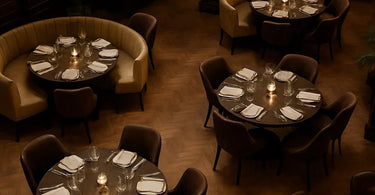
Deliver more, stress less... said every spa and salon owner ever while staring at their treatment rooms wondering why some days feel like orchestrating a ballet and others feel like herding cats through a narrow hallway. What if the secret to creating that seamless, luxurious experience wasn't just about your technical skills or product selection, but about something most wellness professionals never consider: studying how five-star restaurants design their spaces? It's true—the same principles that make guests feel pampered, valued, and eager to return to a world-class dining establishment can transform your spa or salon from functional to phenomenal. Let's pull back the curtain on why restaurant floor plans hold the key to unlocking your business's full potential.
Think about the last time you walked into a truly exceptional restaurant. You weren't tripping over waiting guests, the server didn't bump your chair while delivering meals, and you certainly didn't feel like you were eavesdropping on your neighbors' conversation (unless you wanted to). That's no accident—it's the result of meticulous planning that balances beauty with brains, comfort with capacity, and efficiency with experience. Your clients crave that same effortless flow when they visit your establishment, whether they're coming for a therapeutic massage or a lash enhancement.
The Invisible Choreography: How Flow Impacts Everything
In both restaurants and spas, movement is everything. A five-star restaurant plans its circulation paths with the precision of a Broadway choreographer, ensuring staff can move efficiently while guests enjoy an uninterrupted experience. This same principle applies directly to your space. When your receptionist can guide a new client to the waiting area without crossing paths with a technician carrying hot wax, or when your massage therapist can access warm towels without leaving their client feeling abandoned, you've mastered the invisible choreography that separates amateur setups from professional sanctuaries.
Consider this: top restaurants maintain main walkways of 36-48 inches wide to prevent congestion. Does your pathway from reception to treatment rooms allow two people to pass comfortably? Is your hydrodermabrasion station positioned so clients don't feel on display during their treatment? These considerations might seem small, but they collectively create an environment where both clients and staff can move with purpose and grace.
Beyond Squeezing in Another Pedicure Chair: The Art of Strategic Spacing
It's tempting to maximize every square inch of your floor plan with additional revenue-generating stations. Who wouldn't want one more pedicure chair or treatment room? But five-star restaurants understand that perceived space directly impacts perceived value. Fine dining establishments typically allocate 18-20 square feet per guest, while casual venues work with 12-15 square feet. What does this mean for your wellness business?
That extra breathing room between your manicure stations or the strategic placement of a small table next to your facial bed isn't wasted space—it's an investment in client comfort that pays dividends in retention and referrals. Clients who feel cramped during their dermaplaning treatment or self-conscious about neighboring conversations during their brow appointment might not articulate why they don't rebook, but the spatial discomfort lingers in their memory.
The Welcome Mat: First Impressions That Last
Step into any acclaimed restaurant, and you're immediately greeted by a welcoming entry that sets the tone for the entire experience. The host stand is visible, the waiting area feels intentional rather than like an afterthought, and you get that immediate sense of "I'm in good hands." Does your reception area create that same confident first impression?
Your entry zone should accomplish three things: make arriving clients feel expected and welcomed, provide clear direction about what to do next, and separate new arrivals from those deep in their relaxation journey. This might mean positioning your reception furniture to offer a clear sightline of the entrance, creating a defined waiting area that doesn't intrude on treatment spaces, and ensuring that clients coming and going don't disrupt the tranquility of someone enjoying their hot stone massage.
The Backstage Ballet: Optimizing Your Operational Heart
Here's where the restaurant analogy gets really delicious—kitchen design. The best restaurants create kitchen layouts that function like well-oiled machines, with logical workflows between prep areas, cooking stations, and service points. Your "backstage" areas need the same thoughtful planning.
Is your clean linen storage conveniently located near treatment rooms? Are your wax warmers positioned to minimize unnecessary steps during services? Do you have discreet but accessible storage for cleaning supplies? Creating efficient staff pathways reduces physical fatigue and mental stress, which directly translates to better client interactions and more consistent service quality. When your team isn't exhausted from navigating an obstacle course between clients, they bring their best energy to every aromatherapy session and waxing service.
Sensory Symphony: Beyond Just Furniture Placement
Five-star restaurants don't just arrange tables—they curate experiences through lighting, acoustics, and ambiance. Similarly, your spa or salon's success depends on engaging all the senses, not just maximizing square footage. Restaurants often use sound-absorbing materials, strategic lighting, and even scent to create their desired atmosphere.
What's the acoustic experience in your space? If clients can clearly hear every word from the reception area during their quiet facial, consider adding soft surfaces like plush spa blankets or acoustic panels. How does the lighting transition from the bright reception area to the dim relaxation space? The strategic use of magnifying lights for technical work versus soft ambient lighting for relaxation can create the same dramatic effect as a restaurant's transition from lively bar to intimate dining room.
Embracing Flexibility: The Power of Adaptable Spaces
The smartest restaurants design flexibility into their layouts, with movable tables that can accommodate everything from intimate dates to large celebrations. Your wellness business needs that same adaptability. Can your space easily transform for different needs?
Perhaps you need portable massage tables that can be reconfigured for couples treatments or private event services. Maybe modular seating in your waiting area could accommodate both individual clients and groups celebrating special occasions. This flexibility not only maximizes your revenue potential but also ensures that every client—whether seeking solo relaxation or shared experiences—feels perfectly accommodated.
Transforming Theory Into Treatment Room Reality
So how do you translate these restaurant-inspired insights into practical improvements for your business? Start by becoming a detective in your own space. Sit in every client chair and treatment table. Walk the paths your staff take during service delivery. Notice where bottlenecks occur and where the experience feels disjointed.
Then, consider targeted upgrades that enhance flow and function. Something as simple as adding a compact applicator station in your treatment room or repositioning your lash lift supplies can shave precious minutes off service setup time. Evaluating your manicure table configuration might reveal opportunities to create more privacy without expanding your square footage.
The most successful spas and salons understand that their physical space is as much a part of their service delivery as their technical expertise. By learning from the masters of experience design—five-star restaurants—you can create an environment that delights clients, empowers staff, and positions your business as a destination that transcends mere service delivery. After all, in the wellness industry, how you make people feel is what they remember long after the specific technique or product used. And that's a recipe for success worth studying.
