
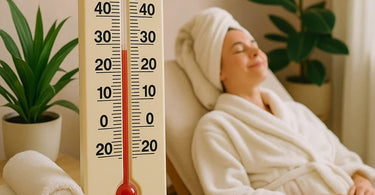
Simplify your workday with... the thermostat. Yes, that unassuming little box on your wall might be the most underrated spa essential in your entire business. While you’ve been obsessing over the perfect low-temperature wax and stocking up on heated towels, your room temperature has been quietly working behind the scenes – either as your secret weapon or your worst enemy. Think about it: your client is lying there in what amounts to a fancy paper napkin, and you’re about to perform what essentially feels like organized torture if the environment isn’t just right. The temperature in your treatment room isn’t just about comfort – it’s a legitimate pain management tool that can make or break your client’s experience.
Let’s talk science without the boring textbook stuff. When your body gets cold, what happens? You tense up. Your muscles contract. Your nerves become more sensitive. Now imagine that scenario during a Brazilian wax or deep tissue massage – it’s like adding insult to injury, literally. The perfect room temperature keeps muscles relaxed, nerves calm, and your clients from developing a sudden interest in ceiling tiles as a distraction technique. It’s the difference between “Wow, that was surprisingly comfortable!” and “I need to rethink all my life choices that led me here.”
The Goldilocks Zone: Finding That “Just Right” Temperature
So what’s the magic number? Most experts agree that treatment rooms should hover between 72°F and 76°F (22°C to 24°C), but here’s the secret: it depends on what you’re doing. A hot stone massage might feel amazing in a slightly cooler room, while a body wrap treatment might have your client sweating buckets if the room is too warm. The real art is reading your client and the service type – it’s like being a temperature whisperer.
Consider this: during waxing services, warmer rooms help keep the skin supple and hair removal more comfortable. Colder rooms? They make the skin contract and every pull feel more intense. It’s the difference between “Ooh, that was quick!” and developing a new core memory of pain. Your hard wax might be top-quality, but if your client is shivering, you’re fighting an uphill battle.
The Thermal Tango: How Temperature and Pain Dance Together
Here’s where it gets really interesting. Your body’s pain receptors and temperature receptors are like neighbors who constantly borrow sugar from each other. When you apply heat (like with our massage table warmers), it essentially distracts the nerve pathways from pain signals. It’s like giving your nerves something else to talk about at the party. “Ooh, that’s warm and lovely! Wait, were you saying something about discomfort? I wasn’t listening.”
This principle is why contrast therapy works so well, and why your room temperature sets the stage for all your thermal magic. A comfortably warm room means your client is already relaxed before you even touch them with that heated blanket or paraffin treatment. It’s like pre-gaming for pain management – but with thermostat adjustments instead of cocktails.
Seasonal Strategy: Your Temperature Playbook
Summer clients walking in from 95°F heat need a different approach than winter clients who just escaped a snowstorm. That client who just trudged through slush expecting a warm sanctuary isn’t going to appreciate your “refreshingly cool” 68°F room. Meanwhile, the summer client might actually appreciate a slightly cooler space after battling the heat.
This is where having the right equipment pays off. A quality towel steamer isn’t just for hot towels – it can help maintain ambient humidity and warmth in smaller spaces. Those plush towels from your warmer become instant comfort devices that complement your room temperature perfectly.
The Business Case for Thermal Comfort
Let’s talk money, honey. Comfortable clients become repeat clients. They leave better reviews. They refer their friends. They don’t develop a nervous twitch every time they drive past your spa. Getting the temperature right is literally good for business.
Think about your lash and brow services – if your client is comfortable and relaxed, they’re less likely to twitch or move during those precise applications. Your gel polish will cure better at consistent temperatures. Even your facial steamer works more effectively when the room temperature complements rather than fights the treatment.
Temperature Troubleshooting: Common Spa Scenarios
Ever had a client who’s always cold no matter what? Or one who seems to generate their own heat? Here’s your cheat sheet: For the “always cold” client, pre-warm your table linens, offer a heated blanket, and maybe bump the room temp a degree or two. For the “always warm” client, ensure good air circulation, have cooling compressed sponges ready, and maybe keep a small fan handy.
During dermaplaning or microdermabrasion, consistent room temperature helps prevent skin from reacting unpredictably. Your skincare products perform better when not fighting extreme temperatures. It’s all connected!
Beyond the Thermostat: Creating Thermal Harmony
Your room temperature strategy doesn’t stop at the HVAC system. Consider your massage oils and lotions – are they room temperature or chilling in a drafty cabinet? Warm your oil warmer before the client arrives. Your cotton products and applicators shouldn’t be shockingly cold when they touch skin.
Even your pedicure chairs and manicure stations benefit from thermal consideration. Nobody wants chilly feet in a pedicure bowl, no matter how fancy your sugar scrub is.
The Psychology of Warmth
Here’s a fun fact: warm environments make people feel more emotionally warm toward you. It’s science! Studies show that physical warmth activates the same brain regions as social warmth. So when your client feels physically comfortable in your perfectly-temperatured room, they’re also developing warmer feelings toward you and your business. It’s like emotional manipulation through thermostat control – but the good kind!
This is especially crucial during intimate services like waxing or more vulnerable treatments. A warm room says “I’ve got you, you’re safe here” without you having to say a word. Your spa apparel might look professional, but your room temperature does the real talking.
Practical Tips for Temperature Perfection
So how do you master this thermal art? Start by investing in a good digital thermostat – the kind that doesn’t have you guessing whether it’s set to “arctic blast” or “surface of the sun.” Monitor humidity levels too – dry air feels colder, while humid air can feel stuffy.
Consider your aromatherapy diffusers – some can slightly affect room temperature. Your LED lamps for gel polish generate heat. Even your UV sterilizers might affect the immediate area temperature. It’s all about finding balance.
The Bottom Line: Your Thermostat is a Revenue Generator
At the end of the day, perfect room temperature leads to better outcomes, happier clients, and more repeat business. It makes your pre and post-wax products more effective. It makes your massage creams glide more smoothly. It even makes your cuticle oil applications more luxurious.
So go forth and conquer that thermostat like the professional you are. Your clients’ comfort – and your bottom line – will thank you for it. After all, in the world of spa and wellness, every degree counts toward creating that perfect, pain-managed, utterly blissful experience that keeps them coming back for more.
