
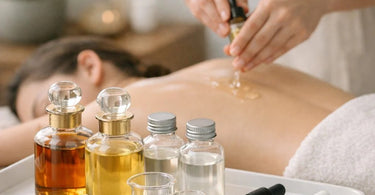
Get more from less... that’s what we’re all about, right? More relaxation from fewer stress wrinkles, more client loyalty from less awkward small talk, and definitely more amazing spa days from less of those “uh-oh” moments. Speaking of which, let’s talk about the magic potion of the massage world: essential oils. They can transform a simple massage into a transcendent, sniff-worthy experience that has your clients floating out the door. But honey, like that one time you tried to wax your own bikini line (we’ve all been there), things can go from zen to oh-no in a hot minute if you don’t know what you’re doing. So, grab your favorite comfy spa pants, and let’s dive into the wonderfully scented world of aromatherapy for massage: essential oil safety, dilution rates, and allergy policies!
We’re about to get down to the nitty-gritty of keeping your massage table a drama-free zone. Because nothing ruins a tranquil ambiance faster than a client breaking out in hives or, worse, you accidentally creating a human pepper spray incident. Trust me, it’s not the kind of “deep tissue” release anyone is looking for. So, let’s make sure your aromatherapy supplies are used for bliss, not for boo-boos.
Essential Oil Safety 101: It’s Not Just About Sniffing Pretty
First thing’s first: essential oils are potent little chemical powerhouses. They’re the concentrated essence of plants, which means they’re awesome for therapeutic benefits but can also be major skin irritants if misused. Think of them like that super intense friend who’s amazing in small doses but a lot to handle when they’ve had too much espresso. You wouldn’t drizzle pure peppermint oil directly on someone’s skin any more than you’d drink hot sauce straight from the bottle. It’s just not a good time for anyone involved.
When we talk about safety, we’re talking about a few key things: phototoxicity, sensitization, and general toxicity. Some oils, particularly cold-pressed citrus oils like bergamot, can cause severe skin reactions when exposed to UV light. So, if you’re using a zesty blend and your client is heading to the beach afterward, you might be sending them off to look like a very sad, blotchy lobster. Sensitization is another sneaky one. It’s an allergic reaction that can develop over time with repeated exposure to an oil, even one they’ve used before without issue. It’s like your skin suddenly deciding it’s done with lavender and throwing a full-on tantrum.
Dilution Rates: The Golden Rule of “How Much is Too Much?”
This, my friends, is where the math skills you swore you’d never use after high school come back into play. But don’t worry, it’s easy! The general guideline for massage oils and body lotions is a dilution rate of 1% to 3%. That means for every ounce (or 30ml) of your carrier oil—like the lovely ones from our massage oil collection—you’ll add 3 to 9 drops of essential oil. For a 1% dilution (great for clients who are new to aromatherapy, pregnant, elderly, or have sensitive skin), that’s about 3 drops per ounce. For a standard 2% dilution (a good all-purpose rate for the average, healthy adult), you’re looking at 6 drops per ounce. And for a 3% dilution (for specific, short-term therapeutic issues like muscle pain), you can go up to 9 drops per ounce.
Here’s a pro-tip: always, ALWAYS mix your essential oils into your carrier oil or lotion *before* you bring it anywhere near a client. Don’t just drop peppermint oil onto your hand and then grab the lotion. That’s a recipe for a hotspot of pure, undiluted oil that will have your client leaping off the table faster than you can say “cooling sensation.” We have plenty of mixing bowls and bottles and jars perfect for creating your signature blends in advance. It looks professional, and it’s safe. Win-win!
The Allergy Policy: Your New Best Friend (Seriously)
Okay, let’s talk paperwork. I know, I know, it’s the least glamorous part of being a spa professional. But a solid allergy and intake policy is the superhero cape of your business. It saves you from so many potential disasters. Before you even think about reaching for that portable massage table for an outcalls, or prepping your treatment room, you need a thorough intake form.
This form should ask specific questions, not just “Any allergies?” because people will say “no” and forget they’re allergic to their aunt’s cat. Ask direct questions like: “Do you have any known allergies to plants, specifically lavender, eucalyptus, peppermint, or citrus?” “Have you ever had a reaction to a scented product or lotion?” “Do you have any respiratory conditions like asthma or allergies that are triggered by strong smells?” It’s also a great idea to ask about their current skin condition. If they come in with a sunburn, a fresh tattoo, or a rash, you’ll want to avoid that area entirely, scents or no scents.
And here’s the really fun part: once you have that info, you can customize their experience! Knowing they love the scent of Serenity Essentials or that they break out in hives at the mere mention of ylang-ylang makes you look like a mind-reading genius. It elevates you from a massage therapist to a wellness guru. You can even create little cards with the blends you used, so if they have a reaction later (or just want to buy the scent for home), you have a record. It’s all about covering your... well, everything.
Let’s Talk About Specific Oils & Their Quirks
Every essential oil has its own personality. Some are chill, some are energetic, and some are just a little bit high-maintenance. Lavender is the reliable friend who’s good for everything. Peppermint is the energizer bunny—great for sore muscles but can be overwhelming. Eucalyptus is the respiratory superhero, but it’s also very strong and should be used sparingly, especially around kids or anyone with certain health conditions.
Then you have oils like clove, cinnamon, and oregano. These are the spicy, hot-headed ones. They can be fantastic for pain relief in very, very small amounts, but they are also major skin irritants. We’re talking about the kind of heat that doesn’t feel therapeutic, it just feels like you’re being slow-roasted. Always use these with extreme caution and even lower dilution rates. If you’re looking for high-quality, professional-grade oils, check out the selection from ESS Aromatherapy or Bon Vital. They offer consistency and purity, which is exactly what you need when you’re working with people’s bodies.
When Things Go Sideways: A Tiny Guide to Oopsie-Daisies
Even with the best policies and intentions, sometimes a reaction happens. Maybe you misjudged a dilution, or a client had a sensitivity they didn’t know about. Don’t panic! The first thing to do is remove the oil. Do not rub it in more or add water. Water can actually drive some oils deeper into the skin. Instead, grab a carrier oil (like a plain massage oil or even some vegetable oil from the kitchen if you have to) and gently wipe away the offending oil. The carrier oil will help dilute it and lift it from the skin. Then, you can wash the area gently with a mild, unscented soap and cool water. Apply a cool compress if there’s any redness or heat. And, of course, document what happened for your records and theirs. It’s a learning experience for everyone!
For any future treatments with that client, you’ll have a note to avoid that particular oil or family of oils. This is also a great reason to have products like professional cleaners and disinfectants on hand to quickly refresh your space, and maybe a soothing, unscented lotion like some from Tuel Skincare to help calm any minor irritation after the fact.
Creating Your Signature Scent-sational Experience
Now for the really fun part! Once you’re a master of safety and policies, you can really let your creative flag fly. Mixing your own proprietary blends is what will set you apart from every other therapist in town. Maybe you have a “Morning Zing” blend with grapefruit and peppermint for those 8 AM appointments who need a little boost. Or a “Deep Sleep” blend with lavender, chamomile, and a tiny hint of vetiver for your stressed-out executive clients.
The possibilities are endless, and it’s incredibly satisfying to have clients ask, “Wow, what IS that amazing smell?” You can even bottle your blends and offer them for retail sale using our bottles and jars, creating an additional revenue stream. It’s a beautiful thing when your passion project also pays the bills! Just be sure to label everything clearly with the ingredients and dilution rates. Safety first, even in your signature blends!
And don’t forget the ambiance. The scent is part of it, but so is the feeling of warm, clean towels from a towel steamer and the comforting weight of a massage bolster. All these elements work together to create a multi-sensory experience that screams “luxury” and “I am a professional who has their act together.” Your clients will feel it, and they’ll keep coming back for more.
So, to wrap this up (like a cozy high-quality towel around a happy client), remember: aromatherapy is an incredible tool for deepening your massage practice. It adds a layer of holistic care that your clients will absolutely adore. But with great power comes great responsibility. By mastering essential oil safety, sticking to proper dilution rates, and having a rock-solid allergy policy, you ensure that every whiff is a wish for wellness, not a call for help. Now go forth and mix up some magic, you brilliant, sniff-worthy geniuses! Your clients are lucky to have you.
)