
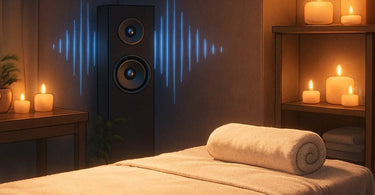
Invest in solutions that work for you... starting with the free one that's already in your pocket. Let's talk about the elephant in the treatment room: your questionable playlist. You've invested in the best massage tables, stocked up on luxurious massage oils, and perfected your pressure points—but if your client is mentally composing their grocery list to the rhythm of a polka beat, you're losing the relaxation game. Music isn't just background noise; it's the invisible hand that guides every stroke, every breath, and every sigh of relief during a treatment.
The right soundtrack can transform a good massage into a transformative experience that clients rave about and return for. Meanwhile, the wrong music creates more tension than it releases. (Seriously, has anyone ever relaxed to accordion music? We think not.)
The Science Behind the Sound: Why Your Playlist Isn't Just Fluff
Music directly impacts the autonomic nervous system, which controls heart rate, breathing, and stress levels. Slow, steady rhythms naturally synchronize with bodily functions, encouraging deeper breathing and slower heart rates. This isn't just spa folklore—it's physiological fact that the right music can elevate your massage from a simple muscle treatment to a full-system reset.
Think of music as the unseen massage bolster for the nervous system—it supports the entire experience without the client even realizing it's working. When selected intentionally, music becomes as crucial to the treatment as your hot stone warmers or towel steamers.
Building Your Sonic Toolkit: The Spa Professional's Guide to Musical Layers
Creating the perfect massage playlist requires more thought than just hitting shuffle on 'Chill Vibes.' Here's how to structure music that supports every phase of treatment:
The Welcome (60-80 BPM): Meeting the Client's Energy Where It Is
When clients first arrive, they're often carrying the residual stress of traffic, work deadlines, or that argument they had with their teenager about sock placement on the floor. Meet them where they are with slightly more structured music featuring gentle acoustic instrumentation or ambient world sounds at 60-80 beats per minute—roughly the resting heart rate.
This transition music should greet clients as they settle onto your massage table without demanding their attention. Think of it as the musical equivalent of your calming reception area with its comfortable reception furniture and subtle aromatherapy diffusers.
The Descent (50-60 BPM): Guiding the Journey Inward
As you begin the massage, gradually transition to slower tracks around 50-60 BPM. This slower rhythm encourages the heart rate to drop and breathing to deepen, supporting the body's natural relaxation response.
Instrumental music works best here—without lyrics that engage the analytical brain. Look for compositions with:
- Simple, repeating melodic patterns
- Open spaces between notes (less is truly more)
- Natural sounds like gentle ocean waves or soft rainfall
- Warm, low-frequency tones that feel physically soothing
This is where your playlists become as specialized as your spa body treatment protocols or your selection of sugar scrubs versus salt scrubs.
The Deep Work (45-55 BPM): Supporting Transformation
During intensive muscle work or deep tissue sequences, maintain very slow, consistent rhythms. The music should provide an anchor point for clients when pressure intensifies—a steady sonic foundation that helps them breathe through challenging moments.
Drones, sustained notes, and minimal harmonic movement work well here. The goal is to create a container that holds space for release without distracting from the therapeutic process. It's the audio equivalent of the reliable support provided by your massage bolsters and the consistent warmth of your hot stone warmers.
The Integration (60-70 BPM): Gentle Return to Awareness
As the session concludes, gradually increase the tempo and introduce slightly more melodic variation to support the client's return to alertness. This musical sunrise should feel natural and unrushed—like slowly turning up a dimmer switch rather than flipping on fluorescent lights.
Allow at least five minutes of transition music before speaking or introducing more structured sounds. This respects the fragile state of consciousness clients experience after deep relaxation and makes the return to reality less jarring.
Genre Guide: What to Play and What to Avoid (Unless You Want Clients to Flee)
Not all 'relaxing' music is created equal. Here's your cheat sheet:
The Green Light List
Ambient Instrumentals: The workhorses of treatment room music. Look for artists like Brian Eno, Stars of the Lid, or Marconi Union.
Minimal Classical: Slow movements from composers like Arvo Pärt, Max Richter, or Erik Satie. Avoid dramatic symphonies unless you're treating for opera-induced tension.
Acoustic World Music: Gentle instruments like hang drums, bamboo flutes, or soft kora. Ensure the recordings have no sudden volume changes or energetic percussion.
Nature Soundscapes: High-quality recordings of rain, ocean waves, or forest sounds. Avoid bird calls that sound like car alarms or jungle sounds that might trigger primal fears.
The Red Light List
Top 40 Pop: Nothing ruins a chakra balancing like subconscious anxiety about whether Blake Shelton is going to turn his chair.
Complex Jazz: Unless you're specifically treating music students who need to analyze chord progressions.
Heavy Classical: Wagner might be great for storming castles but less ideal for relaxing psoas muscles.
Music with Lyrics: The language-processing parts of the brain activate with lyrics, taking attention away from bodily awareness.
Elevator Music: Because nobody wants to feel like they're waiting for the fourth floor during their sacred self-care time.
Practical Playlist Tips for Busy Professionals
Creating the perfect soundscape doesn't require a degree in music theory—just some intentional planning:
Length Matters: Create playlists that are longer than your longest treatment to avoid awkward silence or repetitive loops. Nothing says 'amateur hour' like hearing the same Tibetan singing bowl track three times during a 90-minute session.
Seamless Transitions: Use crossfade features in music apps to create smooth transitions between tracks. Abrupt changes in sound can jolt clients out of their relaxed state faster than a facial steamer running out of water.
Volume Control: Music should be felt more than heard—a subtle presence that supports rather than dominates. A good rule: if clients can identify the song, it's probably too loud.
Seasonal Updates: Rotate your playlists seasonally to keep the experience fresh for regular clients and yourself. Summer might call for ocean sounds, while winter benefits from cozy, warm acoustic textures.
Client Consultation: Add a simple question about musical preferences to your intake process. Some clients might prefer complete silence, nature sounds, or specific instrumental styles.
Beyond Massage: Adapting Music for Other Services
The right musical approach varies by service intensity and client engagement:
For Facials and Hydrodermabrasion: Similar to massage but can incorporate slightly more melodic development since clients are less likely to enter extremely deep states.
For Lash & Brow Services: Maintain relaxation-focused music but consider that clients remain more visually engaged during these treatments.
For Waxing Services: Steady, predictable rhythms help clients regulate breathing during potentially uncomfortable moments. Consider using the same musical principles as the deep work phase of massage.
For Pedicure Stations: Slightly more upbeat but still relaxed music works well since these services are more social. Think acoustic covers or gentle world music.
Troubleshooting Common Musical Mishaps
The Snoring Client: Congratulations! Your music is working. Carry on.
The Fidgety Client: Check your volume and tempo. The music might be too stimulating or not engaging enough to distract from mental chatter.
The Critical Comment: "Is this Enya? I hate Enya." Have alternative playlists ready and never take musical preferences personally.
The Technical Difficulty: Always have a backup device loaded with your essential playlists. Your phone's standard 'relaxation' track is not an adequate substitute.
The Playlist as Professional Tool
Curating treatment music isn't a side task—it's a professional skill that deserves the same attention you give to selecting your professional waxes or designing your facial treatment protocols. Your playlist is an extension of your therapeutic touch, your spa essentials, and your professional expertise.
When chosen with intention, music becomes the invisible partner in your work—setting the pace, deepening the relaxation, and creating an experience that clients don't just feel in their muscles but remember in their souls. And let's be honest—it's a lot more pleasant than listening to the sound of your own breathing for eight hours straight.
Now go forth and curate! Your clients—and your sanity—will thank you.
)