
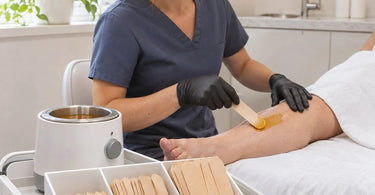
Make the most of every opportunity... especially when that opportunity involves a fully booked waxing schedule, happy clients, and a supply cabinet that actually has everything you need! A full-body wax booking is wonderful for business, but it can also send disposable applicators flying out of your inventory faster than you can say 'freshly waxed legs.' Knowing how to estimate applicator use for a full-body wax booking helps professional estheticians prepare efficiently, control supply expenses, and maintain hygienic service standards without scrambling for another box of sticks halfway through an appointment. With a little planning, you can turn applicator inventory from an annoying guessing game into a predictable part of your waxing business.
Whether you operate a busy waxing studio, manage a multi-room spa, or provide professional body waxing services independently, applicator planning matters. Those humble wooden sticks may not be the glamorous stars of your treatment room, but they play an important supporting role in every beautifully executed service. Let's explore how to estimate quantities, select the right applicator sizes, and build a practical stocking system that works with your service menu.
Why Applicator Estimates Matter for Full-Body Waxing
Full-body waxing involves multiple treatment areas, different application techniques, and potentially hundreds of individual wax applications. Unlike a quick eyebrow cleanup, a comprehensive body wax requires careful preparation and a consistent supply of clean applicators throughout the appointment.
Running short on applicators can interrupt your workflow, create unnecessary stress, and compromise the efficiency of your schedule. Overestimating every appointment by an enormous amount, however, can lead to crowded storage areas and unnecessary purchasing.
A practical estimate helps your business:
- Prepare the right number of disposable applicators before each service.
- Maintain appropriate single-use application procedures.
- Calculate more accurate supply costs for full-body waxing packages.
- Reduce emergency supply purchases and service interruptions.
- Forecast inventory requirements for busy appointment periods.
- Standardize supply preparation across multiple estheticians.
Professional waxing supplies should support a smooth treatment experience, not become another item on your daily stress list. Explore Professional Wax Spatulas and Applicators for Salons & Spas to compare tools suitable for different application areas.
Start With the Actual Areas Included in Your Full-Body Wax Package
Before estimating applicator consumption, define exactly what your business includes in a full-body wax booking. The term can mean different things at different salons. One studio may include legs, arms, underarms, back, chest, and bikini areas, while another offers a customized combination based on client preference.
The number of areas included directly affects your supply needs. A service covering both legs and arms will naturally require a different quantity of applicators than a comprehensive booking that also includes the torso and several smaller areas.
For planning purposes, divide your full-body waxing service into separate treatment zones. This makes it easier to estimate usage based on actual application patterns rather than relying on one enormous mystery number.
A Practical Applicator Estimating Chart for Full-Body Waxing
The following chart provides illustrative starting quantities for a professional using single-use wooden applicators with a fresh applicator for each dip and application. These are operational planning examples, not universal industry standards or guaranteed consumption rates. Actual usage depends on treatment coverage, wax type, technique, applicator size, and client-specific needs.
| Treatment Area | Illustrative Applicator Estimate | Typical Applicator Choice |
|---|---|---|
| Both full legs | 24-40 | Large body applicators |
| Both full arms | 12-24 | Large or medium applicators |
| Both underarms | 6-12 | Medium applicators |
| Back | 12-24 | Large body applicators |
| Chest and abdomen | 12-24 | Large or medium applicators |
| Bikini or Brazilian area | 12-24 | Medium and precision applicators |
Using the lower ends of these example ranges produces an estimated total of 78 applicators. Using the upper ends produces 148 applicators. That is a substantial range, but it demonstrates why a single universal full-body waxing applicator count is not particularly helpful.
For a comprehensive booking that includes all six listed treatment zones, a provisional preparation target of approximately 90-150 disposable applicators may be reasonable for initial inventory modeling under the assumed single-dip procedure. This is a hypothetical starting range, not a validated average. Studios should replace it with measurements from their own services.
If your full-body package covers fewer areas, remove the excluded zones from the calculation. If your technique requires additional applications, increase the estimate accordingly. The goal is not to hit a magical number. The goal is to arrive prepared.
The Simple Formula for Estimating Applicator Use
Fortunately, you do not need a complicated spreadsheet or an advanced degree in stick mathematics to develop a useful estimate.
Start with this formula:
Estimated applicators per booking = Sum of expected applicators for each treatment area + Preparation buffer.
For example, imagine your studio records the following typical usage for a particular full-body waxing package:
- Full legs: 32 applicators.
- Full arms: 18 applicators.
- Underarms: 8 applicators.
- Back: 18 applicators.
- Chest and abdomen: 18 applicators.
- Bikini area: 16 applicators.
The total is 110 applicators. Adding a 15% preparation buffer produces 126.5, which you would round up to 127 applicators for planning purposes. You might prepare approximately 130 clean applicators to keep the workstation ready for that appointment.
The 15% buffer is an illustrative inventory-planning allowance, not an infection-control requirement. Your salon may find that a smaller or larger allowance works better after collecting actual service data.
Also remember that preparing 130 applicators does not mean all 130 must be discarded unused. Keep reserve supplies clean and protected, remove only what you need, and follow appropriate procedures for handling any materials brought into the treatment area.
Why Applicator Size Changes Your Estimate
One of the easiest ways to improve applicator planning is to stop treating every wooden waxing stick as interchangeable. Applicator dimensions influence how much wax can be transferred and how effectively a technician can cover a particular treatment area.
Large body applicators: Wider wooden spatulas are commonly used for legs, arms, backs, and other broad treatment areas. Their surface area can support larger applications when appropriate for the wax system and technique.
Medium applicators: These provide control for moderately sized areas, including underarms and sections of the torso.
Precision applicators: Narrow sticks allow targeted application around smaller or more detailed treatment areas. They are especially useful when accurate wax placement matters more than broad coverage.
Imagine trying to wax an entire leg using only tiny eyebrow applicators. Technically, you could spend a very long time attempting it, but your appointment calendar might begin filing complaints.
Using correctly sized wooden wax applicators helps technicians work efficiently without sacrificing control. Stocking several sizes also makes it easier to prepare customized service kits.
Hard Wax Versus Soft Wax: Does It Affect Applicator Consumption?
Yes, your waxing method can influence applicator requirements, although the exact difference depends heavily on technique and the areas being treated.
Hard wax: Professional stripless hard wax is commonly used for sensitive or detailed areas and may also be used for larger sections, depending on the product. Application size, wax consistency, and technique determine how frequently a new applicator is needed. Explore Professional Stripless Hard Wax for salon service options.
Soft wax: Soft strip wax is often selected for efficient hair removal across larger body areas. A broad applicator can help distribute wax over appropriate sections, while removal requires compatible waxing strips. Browse Soft Strip Wax for Effective Salon Hair Removal and Quality Wax Strips & Rolls when preparing your supply calculations.
Roll-on systems: Some studios use cartridge-based waxing systems for larger treatment zones. These may reduce the need for traditional wooden application sticks in those specific portions of a service. However, cartridge and roller hygiene requirements vary by jurisdiction, and some locations restrict or prohibit roll-on waxing. Always confirm applicable regulations and manufacturer instructions before incorporating a system into your workflow.
For salons offering several waxing methods, create separate applicator estimates for each service technique rather than combining all appointments into one average.
Single-Use Hygiene Is Not the Place to Cut Costs
Here is one supply-saving strategy that should never appear on your salon's efficiency checklist: reusing a contaminated applicator.
When an applicator touches a client's skin, it must not be returned to a shared wax container. Double-dipping can introduce contamination into the wax and create avoidable hygiene risks. Under standard single-dip procedures, use a fresh disposable applicator for each dip and application, and discard the used applicator appropriately.
Never flip a used wooden applicator over and treat the unused end as an excuse to dip it back into the communal wax pot. Unfortunately, the wax container does not recognize clever loopholes.
Some jurisdictions permit specific single-client wax dispensing methods, such as transferring a service-sized quantity into a disposable container and discarding the remaining wax afterward. These practices must comply with applicable regulations and manufacturer instructions. Never assume that a procedure approved in one location is automatically permitted in another.
Maintain sufficient clean applicators throughout every appointment, and ensure your team follows the infection-control rules governing your business. Proper Protective Gloves & Masks, clean treatment surfaces, and suitable Professional Cleaners & Disinfectants are also important parts of a complete waxing room setup.
Efficient inventory management should make safe procedures easier to follow, never encourage shortcuts.
Build a Full-Body Waxing Supply Kit Before the Client Arrives
One simple improvement is to prepare supplies according to the treatment areas on your appointment schedule. Rather than opening multiple boxes and gathering materials midway through a service, organize a clean kit before the client enters the treatment room.
A typical full-body waxing preparation kit may include:
- Large disposable wooden applicators for broad body areas.
- Medium applicators for smaller body sections.
- Precision applicators for detailed application.
- Appropriate professional hard wax or soft wax.
- Waxing strips when using a strip wax system.
- Single-use gloves and approved skin preparation supplies.
- Clean protective treatment table coverings.
- Suitable post-wax care products.
- An accessible, appropriate waste disposal container.
Browse Waxing Supplies for Professionals for a broader selection of professional service essentials. The Pre & Post-Waxing Products collection can also help you plan the preparation and finishing portions of each booking.
Organizing supplies ahead of time minimizes unnecessary movement around the treatment room and supports a more polished client experience.
Calculate Your Applicator Cost Per Full-Body Wax Appointment
Once you establish realistic consumption estimates, calculating applicator costs becomes straightforward.
Suppose your salon purchases a package of 1,000 disposable applicators for a hypothetical price of $20. That means each applicator costs $0.02.
If an appointment uses 110 applicators, your applicator expense is $2.20 for that service.
If your average booking requires 130 applicators, the estimated applicator expense rises to $2.60.
Those numbers may seem small compared with the total service price, but understanding them helps you develop accurate treatment costs and identify purchasing opportunities.
For a studio performing 60 comparable full-body wax bookings monthly at an average of 110 applicators per booking, estimated monthly consumption is 6,600 applicators. At the hypothetical $0.02 unit price, that represents $132 in monthly applicator spending.
These calculations exclude additional waxing materials, shipping, waste, taxes, equipment, labor, and other operating expenses. They are useful for understanding one supply category, not for calculating the total cost of providing a full-body waxing service.
If you stock multiple applicator sizes with different purchase prices, calculate each category separately and add the costs together.
Turn Appointment Volume Into a Monthly Purchasing Forecast
Understanding average applicator use is only half the equation. You also need to know how many bookings your salon expects to perform.
Use the following calculation:
Monthly applicator demand = Expected bookings x Average applicators per booking.
For example, if your studio anticipates 40 full-body wax bookings and your measured average is 125 applicators per service, the estimated monthly requirement is 5,000 applicators.
Adding a hypothetical 15% inventory allowance brings your purchasing target to 5,750 applicators. If your supplier sells packages of 1,000, purchasing six packages would cover that projected quantity, assuming you begin with no usable stock.
Before placing an order, subtract your current usable inventory and account for any already scheduled deliveries. Include supplies needed for smaller waxing appointments, too, since those services often share applicator inventory.
For higher-volume businesses, review Bulk Wax Deals alongside your applicator purchasing strategy. Buying compatible professional consumables in planned quantities can simplify inventory management, provided your storage capacity and actual demand justify the order.
Track Actual Usage Instead of Guessing Forever
The best estimates come from your own treatment room. Even a beautifully organized forecasting chart will be more valuable once real service data replaces its starting assumptions.
For the next 10-20 comparable full-body wax bookings, have your technicians record the number of applicators used. Choose a sample that reflects your typical services and includes different client coverage needs.
Record the following details:
- Which body areas were included.
- Whether hard wax, soft wax, or another approved method was used.
- How many large applicators were consumed.
- How many medium and precision applicators were consumed.
- Whether extra applications or touch-up areas were needed.
- The total number of disposable applicators used.
After gathering enough observations, calculate the average for each treatment category. You can also review higher-use bookings to determine a reasonable preparation buffer.
For example, if 10 comparable bookings consume a combined 1,180 applicators, the observed average is 118 applicators per appointment. That number offers a more relevant starting point for your salon than an estimate borrowed from another business with different techniques.
Review these measurements periodically, especially when introducing a different wax formula, changing application methods, or adding technicians.
Five Common Applicator Inventory Mistakes to Avoid
1. Using the same estimate for every body wax. A customized partial-body booking and an extensive full-body service may require dramatically different quantities. Categorize appointments based on actual coverage.
2. Stocking only one applicator size. Large applicators are practical for broad areas, but precision applications may require smaller tools. Maintain an appropriate selection.
3. Ignoring single-use consumption. Inventory forecasts must reflect your required hygienic application method. Never build cost assumptions around prohibited applicator reuse.
4. Forgetting about smaller daily services. Eyebrow, lip, bikini, and underarm appointments also consume applicators. Full-body bookings are only one part of your total demand.
5. Waiting until the final box is open to reorder. Establish a reorder point that accounts for supplier lead times, scheduled bookings, and a reasonable safety stock.
A salon running out of waxing sticks on a Saturday afternoon is not the kind of excitement anyone ordered with their appointment.
Set a Reorder Point That Matches Your Schedule
Your reorder point should reflect how quickly supplies are consumed and how long replacement inventory takes to arrive.
A practical formula is:
Reorder point = Expected applicator usage during supplier lead time + Safety stock.
For example, suppose your business uses approximately 1,500 applicators weekly and your normal supplier lead time is two weeks. You would expect to use roughly 3,000 applicators while waiting for the next delivery.
If your business chooses an additional safety stock of 1,500 applicators, your illustrative reorder point becomes 4,500 applicators.
In this example, you would begin the replenishment process when available inventory approaches that quantity, adjusting for confirmed incoming shipments and unusual appointment demand.
Make sure your reorder system distinguishes between large, medium, and precision sticks. A closet filled with large applicators is not especially helpful when your technician needs small applicators for a detailed service.
Make Professional Waxing Supplies Work Smarter for Your Business
Applicator forecasting becomes easier when your salon maintains a consistent selection of professional waxing products and organized treatment supplies.
Pure Spa Direct is a distributor of professional spa, salon, and beauty supplies, helping businesses shop across product categories and brands rather than limiting them to one manufacturing line.
Explore ItalWax, Berodin, Cirepil, and Starpil when reviewing professional wax options suited to your treatment menu. Check individual product instructions, application requirements, and compatibility before making changes to your established service procedures.
You can also browse Professional Wax Warmers for Salons & Spas, Waxing Accessories & Removers, and Complete Waxing Kits for Salons & Spas to support an efficient, well-equipped professional waxing room.
The Bottom Line: Count Smarter, Wax Confidently, and Keep Clients Comfortable
Estimating applicator use for a full-body wax booking does not require perfect predictions. It requires a clearly defined service menu, realistic area-by-area estimates, appropriate applicator sizes, hygienic application procedures, and a simple method for monitoring actual consumption.
Begin with a provisional estimate, prepare a modest reserve, and record what your technicians really use. Then turn that information into better appointment preparation, more accurate service costing, and smarter inventory purchasing.
Most importantly, never sacrifice proper sanitation to reduce the number of disposable applicators used. The real objective is to eliminate unnecessary waste and last-minute shortages while preserving safe, consistent professional service.
Ready to organize your waxing station and get ahead of your next busy booking day? Shop Professional Wax Spatulas and Applicators and discover additional Professional Waxing Supplies at Pure Spa Direct. Because the only thing that should be unexpectedly disappearing during a full-body waxing appointment is unwanted hair!
