
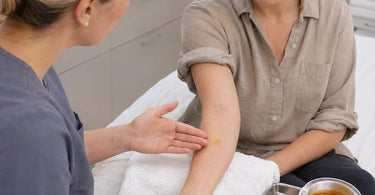
Elevate every treatment with this essential approach to explaining wax patch testing before a new waxing service. A patch test can provide helpful information about how a client responds to a particular product or small treatment area, but it is not a magical crystal ball for predicting every possible skin reaction. For professional estheticians and waxing specialists, explaining that distinction is one of the smartest ways to build trust, manage expectations, and establish a thoughtful service experience. After all, nobody wants a client thinking a tiny test spot comes with an invisible guarantee stamped APPROVED BY THE SKIN UNIVERSE.
Whether you are introducing a new professional hard wax, switching formulas, or welcoming a first-time waxing client, a clear conversation about patch testing helps everyone understand the benefits, limitations, and precautions involved. The secret is to keep that conversation informative without making it sound like a dramatic warning announcement at an airport.
What Is a Wax Patch Test, and What Can It Actually Tell You?
In a professional waxing environment, the phrase patch test often refers to a small, controlled product exposure or test application performed according to the manufacturer's directions and the salon's established protocols. Depending on the product, this may involve evaluating skin compatibility with a pre-wax preparation, wax formula, or aftercare product. A small test wax may also help the professional observe the skin's immediate response to the hair removal process.
These procedures are not identical to medical diagnostic patch testing performed by dermatology professionals to investigate allergic contact dermatitis. A salon test should never be presented as a medical allergy diagnosis or proof that a product is completely safe for an individual.
A preliminary test may help reveal certain immediate signs of sensitivity, such as unusual redness, itching, or discomfort. It may also provide an opportunity to evaluate how the selected formula behaves on a small area of skin.
However, the absence of an immediate reaction does not guarantee that a delayed reaction will not develop. Some allergic responses appear hours or days after exposure. Others may occur only after repeated exposure, when the amount of product changes, or when different areas of the body are treated.
The simplest message for clients is this: a test provides additional information, not an absolute promise.
Why a Negative Patch Test Does Not Guarantee a Reaction-Free Wax
One of the most important points to explain is that skin responses are influenced by multiple factors. Product ingredients matter, but so do skin condition, medications, recent treatments, application technique, and the amount of skin exposed during the service.
A small test area cannot completely reproduce the conditions of an entire leg, bikini, underarm, or facial waxing appointment. Different body areas may have different sensitivities, hair densities, and skin characteristics.
For example, a client may tolerate a small application on one area but experience greater irritation during a larger service involving repeated manipulation or more delicate skin.
There is also a difference between an allergic reaction and irritation caused by the waxing process itself. An allergic reaction involves an immune response to a substance. Irritation may result from friction, heat, hair removal, or disruption of the skin barrier.
Even when a client does not appear sensitive to a formula, improper technique, excessive heat, repeated applications, or unsuitable skin conditions can contribute to unwanted effects.
Think of the test as one piece of a larger professional assessment. It is useful information, but it cannot complete the entire puzzle by itself.
How to Explain Patch Testing Limits Without Making Clients Nervous
Professional communication should feel calm, confident, and conversational. Clients generally appreciate knowing that their esthetician takes precautions seriously, especially when they are trying a new service or product.
Instead of delivering a lengthy technical explanation, consider a simple statement such as:
"We can perform a small preliminary test to see how your skin responds to this product or treatment area. It can help identify certain reactions, but it cannot guarantee that irritation or an allergic response will not happen later. We will also review your skin history and current products before deciding whether waxing is appropriate."
This explanation accomplishes several important things. It describes the purpose of the test, acknowledges the limitations, and reinforces the professional's responsibility to assess the client before proceeding.
Most importantly, it avoids creating unnecessary fear. You are not announcing that waxing is a dangerous adventure. You are demonstrating that professional skin services deserve professional attention.
Ask the Right Consultation Questions Before Testing
A thorough consultation is just as important as the preliminary test itself. Before introducing a new wax service, ask targeted questions about factors that could affect skin tolerance.
Previous waxing reactions: Has the client experienced significant redness, swelling, itching, blistering, skin lifting, or persistent irritation after previous appointments?
Known sensitivities: Does the client have any known allergies or reactions to fragrances, resins, adhesives, skincare ingredients, or hair removal products?
Current skincare routine: Are they using retinoids, exfoliating acids, acne treatments, or other products that may influence skin sensitivity?
Recent procedures: Have they recently received chemical peels, resurfacing treatments, laser procedures, or other services affecting the treatment area?
Medication history: Are they taking medications, including isotretinoin, that may affect whether waxing is appropriate?
Current skin condition: Is the treatment area sunburned, irritated, broken, inflamed, infected, or otherwise compromised?
These questions help identify situations in which waxing should be modified, postponed, or avoided. They also demonstrate that a professional consultation involves more than asking which eyebrow shape is trending this week.
If a client reports a serious previous reaction, an uncertain allergy history, or a concerning skin condition, recommend appropriate medical evaluation rather than attempting to resolve the concern through repeated salon testing.
Know When Patch Testing Is Not Enough
One of the biggest professional mistakes is treating a successful preliminary test as permission to overlook contraindications.
For example, certain prescription acne medications and topical retinoids can make waxing inappropriate for particular treatment areas or circumstances. Isotretinoin use requires special attention to medication labeling, professional protocols, and medical guidance. A small successful test does not cancel these considerations.
Similarly, a client with active sunburn, open skin, significant inflammation, or a recent aggressive resurfacing treatment may not be a suitable waxing candidate even if a test area initially appears normal.
Professionals should follow the specific product manufacturer's instructions, relevant licensing requirements, and established contraindication screening procedures. Avoid creating universal waiting periods for every medication or skincare treatment, because appropriate recommendations can differ depending on the product, procedure, and individual circumstances.
If there is uncertainty about skin safety, postponing the service and recommending medical advice is a responsible professional decision.
Sometimes the most impressive service you provide is knowing when not to wax.
Understand the Difference Between Immediate and Delayed Skin Reactions
Clients may assume that if their skin looks normal immediately after a test, the assessment is complete. Explain that different reactions can follow different timelines.
Some irritation appears quickly, including visible redness, burning, or discomfort. Other reactions develop later, particularly when allergic contact dermatitis is involved.
That means a brief observation period cannot reliably exclude every possible delayed response.
When a product manufacturer specifies a test procedure and observation period, follow those instructions exactly. Do not invent a universal testing window or substitute a quick salon check for a medically supervised allergy evaluation.
Clients should understand that a new product can cause an unexpected reaction even after previous trouble-free use. Formulations can change, skin conditions can change, and sensitivities may develop over time.
Encourage clients to communicate any unusual symptoms following a test or completed service. If concerning symptoms develop, stop product exposure and direct them toward appropriate medical care. Severe symptoms such as breathing difficulty or swelling involving the throat require emergency medical attention.
Choose Professional Waxing Products With Transparency in Mind
Clear patch testing conversations become easier when professionals understand the products they use.
Before introducing a new formula, review its ingredient information, manufacturer instructions, application recommendations, and any specified precautions. Keep packaging or product documentation accessible so your team can answer reasonable client questions accurately.
Pure Spa Direct offers a broad selection of professional waxing supplies from established manufacturers, allowing salon owners and estheticians to explore formulas and accessories suited to different services and business needs.
For example, browse ItalWax hard and soft wax, Berodin wax, and Cirepil when evaluating professional waxing options.
Consider soft strip wax and stripless hard wax according to treatment requirements, manufacturer guidance, and your professional training.
Remember that descriptions such as gentle, flexible, natural, or suitable for sensitive skin do not mean a product is incapable of causing irritation or allergic reactions. Even formulas designed for delicate applications require appropriate screening and technique.
Professional product selection is about compatibility and informed decisions, not finding a mythical wax that every person on the planet can use without concern.
Build a Consistent Patch Testing and Consent Protocol
For salon owners managing multiple service providers, consistency is essential. Clients should receive accurate information regardless of which esthetician performs the appointment.
Create a written protocol addressing when preliminary testing is indicated, which manufacturer instructions apply, how the test is documented, and what happens when a client experiences a concerning response.
Your documentation may include the product name, relevant formulation or lot details, test location, date, application method, observation findings, and client-reported symptoms.
Keep consultation records current and establish a procedure for reviewing changes in medication use, skincare routines, and health history before subsequent services.
Client consent should document that the service, potential risks, limitations, and appropriate alternatives have been explained. Consent is not a substitute for screening, correct technique, or professional responsibility.
A signed form should never be interpreted as permission to proceed when significant contraindications exist.
Make sure all staff members know how to respond when testing reveals a problem. A positive or concerning reaction should trigger an appropriate pause and reassessment, not an enthusiastic attempt to find a workaround five minutes before the next appointment.
Use the Consultation to Explain Other Waxing Risks
Patch testing is only one element of informed consent. A good consultation also prepares clients for the ordinary and less common effects of waxing.
Temporary redness, tenderness, and mild follicular bumps may occur after hair removal. More significant problems can include skin lifting, burns, persistent irritation, infection, or changes in pigmentation.
Not all of these risks are predictable through preliminary product testing. Many relate to skin condition, treatment area, application temperature, preparation, and technique.
Explain what clients should reasonably expect during and after the appointment without promising that discomfort or visible irritation can always be prevented.
When discussing sensitive areas, such as the face or bikini line, be particularly attentive to the client's history and the condition of the skin.
Professional education is empowering. The goal is not to deliver a scary list of possibilities but to help clients understand the difference between expected temporary effects and symptoms that deserve attention.
Prepare the Waxing Station for a Thoughtful Professional Service
A well-organized station supports consistency, hygiene, and confidence during consultations and waxing appointments.
Start with reliable professional wax warmers and follow the selected wax manufacturer's temperature and application guidance. Check product temperature appropriately before use and never rely on appearance alone to determine whether heated wax is suitable for application.
Keep professional wax spatulas and applicators readily available, and follow hygienic dispensing practices without double-dipping disposable applicators into shared wax.
Stock appropriate pre- and post-waxing products for the services offered. Review their ingredients as well, because products used before or after waxing may contain substances that irritate sensitive skin.
Maintain clean working surfaces with suitable professional cleaners and disinfectants and use protective gloves according to applicable infection-control standards.
For a convenient starting point when stocking or reorganizing your treatment area, explore waxing supplies for professionals and complete waxing kits.
Having the right tools does not replace good judgment, but it certainly makes professional service easier. And anything that reduces frantic rummaging through a supply drawer deserves a little appreciation.
Give Clients Aftercare Instructions They Can Actually Remember
The conversation about skin reactions should continue through aftercare education. Even clients who experience no immediate problems benefit from understanding how to care for freshly waxed skin.
Provide instructions tailored to the treatment area, the products used, and the client's individual circumstances. Common recommendations include avoiding unnecessary friction, aggressive exfoliation, excessive heat, and potentially irritating skincare products immediately following treatment, consistent with product guidance.
Encourage gentle skincare and remind clients not to scratch or pick at irritated areas.
Explain when normal temporary redness or tenderness should improve and what symptoms should prompt them to contact the salon or seek medical advice.
For clients who regularly experience ingrown hairs, explore appropriate ingrown hair products and explain when exfoliation or other treatments may safely resume. Avoid applying strong exfoliating products to freshly irritated or compromised skin.
Written aftercare instructions can be particularly helpful because clients may not remember every detail after an appointment. They might remember the smooth skin, the appointment conversation, and their plans for dinner. The finer points of skincare timing can disappear somewhere between the front desk and the parking lot.
Train Your Team to Avoid These Common Patch Testing Statements
Small changes in wording can make a major difference in how clients understand waxing precautions.
Avoid: "Your patch test was fine, so you definitely will not have a reaction."
Better: "We did not observe a concerning response during this test, but some reactions can develop later or under different conditions."
Avoid: "This wax is hypoallergenic, so nobody reacts to it."
Better: "This formula may be suitable for certain clients, but individual ingredient sensitivities and skin reactions are still possible."
Avoid: "You passed the test, so your medication does not matter."
Better: "We still need to review your medication and skincare history because a small test cannot rule out every waxing contraindication."
Avoid: "If you have a reaction, it means you are allergic to the wax."
Better: "Several factors can contribute to skin reactions. A qualified medical professional can help evaluate whether an allergy or another cause is involved."
These alternatives sound professional, protect against misleading assurances, and encourage an open conversation rather than an unrealistic guarantee.
Turn Honest Expectations Into Long-Term Client Confidence
Clients do not need their estheticians to promise perfection. They need knowledgeable professionals who listen carefully, communicate clearly, and make responsible treatment decisions.
Explaining the limits of preliminary testing demonstrates that your salon values informed consent and client well-being. It also provides a natural opportunity to discuss product ingredients, service preparation, contraindications, and realistic outcomes.
For a first-time waxing client, that reassurance can be particularly valuable. A calm, transparent conversation helps replace uncertainty with understanding.
For returning clients, reviewing relevant changes in skincare, medications, or previous reactions reinforces that their needs are being evaluated rather than assumed.
Consistency matters here. Make patch testing education part of your broader client experience, not an awkward disclaimer delivered only when someone asks a difficult question.
Professional Waxing Confidence Starts With Education and the Right Supplies
Knowing how to explain patch testing limits before a new wax service is an important part of delivering thoughtful, professional hair removal. A preliminary test can provide useful observations, but it cannot guarantee freedom from delayed allergies, irritation, skin lifting, or other complications. Thorough consultation, careful product selection, proper technique, documentation, and informed consent remain essential.
At Pure Spa Direct, we understand that busy estheticians and salon owners need dependable access to professional products that support their services. As a wholesale distributor serving spa, salon, beauty, and wellness professionals, we offer a wide selection of waxing formulas, tools, preparation products, and treatment essentials from a variety of manufacturers.
Explore our professional waxing supplies, discover ItalWax pre- and post-wax products, or browse waxing accessories and removers to support an organized and well-equipped treatment room.
The takeaway? A successful waxing consultation is not about promising that nothing could ever go wrong. It is about explaining what you know, acknowledging what a test cannot predict, and making the best professional decision for the client in front of you. That combination of transparency, preparation, and expertise is what helps turn a first appointment into a lasting professional relationship.

