
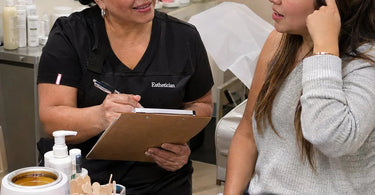
Boost sales, stock this essential professional resource, and make every waxing appointment safer by mastering one of the trickiest consultation situations: How to Handle a Wax Consultation When a Client Cannot Recall Their Medications. Picture this: Your client is comfortably settled in the treatment room, excited about beautifully smooth skin, when you ask about medications. Suddenly, the confident conversation turns into a guessing game involving a little white pill, a cream with a complicated name, and something prescribed by a dermatologist three months ago. Before you reach for your professional waxing supplies, remember that a thoughtful consultation can be the most important part of the entire service.
For licensed estheticians and waxing professionals, incomplete medication information is more than an awkward paperwork moment. Certain prescription medications, topical treatments, and active skincare ingredients can affect skin sensitivity, healing, or the risk of epidermal lifting during hair removal. The challenge is identifying potential concerns without making clients feel interrogated or pretending to practice medicine. Fortunately, a consistent consultation process helps protect clients, build trust, and support a professional waxing business.
Why Medication History Matters Before Waxing
Waxing removes hair by adhering to the hair and pulling it from the follicle. Unfortunately, the skin sometimes gets invited along for the ride, especially when its surface is compromised. Certain medications and skincare treatments can contribute to dryness, irritation, increased fragility, bruising, or delayed recovery.
One particularly important concern is epidermal lifting, which occurs when superficial layers of skin are removed along with the wax. This can leave an area looking shiny, raw, or unusually red and may increase the risk of discomfort, pigmentation changes, or complications.
Proper temperature control, application technique, and high-quality professional hard wax are important, but no wax formula eliminates medication-related contraindications. A premium product cannot compensate for skin that should not be waxed in the first place.
The purpose of medication screening is not to diagnose medical conditions. It is to recognize situations where treatment may need to be delayed until the client can provide reliable information or obtain guidance from an appropriate healthcare professional.
Start With Reassurance Instead of Interrogation
Clients often forget medication names for completely understandable reasons. Some take multiple prescriptions. Others remember the color of a bottle better than the medication itself. A client may also consider a prescription cream to be skincare rather than medication.
Respond calmly when someone says they cannot remember. A helpful explanation might sound like this: "That is absolutely fine. I ask because certain medications and skincare treatments can make waxing more irritating or increase the chance of skin lifting. We can review what you remember and decide whether it is safe to continue today."
This approach accomplishes three things. It removes embarrassment, explains why the information matters, and establishes that treatment decisions depend on safety rather than convenience.
Avoid language suggesting that every medication automatically prevents waxing. The relevant factors include the specific medication, route of administration, treatment area, skin condition, timing, and applicable professional guidance.
Ask Questions That Help Clients Remember
Repeating "Are you taking anything?" rarely produces new information. Instead, use specific, neutral prompts that help clients recall categories of treatment.
Begin with the purpose of the medication. Ask whether the client uses anything prescribed for acne, skin conditions, inflammation, infections, or another condition. Then ask whether they have recently started, stopped, or changed any medication.
Move beyond pills. Prescription creams, acne gels, medicated ointments, and topical retinoids deserve attention, especially when applied directly to the treatment area.
Useful consultation questions include:
- Are you currently taking prescription medications or using prescription skincare?
- Have you recently taken medication for acne or a skin condition?
- Do you use retinol, tretinoin, adapalene, or another retinoid product?
- Have you taken antibiotics recently or are you currently taking them?
- Do you take medications that affect bleeding, bruising, or skin healing?
- Have you started any new creams, peels, or exfoliating products?
- Have you noticed unusual dryness, irritation, bruising, or changes in skin sensitivity?
- Can you check your medication list, pharmacy app, or prescription packaging?
These questions are intended to identify potential concerns, not to collect unnecessary medical details. Clients should only be asked for information relevant to providing the requested service safely.
Recognize Medication Categories That Require Extra Caution
Not every medication has the same implications for waxing. Professionals should understand common categories and know when the correct response is to postpone treatment.
Isotretinoin and Prescription Acne Treatments
Oral isotretinoin is an especially important medication to identify. Dermatology guidance advises against waxing while taking isotretinoin and for six months after stopping because of the risk of skin injury and scarring. If a client cannot confirm whether an acne medication is isotretinoin or when treatment ended, do not proceed with waxing until the information has been verified and any necessary medical clearance obtained.
Prescription topical retinoids, including tretinoin, can also increase susceptibility to irritation and skin lifting. A client may know the product by a brand name rather than its active ingredient.
Ask where the product is applied and when it was last used, but do not invent a universal waiting period. Appropriate precautions depend on the specific product, treatment area, professional guidance, and the client's skin condition.
Importantly, clients should never be instructed to discontinue prescribed medication simply to accommodate a waxing appointment.
Antibiotics and Other Prescription Treatments
Antibiotics should also prompt further screening. Some medications or associated skin conditions can increase sensitivity, and professional dermatology guidance recommends avoiding waxing while using certain medications, including antibiotics.
If the client cannot identify the medication, verify it before deciding whether to proceed. Do not assume that all antibiotics affect the skin identically or that a standard waiting period applies to every prescription.
Prescription corticosteroids, particularly prolonged or potent topical steroid use, may be associated with skin thinning. Other medications may influence healing, bruising, or skin integrity depending on the treatment and individual circumstances.
For clients taking anticoagulants or medications that affect bleeding, investigate whether waxing might cause significant bruising or skin trauma. Do not advise stopping these medications. Refer questions about individual medication risks to the prescribing clinician or pharmacist.
Active Skincare Ingredients Count Too
One of the easiest ways to miss a contraindication is to focus exclusively on prescription drugs.
Clients may use powerful exfoliating products without realizing they belong in the consultation. Retinol, glycolic acid, salicylic acid, certain acne treatments, and recently performed chemical peels can all affect the skin's tolerance for waxing.
Ask about recent exfoliation, professional resurfacing treatments, and changes in home skincare routines. This is particularly important for facial waxing, where delicate skin and frequent active ingredient use can overlap.
Make sure clients understand that products purchased without a prescription still count. The phrase "It is just something from the skincare aisle" is not enough to establish that the area is ready for waxing.
Use a Simple Stop, Verify, or Proceed Decision Process
Every waxing business benefits from a consistent system for handling incomplete information. Rather than relying on intuition or the client's willingness to accept risk, use a documented decision process.
Stop: Do not wax when a known contraindication is present, the treatment area shows concerning skin changes, or a potentially high-risk medication cannot be identified.
Verify: Ask the client to confirm the medication name, active ingredient, and relevant usage history. A prescription label, reliable medication list, pharmacy record, or consultation with a pharmacist or prescribing clinician may help establish the facts.
Proceed: Continue only when relevant screening information is sufficient, no contraindication has been identified, the skin assessment is satisfactory, and the treatment is permitted under applicable licensing rules, training, and product guidance.
This framework reduces confusion for employees and helps clients understand why an appointment might need to be rescheduled.
A signed consent form does not make an otherwise contraindicated service safe. Likewise, a client saying they are willing to take the risk does not eliminate the professional's responsibility to exercise appropriate judgment.
What to Do When a Client Wants to Wax Anyway
Imagine a client has an event tomorrow and insists that waxing must happen today. Unfortunately, an important event does not change how vulnerable skin responds to wax.
Explain your decision without blame or unnecessary drama. You might say, "I would love to help you get ready, but because we cannot confirm the medication, I cannot safely recommend waxing this area today. Once we verify it, we can discuss the best next step."
Offer to reschedule after the information is confirmed. If appropriate, discuss alternative grooming options that do not involve pulling wax from the skin, while respecting your license, training, and any applicable contraindications.
Do not automatically substitute sugaring, a different wax temperature, or another adhesive hair-removal method. These techniques may still place mechanical stress on compromised skin.
Maintaining the boundary professionally often creates more confidence than rushing through a service simply because the appointment is already on the calendar.
Assess the Skin Without Relying on Appearance Alone
A visual assessment is essential, but it has limits. Skin can appear relatively normal while still being vulnerable because of medication use or recent exfoliation.
Check the treatment area for visible irritation, peeling, inflammation, open lesions, bruising, sunburn, unusual dryness, or healing skin. Ask about recent treatments such as chemical peels, aggressive exfoliation, and other procedures affecting the area.
Do not wax over damaged or inflamed skin. Follow your licensing requirements and professional protocols for other concerning findings.
A patch test may be useful for evaluating certain product reactions when otherwise appropriate, but it cannot establish that unknown medication use is safe. A small successful test does not rule out skin lifting during a full service.
Good lighting and an organized treatment area make assessments easier. Professionals can explore magnifying lamps and other suitable treatment-room equipment to support careful visual inspection.
Document the Consultation Without Creating a Medical Investigation
Accurate client records help create consistency from one appointment to the next. They are especially useful when a client returns after confirming an unfamiliar medication.
Document the information relevant to the service, including the client's reported medication status, any uncertainty, skincare products affecting the treatment area, visible skin concerns, questions asked, and the reason for proceeding or postponing.
If a client cannot remember a medication, record that uncertainty accurately rather than entering "no medications." Those statements mean very different things.
When relevant, note whether the client was advised to contact a pharmacist or prescribing clinician. Record any subsequent information or clearance according to salon policy and applicable requirements.
Protect confidentiality by restricting access to intake information, using secure storage, and retaining records according to applicable privacy and professional requirements. Collect only the details needed for safe service delivery.
A well-designed intake process should also allow returning clients to update their medication information. Yesterday's accurate answer is not necessarily today's accurate answer.
Keep Your Treatment Room Ready for Safe Services
Once screening supports proceeding, the physical setup should reinforce the same professional standard. An organized waxing station helps practitioners concentrate on application technique, temperature, skin support, and hygienic procedures.
Start with appropriate professional wax warmers that allow careful temperature management according to manufacturer instructions. Always evaluate wax temperature before application.
Maintain a supply of single-use wax applicators and spatulas. Never double-dip a used applicator into a communal wax container. This basic hygiene principle applies regardless of whether the consultation reveals medication concerns.
Use fresh protective coverings, including hygienic table paper, and maintain appropriate cleaning and disinfection procedures between clients. Stock suitable protective gloves according to the service and your sanitation requirements.
For services that are appropriate to perform, choose products based on the treatment area, hair characteristics, skin condition, practitioner training, and manufacturer instructions. Your inventory might include soft strip wax as well as hard wax options for different applications.
A reliable selection of pre- and post-waxing products can support normal preparation and aftercare. However, calming lotions and specialty formulas should never be presented as solutions to medication-related contraindications.
Train Your Entire Team to Give Consistent Answers
In a busy spa, the client may speak with a receptionist, booking coordinator, and esthetician before the service begins. If each employee gives different advice about medications, the experience becomes confusing and potentially unsafe.
Develop a written consultation protocol covering medication questions, skin assessment, contraindications, verification steps, documentation, and postponement procedures.
Train reception employees to recognize questions that should be referred to a licensed practitioner rather than providing medical assurances during booking.
For example, if someone calls to ask whether a prescription acne medication is compatible with eyebrow waxing, the receptionist should gather the relevant information and direct the concern to the appropriate professional instead of promising that a gentler wax will solve the problem.
Estheticians should also understand the limits of their scope. They can screen for contraindications and decline unsuitable services, but diagnosing conditions, prescribing medication changes, and providing individualized pharmaceutical advice belong with qualified healthcare professionals.
Review protocols periodically as professional guidance, product formulations, and applicable regulations evolve. Good training is not a one-time event followed by a binder that lives forever beneath the reception desk.
Build Medication Screening Into the Booking Process
One of the easiest ways to reduce incomplete consultations is to begin the conversation before the client arrives.
Include a short medication and skincare reminder in appointment confirmations. Encourage clients to bring an up-to-date medication list or have their prescription information available if they are uncertain about names.
For facial waxing, specifically mention prescription acne products, retinoids, exfoliating acids, and recent skin treatments. Keep the message educational rather than intimidating.
Online intake forms can provide structured questions, but they should not replace a brief verbal confirmation at the appointment. Clients may start a new medication between completing a form and arriving at the salon.
Establish a straightforward rescheduling policy for situations where safety information cannot be verified. Clients are more likely to cooperate when the procedure is explained consistently and respectfully.
Protect Client Trust While Protecting Your Business
Postponing a service may feel like lost revenue, particularly when your schedule is packed. However, preventable skin injuries can result in client distress, complaints, treatment expenses, reputational damage, and business disruption.
A professional consultation helps clients understand that they are receiving a service based on informed judgment, not simply a transaction.
That distinction matters in a competitive waxing market. Clients often remember practitioners who communicate clearly, respect personal boundaries, and demonstrate genuine concern for skin health.
Professionalism also creates opportunities for long-term loyalty. A client who must return after verifying a prescription can still leave with a positive impression if the situation is managed thoughtfully.
Consider evaluating your broader salon and spa business essentials alongside intake procedures, service training, and treatment-room organization. Operational consistency is just as valuable as having the right product on the shelf.
Common Consultation Mistakes to Avoid
Assuming forgotten means harmless: A client who cannot recall a medication has provided incomplete information, not confirmation that no risk exists.
Asking only about pills: Topical prescriptions, retinoids, exfoliating products, and recent professional treatments may be especially relevant to facial waxing.
Believing sensitive-skin wax eliminates contraindications: Product selection cannot reverse medication-related skin fragility.
Relying on a patch test to clear unknown medication use: A patch test does not establish overall safety when a potentially important contraindication remains unresolved.
Suggesting clients stop prescribed medications: Medication changes must be directed by the appropriate healthcare professional.
Allowing appointment pressure to determine the decision: The client's schedule, a special occasion, or an employee's sales target should never override safety screening.
Recording uncertainty as a negative answer: Documentation should distinguish between confirmed absence of relevant medications and missing information.
Frequently Asked Questions About Waxing and Unknown Medications
Can I wax a client who cannot remember the name of a prescription?
That depends on whether the missing information is relevant to the proposed service. If the medication may affect skin integrity, bruising, healing, or another safety consideration, postpone waxing until the necessary information can be verified. Do not guess based on the client's appearance or recollection.
What if the client insists they have been waxed before without problems?
Previous successful appointments do not guarantee that current skin conditions or medications are compatible with waxing. Screen the client according to their present circumstances.
Can switching from strip wax to hard wax make the service safe?
Not when a contraindication remains unresolved. Different wax types may have different application characteristics, but both can cause skin injury under unsuitable conditions.
Should clients stop using prescription skincare before waxing?
Estheticians should not direct clients to stop prescribed treatments. Clients should consult the prescribing clinician about medication use, treatment timing, and appropriate hair-removal options.
What if the client remembers the medication after leaving?
Update the consultation record, verify the relevant information, and determine whether another appointment is appropriate under professional guidelines and the practitioner's scope of practice.
Does a signed waiver allow treatment to continue?
No consent document substitutes for appropriate screening or permits a professional to disregard known contraindications, licensing requirements, or safe-practice standards.
Make Every Wax Consultation a Sign of Professional Excellence
Handling a wax consultation when a client cannot recall their medications requires patience, careful questioning, practical decision-making, and the confidence to postpone treatment when important information is missing.
Keep the conversation friendly, identify relevant medication and skincare concerns, document uncertainty accurately, and refer medical questions to qualified professionals. Most importantly, never let product promises or appointment pressure replace sound professional judgment.
At Pure Spa Direct, we understand that successful waxing services depend on more than a beautifully stocked wax station. As a professional distributor, we help spas, salons, and estheticians source the equipment, disposables, and service essentials needed for organized, hygienic treatment rooms. Explore our professional waxing supplies and complete waxing kits to support your team's daily workflow.
Because the best waxing experience is not simply about removing unwanted hair. It is about making clients feel comfortable, informed, respected, and confident that their skin is in capable hands. Smooth results are wonderful, but professional judgment is always in style.

