
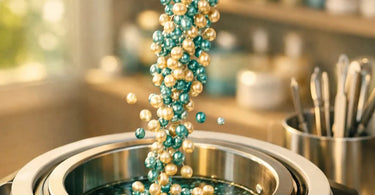
Pros know this delivers every time... the satisfying “pop” of a perfectly set hard wax bead, the pristine, hairless skin left behind, and the feeling of a job well done. But let’s be real for a second: that triumphant feeling can fade faster than a spray tan in the rain when you look down at your wax pot and realize you just used half a bag on one Brazilian. Ouch. In the world of professional waxing, every bead counts, and watching those little spheres of promise melt away into wasted, unusable globs is the business equivalent of throwing dollar bills directly into the trash can while your wax warmer plays the world's smallest violin.
We at Pure Spa Direct see it all the time. Spas and salons are buying top-tier products like ItalWax, Starpil, and Dermwax, but they aren't getting the full potential out of them. The good news? Mastering your hard wax technique isn't just about giving a killer service (though, obviously, that's the goal). It's also a major win for your bottom line. By tweaking how you handle, heat, and apply your hard wax beads, you can dramatically reduce waste and maximize product yield. That means less time scrubbing wax off your waxing supplies and more money in your pocket. Let's dive into the sticky, satisfying science of stretching your wax.
Why Hard Wax Beads Are Your Wallet's Best Friend (When You Treat Them Right)
Hard wax beads are inherently a more economical choice than soft wax, provided you know the secret handshake. Unlike their strip-wax cousins, which often require a thick, wasteful layer and a fabric strip that absorbs product, hard wax beads are designed for precision. They adhere only to the hair, not the skin, meaning you use less product per area. This is a huge win for Professional Stripless Hard Wax efficiency. But this isn't a passive benefit; it's a skill. If you're using the wrong wax spatulas and applicators or heating them to the temperature of a forgotten latte in a hot car, your efficiency goes out the window. Treat your beads right, and they'll treat your budget right.
The Golden Rule: Temperature is Everything (Or, How to Not Cook Your Profits)
We've all been there. You're in a rush, you crank the wax warmer to high, and ten minutes later, your once-perfectly-round beads have transformed into a bubbling, smoking, thin-as-water mess that drips everywhere except where you want it. Overheating your hard wax is public enemy number one when it comes to waste. When wax is too hot, it becomes runny. You end up applying a thin, uneven layer that doesn't grip the hair properly, leading to multiple applications (double the product!) on the same spot. Plus, it can burn your client, and a burnt client is a client who doesn't come back—the worst kind of waste of all.
The sweet spot for most quality hard wax beads, like those in our ItalWax collection, is a thick, spreadable, honey-like consistency. Think creamy peanut butter, not soup. Use a warmer with precise temperature control and avoid the temptation to "turbo-boost" it. Heat the beads slowly, stir them occasionally with a clean spatula to distribute the heat evenly, and test the temperature on the inside of your wrist before applying. If you have to blow on it to cool it down, it's too hot. Let it sit and thicken up. This simple step will drastically reduce product waste from drips, runs, and re-dips.
Application Station: Less is Actually More
Here's a truth bomb: that giant glob of wax you just slapped on is not making you look like a hero. It's making you look like you hate your own inventory. Hard wax works best when applied in a thin, even layer that is slightly thicker at the edge you plan to pull (create a little "tab"). A layer that's too thick doesn't dry uniformly, can crack, and often leaves a sticky mess that requires extra product to remove. A layer that's too thin (often from wax that's too hot) won't grip the hair effectively, forcing you to go back over the area.
When you're working on larger areas like legs or arms, you want to cover the surface efficiently. For intimate areas or the face, precision is your best friend. Using the right size spatula is crucial. A small spatula for brows and upper lips, a medium for underarms and bikini lines, and a larger one for legs. This isn't just about technique; it's about resource management. You are literally controlling the outflow of your product with every scoop. So, scoop deliberately. Apply with intention. Pretend each bead costs you a personal high-five from your favorite celebrity—you wouldn't waste it.
The "Re-Dip" Dance: When to Save and When to Let Go
One of the most common waste culprits in a busy salon is the dreaded double-dip. You apply a layer, it doesn't quite cover, so you dip the same spatula back into the pot, contaminating the entire batch with a little bit of powder, oil, or—let's be honest—a micro-spec of skin. Before you know it, your pristine wax is cloudy and loses its grip, leading to more failed applications and more product waste.
Here's the protocol: Use a clean spatula for every application. I know, I know, you think you're saving time and spatulas. But you're not. You're creating waste. If you need to reapply in a small area, either use a fresh spatula or, if you're working on the same client and the spatula hasn't touched the skin, you can use it to carefully add a little more. But the moment a spatula has touched a client's skin, it is done. It goes in the trash, not back in the pot. This one change will keep your wax performing at its peak, ensuring you get the most out of every bulk wax deal you invested in.
Mastering the Pull: It's All in the Wrist (and the Taut Skin)
A failed pull is the ultimate waste of wax. You wait too long, and it cracks. You don't wait long enough, and it's a sticky mess. You pull at the wrong angle, and you leave half the hair behind. Each failed pull means you have to go back in with fresh wax, using more product to fix a mistake that was entirely preventable. It’s a productivity and profitability sinkhole.
The key is patience and skin tension. Once you've applied your wax, let it do its thing. It should cool enough to be firm to the touch but still flexible. This is the "sweet spot." Before you pull, use your free hand to stretch the skin as taut as possible—this reduces pain and ensures the wax removes cleanly, not just the hair. Then, pull with a swift, low-to-the-skin motion in the opposite direction of hair growth. A clean, successful pull on the first try uses exactly the amount of product you intended. Master this, and your product yield will thank you.
After the Service: Saving Leftovers and Keeping it Clean
What about the wax left in the pot at the end of the day? The temptation to toss it out and start fresh in the morning is strong, but it's a costly habit. High-quality hard wax is designed to be reheated multiple times without losing its integrity. That's part of what you're paying for. As long as you've kept your wax free of contamination (no double-dipping!), you can simply turn off your warmer and let the wax harden. The next morning, turn it back on, stir it gently, and it will re-melt to its perfect consistency.
However, there is a limit. If the wax starts to look cloudy, smell different, or has a grainy texture, it's time to replace it. But for daily use, you should easily get a week or more from one pot. Also, don't forget to maintain your equipment. A clean professional wax warmer works more efficiently, heating the wax evenly and preventing burnt-on residue that can waste product and shorten the life of your equipment. It's like changing the oil in your car—a little maintenance goes a long way.
Choosing the Right Beads for the Job: A Strategic Investment
Finally, maximizing product yield starts before you even open a bag. Are you using the right hard wax for your clientele? A wax formulated for coarse hair is going to work better and faster on a Brazilian than a gentle facial wax. Using a product that's mismatched to the task often results in using more of it. This is where having a curated selection from our brands pays off.
For instance, Dermwax offers flexible, gentle formulas perfect for sensitive areas. Lycon is known for its exceptional grip on stubborn hair, and Starpil offers specialized formulas for different body parts. Using a hyper-specialized ItalWax product for the exact service you're performing is the most efficient move you can make. It ensures the first application is effective, minimizing the need for rework and wasted product. So, next time you're stocking up on your waxing supplies, think strategically about which formulas will serve your services best.
Reducing waste and maximizing yield isn't about being cheap; it's about being a smart, sustainable business owner. It's about honoring the craft and the products you use. By focusing on proper heating, precise application, clean habits, and mastering the pull, you’ll find that your wax lasts longer, your services feel more luxurious, and your bottom line looks healthier. Now, go forth and make every bead count. And hey, when you see those savings add up, you can treat yourself to a new luxury spa furniture piece—you've earned it.
