
Build better results with smarter tools... and let‘s be real, who doesn't want their clients to walk out looking like they just had a tropical vacation (minus the sun damage and awkward tan lines)? If you are a spa professional or esthetician, you know that treating melanin-rich skin requires a little extra finesse. It‘s not about being scared of peels; it’s about being smarter than the peel. We‘re talking about ditching the one-size-fits-all disaster pants and embracing the gentle, yet mighty power of enzyme exfoliation. Because let’s face it, nobody has time for post-inflammatory hyperpigmentation (PIH) crashing the party uninvited. At Pure Spa Direct, we are all about giving you the wholesale goods to make you the hero of your treatment room, so let‘s dive into how to pick the perfect enzyme peel strength for every gorgeous melanin-rich complexion that walks through your door.
First, a quick science moment that won‘t put you to sleep. Melanin-rich skin is absolutely stunning, but it tends to react to trauma (like a harsh acid peel) by producing extra pigment as a protective mechanism. Think of it as an overprotective bodyguard. Traditional strong chemical peels can sometimes send that bodyguard into a frenzy, causing dark spots or bleaching. Yikes. This is where enzyme peels swoop in like a friendly ninja. They work by digesting dead skin cells (keratin) on the surface without the intense burning or controlled injury that acids cause. They are generally much safer for Fitzpatrick skin types IV to VI, but strength still matters, honey! You wouldn‘t use a jackhammer to hang a picture, right? Same logic applies here.
Why Enzymes Are Your BFF for Darker Skin Tones
Before we talk about low, medium, or high strength, let‘s appreciate why enzymes are the VIPs of the facial treatment world for melanin-rich clients. Unlike glycolic or TCA peels that penetrate deep and can cause inflammation, enzymes like Papain (from papaya) and Bromelain (from pineapple) are proteolytic. Fancy word aside, they literally eat up the glue holding dead skin cells together. They work on the stratum corneum (the very top layer) without a massive inflammatory response. This means you get that gorgeous glow, smoother texture, and help with mild congestion or sun damage without the fear of a major PIH flare-up. It‘s exfoliation for the control freak in all of us. Plus, they smell way better than a chemical lab explosion. You can even pair them with a Facial Steamer to boost hydration and efficacy without increasing irritation.
The Low Strength Lane: Gentle Enzymes for Sensitive or Reactive Skin
Okay, let‘s talk dosage. Low-strength enzyme peels are your go-to for clients who are new to professional exfoliation, have reactive skin, or are dealing with active acne breakouts (where we want to calm, not agitate). Think of this as the “spa day chill pill.” These formulations usually contain smaller concentrations of active enzymes, often buffered with soothing agents like lactic acid or aloe. They are perfect for a quick brightening facial or prepping the skin for extractions without turning the client’s face into a tomato. You might also use this strength on clients who are currently using prescription retinoids; we don‘t want a war on their face. A low-strength peel will leave the skin feeling soft and looking dewy, but it likely won’t touch deep-set hyperpigmentation. It‘s the starter pack for enzyme newbies. Always follow up with a High-Quality Towel soaked in cool water to remove the mask gently.
Medium Strength Magic: The Workhorse for Hyperpigmentation
Now we are cooking with gas. For the majority of your melanin-rich clients dealing with that stubborn post-inflammatory hyperpigmentation from old breakouts or general dullness, a medium-strength enzyme is where the money is made. This is the sweet spot. It‘s strong enough to actually lighten dark spots over a series of treatments, but safe enough to do every two to four weeks. Look for formulations that blend powerful fruit enzymes with brightening boosters like Kojic Acid, Vitamin C, or Niacinamide . These ingredients help inhibit tyrosinase (the enzyme that makes melanin) while the enzymes sweep away the pigmented dead cells. This is the “fade the spots, not the client” level. If you have a client who says, “I just want to look even,” this is your huckleberry. You can add a Ultrasonic Skin Scrubber after the enzyme to further dislodge debris, but be gentle—don‘t overdo it on the same day!
High Strength / Professional Use Only: When to Unleash the Beast
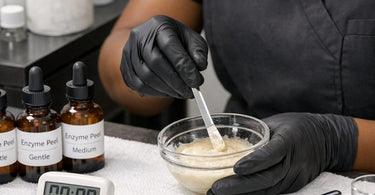
Alright, hotshot. High-strength enzyme peels are not for the faint of heart or the untrained hand. These are usually pure enzyme powders that you mix with an activator (or water) on the spot, creating a highly concentrated paste . These are fantastic for very thick, oily, or resistant skin that has seen it all. However, on melanin-rich skin, high strength comes with a caveat: timing is everything. You might leave a high-strength papain mask on for 3-5 minutes on a Fitzpatrick II, but only 90 seconds on a Fitzpatrick V. Seriously, watch the clock like a hawk. The goal is a slight, pleasant tingling, not a burn. If it stings, run (don‘t walk) to remove it. These are amazing for breaking down congestion and refining deep textural irregularities, but you must follow strict protective protocols. Always have your applicators and neutralizers ready. This isn’t a level for a rushed lunch break.
Listen to the Skin: The Golden Rule
I can give you all the charts in the world, but the actual rule is: listen to the skin in front of you. Fitzpatrick types are a guide, not a gospel. I‘ve seen a Type III burn to a crisp and a Type V handle a medium peel like a champ. You have to assess the condition of the skin. Is the barrier compromised? Is it actively breaking out? Is it dehydrated? If yes, drop down a strength level. It is always better to under-exfoliate and have the client come back next month than to over-exfoliate and spend the next six months trying to fix the dark marks you caused. Don‘t be that esthetician. Be the one who is known for being safe, smart, and effective. Your spa bedding should be clean, and your reputation should be cleaner.
The Perfect Pairing: Pre & Post Care for the Win
You can pick the perfect strength, but if your client goes home and uses a gritty apricot scrub the next day, we have a problem. Pre-care is vital. For two weeks before an enzyme peel, melanin-rich clients should be using a solid home routine featuring tyrosinase inhibitors (like azelaic acid or tranexamic acid) and always SPF. Post-care is non-negotiable. After an enzyme peel, the skin is fresh. No actives for 48 hours. Use a gentle cleanser, a hyaluronic acid serum, and a physical block sunscreen (zinc oxide is great for calming). If you don‘t have these retail products to send them home with, you are missing out on revenue and client results. Stock up on Spa Retail Products so you can be the full-service solution. Remind them that a little flaking is normal (like dandruff, but on your face), but redness and pain are not. Tell them to call you, not Dr. Google.
Common Fails (And How to Avoid Laughing/Crying)
We‘ve all been there. You mix up what you think is a low-strength mask, but you accidentally grabbed the “Pro” formula, and suddenly your client looks like they‘re blushing from the neck up. Fail. Or, you leave the room to grab more cotton rounds and get distracted by the new ItalWax shipment, leaving the enzyme on for ten minutes instead of five. Super fail. The remedy? Stay in the room. Set a timer. And always, always spot test behind the ear if you are using a new brand or a new strength on a client you haven‘t seen before. Also, avoid using enzyme peels on skin that has been freshly waxed or lasered. That is a recipe for a lawsuit, not a glow up. If you need gentle hair removal alternatives, look at Natural Sugaring Products for those clients instead of waxing right before a peel.
Tools of the Trade: What You Need in Your Cart
Ready to upgrade your enzyme game? You need the right tools to apply and remove these treatments like a boss. First, you need flawless application. Grab some Mixing Bowls and Applicators and Spatulas to keep things hygienic. Secondly, removal should be gentle but effective. Use dampened Compressed Sponges or Professional Cotton to lift the mask without rubbing the skin raw. Finally, finish with a calming mask or a chill High Frequency Machine to zap any lingering bacteria and soothe the skin. And for the love of all that is holy, do not forget to run a Facial Steamer beforehand to open the door for the enzymes. It‘s like butter on warm toast, not cold toast.
Wrapping It Up (Without Wrapping Your Client in a Sheet)
Selecting the right enzyme peel strength for melanin-rich skin is not rocket science, but it is skin science. It requires respect, attention, and a little bit of intuition. Start low, go slow, and always watch the skin‘s reaction in real-time. Whether you are using a gentle pineapple enzyme for a teen with acne or a high-power papain mix for a client with deep sun damage, the goal is the same: radiant, even, healthy skin without the drama. At Pure Spa Direct, we have the wholesale brands you trust, from Tuel Skincare to Murad, and all the spa essentials in between. Now go forth, exfoliate wisely, and make those melanin-rich complexions shine like the diamonds they are. Your clients will thank you, and their selfies will be proof.
