
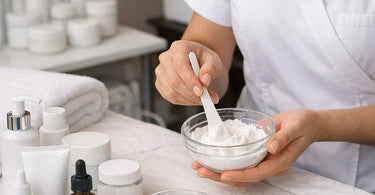
Clients notice the upgrade... especially when you make them feel seen, respected, and absolutely radiant without the outdated baggage. We live in a fabulous era where the beauty industry is finally having the honest, sometimes awkward, conversations we have been avoiding for decades. If you have been in this game for a while, you have definitely had a client walk in, point to a celebrity who has a completely different genetic melanin profile, and say, "Make me look like that." It puts you in a tough spot. You are an artist, not a magician who changes someone's DNA. But here is the plot twist: the language we use on our spa menus, retail shelves, and social media might be accidentally reinforcing that impossible standard. Specifically, the word “Whitening.” It is time we talk about why ditching that term is not just good politics—it is good business.
Let’s be real for a second. The global beauty industry is shifting gears faster than a barber with a straight razor . Major players like L'Oreal and Unilever have already scrubbed the words “whitening,” “fair,” and “lightening” from their bestsellers . Why? Because they realized what we all know deep down: skin comes in a breathtaking spectrum of shades, and implying that one end of that spectrum needs to be “fixed” to look like the other is so last century. For the modern skincare pro, this isn't about censorship; it is about clarity. It is about treating every single person who walks through your door like the masterpiece they already are, while still offering them the glow-up they actually came for.
The Great Rename: Why “Brightening” Wins Every Time
Let’s clear up the confusion because, honestly, the marketing teams of the past made a mess of this. When you offer a “Whitening” treatment, what are you actually selling? Are you selling a reduction in hyperpigmentation? Are you selling a glow? Or are you accidentally selling the idea that a client's natural skin color is wrong? Spoiler: It is usually the first two, but the word implies the third .
Whitening implies a change in your client's baseline melanin. It suggests bleaching or altering the skin's natural color. In many medical contexts, that requires harsh chemicals like high-grade hydroquinone or even worse, unregulated additives . That is a liability nightmare and, frankly, not what 99% of your spa body treatment clients are looking for.
Enter Brightening. This is the hero term we all need to adopt. Brightening is about radiance, clarity, and health. It is about taking that client's specific skin—whether it is porcelain, olive, bronze, or deep mahogany—and making it look like the healthiest, most hydrated, most glowing version of itself . When you slap a brightening serum on a client, you are fighting dullness, not ethnicity. You are fading that annoying sun spot from last summer's beach day, not trying to turn back the clock on their heritage. It is a subtle shift in language, but to a client who has spent their life feeling like they don't fit the “fair” mold, it is everything.
What Are We Actually Treating? (Let’s Get Specific)
Okay, so we have agreed to banish the “W” word from our vocabulary. But what do we do with all those services? You still need to fix uneven tone. You still need to sell those retail products that fade acne scars. You just need to describe the what and the why better.
Instead of offering a “Whitening Facial,” try “Hyperpigmentation Correction” or “Radiance Recovery.” Instead of a “Whitening Body Wrap,” try “Even-Tone Detox.” We are moving the goalpost from “changing color” to “improving condition.” This is where your professional advanced facial treatment products really shine. You are selling results, just without the baggage.
For example, when using a High Frequency Machine or a Hydrodermabrasion device, tell your client: “This is going to lift away the dead, dull cells that are hiding your natural glow.” You aren't promising to make them pale; you are promising to make them sparkle. And let’s be honest, who doesn't want to sparkle?
The Ingredient Shift: How to Brighten Safely
Now, let's talk about the tools of the trade. If you are currently offering “whitening” treatments, take a hard look at your ingredient deck. Are you using ingredients that are safe and effective, or are you riding the razor's edge of chemical burns?
True skin lightening (the medical kind) often relies on ingredients that suppress melanin production entirely. That can be dangerous, especially without a doctor's supervision . Brightening, on the other hand, relies on ingredients that exfoliate, hydrate, and block the transfer of pigment to the surface cells.
You should be talking about Vitamin C (the antioxidant queen), Niacinamide (the barrier builder that stops pigment in its tracks), Kojic Acid, Azelaic Acid, and Alpha Hydroxy Acids (AHAs) like Lactic and Glycolic acid . These are your heavy hitters. They are also your safest bet. They are the ingredients that tell the skin, “Hey, let's just turn over these dead cells and reveal the fresh, even stuff underneath,” rather than “Let's kill the color factory.” Stock up on these types of ingredients in your spa retail products and watch your clients glow (safely).
Navigating the Waxing Suite: Ingrown Hairs & Dark Marks
This conversation hits particularly close to home for our waxing supplies for professionals crew. Let’s face it, the bikini line and underarms are prime real estate for Post-Inflammatory Hyperpigmentation (PIH). Those pesky dark marks left behind after an ingrown hair or a rough wax are often the reason clients ask for “lightening” creams. They don't want to change their skin color globally; they want to erase the ugly purple spot where a hair got stuck.
This is a perfect opportunity to use ethical language. You aren't offering a “Whitening Cream for the Bikini Area.” You are offering “Brightening Correction for Ingrown Scars.” See the difference? One sounds like it belongs in a dubious back-alley clinic; the other sounds like a medical-grade solution for a specific problem.
Pair your Ingrown Hair Products with a brightening serum that contains Licorice Root or Tranexamic Acid. Educate your clients that the goal is evenness, not a color change. When you use ItalWax - Wax or Lycon (which is designed to grip the hair, not the skin), you are already reducing trauma, which reduces the dark marks. Finish the job with the right retail recommendations, using the right words, and you become a hero, not just a hair-removal technician.
Nail & Hair Salons: The “Nude” Problem
While we are cleaning up our language, can we talk about the elephant in the room? The “Nude” pump. For decades, the beauty industry decided that “nude” meant beige. It meant pale pink. It meant “white lady.” . That is not inclusive, and frankly, it is just lazy inventory management.
In your Professional Nail Care Collections, look for brands that describe their shades specifically. Don't just sell a “Nude Polish”; sell a “Mocha Sheer,” a “Sand Beige,” or a “Rose Taupe.” . The same goes for Lash & Brow Enhancement Services. When tinting brows, we are matching the hair to the client's natural coloring, usually a few shades darker. We aren't trying to “lighten” brows to match an aesthetic—we are enhancing them. Even with Hair Bleaches and Lighteners (note the use of “Lightener” instead of “White-ener”), we are lifting pigment to achieve a pastel canvas, not erasing the client's identity.
Imagine doing a beautiful Brow Lamination and Tint on a client with darker skin. If you only stock “nude” makeup or “blonde” brow tints that are too light, you fail. If you stock a diverse range of shades and call them what they are—“Ebony,” “Walnut,” “Honey”—you tell that client, “I see you, and I know how to do my job.” That is the power of language.
How to Talk to Clients About the Switch (Without Confusing Them)
Change is hard, especially when Mrs. Johnson has been coming to you for 10 years asking for her “Whitening Mask.” You can't just snap your fingers and expect her to magically know the new lingo. You have to guide her.
Try this script next time she asks: “Mrs. Johnson, we have actually updated our menu to be more specific about the results we get! I am still going to give you that amazing glow and fade those sun spots you hate, but we are calling it a 'Brightening' treatment now. We found that 'whitening' implied we were changing your whole skin tone, which we would never do—we just want to make your natural skin look as clear and radiant as possible!”
Most clients will respond with, “Oh, well, that makes sense. I don't want to look like a ghost anyway, I just want to look awake!” Bingo. You have just educated a client, aligned with their values, and sold them the same service, but better. Use those same principles when selling retail. Hand them a Premium Skincare Product and focus on the texture of the result. “This is going to make your skin feel like silk and look like glass.” Nobody argues with glass skin.
Equipment Check: Do Your Machines Need a Rebrand?
Finally, let's look at your Top-Quality Equipment & Furniture for Spas & Salons. Your Facial Steamers don't care what you call the treatment—they just blast steam. But the way you position your Microdermabrasion or Ultrasonic Facial Machines matters.
Are you selling the “Ultimate Whitening Facial” on your booking site? Change it to “Ultimate Clarity + Even Tone Facial.” Are you selling a “Whitening Body Scrub” using your Sugar Scrubs? Change it to “Radiance Reveal Scrub.” The physical action of the equipment remains the same (exfoliation, circulation, oxygenation), but the emotional impact of the name changes completely.
Using Light Therapy Devices? Instead of saying this “whitens” the skin, explain that certain wavelengths (like Yellow or Green LEDs) target melanocytes to calm pigmentation production. You are using science, not social pressure. That makes you look smarter, and frankly, it makes you more money because clients trust the science.
Conclusion: Your Brand, Your Values, Your Bottom Line
Look, we know you didn't get into this industry just to make a quick buck. You got into it because you love the look on someone's face when they look in the mirror and finally see what you see: potential, beauty, and confidence. Using outdated language like “Whitening” chips away at that confidence before you even start. It tells a segment of your potential clientele that your space might not be for them .
By switching to “Brightening” and focusing on skin health (hydration, clarity, exfoliation, evenness), you open your doors to everyone. You become the Professional Salon that gets it. You become the Massage therapist who understands holistic wellness isn't just about muscles, but about mental well-being too.
So, go ahead. Audit your menu. Check your product labels. Change your Salon & Spa Bedding if you have to (okay, maybe not the sheets, but definitely the marketing). Make the switch. Your clients will feel safer, your ethics will be intact, and honestly, you will sleep better knowing you are part of the solution, not the problem. Now go out there and make the world a brighter place—literally.
)