
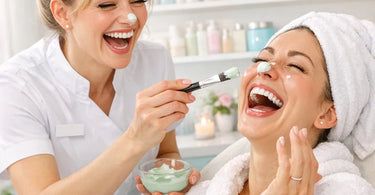
Make excellence your standard, and sometimes that means embracing a little temporary discomfort for a fantastic, long-lasting result. Let's talk about one of the most common reflexes in our industry: the automatic apology. A client flinches during a bikini wax, and we instantly murmur, "Sorry!" They tense up during an ingrown hair extraction, and we say it again. But what if this well-intentioned habit is actually undermining your expertise, shaking client confidence, and even making the experience feel more painful? Buckle up, beauty pros, because we're instituting the "No Apology" Rule. It's not about being cold-hearted; it's about being confident, professional, and reframing the entire service into one of empowered care.
Think about it. When you apologize for something, you're implicitly taking ownership of a negative outcome. You're saying, "I did something wrong that caused you this discomfort." But did you? You performed a skilled, technical service exactly as trained. The brief sensation is a known, expected, and temporary part of the process to achieve the smooth, hair-free skin they booked you for. By apologizing, you accidentally frame your professional action as a mistake, which can make clients anxious ("Why is she sorry? Is this going to hurt more? Is she doing it wrong?"). Instead, we need to master the art of acknowledgment and redirection. This shift is a game-changer for client trust, your own stress levels, and those all-important repeat bookings.
Why "Sorry" is the Wrong Word (Even When You Feel It)
Our desire to soothe is innate, especially for those of us in caring professions. But language is powerful. Saying "sorry" during a moment of sensation can actually heighten a client's perception of pain. It focuses their attention squarely on the discomfort and validates it as something that shouldn't be happening. Instead, we want to acknowledge the sensation while confidently moving the process—and the client's mind—forward. This is where your toolkit isn't just your favorite hard wax or your precision spatulas; it's your vocabulary.
Consider the difference. A flinch, followed by "Sorry!" creates a pause filled with tension. A flinch, followed by a calm, "Just breathe through it... and we're done. Beautiful." keeps the rhythm. The latter acknowledges the moment without giving it power, reaffirms your control, and immediately points to the completion and success of the action. You're the guide, not a fellow passenger on the anxiety train.
The Champion's Playbook: What to Say (& Do) Instead
So, if "sorry" is off the table, what goes in its place? Here’s your new script, filled with phrases that project confidence, control, and care.
1. The Acknowledgment & Instruction: This is your bread and butter. "I know, that's a sensitive spot. Take a deep breath in... and out as I remove it. Perfect." You've validated their feeling without apologizing, and you've given them an active task (breathing) that physiologically reduces pain perception.
2. The Forward-Focus Compliment: "You're doing great. This section is the toughest, and then it's all easy coasting." This rewards their endurance and sells the rest of the service as a reward.
3. The Informative Prepare: Before a potentially sensitive area, use a calm warning. "Okay, next one might bring a bit more sensation. Ready? One, two..." This builds trust because you're not surprising them. They are prepared and feel in partnership with you.
4. The Confident Distraction: "Just a few more and your brow arch is going to be impeccable. Have any plans this weekend?" A light question can pull their mental focus away from the sensation. This works wonders during brow shaping or lash lift application.
5. The Empowering Reframe: "That sensation is the wax gripping strongly—it means we're getting a super clean removal so you stay smooth longer." You've transformed the "ouch" into a positive indicator of efficacy.
Back Up Your Words with Pain-Minimizing Actions
Your new verbal strategy needs to be supported by top-tier technique and products. This is where Pure Spa Direct becomes your backstage crew. The "No Apology" Rule is easiest to enforce when you're using the best tools to minimize discomfort in the first place.
Invest in Superior Wax: Not all waxes are created equal. A low-temperature hard wax like ItalWax shrinks as it sets, gripping hair not skin. Brands like Starpil and Cirepil offer formulas with skin-soothing properties. The right wax makes your job easier and the client's experience better—fewer flinches means fewer urges to apologize!
Master Pre & Post-Care: Your service starts before the wax touches the skin. Using a high-quality pre-wax oil or powder creates a protective barrier. Following up with a calming post-wax lotion or serum not only soothes but shows exquisite aftercare. Offer retail-sized ingrown hair treatments to extend the comfortable, smooth results.
Control the Environment: A relaxed client feels less pain. Is your towel steamer providing warm, comforting towels? Is the table heated? Are you using a calming essential oil in a diffuser? These sensory details build a cocoon of relaxation that directly counteracts pain sensitivity.
Beyond Waxing: Applying the Rule to All Services
This principle isn't just for waxing! It applies anywhere a service involves therapeutic or corrective discomfort.
Massage Therapy: Instead of "Sorry, is that too much pressure?" try, "This area feels very tight. I'm going to work here to release it; let me know if you need me to ease up for a moment."> You're the expert diagnosing and treating.
Advanced Skincare: During a microdermabrasion or chemical peel, "You'll feel a warm, tingling sensation—that's the active formula working. It will subside in just a minute."
Lash Extensions: If a client's eyes water, "It's perfectly normal for the eyes to water a bit; we're working close to the lash line. Just relax, and it will pass."
Nail Care: During cuticle work, "I'm just cleaning up this edge precisely so your gel polish will last for weeks without lifting."
The Icing on the Cake: Ending on a High Note
When the service is complete, this is your moment to shine. Instead of a final, "Sorry about any pain," you say, "You did wonderfully. Look at these fantastic results!"> Hand them a mirror, celebrate the outcome. Then, reinforce the comfort of the aftercare. "I've applied a soothing lotion to calm the skin immediately. Use this cuticle oil (or serum, or scrub) at home to keep everything perfect."
By dropping the unnecessary apology, you step fully into your role as a confident, skilled professional. You manage the client's experience from start to finish, turning potential moments of tension into demonstrations of your competency. The result? Clients who trust you implicitly, who feel empowered (not victimized), and who book again because they feel they're in the hands of a true expert—not someone who's just "sorry."
Ready to outfit your salon for a no-apology, all-confidence experience? Explore our complete range of professional waxing supplies, spa essentials, and top-quality equipment at Pure Spa Direct. We supply the tools; you supply the expertise. Now go forth and own your craft—unapologetically.
)