
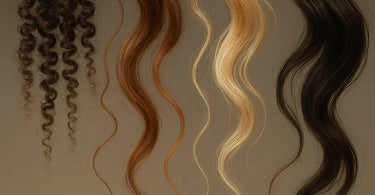
Smart tools, professional results... and a whole lot of confused looks when that gorgeous red you mixed turns out burgundy on your client with coily hair. If you've ever scratched your head wondering why the same professional hair color looks completely different on two different clients, you're not alone. The secret isn't in the formula—it's in the fiber. A client's curl pattern and hair density are the puppet masters pulling the strings of color uptake, and understanding this is what separates good colorists from absolute hair heroes.
Think of hair like a sponge. A tight, dense sponge (aka coily, high-density hair) absorbs liquid differently than a loose, airy sponge (straight, fine hair). The same principle applies to color molecules. They don't just blindly stain; they navigate a complex landscape of twists, turns, and density that ultimately determines the final hue. Getting this wrong leads to frustrated clients and costly corrections. Getting it right? That leads to rave reviews and a chair that's always full.
The Curl Spectrum: From Straight Springs to Coily Corkscrews
Let's break it down. Hair texture is typically categorized on a spectrum from 1 (straight) to 4 (coily). Each type has its own personality and its own way of interacting with color.
Type 1 (Straight): This hair is like a smooth, open highway. Color molecules can cruise right on down to the cortex with minimal obstacles. The result? Predictable, even, and often more intense color uptake. The downside? Color can sometimes process faster than expected, so timing is crucial.
Type 2 (Wavy): Now we're introducing some gentle curves to our highway. The wave pattern creates slight variations in how light reflects and how color absorbs. You might see subtle dimension even with a single process color, which can be a beautiful, hidden benefit.
Type 3 (Curly): The highway has become a winding mountain road. The curls create more surface area and cause light to bounce around differently. Color may appear slightly less intense than on straight hair because of this light reflection. The bends in the hair shaft can also make it slightly more resistant, so ensuring proper penetration is key.
Type 4 (Coily/Kinky): This is the off-road adventure of hair textures. The tight zig-zag pattern creates the most surface area but can also be the most resistant. The cuticle layers are often tightly packed, making it harder for color to penetrate initially. However, once it does, the results can be incredibly rich and vibrant. This hair type requires special attention to ensure even saturation from root to tip.
Density Drama: It's Not Just About the Curl
While curl pattern sets the stage, hair density writes the script. Density refers to how many hair strands are packed per square inch on the scalp.
Low Density (Fine Hair): With fewer strands, this hair can be easily overwhelmed by color. It processes quickly and can become saturated faster, leading to darker or more intense results than anticipated. A gentle hand and careful formulation are required to avoid a color disaster. Using a lower volume developer is often a smart move.
High Density (Thick Hair): This is the hair that eats color for breakfast. It can require more product to fully saturate and may need longer processing times to achieve the desired level of lift or color deposition. The sheer mass of hair can act as an insulator, so checking the color progress frequently is essential to prevent under-processing.
The Dynamic Duo: When Texture and Density Team Up
The real magic (or mayhem) happens when curl pattern and density combine forces. A client with high-density, type 4 coily hair presents a very different coloring challenge than someone with low-density, type 4 hair.
The High-Density, Coily Client: This hair is often highly resistant. The combination of tight cuticles and a thick head of hair means you need a strategy. Pre-treatment with a clarifying shampoo can help remove buildup and open the cuticle slightly. You might need to increase your developer volume or extend processing time slightly, but always do a test strand first! Sectioning is non-negotiable—you need to ensure every single strand gets love.
The Low-Density, Straight Client: This hair is the opposite; it's highly susceptible. Color will process rapidly and can easily become over-processed. A lower volume developer is your best friend here. The goal is to achieve the color without compromising the integrity of the already delicate strands. A good strengthening treatment post-color is a must.
Pro Tips for Mastering Color on Every Texture
Ready to become a texture whisperer? Here's your game plan:
1. The Consultation is Queen: Never skip a thorough consultation. Feel the hair, assess its density, and examine the curl pattern up close. Ask about previous color services and how their hair typically behaves. This is where you win or lose the game.
2. Strand Test, Always: This is the most important step you can take. Mix a small amount of your formula and apply it to a discreet section. Process it for the full time and rinse. This tells you exactly how that particular hair will react, saving you from a potential catastrophe.
3. Customize Your Developer: Don't just grab the same 20-volume every time. For resistant, high-density curls, you might need 30-volume to achieve lift. For fine, straight hair, 10-volume might be plenty. Your developer is a powerful tool—use it wisely.
4. Section Meticulously: Thick, curly hair needs to be broken down into small, manageable sections to ensure no spot is missed. For finer hair, smaller sections help prevent over-application and muddy results.
5. Mind the Porosity: Often related to curl pattern, porosity trumps everything. If the hair is highly porous (from damage or genetics), it will grab color quickly and intensely. If it's low porosity (common in virgin, coily hair), it will resist. A quick porosity test during the consultation can guide your entire process.
6. Invest in Continuing Education: The world of textured hair color is deep and rewarding. Consider taking advanced classes specifically focused on coloring curly and coily hair textures. Your clientele—and your books—will thank you.
The Right Products for the Job
Having the right tools in your arsenal makes all the difference. Beyond your trusted hair color brands, ensure you have:
For Resistance: Pre-color treatments that gently soften the cuticle can promote even uptake. Also, consider color additives or boosters designed for resistant gray coverage.
For Porosity: Protein fillers are a lifesaver for filling in gaps in overly porous hair before coloring, preventing patchiness and ensuring an even result.
For Aftercare: The service isn't over until the client leaves with the right products. Recommend sulfate-free shampoos and color-safe conditioners formulated for their specific texture. For curly clients, a defining cream or curl refresher can help maintain vibrancy between washes.
Mastering the relationship between curl pattern, density, and color isn't just a technical skill—it's an art form. It's about seeing the unique canvas each client presents and knowing exactly how to make the color sing. It transforms the coloring process from a guessing game into a predictable, repeatable, and incredibly satisfying service. So embrace the texture talk. Your clients will notice the difference, and your color work will never be the same.
)